
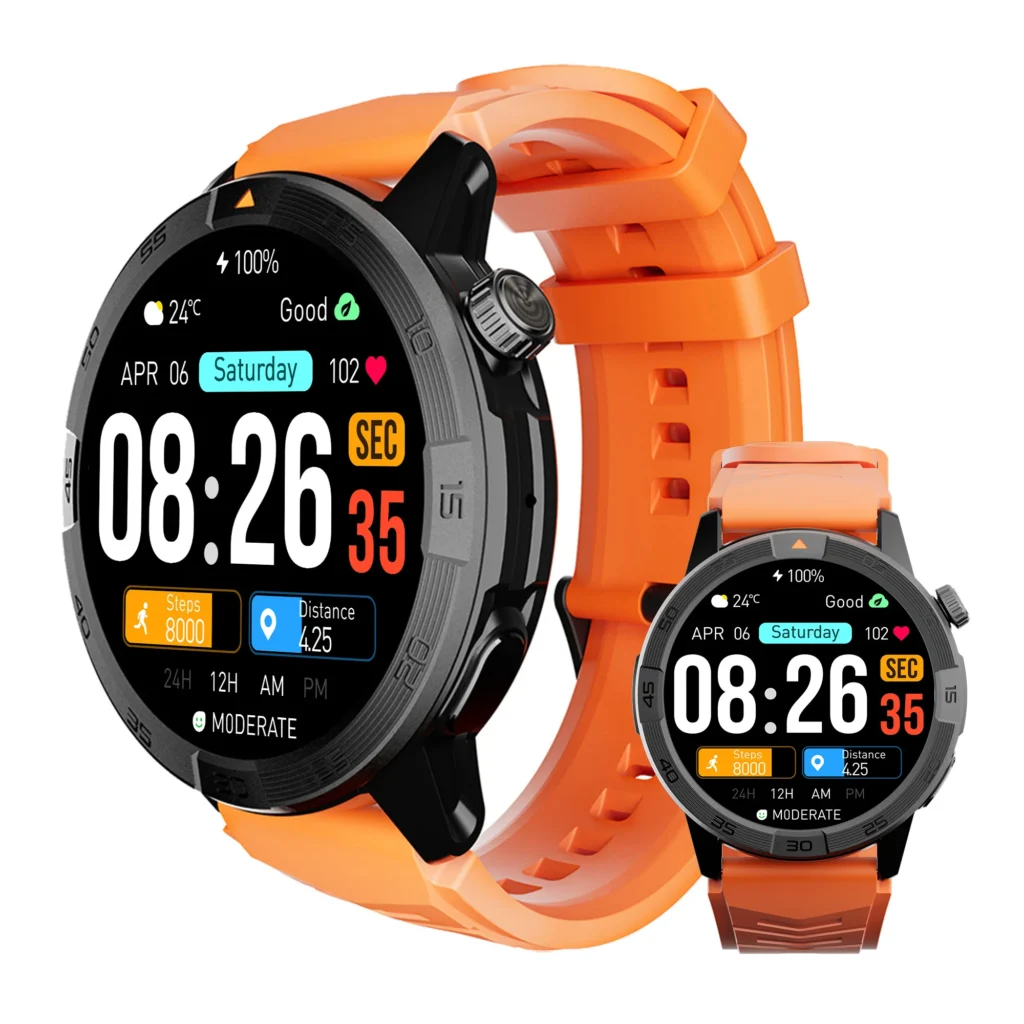
A premium smartwatch with long battery life should look polished, handle useful daily tasks, and avoid becoming another device that needs nightly charging. That balance matters for commuters, office workers, delivery drivers, travelers, gym users, and anyone with a busy schedule. The featured $150 smartwatch combines an advertised battery life of up to 30 days with Bluetooth calling, built-in GPS, offline maps, an AMOLED display, and everyday fitness tracking. This guide explains what makes it feel premium, how its battery may perform in real life, where it compares well with major brands, and what buyers should verify before ordering.
What Makes a Premium Smartwatch With Long Battery Life Worth Buying?
“Premium” does not have to mean the most expensive watch available. For most buyers, it means a refined design, a sharp display, dependable notifications, useful calling and GPS features, comfortable all-day wear, and battery life that fits a real schedule.
Battery endurance is what makes those features convenient. A beautiful watch becomes frustrating when it spends every night on a charging dock or runs out of power halfway through a workday. Multi-week battery life also makes continuous activity and sleep tracking more practical.
Readers focused mainly on endurance can also explore our guide to the best smartwatch with 30-day battery life.
Why Long Battery Life Changes Everyday Use
Frequent charging creates interruptions that add up. You remove the watch before bed, forget it the next morning, and lose a day of calls, notifications, and activity tracking. Longer battery life helps in several common situations.
Work and Commuting
A warehouse worker or delivery driver may not have easy access to a charger during a long shift. An office employee may move between meetings, while a commuter keeps a phone inside a bag.
In each case, the watch is more useful when it stays powered for calls, messages, time checks, and activity data.
Travel and Road Trips
A watch that can last for days or weeks means one less cable to pack. That matters during business travel, road trips, camping weekends, and family vacations where charging outlets are already crowded.
You may still need to bring the charger on a longer trip, but you are less likely to depend on it every night.
Fitness and Sleep Tracking
Short-battery watches often get charged at night, which prevents sleep tracking. A longer-lasting model can stay on your wrist through workouts and sleep.
That gives you a more complete view of your activity instead of leaving gaps whenever the watch is charging.
The biggest advantage may simply be not checking the battery percentage every morning.
Featured 30-Day Smartwatch: Premium Features at a Midrange Price
The featured model is listed at $150 with free shipping. It is positioned for buyers who want a premium appearance and practical features without flagship pricing.
Its listed features include:
- Up to 30 days of advertised battery life
- 370mAh battery
- Bluetooth calling and wrist dialing
- Built-in GPS and offline maps
- 1.43-inch AMOLED touchscreen
- 466 × 466 display resolution
- Heart-rate and sleep tracking
- Step and calorie tracking
- Multiple sports modes
- Music controls and smart notifications
- Compass and altitude meter
- IP68 and 5ATM ratings
- Android and iPhone compatibility
- Black and orange color choices
The value comes from the combination. Some endurance watches lack voice calling, while Apple, Samsung, and full Wear OS models offer more apps but need much more frequent charging.
This model aims for a middle ground: a premium-looking display, calls, navigation, wellness tools, and a lower price.
You can review the complete specifications for this premium smartwatch with long battery life.
How Long Will the Battery Last in Real Life?
The watch advertises up to 30 days of battery life, but real results depend on settings and usage. “Up to” should be treated as a maximum rather than a guarantee for every owner.
Light Use
A lighter user may mainly:
- Check the time
- Count steps
- View occasional notifications
- Monitor sleep
- Use moderate screen brightness
- Keep the always-on display turned off
- Use GPS only when needed
These habits give the watch the best chance of approaching the higher end of the advertised range.
Moderate Use
A typical routine may include regular notifications, several short calls, heart-rate checks, sleep tracking, music controls, and a few GPS workouts each week.
Battery life will probably fall below the maximum, but the charging interval may still be far longer than on watches that last only one or two days.
For many buyers, this is the most useful comparison. A watch does not need to reach exactly 30 days to provide a major convenience advantage over one that needs nightly charging.
Heavy Use
Runtime drops faster with:
- Long Bluetooth calls
- Hours of GPS tracking
- Offline navigation
- Maximum screen brightness
- Always-on display
- Frequent alerts
- Continuous sensor monitoring
A delivery driver using calls and GPS throughout a shift should expect to recharge sooner than an office worker who mainly checks time and messages.
The real question is whether the watch can reduce charging enough to improve your routine. For more detail, read our guide to choosing a smartwatch with a battery that lasts weeks.
Bluetooth Calling Adds Real Everyday Convenience
Long battery life is useful on its own, but Bluetooth calling gives the watch a stronger everyday purpose.
When paired with a compatible smartphone, it is designed to let you:
- See incoming callers
- Accept or reject calls
- Dial from your wrist
- Speak through the built-in microphone
- Hear the caller through the watch speaker
This helps when your phone is nearby but out of reach.
At Work
An office worker can screen a call during a meeting. A delivery driver may keep a phone mounted for navigation, while a warehouse employee stores it in a secure pocket.
A visible call alert lets you decide whether the call needs immediate attention without repeatedly taking out your phone.
At Home or the Gym
Wrist calling is useful while cooking, exercising, carrying groceries, or doing yard work. You can answer a short call or reject it without interrupting what you are doing.
Bluetooth calling is not independent cellular service. The paired phone normally needs to remain nearby, and call audio may be difficult to hear in a loud workplace or gym.
Buyers who want to make calls without carrying a phone should consider a cellular Apple Watch, Samsung Galaxy Watch, or another LTE-compatible model.
AMOLED Display, GPS, and Everyday Design
The watch uses a 1.43-inch AMOLED touchscreen with a listed 466 × 466 resolution.
AMOLED technology can provide deep blacks, strong contrast, and vivid colors. That makes caller information, notifications, maps, workout data, and watch faces easier to read.
The round case and black or orange straps create a more traditional look than many rectangular fitness trackers. Black suits office wear, while orange feels sportier.
Built-in GPS and offline maps can support walking, running, hiking, travel, outdoor workouts, and exploring unfamiliar areas.
Before buying, confirm:
- How maps are downloaded
- Whether turn-by-turn directions are available
- Which U.S. regions are supported
- Whether the phone is required during navigation
- How much map storage is available
GPS is one of the most power-hungry smartwatch features. Running it continuously will use considerably more battery than checking notifications or tracking steps.
The watch also lists IP68 and 5ATM ratings. These may help with rain, sweat, dust, handwashing, and normal outdoor exposure.
They do not make the watch immune to every impact, chemical, temperature, or water condition. Hot water, steam, saltwater, damaged seals, and heavy impacts may affect protection.
Health and Fitness Features for Daily Use
The watch includes heart-rate monitoring, sleep tracking, step counting, calorie estimates, breathing monitoring, sedentary reminders, and multiple sports modes.
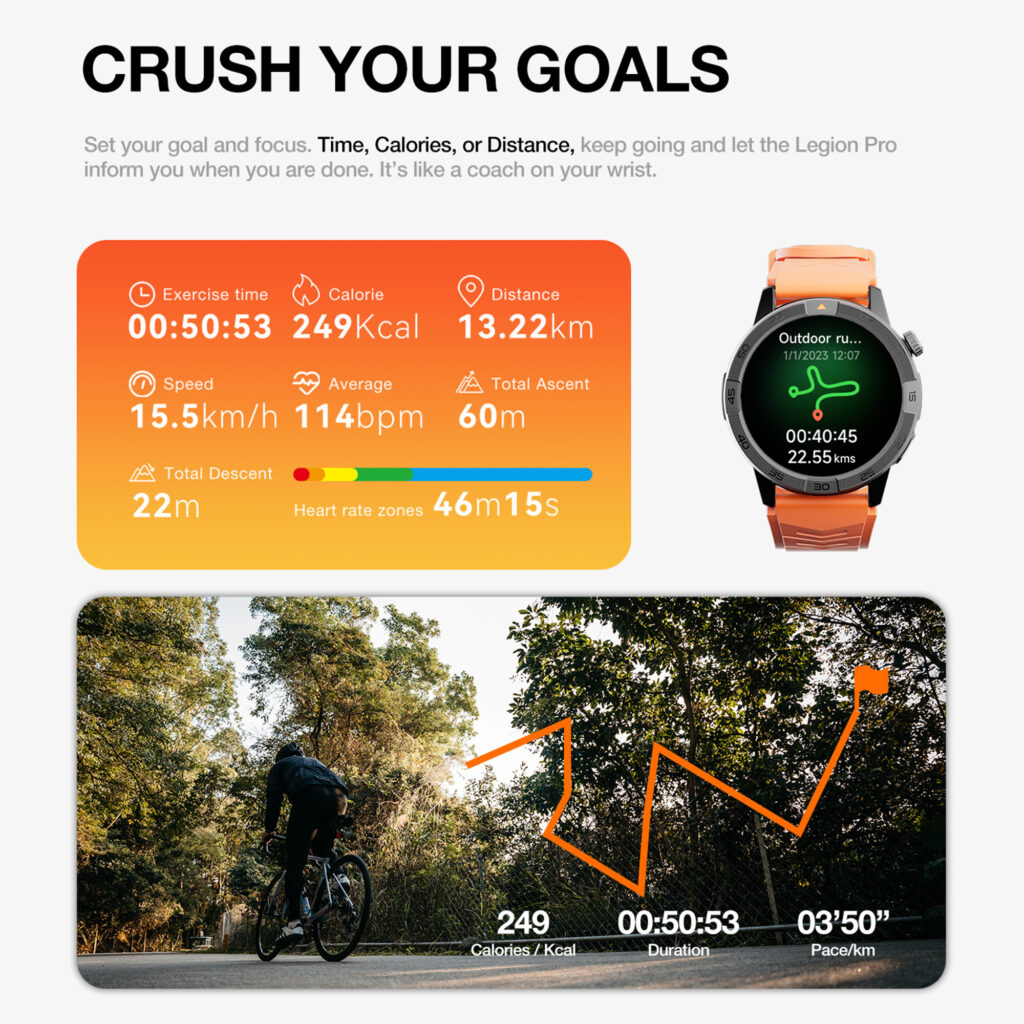
These tools are best used for general awareness. Office workers can use movement reminders, warehouse employees can review steps, and gym users can monitor activity. Long battery life helps by making consistent wear easier.
Sleep tracking is particularly relevant. A smartwatch cannot record your sleep while sitting on a charger, so extended battery life may make overnight tracking more practical.
These readings are general wellness data, not medical diagnoses. Fit, movement, skin contact, and temperature can affect results.
How It Compares With Popular Premium and Long-Battery Watches
Battery claims are not perfectly comparable because manufacturers use different test conditions. Still, the table shows the main trade-offs.
| Smartwatch | Advertised Battery Life | Wrist Calling | Main Strength | Main Limitation |
|---|---|---|---|---|
| Featured 30-Day Smartwatch | Up to 30 days | Bluetooth calling | Long claimed runtime, AMOLED, GPS, $150 price | Limited independent reviews |
| Garmin Instinct 3 AMOLED | Up to 24 days | No voice calling | Strong outdoor and training tools | Less useful for calls |
| OnePlus Watch 3 | About 3–5 days | Bluetooth calling | Wear OS apps and Google services | More frequent charging |
| Amazfit Bip 6 | Up to 14 days of typical use | Bluetooth calling | Budget-friendly fitness value | More basic design and software |
| Withings ScanWatch 2 | About 30–35 days | No calling | Classic premium hybrid style | Small display and fewer smart features |
| Samsung Galaxy Watch Ultra | Around three days in common use | Bluetooth and LTE options | Strong apps and Android integration | Much shorter runtime |
Garmin is better for serious training. OnePlus and Samsung are stronger for apps and phone integration. Withings offers a traditional hybrid style, while Amazfit provides an established budget alternative.
The featured watch makes the most sense for buyers prioritizing endurance, calling, AMOLED, GPS, and a $150 price.
When a Major-Brand Watch Makes More Sense
Consider Apple, Samsung, OnePlus, or Garmin when you place more value on:
- A mature app ecosystem
- Contactless payments
- Voice assistants
- Independent LTE service
- Advanced training metrics
- Longer software support
- An established record of independent reviews
The trade-off is usually a higher price, shorter battery life, or the loss of wrist calling in some endurance-focused models.
Pros and Cons
Pros
- Advertised battery life of up to 30 days
- Bluetooth calling from the wrist
- Built-in GPS and offline maps
- Sharp AMOLED touchscreen
- Premium-looking round design
- Android and iPhone compatibility
- Fitness and sleep tracking
- Useful for work, travel, commuting, and gym use
- $150 price offers strong feature value
- Free shipping listed at the time of writing
Cons
- The 30-day figure is not guaranteed under heavy use
- Calling and GPS will reduce runtime
- Bluetooth calls require a nearby phone
- No LTE option is listed
- No customer reviews are currently displayed
- Software update support is unclear
- Companion-app quality is not fully explained
- Offline-map details should be confirmed
- Health readings are not medical-grade
Who Should Buy This Smartwatch?
This watch may be a good fit for:
- Buyers seeking a premium feel without a premium price
- People tired of charging every night
- Delivery drivers and warehouse workers
- Office employees and commuters
- Travelers and road-trip users
- Gym users who want calling and activity tracking
- Android and iPhone owners
- Shoppers who value endurance more than a large app store
Budget-focused readers can also compare options in our guide to a 30-day battery smartwatch under $200.
Who Should Avoid It?
Choose another smartwatch if you need independent LTE calls, a major app store, contactless payments, advanced medical tools, professional training analytics, verified high-accuracy GPS, or guaranteed long-term software support.
Apple, Samsung, and OnePlus are stronger for apps and ecosystem integration. Garmin is better for serious outdoor and athletic use. Withings is more suitable for buyers who prefer a traditional hybrid watch.
What to Check Before Ordering
Before buying, verify:
- Battery conditions: Does the 30-day claim refer to standby, light use, or typical use?
- Phone compatibility: Which Android or iOS versions and companion app are required?
- Calling quality: Will the speaker be loud enough for your usual environment?
- Map support: Does it cover the U.S. regions you need, and is turn-by-turn guidance included?
- Returns and warranty: What happens if the fit, battery, display, or app performance does not meet expectations?
This step matters because the product page currently has no published customer reviews.
Frequently Asked Questions
What Is a Good Premium Smartwatch With Long Battery Life?
A good option should combine an attractive design and display with useful daily features and multi-day endurance. The featured $150 smartwatch advertises up to 30 days and includes Bluetooth calling, GPS, offline maps, an AMOLED screen, and fitness tracking.
Will the Battery Actually Last 30 Days?
Thirty days is a maximum advertised figure. Heavy calls, GPS, high brightness, always-on display, and continuous monitoring can shorten runtime.
Can I Answer Calls Directly From the Watch?
Yes. It supports Bluetooth calling through its microphone and speaker when connected to a compatible nearby phone.
Does It Work Without a Phone?
Basic watch and fitness functions may work independently, but Bluetooth calls and some connected features require a paired phone. No LTE service is listed.
Is It Suitable for Office and Everyday Wear?
The round AMOLED display and black strap option provide a versatile look for office work, commuting, and daily use.
Is It Better Than an Apple Watch or Galaxy Watch?
It may be better for someone prioritizing battery life and price. Apple and Samsung offer stronger apps, payments, software, and phone integration but need more frequent charging.
Conclusion: Is This Premium Smartwatch With Long Battery Life Worth It?
A premium smartwatch with long battery life should look good, handle practical daily tasks, and reduce the frustration of constant charging.
The featured model offers an appealing package for $150: up to 30 days of advertised battery life, Bluetooth calling, built-in GPS, offline maps, a high-resolution AMOLED display, and everyday fitness tracking.
Its biggest advantage is convenience. It is designed for people who want calls, notifications, navigation, and activity data without putting the watch on a charger every night.
There are trade-offs. Actual runtime will vary, Bluetooth calling requires a nearby phone, and the product currently lacks customer reviews and a clearly explained software-support policy.
For commuters, shift workers, travelers, gym users, and shoppers seeking a premium feel without flagship pricing, it is worth considering. Buyers who need LTE, a large app ecosystem, or advanced athletic tools should choose a more established alternative.
Ready to Upgrade Without Adding Another Daily Charging Habit?
Get long-lasting power, Bluetooth calling, GPS, fitness tracking, and a sharp AMOLED display in one practical wearable.
Shop the 30-Day Battery Smartwatch and bring premium everyday convenience to your wrist.