
A missed call on the road is not always just a missed call. For a truck driver, it could be dispatch, a receiver, a family member, a broker, a maintenance update, or a rest-stop coordination message. A smartwatch for truck drivers phone calls should not encourage more screen interaction behind the wheel. It should help drivers manage communication more safely around long routes, parked breaks, rest stops, and multi-day schedules.
This safety-first road-life handbook explains how a smartwatch can support truck drivers with call awareness, battery life, offline maps, sleep tracking, comfort, and fewer charging concerns — without treating the watch as something to use while driving.
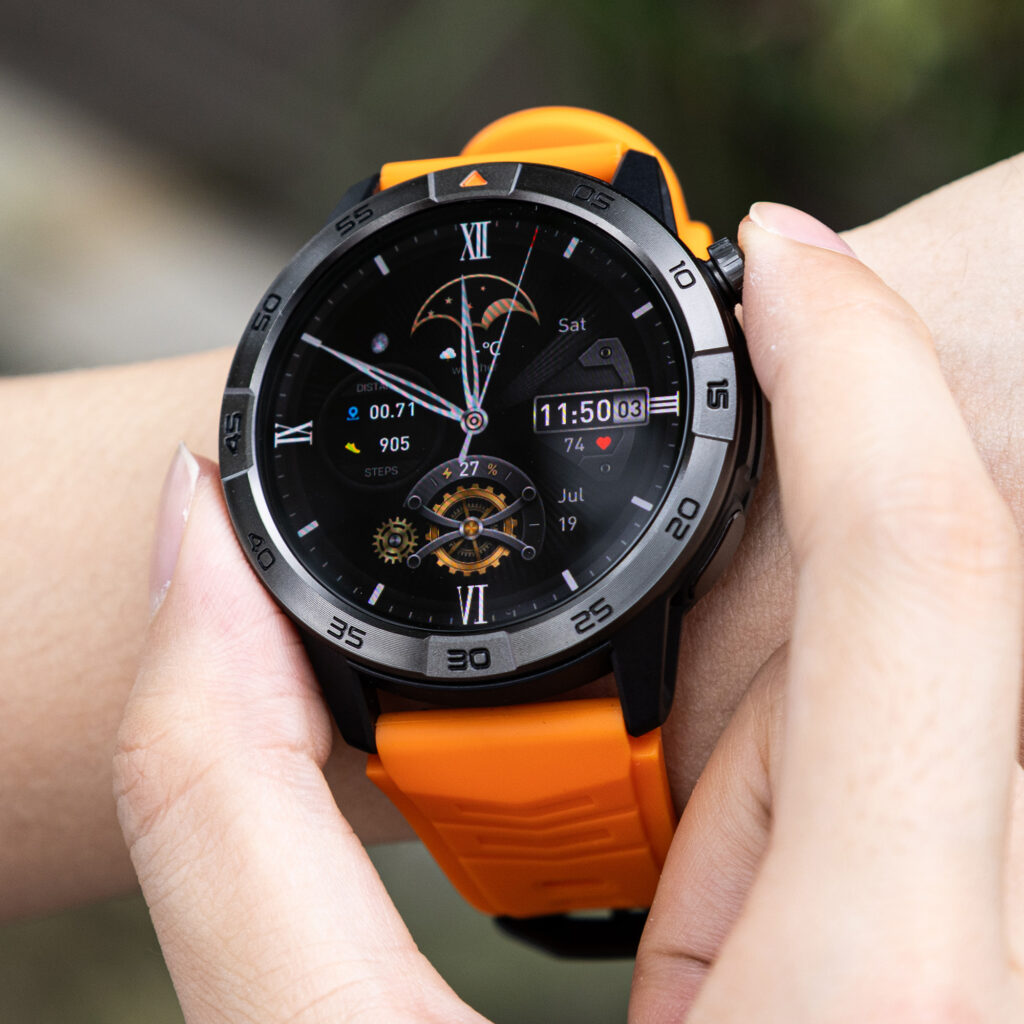
Multi-Day Route Realities for U.S. Truck Drivers
Truck driving in the United States is not a normal desk routine. A driver may move through several states in a week, cross time zones, deal with weather changes, wait at loading docks, stop at weigh stations, and sleep away from home.
That kind of road life makes ordinary devices feel different. A smartwatch that works fine for a short office day may become frustrating if it needs constant charging or if the call screen is hard to manage during breaks.
For truckers, the value is not “more tech.” The value is fewer small problems during long routes.
A truck driver may need to:
- Check who called during a safe parked stop
- See a dispatch call without digging through a bag
- Track basic activity during long sedentary days
- Use alarms for breaks or wake-up routines
- Keep an eye on sleep patterns between shifts
- Use GPS or offline-map tools outside active driving situations
- Avoid another device that demands daily charging
This is why a smartwatch for truckers should be judged by reliability, simplicity, battery headroom, comfort, and safe-use habits.
Limited Charging Access on Long U.S. Routes
Charging access can be inconsistent during long-haul or regional trucking. A driver may have charging ports in the cab, but those ports may already be used for a phone, headset, dash cam, GPS unit, tablet, or other work tools.
A smartwatch that constantly needs charging can become one more thing to manage. That is not ideal for drivers moving between truck stops, rest areas, delivery windows, and overnight parking.
Why Battery Headroom Matters More on the Road
For U.S. truck drivers, long battery life is less about bragging rights and more about routine protection. If the watch has a longer battery window, the driver has more flexibility when schedules shift.
Battery life still depends on usage. Bluetooth calls, GPS, screen brightness, frequent notifications, and health tracking can reduce runtime. But a smartwatch with stronger advertised battery performance can be more practical than a short-runtime watch when the driver is away from a normal charging setup.
The current smartwatch includes a 370mAh battery and a long-battery design, which makes it relevant for truckers who want call awareness without charging stress. The goal is not to promise the same runtime for every driver. The goal is to give drivers more room between charges than many feature-heavy options.
For related battery-focused reading, drivers can compare this guide on a smartwatch for truck drivers with long battery life.
Dispatch Calls: Useful Only When Handled Safely
Dispatch calls are one of the biggest reasons truck drivers care about call visibility. A driver may need to know whether a call is from dispatch, a broker, a shipper, a receiver, maintenance, or a family contact.
A smartwatch can help by showing incoming call information on the wrist. But that does not mean a driver should tap, read, or answer from the watch while moving.
Calls should be handled only when safely parked or through a lawful hands-free system that follows federal, state, employer, and carrier rules.
How a Smartwatch Can Support Dispatch Communication
The watch is most useful as a call-awareness tool. It can help drivers notice who is calling, then decide what to do at the next safe opportunity.
A practical dispatch workflow may look like this:
- Keep the phone connected and accessible through approved systems.
- Let the smartwatch show call alerts.
- Do not interact with the watch while driving.
- Pull over safely or wait for a parked stop if attention is needed.
- Return non-urgent calls during breaks, fuel stops, or loading delays.
- Use the phone or approved hands-free setup for longer conversations.
Bluetooth calling works through the nearby paired phone. It is not LTE or cellular calling, so the phone still powers the connection. For truckers, this is usually acceptable because the phone is often in the cab, but safe handling rules still come first.
For a broader call-use breakdown, this guide on a smartwatch that can answer phone calls can help explain the difference between call alerts and actual wrist calling.
Rest-Stop Communication and Parked Breaks
Rest stops, truck stops, loading docks, fuel islands, inspection stops, and overnight parking areas are where smartwatch communication becomes more realistic.
When the truck is safely parked, a smartwatch can help drivers return missed calls, answer quick check-ins, manage family communication, or confirm a delivery update without searching through the cab.
This is where Bluetooth calling makes more sense: short, practical communication while the phone stays nearby.
Realistic Parked-Call Scenarios for American Truckers
A smartwatch may help during:
- A quick call to dispatch at a truck stop
- A family check-in during a parked meal break
- A receiver call while waiting near a loading dock
- A broker update during a safe parked pause
- A maintenance callback before entering a service bay
- A hotel or motel check-in call during off-duty time
- A roadside assistance call after the vehicle is safely stopped
These are different from normal office examples. Truck drivers need communication tools that fit road rhythm, not desk rhythm.
A smartwatch speaker and microphone can be useful for brief calls, but longer or private conversations are usually better on a phone or headset.
Offline Maps for Route Support, Not Driving Distraction
Offline maps can be useful for truck drivers, but they must be understood carefully. A smartwatch should not replace professional truck navigation, ELD systems, route planning tools, or carrier-approved navigation devices.
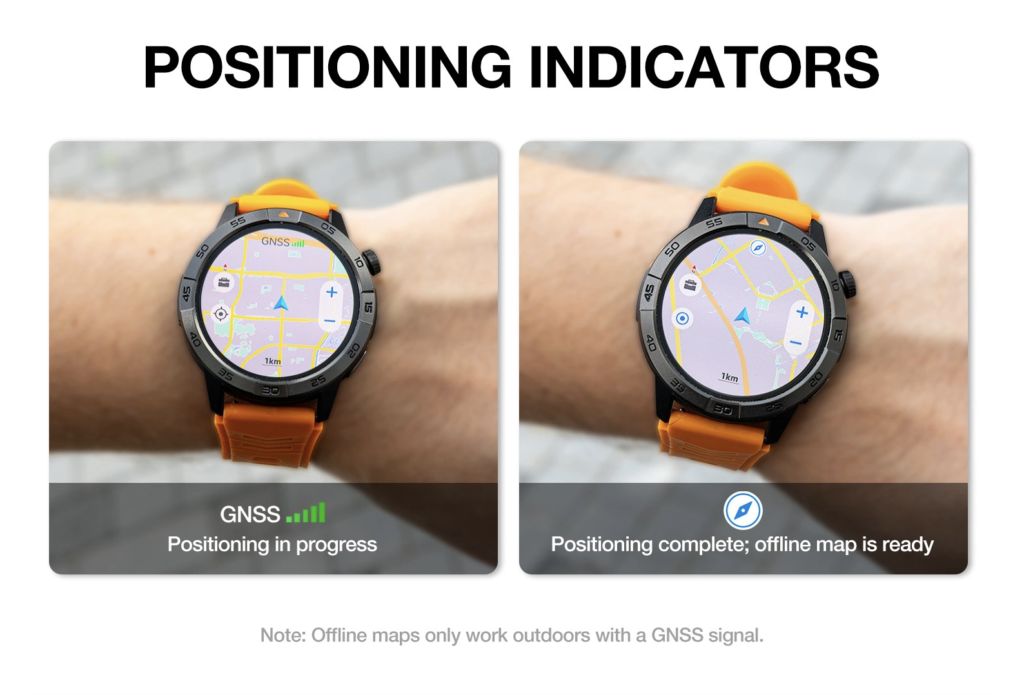
The smartwatch’s built-in GPS and offline maps may be helpful for non-driving moments, such as walking around a truck stop, finding a nearby location after parking, checking general area orientation, or using location features during off-duty time.
Where Offline Maps Make Sense for Truckers
Offline maps may be useful when:
- Walking from overnight parking to a nearby store
- Finding a building entrance after parking
- Checking a general area during rest time
- Navigating a large truck stop on foot
- Planning a walking break
- Using location tools when phone signal is weak
Drivers should not interact with smartwatch maps while driving. They should rely on proper truck navigation tools, pre-trip planning, and safe parked checks.
The feature is best treated as a secondary convenience, not a driving navigation system.
Sleep Tracking Between Routes
Sleep is a major part of truck driving life. Long routes, early appointments, overnight parking, changing schedules, and road noise can make rest difficult.
A smartwatch with sleep tracking can help drivers notice patterns in their rest routines. It may show estimated sleep duration, sleep timing, or general sleep trends.
This can be useful for personal awareness, but it should not be treated as medical-grade sleep analysis or a fatigue diagnosis tool.
How Truck Drivers Can Use Sleep Data Realistically
Truck drivers may use sleep tracking to notice:
- Whether overnight parking locations affect rest
- How early delivery appointments change sleep timing
- Whether off-duty routines are consistent
- How rest differs between home time and road time
- Whether long routes create repeated short-sleep patterns
The smartwatch can provide general wellness awareness, not medical advice. Drivers who experience serious fatigue, sleep problems, or health concerns should speak with a qualified professional.
For a truck driver, sleep tracking is most useful when it supports better routine awareness without becoming another source of stress.
Long-Term Comfort for Cab Life and Rest Days
Comfort matters more for truck drivers than many shoppers realize. A watch may feel fine in a store, but truckers may wear it through long seated hours, fuel stops, unloading delays, showers, sleep periods, and off-duty errands.
A smartwatch for truck drivers should feel comfortable enough for long-term wear. If it feels bulky, irritating, or distracting, drivers may stop wearing it — and then the battery, calling, and tracking features no longer matter.
Comfort Factors Truckers Should Check
Truck drivers should consider:
- Strap comfort during long seated periods
- Whether the watch feels bulky while sleeping
- Screen readability in cab lighting
- Sweat and moisture resistance during warm routes
- Whether the watch catches on sleeves or gloves
- Whether the display is easy to see during parked stops
- Whether the watch feels natural during rest breaks
The 1.43-inch AMOLED display can help with readability, especially when checking caller information or notifications quickly. But comfort depends on the driver’s wrist size, strap preference, and daily routine.
Safe-Use Limitations for Truck Drivers
Safety is the most important section of this article.
A smartwatch should not create new distractions for truck drivers. It should not encourage tapping, scrolling, reading, answering, rejecting, or adjusting settings while driving.
Truckers should follow federal rules, state laws, carrier policies, employer rules, and safe-driving practices. Handheld phone use and texting while driving commercial vehicles are restricted, and drivers should treat smartwatch interaction with the same seriousness.
What Not to Do With a Smartwatch While Driving
Truck drivers should not:
- Tap the watch while the vehicle is moving
- Read detailed notifications while driving
- Scroll through missed calls on the road
- Use smartwatch maps while driving
- Adjust settings while operating the truck
- Hold wrist calls that take attention away from driving
- Treat the watch as a reason to ignore company communication rules
If a call needs attention, the safest approach is to handle it during a legal parked stop or through a lawful hands-free system that meets applicable rules.
The smartwatch is a support tool. It is not permission to multitask while driving.
Features Truckers Should Prioritize
Truck drivers should not buy a smartwatch only because it has a long feature list. The best choice is the one that fits road life.
1. Long Battery Design
A longer battery window helps reduce charging pressure during multi-day routes. Truckers should look for battery capacity, charging habits, and power-drain features.
2. Clear Call Visibility
The watch should show caller information clearly. Dispatch, family, receiver, and unknown calls should be easy to identify during safe parked moments.
3. Bluetooth Calling Support
Bluetooth calling can be useful for parked communication when the phone is nearby. It should be treated as a convenience layer over the phone, not a cellular replacement.
4. Comfortable All-Day Wear
Truckers may wear the watch for long stretches, so comfort matters. Strap quality, weight, and screen size should all be considered.
5. Offline Maps and GPS
GPS and offline maps can help during off-duty walking, truck stop navigation on foot, and general location awareness. They should not replace truck-specific navigation systems.
6. Sleep and Activity Awareness
Sleep tracking, step counting, and activity tracking can help drivers monitor general patterns during sedentary road routines. These features are for awareness only.
7. iOS and Android Compatibility
Truckers may use different phone ecosystems, so compatibility with both iOS and Android makes the smartwatch easier to consider.
How This Smartwatch Fits Truck Driver Needs
The smartwatch fits truck-driver needs best when viewed as a road-life support tool. It is not a driving communication device and not a replacement for a phone, headset, ELD, dispatch system, or truck navigation setup.
Its strongest fit is parked communication, call awareness, battery flexibility, general wellness tracking, and off-duty convenience.
For U.S. truck drivers, that feature mix can support long routes when used correctly. The call feature helps drivers notice and handle communication at safe times. The longer battery positioning helps reduce charging concerns across multi-day schedules. Offline maps and GPS can support non-driving moments. Sleep and activity tracking can support general road-life awareness.
The product page currently shows no customer reviews, so buyers should evaluate the listed features, road routine, safety needs, and budget before deciding.
Frequently Asked Questions
Is a smartwatch useful for truck drivers phone calls?
Yes, a smartwatch can help truck drivers see call alerts, identify dispatch or family calls, and manage communication during parked breaks. It should not be used as a distraction while driving.
Can truck drivers answer smartwatch calls while driving?
Truck drivers should not interact with a smartwatch while driving. Calls should be handled only when safely parked or through lawful hands-free systems that follow federal, state, carrier, and employer rules.
Does Bluetooth calling work without a phone nearby?
No. Bluetooth calling depends on a nearby paired phone. The smartwatch handles the call interface, but the phone still powers the connection.
Why does battery life matter for truck drivers?
Truck drivers may spend multiple days on the road with limited charging access. A smartwatch with longer battery positioning can reduce charging stress during routes, stops, and overnight schedules.
Are offline maps useful for truck drivers?
Offline maps can be useful during parked or off-duty moments, such as walking around truck stops or checking nearby areas. They should not replace truck-specific navigation or be used while driving.
Is sleep tracking helpful for truck drivers?
Sleep tracking can help drivers notice general rest patterns during long routes, but it is not medical-grade and should not be used to diagnose fatigue or sleep problems.
A Practical Decision for American Truck Drivers
A smartwatch for truck drivers makes the most sense when it solves real road problems without adding unsafe distractions.
It may fit drivers who want:
- Fewer charging concerns during long routes
- Clear call alerts during safe parked moments
- Dispatch-call awareness without constant phone checking
- A smartwatch that supports rest-stop communication
- Offline-map tools for non-driving use
- General sleep and activity awareness
- A practical wrist device for workdays and off-duty time
It may not be right for drivers who want LTE independence, professional truck navigation, guaranteed maximum battery life under heavy use, or a device for interacting while driving.
Before choosing, compare your actual route style, call habits, charging setup, and carrier rules. If the feature mix matches your road routine, you can review the battery, calling, and GPS details before making a final buying decision.