
Two hands, four objects, and no spare grip.
One hand steadies a cabinet-door sample. The other manages a tape measure and an order sheet while the phone stays stored. When the wrist begins ringing, the real question is not whether the watch has an answer button. It is whether communication can begin without shifting, dropping, or surrendering something already in use.
A smartwatch for hands-free communication daily should fit the wearer’s existing hand state rather than force that state to change. For a hypothetical custom cabinet showroom coordinator in Wichita, Kansas, the Hands-Occupied Moment Map separates four recurring conditions: Carrying, Measuring, Gloved, and Hands Available. Each moment receives an Answer, Reject, Voice Action, or Defer decision based on what the hands must actually do.
Count the Hands Before Counting Smartwatch Features
Product descriptions often group several different experiences under the phrase “hands-free.” A watch may leave the phone untouched while still requiring a screen tap. Another workflow may begin by voice but need a second touch to correct the contact. Some calls work only after the wearer puts down what they are carrying.
Those experiences should not receive the same label.

| Communication label | What the wearer actually does |
|---|---|
| Phone-free | The phone remains untouched, but the watch may still require interaction |
| One-touch | One deliberate watch action starts, accepts, rejects, or ends the communication |
| Voice-ready | A verified voice command begins the intended action without device touch |
| Fully hands-free | No phone touch, watch touch, unsafe wrist movement, or object release is required |
A one-touch workflow can still provide strong daily convenience. The problem begins when that narrower benefit is described as full hand freedom.
Before comparing controls, record what each hand already supports. The object load exists before the communication request arrives, so the watch must adapt to the moment rather than claim an imaginary spare hand.
Readers comparing broader routine benefits can separate everyday convenience from actual hand freedom. Convenience may reduce phone retrieval even when the wrist still needs a touch.
Build a Wichita Hand-Occupancy Inventory
An American showroom day may include carrying finish samples, aligning display materials, checking dimensions, handing information to a customer, and moving between a counter and a sample wall. None of those moments should be treated as automatically suitable for wrist communication.
Create a Hand Occupancy Snapshot before testing:
- What is the left hand holding or controlling?
- What is the right hand holding or controlling?
- Is either object heavy, fragile, aligned, measured, or customer-facing?
- Where is the phone stored?
- Is the wearer safely stationary?
- Can the wrist move naturally?
- Would object release change the original task?
| Daily moment | Left hand | Right hand | Phone location | Release acceptable? |
|---|---|---|---|---|
| Comparing two samples | Sample one | Sample two | No | |
| Measuring a display | Tape anchor | Tape and notes | Counter | No |
| Carrying a customer packet | Packet | Available | Bag | Possibly |
| Standing at the counter | Available | Available | Not needed |
The Wichita coordinator remains hypothetical. These examples do not describe a real showroom, customer order, cabinet line, employer policy, or measurement procedure.
The inventory exists to reveal repeated patterns. One successful voice action during a hands-available moment cannot prove the same result while carrying two samples.
Separate Phone-Free, One-Touch, and Truly Hands-Free Use
Phone Untouched but Watch Tapped
When the phone stays in a pocket and the wearer taps the watch once, the moment is phone-free and one-touch. That may be useful for rejecting an interruption or accepting a brief call, but it is not fully hands-free.
Voice Starts the Action
A voice command may create a hands-free start when the exact watch, phone, software, settings, and connection support it. The action must also work from the wearer’s natural wrist position without forcing object release.
If the watch misunderstands the contact and the wearer must tap the screen to correct it, the final classification changes. Judge the complete action, not the first successful step.
An Object Must Be Put Down
When communication begins only after the wearer places a sample, package, tool, or document on a counter, the original hands-occupied moment did not support hands-free use.
The Phone Returns Mid-Action
A call may start at the watch yet require the phone for contact selection, audio routing, privacy, or completion. That workflow is neither phone-independent nor fully hands-free.
The most demanding step controls the final label. A voice-start feature does not rescue a moment that ends with phone retrieval or unsafe object release.
Map Carrying Moments Across an American Showroom Day
Carrying is the first panel of the Hands-Occupied Moment Map. It includes situations where one or both hands support an object and where loosening the grip could cause damage, discomfort, or loss of control.
For each carrying moment, record:
- Object type
- Number of occupied hands
- Grip stability
- Phone location
- Communication trigger
- Start method
- Number of watch touches
- Any object movement
- Final decision
Two Samples Occupy Both Hands
The watch receives an incoming call while the coordinator compares two finish samples. Neither hand can reach the screen without shifting an object.
Decision: Defer.
The call may be important, but the hand state does not support a safe answer or reject action.
One Packet Leaves One Hand Available
A customer packet occupies the left hand while the right remains available. A single reliable watch action may work without dropping or transferring the packet.
Decision: One-touch Answer or Reject, depending on the call and setting.
A Verified Voice Action Preserves the Grip
When official documentation confirms the intended voice function and the user has configured it correctly, a short action may begin without releasing the carried object.
Decision: Voice Action.
Do not test while carrying heavy, fragile, unstable, awkward, or hazardous loads. Use only manageable objects at a safe, stationary point.
Measure Communication Without Losing the Reference Point
Measuring creates a different kind of hand pressure. The object may be light, yet the exact position of the hands carries the value of the task.
In the Wichita scenario, one hand may anchor a tape while the other holds the tape body, aligns a sample, or records a reference. A wrist movement can shift the starting point even when nothing falls.
Record whether communication causes:
- The tape position to change
- The reference point to disappear
- The order sheet to move
- The wrist to rotate unnaturally
- One hand to leave the measurement
- A voice command to require correction
A communication action fails this panel when the measuring task must change merely to accommodate the watch.
Voice Action Preserves the Measurement
A verified voice command may work when the wearer can remain stationary and keep both hands in place.
Reject Protects the Reference Point
A short, reliable decline action may be preferable when the measurement matters more than the incoming call.
Defer When Position Is Fragile
When any wrist movement could alter the result, the correct decision is to let the communication wait.
Successful communication cannot be separated from preservation of the original hand task. A call that completes after the measurement is lost does not earn a hands-free result.
Test Gloved Communication at a Safe Kansas Work Point
Gloves create the third hand-state panel. The test should occur only after the wearer reaches a safe, stationary point and confirms that employer instructions permit device use.
Use the same glove type normally worn for the relevant routine and record:
- Whether a voice action works
- Whether the screen responds
- Whether a side button can be operated
- Whether accidental inputs occur
- Whether glove removal becomes necessary
- Whether the wrist must be repositioned
- Whether the phone is retrieved
A bare-finger demonstration does not prove glove operation. Likewise, a large answer icon does not establish that the control responds through the material used in the wearer’s real routine.
If glove removal becomes necessary, classify the full moment honestly:
- One-touch after glove removal: Convenient, but not hands-free
- Hand-Release Required: The wearer must interrupt object handling
- Defer: The moment cannot support safe interaction
Article 259 examines hand occupancy after the moment is already safe. Readers evaluating whether an active work task has reached an appropriate pause can compare hand occupancy with a separate safe work-pause test.
Use Hands-Available Moments as the Control Baseline
The fourth panel removes the hand-occupancy pressure. Both hands are available, the wearer stands still, and no object needs protection.
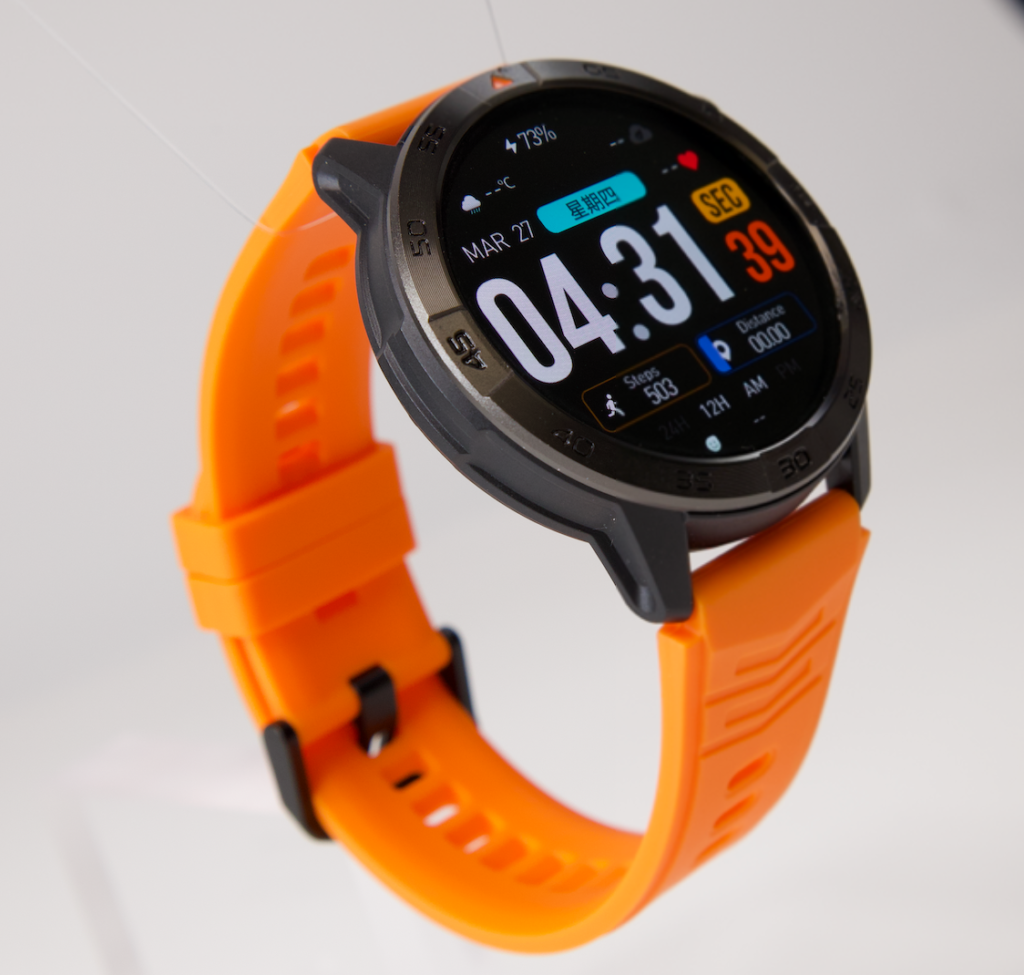
Test:
- Can the action start by voice?
- Does one watch tap begin it?
- Are several touches required?
- Must the phone be unlocked?
- Does audio return to the phone?
- Can the action end from the watch?
- Does the wrist need an awkward position?
This favorable condition creates a baseline. When an action fails with both hands available, it is unlikely to become easier while carrying, measuring, or wearing gloves.
| Baseline path | Classification |
|---|---|
| Voice start and voice completion | Voice-ready baseline |
| Voice start with touch finish | Mixed-control baseline |
| One reliable watch tap | One-touch baseline |
| Several watch taps | Multi-touch baseline |
| Phone required | Phone-dependent baseline |
The baseline does not become the final daily verdict. The Carrying, Measuring, and Gloved panels still determine whether the routine fits hands-occupied moments.
Assign Four Decisions to Every Hands-Occupied Moment
Answer
Use this decision when an incoming communication can be handled appropriately without unsafe object release, phone retrieval, or unsuitable wrist movement.
Reject
Choose Reject when the watch can dismiss or decline the interruption while preserving the hand task. Rejecting a call may protect the moment better than forcing an answer.
Voice Action
Use Voice Action only when current official documentation and safe testing confirm that the desired function can begin without touch or object release.
Defer
Defer when the moment requires:
- Phone retrieval
- Several watch touches
- Object release
- Unsafe wrist movement
- Glove removal at an unsuitable point
- More attention than the moment allows
| Hand state | Answer | Reject | Voice Action | Defer |
|---|---|---|---|---|
| Carrying | Only if grip remains secure | Possible with reliable control | Possible when verified | Default for unsafe loads |
| Measuring | Rarely appropriate | Possible | Useful if the reference stays fixed | Correct when position may shift |
| Gloved | Depends on verified control | Depends on verified control | Possible when supported | Correct when gloves block access |
| Hands available | Usually easiest | Usually available | Baseline test | Use when phone or complexity is required |
Run the Hand-State Map Across a U.S. Day
The goal is not to create a generic day-in-the-life story. Each moment should test a distinct physical hand condition.
Moment One: Carrying Two Finish Samples
Phone location: Pocket
Communication: Incoming call
Decision: Defer
Reason: Neither hand can release its object safely.
Moment Two: Carrying One Customer Packet
Phone location: Bag
Communication: Incoming call
Decision: One-touch Answer or Reject
Reason: One hand remains available, but the action is not fully hands-free.
Moment Three: Measuring a Display
Phone location: Counter
Communication: Incoming alert
Decision: Reject or Defer
Reason: The measurement reference must remain stable.
Moment Four: Wearing Gloves at a Stationary Point
Phone location: Pocket
Communication: Short response
Decision: Voice Action only when verified; otherwise Defer
Moment Five: Standing With Both Hands Available
Phone location: Pocket
Communication: Return call or message
Decision: Use the baseline result
American users can adapt the same map to carrying grocery bags, sorting household purchases, holding travel documents, moving packages, or organizing work materials. Keep every test safe and stationary, and do not use unstable or hazardous objects.
Identify Four Hands-Free Claim Failures
Hands-Free Overclaim
The phone remains stored, but the wearer still needs several watch touches.
Hidden requirement: Physical watch interaction.
Correct classification: One-touch or multi-touch, not hands-free.
Object-Release Requirement
The wearer must place, shift, loosen, or transfer an object before communication begins.
Hidden requirement: The original hand state must change.
Correct classification: Hand-Release Required.
Voice-Start Assumption
The buyer expects voice initiation without verifying the exact device, phone, software, settings, connection, and supported command.
Hidden requirement: Unconfirmed technical support.
Correct classification: Voice action unproven or Defer.
Touch-Control Dependency
The moment depends on a screen or button that the wearer cannot reach reliably while carrying, measuring, or wearing gloves.
Hidden requirement: A free and accurate hand.
Correct classification: One-touch, phone-dependent, or Defer.
| Failure | Hidden requirement | Correct classification |
|---|---|---|
| Hands-Free Overclaim | Watch touch still required | One-touch or multi-touch |
| Object-Release Requirement | Object must move | Hand-Release Required |
| Voice-Start Assumption | Voice support unverified | Defer or unproven |
| Touch-Control Dependency | Physical control required | One-touch, phone-dependent, or defer |
Choose a Daily Hands-Free Verdict for American Users
Voice-Ready Daily Fit
Use this verdict when repeated moments begin through verified voice control, the phone remains untouched, objects stay secure, the wrist remains practical, and corrections do not require physical input.
One-Touch Daily Fit
Choose this result when one reliable watch action handles recurring moments while the phone stays stored and the object remains controlled.
This verdict represents useful convenience without claiming full hand freedom.
Hand-Release Required
Apply this verdict when communication works only after an object is set down, shifted, transferred, or loosened.
Hands-Free Claim Rejected
Use this result when phone retrieval occurs frequently, voice initiation remains unavailable or unreliable, multiple touches are necessary, or the feature works only after changing the hand task.
| Verdict | Phone untouched? | Watch touch required? | Object release required? |
|---|---|---|---|
| Voice-Ready Daily Fit | Yes | No | No |
| One-Touch Daily Fit | Yes | One touch | No |
| Hand-Release Required | Usually | Possibly | Yes |
| Hands-Free Claim Rejected | No or uncertain | Multiple or unclear | Yes or unsafe |
Hands-Free Smartwatch FAQs for U.S. Consumers
Does One Screen Tap Count as Hands-Free?
No. A more accurate label is one-touch and phone-free.
Can Smartwatch Calls Begin by Voice?
Some device combinations may support voice initiation, but buyers should verify the exact watch, phone, software, settings, and connection through current official documentation.
What if the Phone Must Remain Nearby?
The moment may still be phone-free when the phone stays untouched, but it is not independent of the phone.
Should Carrying Moments Count?
Yes. They reveal whether communication fits the wearer’s actual hand load. Test only with safe, manageable objects while stationary.
Does Putting an Object on a Counter Count as Hands-Free?
No. The wearer changed the original hand state before communication could begin.
Can Gloves Change the Result?
Yes. Gloves may block reliable touch or button control. Verified voice action may still work, but it should be tested safely rather than assumed.
Does Clear Audio Prove Hands-Free Communication?
No. Audio clarity matters after communication begins. Buyers evaluating that separate question can check whether both sides understand the conversation.
Is Hands-Free Communication the Same as Daily Convenience?
No. One-touch use may be convenient without being fully hands-free. American buyers can compare hand freedom with broader everyday practicality.
A Hands-Free Claim Must Fit the Hands Already in Use
Return to the Wichita object study. The wood sample, tape measure, and order sheet already had claims on both hands before the wrist began ringing.
The Hands-Occupied Moment Map does not award a hands-free label because the phone stayed in a pocket. It checks whether Carrying, Measuring, Gloved, and Hands Available moments can support communication without unsafe release, unnecessary repositioning, or hidden touch requirements.
Voice-ready, one-touch, and hand-release workflows can each provide different levels of value. Keeping those verdicts separate gives U.S. consumers a clearer buying decision than one broad convenience claim.
A routine is hands-free only when communication fits the hands already occupied, not when the objects must be surrendered to make the claim work.
List the moments when both hands are occupied, mark the phone location, count every watch touch, record every object shift, and verify any voice-start claim. Use the completed map to compare this watch with your hand-state map before calling the daily routine hands-free.