
At 10:47 p.m., the outlet beside the bed is already full.
Your phone is charging. Your earbuds need power. Your laptop is plugged in for tomorrow. Then you notice the smartwatch battery warning.
This is the moment when a useful device starts to feel like one more responsibility.
A smartwatch for people who hate charging devices should not require a nightly reminder, a dedicated travel cable, or a carefully planned charging window. It should stay on your wrist through work, commuting, exercise, sleep, and the weekend without constantly asking for attention.
The real benefit of longer battery life is not a bigger number on a product page. It is having one less thing to manage.
The Nightstand Problem Nobody Asked For
Most people do not own only one rechargeable device.
A normal evening may involve connecting a phone, wireless earbuds, a tablet, a work laptop, or a portable battery pack. Adding a smartwatch to that routine sounds minor until every device has a different cable, charging puck, or preferred outlet.
The frustration is rarely about the few seconds required to connect the charger. It comes from having to remember.
Did you charge the watch before tomorrow’s commute?
Did you leave its cable in the hotel?
Is there enough battery for a full work shift?
Should you charge it now and lose tonight’s sleep data, or wear it overnight and hope it lasts through the morning?
These are small questions, but they repeat. A product purchased for convenience becomes another item on a mental checklist.
Travel makes the problem worse. Phones and laptops often use cables that are easier to replace or borrow. A smartwatch may depend on its own magnetic charger. Forget that small accessory during a weekend trip, and the watch can become useless long before you return home.
Then there is the dead-watch morning.
You get dressed, pick up the watch, and find a blank screen. There is no time to charge it before leaving, so it stays behind. You lose the notifications, calls, activity tracking, and sleep continuity that made you buy it in the first place.
A smartwatch does not need to fail dramatically to become inconvenient. It only needs to interrupt your routine often enough that you stop trusting it.
When a Smart Device Starts Feeling Like a Chore
The clearest sign of an impractical battery is not a specific runtime. It is the way you behave around the watch.
You check the battery percentage before checking the time.
You avoid using GPS because you are worried the watch will not survive the day.
You turn off useful notifications, lower the screen until it is hard to read, or stop wearing the watch to bed.
You carry the charger for trips that last only one or two nights.
Eventually, you may leave the watch on a desk for several days. Not because you dislike its features, but because charging it has broken the habit of wearing it.
That is an important difference.
Some people do not need a more advanced smartwatch. They need one that creates less friction.
A low-maintenance watch should be ready when you reach for it. It should allow a forgotten charging night without ruining the next morning. It should give you room to use calls, reminders, activity tracking, and sleep monitoring without treating every feature as a threat to the remaining battery.
This is also why fast charging does not completely solve the problem.
Faster charging reduces the time connected to power, but you still need the charger, an available outlet, and the memory to use both. A longer battery window changes the routine itself.
What a Smartwatch for People Who Hate Charging Devices Should Feel Like
The best experience is not “never charge again.” Every rechargeable smartwatch eventually needs power.
A more realistic goal is to make charging occasional enough that it no longer shapes your day.
That kind of watch should feel dependable in three ways.
First, it should provide a generous buffer. If you forget to charge on Sunday, the watch should not become Monday morning’s problem. If work runs late, you should not need to switch off the features you normally use.
Second, it should remain useful while saving power. Long battery life has little value when it comes from removing the screen quality, calling tools, navigation, or tracking features that you wanted.
The better balance is a watch that lasts longer while still handling ordinary tasks well.
Third, it should fit the moments when charging is most inconvenient. Overnight sleep tracking, long shifts, business travel, road trips, and busy weekends all become easier when the watch is not tied to a daily power routine.
For a closer look at this type of experience, read the guide to choosing a smartwatch that does not need frequent charging.
One Ordinary Week Without the Nightly Charger Hunt
The value of longer battery life becomes clearer when you stop thinking in technical specifications and picture a normal week.
Monday: Start the Week Without a Battery Check
The alarm goes off, and the watch is already on your wrist because you wore it for sleep tracking.
During the commute, a calendar reminder appears. At work, you notice a call without searching through your bag.
The important part is not that these features are unusual. It is that you can use them without planning a charge around them.
Tuesday: A Day That Runs Longer Than Expected
A regular workday becomes dinner out, an extra errand, and a late trip home.
With a short-battery watch, an unplanned evening can push the device toward empty. A watch built for longer endurance has more room for days that do not follow the schedule.
You do not need to rush home because the battery is low or remove the watch halfway through the evening.
Wednesday: Use the Watch Instead of Protecting the Battery
You track an outdoor walk, check your steps, and use music controls at the gym.
You do not spend the entire workout wondering whether GPS or screen time will leave enough power for tomorrow.
Heavy GPS use still consumes more energy, but a larger starting window means ordinary features feel usable rather than risky.
That is how a smartwatch should work. You should use it, not spend the day protecting its battery.
Thursday: Keep It On Overnight
You wear the watch to bed again instead of placing it on a charger.
This matters for anyone trying to build a consistent picture of sleep habits. A device that repeatedly misses nights because it needs power can only provide a partial record.
Longer battery life makes it easier to keep the watch on your wrist and choose a more convenient charging time later.
Friday: Leave Work Without Another Cable
The weekend plan changes.
You decide to stay overnight with family or take a short road trip. The smartwatch charger is still at home, but it does not automatically become a problem.
This is where a long-battery watch feels different from a daily-charging model. It provides room for spontaneity.
You can change your plans without immediately thinking about the remaining battery percentage.
Saturday: Calls, Directions, and Time Away From Home
A quick wrist call helps while your hands are occupied.
GPS or offline maps may help during a walk in an unfamiliar area. Notifications keep you reachable without holding your phone throughout the day.
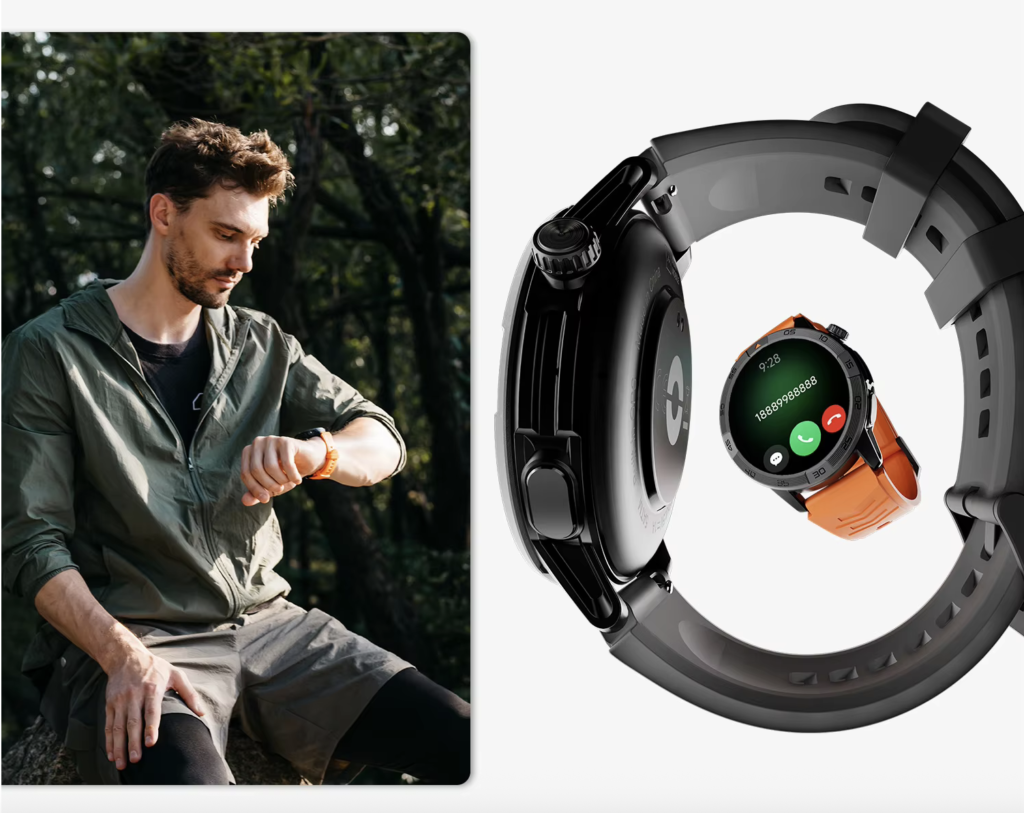
These features use power, but they are also the reason to own a smartwatch.
The goal is not to avoid them. The goal is to have enough battery capacity that using them does not create immediate charging anxiety.
Sunday: Charge When It Suits You
Perhaps Sunday evening becomes your preferred charging time. Perhaps the watch still has enough power and you wait longer.
Either way, charging becomes a deliberate choice rather than a nightly emergency.
That change sounds small. Over months of use, it can determine whether the watch stays on your wrist or ends up forgotten in a drawer.
Where the Omarek Smartwatch Enters the Story
The Omarek Smart Watch for Men and Women is relevant here because it is designed around a rated battery life of up to 30 days rather than a daily charging cycle.
It uses a 370mAh battery and is currently listed at $150 with free shipping.
The watch does not rely on battery life alone.
Its 1.43-inch AMOLED touchscreen is designed for clear everyday viewing. Bluetooth calling allows users to make and receive calls from the wrist while the paired phone is nearby.
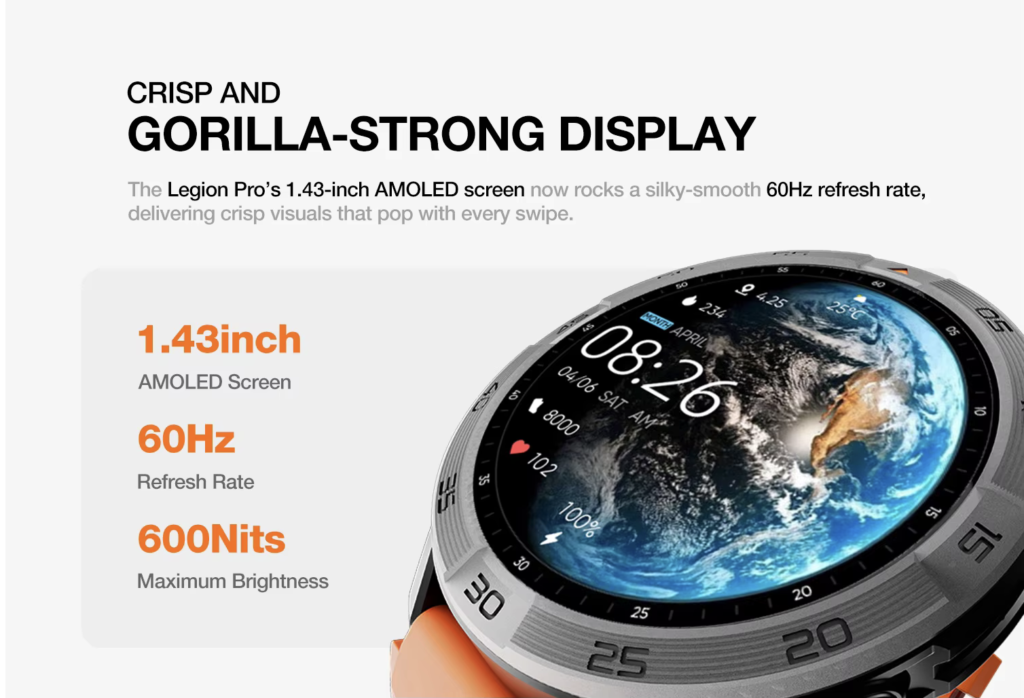
Built-in GPS and offline maps support walking, running, hiking, and travel. The watch also includes notifications, alarms, calendar functions, music controls, sleep tracking, heart-rate monitoring, steps, calories, and activity modes.
Compatibility with both iOS and Android makes it an option for people who do not want their watch tied permanently to one phone brand.
IP68 and 5ATM ratings add protection for common daily exposure, although users should still follow the product’s water-use and care instructions.
The point is not that every owner will use every feature every day.
The point is that choosing longer battery life does not require settling for a watch that only tells the time and counts steps.
A person who mainly wants notifications and sleep tracking can keep the routine simple. Someone with a busier day can add occasional calls, workouts, or navigation.
The watch has enough everyday tools to serve different routines without turning battery life into its only reason to exist.
What “Up to 30 Days” Does Not Promise
Battery claims need context.
“Up to 30 days” describes a maximum rated result. It is not a guarantee that every user will go exactly one month between charges.
A watch used mostly for time checks, steps, and occasional notifications will consume power differently from one used for long Bluetooth calls, daily GPS workouts, maximum brightness, and frequent screen wake-ups.
Always-on display settings and continuous monitoring can also shorten runtime.
That does not make the rating meaningless. It means the useful benefit is the larger charging window, not an exact calendar promise.
Bluetooth calling has another practical limit.
This model is not listed as an LTE or cellular watch, so the connected phone needs to stay within Bluetooth range. It can make answering a call more convenient, but it does not replace the phone during a run across town or a full day away from it.
The health and activity tools should also be treated as general wellness features, not medical devices.
Serious athletes who need advanced training load, recovery analysis, or specialized performance metrics may prefer a dedicated sports watch.
There are currently no customer reviews displayed on the product page. Buyers who rely on owner feedback should consider that and review the store’s shipping, warranty, and return terms before ordering.
For a more detailed explanation of realistic runtime, see what it means when a smartwatch battery lasts 30 days.
Who Will Notice the Difference Most
The people most likely to appreciate this watch are not necessarily technology enthusiasts. They are people whose days already contain enough small tasks.
A frequent traveler will notice that short trips require less cable planning.
A warehouse or delivery worker may appreciate a watch that is less likely to need attention between long shifts.
An office worker may value receiving calls and calendar reminders without adding another daily charge to the evening routine.
Sleep-tracking users may notice the difference most clearly. Longer endurance gives them more freedom to wear the watch overnight and choose a convenient daytime charging window.
It may also suit someone who previously abandoned a smartwatch.
If the old device ended up in a drawer because daily charging kept breaking the wearing habit, a longer-lasting model addresses the real reason it stopped being useful.
On the other hand, someone who wants independent cellular calling, a large third-party app store, advanced medical-style features, or deep integration with one phone ecosystem may be happier with another watch, even if that means charging more often.
A Quieter Kind of Convenience
The best technology does not always demand attention.
Sometimes it works quietly, stays ready, and removes one repeated task from the day.
For people surrounded by charging cables, the appeal of the Omarek watch is not simply its 370mAh battery or its up-to-30-day rating.
It is the possibility of wearing a smartwatch through work, sleep, exercise, travel, and changing plans without treating the charger as part of the daily routine.
A smartwatch for people who hate charging devices should still provide the features that make a watch worth wearing. Bluetooth calls, GPS, offline maps, an AMOLED display, notifications, and everyday tracking give this model practical value beyond battery life.
It will still need charging. Heavy use will still shorten runtime.
But it is designed to ask for power less often, and that can make it easier to keep using every day.
Ready to remove one device from the nightly charging lineup? Explore the Omarek 30-day smartwatch with GPS and Bluetooth calling and see whether a lower-maintenance watch fits your routine.