
At 7:00 a.m., six people put on a smartwatch before work.
One is heading to an office. Another is starting a warehouse shift. A delivery driver is loading the first packages of the day. A truck driver is preparing for a multi-day route. A field technician is checking equipment before leaving the shop. A nurse is beginning a 12-hour shift.
They all want long battery life, but they do not need the same watch experience.
The best smartwatch for work without charging daily should match the conditions of the job. It may mean calendar alerts and comfort, outdoor visibility, quick call access, or enough reserve for overtime.
This guide helps you choose by work style rather than by one impressive battery number.
Start With Your Workday, Not the Specification List
Before comparing features, answer three questions.
Do You Work Mostly at a Desk or Stay in Motion?
Desk workers usually interact with the watch in short, controlled moments. They may check a calendar alert, identify a caller, or silence a notification during a meeting.
Mobile and physical workers use the watch differently. They may be carrying boxes, entering and leaving vehicles, working outdoors, wearing gloves, or moving between job sites. Screen visibility, secure fit, and brief hands-busy interactions become more important.
Can You Charge Every Evening?
Some workers return to the same home and schedule each night. Others work rotating shifts, sleep away from home, travel between locations, or finish at unpredictable hours.
If charging is easy and consistent, a short-battery watch may be manageable. If workdays change constantly, multi-week battery potential creates a much safer buffer.
What Must the Watch Do During Work?
Choose the two or three functions that matter most.
An office worker may prioritize calendar alerts and comfort. A warehouse employee may want caller visibility and activity tracking. A delivery driver may need outdoor readability. A truck driver may care most about multi-day battery life and sleep tracking between routes.
The right watch is not the one with the longest feature list. It is the one that keeps your most useful features available through the full work cycle.
Choose Your Work Route
Route 1: You Work at a Desk, in Meetings, or Between Offices
Your smartwatch should behave like a quiet assistant.
It needs to show the next meeting without forcing you to open your phone. It should identify calls, deliver selected messages, and remain comfortable while typing, commuting, and wearing a shirt cuff.
Battery life still matters because office use rarely ends at the office. The watch may continue through the commute home, an evening workout, and overnight sleep tracking.
The most important features are:
- Calendar and reminder support
- Clear but discreet notifications
- A professional-looking display
- Comfortable all-day wear
- Bluetooth calling for short conversations
- Enough battery for work, commuting, exercise, and sleep
Avoid sending every phone notification to the wrist. A work watch is more useful when it filters interruptions rather than multiplying them.
The dedicated guide to the best battery smartwatch for office workers explores meeting alerts, professional appearance, commuting, and desk comfort in more detail.
Route 2: You Work in a Warehouse or Other Fixed Physical Workplace
A warehouse worker may cover thousands of steps, handle packages, work around noise, and keep the phone in a pocket or designated area.
The watch should make important information easier to notice without requiring long screen interaction. Caller identification, strong vibration, alarms, and shift reminders may matter more than advanced apps.
Battery reserve becomes important during overtime and consecutive shifts. A watch that needs charging after every workday is easy to forget when schedules change.
Look for:
- A secure and comfortable strap
- Clear caller and alert visibility
- Battery life that covers overtime
- Step and activity tracking
- Water and dust protection for everyday exposure
- Simple controls that do not distract from the task
A smartwatch is never a substitute for workplace safety procedures. It should not be used near machinery or during lifting when looking at the screen could create risk. Employer rules always come first.
For a floor-specific view, see the guide to a long-battery smartwatch for warehouse workers.
Route 3: You Spend the Day Making Deliveries
Delivery work combines driving, walking, customer calls, route changes, outdoor light, weather, and repeated vehicle entry.
This job can be demanding on a smartwatch battery. The display may wake frequently, Bluetooth stays connected, activity tracking runs throughout the shift, and GPS may be used during walking portions of the route.
The watch is most useful when it supports quick interactions while the driver is parked or walking. It may show an incoming customer call, a dispatch alert, the time between stops, or the battery level before overtime begins.
Prioritize:
- Outdoor-readable display
- Long battery reserve
- Bluetooth calling with the phone nearby
- Selected dispatch and customer alerts
- GPS for appropriate walking use
- Activity tracking across the route
- Water protection for rain and sweat
The watch should not replace the delivery app or vehicle navigation, and it should never be operated while driving.
The full-shift smartwatch guide for delivery drivers follows a route from morning preparation through overtime.
Route 4: You Drive Long Routes or Spend Nights Away From Home
Truck drivers need a different kind of reliability.
The watch may stay on the wrist across several days, overnight stops, irregular sleep periods, and changing route conditions. Charging access may exist in the cab, but outlet space and cable management are already shared with phones, headsets, navigation equipment, tablets, and other devices.
Useful features include selected alerts, alarms, brief calls while parked, movement reminders during suitable stops, and sleep tracking during off-duty periods.
The priorities are:
- Multi-day battery life
- Low-maintenance notifications
- Bluetooth calling while safely parked
- Sleep and activity tracking
- A readable display
- Simple reminders
- GPS for personal walking use, not commercial routing
A smartwatch cannot replace an ELD, truck-specific navigation, required rest, or safe-driving judgment. It should remain passive while the truck is moving.
The long-battery smartwatch guide for truck drivers addresses road safety, multi-day routes, and navigation limits directly.
Route 5: You Work Outdoors or Move Between Job Sites
Field technicians, inspectors, contractors, and other mobile workers need information that remains readable away from a desk.
GPS and offline maps may help with basic orientation while stopped. Water resistance can help with rain, sweat, or routine splashes. A bright display matters in daylight, but higher brightness also increases battery use.
The ideal field-work watch should balance:
- Outdoor readability
- GPS and offline maps
- Water protection
- Long battery reserve
- Short wrist calls
- Reliable alarms and notifications
- Compatibility with the worker’s phone
General smartwatch maps should not replace specialized navigation, site plans, safety equipment, or employer-required tools.
Workers who need certified impact, chemical, heat, or electrical protection should choose equipment specifically approved for those conditions. Consumer water ratings are not industrial certifications.
Route 6: You Work 10-, 12-, or 16-Hour Shifts
Long-shift workers need battery reserve more than a perfect advertised maximum.
A normal shift can become overtime. The commute home may add another hour. The watch may still be needed for an evening call, alarm, or sleep tracking after work.
The best setup focuses on:
- Comfort during extended wear
- Reliable priority alerts
- Enough power for overtime
- Short Bluetooth calls
- Moderate display brightness
- Sleep tracking after the shift
- A charging schedule that does not interrupt rest
A watch rated for weeks can offer breathing room when several long shifts run together. Actual runtime will still depend on calls, GPS, brightness, notifications, and sensor settings.
Read the dedicated guide to a smartwatch battery that lasts through long shifts for an hour-by-hour workday scenario.
The Four Features Every Work Style Shares
Different jobs create different priorities, but four requirements appear across nearly every work environment.
Battery Reserve
The watch should have enough power for the shift, commute, schedule changes, and the time before the next convenient charge.
“Up to 30 days” should be read as a maximum, not a guaranteed result. Heavy GPS, long wrist calls, high brightness, and constant display activity reduce runtime.
Readable Information
Workers need to recognize the time, caller, reminder, or battery status quickly. A clear display is more valuable than a crowded watch face filled with tiny information.
Controlled Notifications
A work smartwatch should reduce phone checking without becoming a new source of distraction. Allow alerts from direct contacts, scheduling tools, dispatch systems, or other essential apps. Silence the rest.
Comfortable, Appropriate Wear
The watch must remain comfortable for the full shift and safe for the work environment. Some workplaces restrict watches around machinery, sterile areas, food preparation, electrical systems, or secure facilities.
No battery feature overrides employer policy or job-site safety requirements.
Where One Versatile Smartwatch Fits
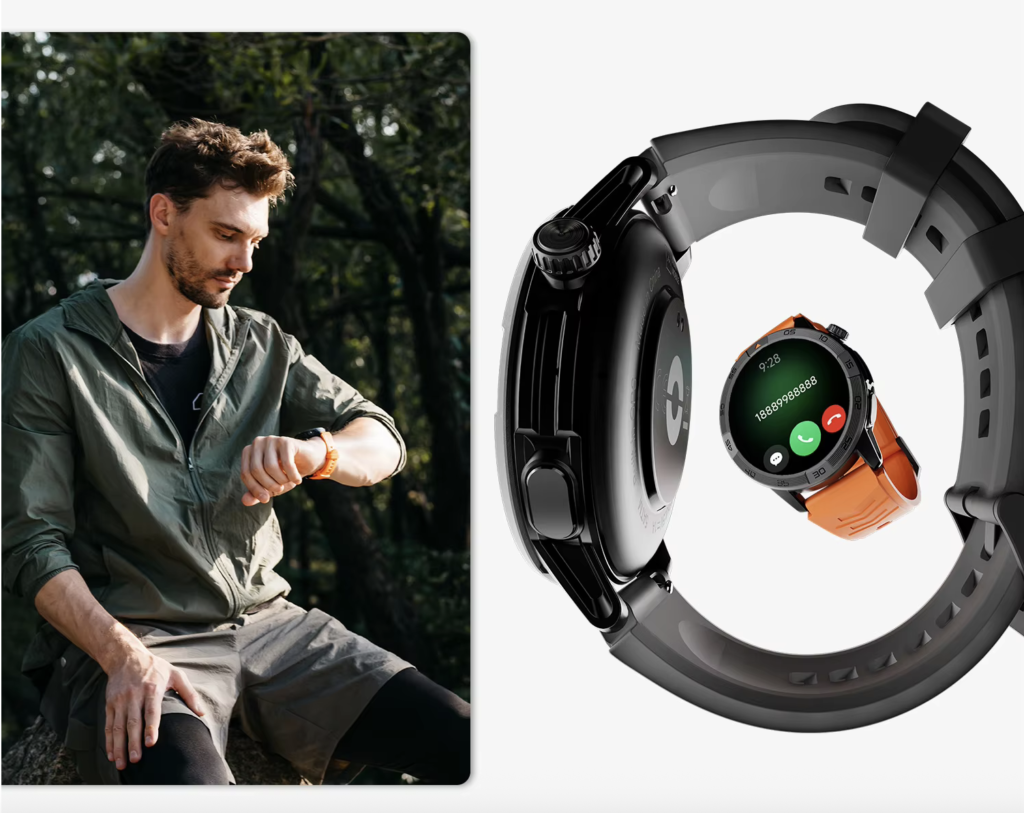
A current long-battery smartwatch combines an advertised battery life of up to 30 days with Bluetooth calling, built-in GPS, offline maps, and a 1.43-inch AMOLED touchscreen.
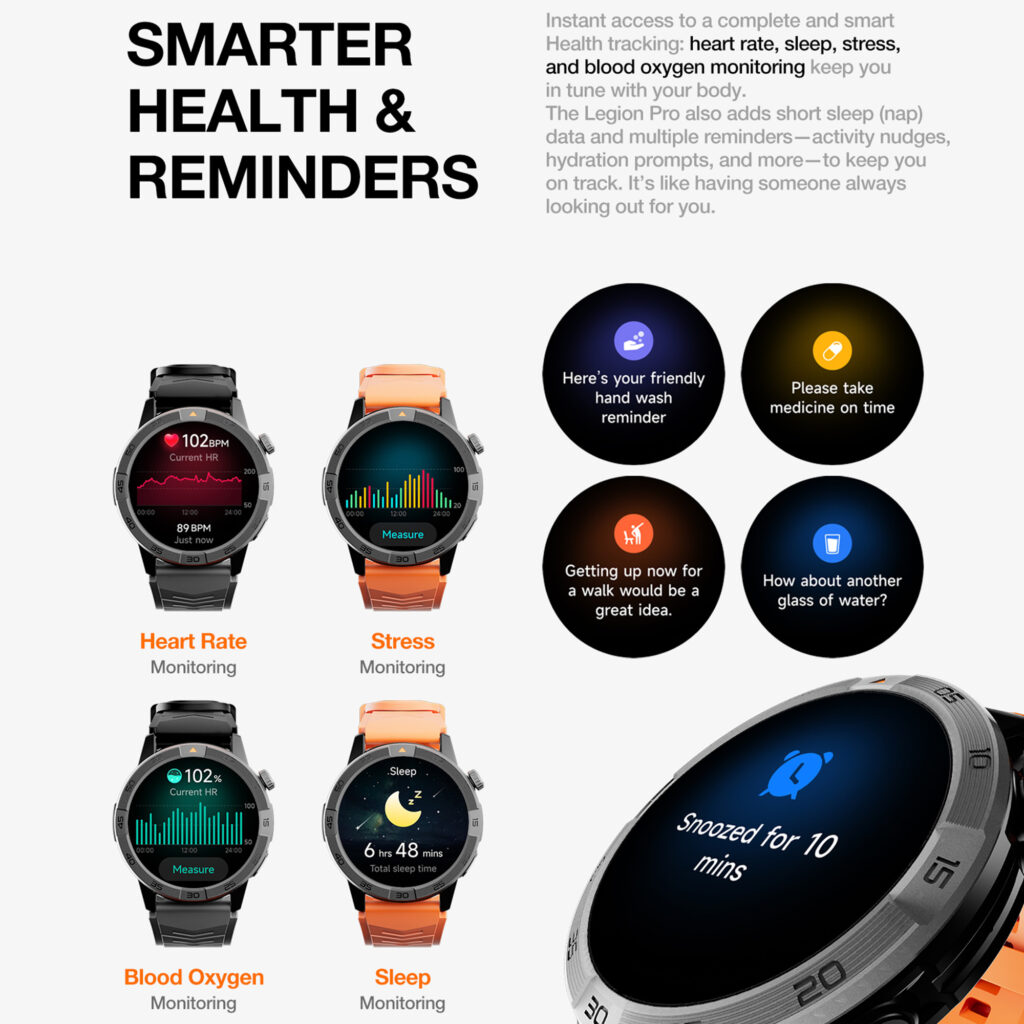
It also provides notifications, alarms, calendar functions, music control, sleep tracking, heart-rate monitoring, step and calorie estimates, activity modes, and compatibility with iOS and Android. The listing states IP68 and 5ATM protection.
That feature mix gives it a broad work role.
An office worker can use calendar reminders and short calls. A warehouse worker can prioritize alerts and activity tracking. A delivery driver can benefit from outdoor readability and battery reserve. A truck driver may value the longer charging window and overnight tracking. A field worker can use GPS or offline maps while safely stopped.
The product is currently listed at $150, placing it below many premium ecosystem-focused watches.
Its main appeal is not specialization. It is the ability to cover several common work needs in one device without being designed around nightly charging.
Build a Workweek Battery Plan
A long-battery watch still benefits from deliberate settings.
For an Indoor Workweek
Use moderate brightness, raise-to-wake, calendar alerts, direct messages, and occasional calls. Disable promotional and social notifications.
For a Mobile Workweek
Increase brightness only when outdoor visibility requires it. Download maps before leaving. Stop GPS after the route or activity ends.
For an Overtime Week
Reduce unnecessary screen wake-ups, keep calls brief, and choose a predictable charging window before the battery becomes urgent.
For Overnight or Multi-Day Work
Pack the charger for longer travel even when you may not need it. Use sleep tracking if it adds value, but remember that consumer wellness data does not determine fitness for duty.
The goal is not to disable every useful feature. It is to stop low-value background activity from consuming power needed for the workday.
When a Specialized Watch Is the Better Choice
One versatile smartwatch will not fit every profession.
Choose a different category when you need:
- Independent LTE calling without a nearby phone
- Certified industrial impact or chemical protection
- Commercial truck navigation or ELD functions
- Medical-grade measurements
- Advanced running, cycling, or endurance analysis
- Employer-specific software integration
- A very small wearable for tight equipment clearances
- A large third-party app ecosystem
The featured watch also currently has no customer reviews displayed on the product page. Buyers who depend heavily on owner feedback should consider that and review the shipping, return, and warranty terms before ordering.
Your Work-Style Decision
Choose the watch by the problem you need it to solve.
Choose for office work when calendar alerts, comfort, appearance, and quiet communication matter most.
Choose for warehouse work when battery reserve, secure wear, caller visibility, and activity tracking are the priority.
Choose for delivery work when outdoor readability, brief calls, GPS support, and overtime battery matter.
Choose for trucking when multi-day power, restrained alerts, and off-duty sleep tracking are more important than apps.
Choose for fieldwork when GPS, water protection, and daylight visibility support a mobile job.
Choose for long shifts when the watch must remain useful after the scheduled workday ends.
This is the role of a work-content hub: identify your job conditions first, then move to the guide built around that environment.
Final Work-Focused Recommendation
The best smartwatch for work without charging daily is not defined by one profession or one battery number. It is the watch that keeps the right features available through the conditions of your job.
A versatile 30-day-rated smartwatch makes the strongest case for workers who want Bluetooth calling, GPS, offline maps, an AMOLED display, notifications, basic wellness tracking, and compatibility with both major phone platforms.
It is especially relevant when daily charging feels unrealistic, but specialized LTE, industrial certification, medical monitoring, or advanced athletic tools are not required.
Compare the watch with your actual shift—not an ideal product demo. Consider where you work, how often you move, whether your hands are occupied, how long you stay away from a charger, and which alerts genuinely matter.
Explore the 30-day smartwatch with GPS and Bluetooth calling and decide whether its balanced feature set fits your workweek.