
“Premium” appears above the watch in oversized lettering.
Nothing beside it explains what the word means.
A wedding photographer in Charleston can see a polished case, a bright display, and several colorful icons. None of those images confirms how calling works, what the case is made from, how battery duration was measured, or whether the watch supports the phone and apps used during client work.
That is the problem an affordable smartwatch with premium features comparison must solve. Do not begin by counting claims. Place each one on an evidence ladder and see how high it can climb.
A claim that remains on the bottom rung is still advertising, no matter how attractive the watch looks.
Build the Evidence Ladder Before Comparing Watches
Use the same five rungs for every important claim:
- Marketing claim
- Clear feature definition
- Visible evidence
- Documented specification
- Real-use confirmation
Each rung answers a different question.
The first records what the seller says. The second forces the wording to mean something specific. The third checks what can actually be seen. The fourth looks for model-specific documentation. The fifth tests whether the feature performs during the buyer’s real routine.
Not every claim needs to reach the top.
Band color may be confirmed by a clear image. Battery duration cannot. A calling icon may show that a call interface exists, but it cannot prove speaker quality, phone independence, or reliable connection during an event.
The evidence requirement must match the claim.
Use four confidence ratings:
- High Confidence — the claim is clearly defined and supported by the evidence it requires.
- Conditional Confidence — documentation exists, but one practical condition still needs confirmation.
- Test Required — the feature may be real, but the buyer must verify it on the actual phone or workday.
- Marketing Only — the wording remains vague or unsupported.
Do not average the ratings at the end. One unsupported required function can matter more than several well-proven decorative details.
Start With the Exact Marketing Language
Write down the wording exactly as it appears.
Possible examples include:
- Premium display
- Advanced calling
- Luxury metal body
- Long-lasting battery
- Professional design
- Broad phone compatibility
- High-end health tracking
Avoid improving the seller’s language.
If the listing says “metal design,” do not rewrite it as “stainless-steel case.” If it says “call function,” do not assume independent cellular calling. When the battery graphic says “up to thirty days,” do not turn that into thirty days of ordinary active use.
The claim belongs on the first rung exactly as presented.
This matters because vague language often gains strength when buyers repeat it in more specific words. The evidence ladder prevents that change.
For the Charleston photographer, each claim should connect to a real need:
- Can the display be checked quickly during a bright outdoor ceremony?
- Can a vendor call be noticed without taking a phone out beside the couple?
- Does the watch look appropriate during a client consultation?
- Can the battery support a long event day?
- Will reminders and alerts work with the photographer’s phone?
A claim that does not affect those needs may not deserve space in the comparison.
Define What “Premium” Means for Each Feature
The word “premium” is not a specification.
It can refer to appearance, material, performance, software, or simply a higher position in a product lineup. The buyer must replace the broad label with a testable definition.
Consider a “premium display” claim. It might refer to:
- AMOLED panel technology
- Screen size
- Resolution
- Refresh rate
- Maximum brightness
- Outdoor visibility
- Touch response
- Thin bezels
Those are different promises.
A “premium calling” claim could mean:
- Incoming-call alerts
- Caller identification
- Rejecting a call
- Answering through the watch
- Speaking through a watch microphone and speaker
- Dialing recent contacts
- Independent cellular calling
Again, the meanings are not interchangeable.
The photographer should write one sentence beneath each claim:
This claim means the watch should be able to ______ under ______ conditions.
For example:
The display claim means the timeline should remain readable outside during an afternoon ceremony.
Or:
The calling claim means the photographer should be able to identify and answer a short vendor call while the paired phone remains nearby.
If the blank cannot be completed clearly, the claim cannot move beyond the definition rung.
Decide What Visible Evidence Can Actually Prove
Product photography is useful, but its limits need to remain visible.
Images may confirm:
- Case shape
- Button placement
- Crown position
- Band color
- General watch-face layout
- Apparent screen proportions
- Presence of speaker or microphone openings
- Charging-contact style
They may also help the photographer judge whether the watch looks appropriate beside formal clothing, camera straps, or client-facing attire.
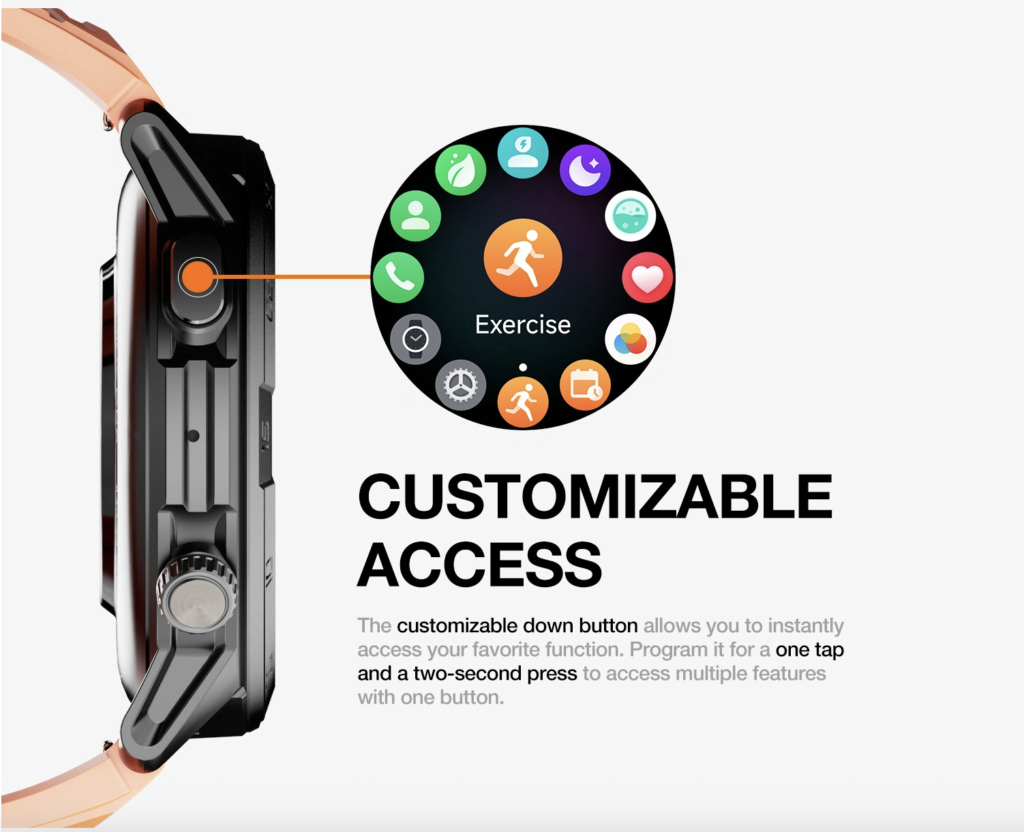
Still, a polished image cannot confirm:
- Battery life
- Calling clarity
- Sensor accuracy
- App compatibility
- Water resistance
- Exact case material
- Scratch resistance
- Independent mobile service
- Outdoor readability in Charleston sun
Rendered images can make bezels look thinner, colors brighter, and surfaces more refined than they appear in ordinary use.
Visible evidence should therefore answer only visible questions.
A watch may look metallic without proving that the entire case is metal. A phone icon may appear on the display without proving that calls work away from the paired phone. A full battery symbol says nothing about how long the charge lasts.
When an image is doing more work than it can support, stop the claim at the visible-evidence rung.
Put the Display Claim on the Ladder
Display claims are common because they are easy to promote visually.

Begin by recording the exact language:
- AMOLED display
- Crystal-clear screen
- Smooth refresh rate
- Bright outdoor view
- High-resolution display
- Premium visual experience
Then separate what can be documented from what must be tested.
Model-specific documentation may confirm:
- Panel type
- Screen size
- Resolution
- Refresh rate
- Maximum brightness
- Always-on-display support
Real use must confirm whether the screen works for the photographer.
A Charleston wedding day can move through very different viewing conditions:
- Bright sun near a waterfront venue
- Shade beneath an outdoor reception tent
- A dim church interior
- A dark ballroom
- A quick timeline check while carrying camera equipment
The watch may have a strong specification and still be difficult to read at the required angle. Another display may look less impressive on paper but remain clear enough for short schedule checks.
Use this confidence rule:
- Exact specification plus successful event-day test: High Confidence
- Exact specification without outdoor testing: Conditional Confidence
- Attractive product render with no supporting details: Marketing Only
Do not call the display premium because the watch face looks colorful in a graphic.
Make the Calling Claim Explain the Phone’s Role
Calling is one of the easiest claims to misunderstand.
A product image may show green and red call buttons. That confirms only that a calling interface is being presented.
It does not explain:
- Whether the paired phone must remain nearby
- Whether the watch can place calls independently
- Which phones are supported
- Whether a companion app is required
- How loud the speaker is
- How well the microphone works
- What happens when Bluetooth disconnects
- Whether caller information appears consistently
Unless independent cellular service is documented for the exact model, treat Bluetooth calling as phone-assisted.
A suitable test for the Charleston photographer is short and specific.
During a venue setup period, the phone remains nearby inside a camera bag. A vendor calls about arrival timing. The photographer should be able to notice the call, identify the caller, answer briefly, and return attention to the event.
That test does not need to prove that the watch can replace a phone conversation. It only needs to confirm the promised calling function in the intended situation.
Buyers who are unsure whether the watch still relies on the paired phone should verify what happens when the phone is not nearby before giving the claim a high confidence rating.
Rate the evidence as follows:
- Calling method documented and successful test completed: High Confidence
- Phone-assisted calling documented but sound quality untested: Conditional Confidence
- Calling shown only through icons or promotional wording: Test Required
- Independent calling implied without documentation: Marketing Only
Separate Material Appearance From Material Proof
An affordable watch may look polished enough for client work without using the same construction as a more expensive model.
That is not a problem. The problem begins when appearance is treated as proof of material.
Record the exact wording:
- Metal body
- Metal frame
- Luxury finish
- Rugged case
- Professional construction
- High-end design
Next, identify which part the claim describes.
The watch may have:
- A metal bezel
- A metal crown
- A coated frame
- A polymer case back
- A silicone band
- A decorative metallic surface
A metal-looking bezel does not prove that the entire case is metal.
Model-specific documentation should identify the component and material. Look for terms such as aluminum alloy, zinc alloy, stainless steel, polymer, silicone, or a named glass type.
Images can help assess style. Documentation supports composition. Real use addresses comfort and durability.
For the wedding photographer, test the watch while:
- Wearing formal client-meeting clothing
- Moving camera straps across the wrist
- Carrying equipment bags
- Working in humid coastal conditions
- Bending and rotating the wrist for several hours
- Moving between indoor and outdoor venues
Physical feel is one evidence category, not the entire proof system.
A watch can feel substantial without confirming its alloy. It can also use modest materials while remaining comfortable, attractive, and appropriate for professional work.
Break the Battery Claim Into Conditions
Battery claims require more than a large number.
Record whether the claim refers to:
- Standby time
- Light use
- Typical use
- Heavy use
- Calling use
- Workout tracking
- Always-on display
- Reduced-use mode
“Up to thirty days” may describe a different condition from ordinary use with alerts, screen checks, and calls.
Look for documentation covering:
- Battery capacity
- Screen settings
- Notification frequency
- Calling frequency
- Tracking conditions
- Always-on-display status
- Test duration
- Standby definition
- Charging method
- Charging time
Then apply a Charleston event-day test.
A realistic wedding schedule may begin with vendor messages in the morning and continue through venue travel, timeline reminders, ceremony coverage, reception coordination, and a late drive home.
The photographer does not need the watch to reach an advertised maximum. The watch needs to remain useful through the required period with the selected functions enabled.
Possible confidence ratings:
- Conditions documented and event-day performance confirmed: High Confidence
- Capacity and broad estimate documented but settings unclear: Conditional Confidence
- Large duration claim with no test conditions: Marketing Only
Once the claim has enough support, the buyer can calculate whether those proven functions produce useful ownership value. Until then, an unsupported battery number should not enter the value calculation.
Verify Compatibility One Function at a Time
“Works with Android and iPhone” may describe basic pairing rather than complete feature support.
Define the required workflow:
- Calendar reminders arrive
- Incoming calls appear
- Caller information is visible
- Priority notifications transfer
- The companion app installs
- Required permissions can be granted
- The watch reconnects after temporary separation
- The selected functions work on the photographer’s exact phone
Check the documented requirements:
- Supported operating-system versions
- Companion-app name
- Account requirement
- Bluetooth requirement
- Permission list
- Regional limitations
- Differences between phone platforms
- Features excluded from one operating system
A phone image beside a watch does not prove compatibility.
The real-use test should use the photographer’s own phone, software version, calendar, and notification settings. A generic demonstration on another device is not enough.
Rate the claim:
- Required workflow documented and tested: High Confidence
- Pairing supported but one important function untested: Conditional Confidence
- App information exists but platform details are incomplete: Test Required
- Compatibility stated without model or software requirements: Marketing Only
Compare the Claims in One Evidence Sheet
Use one row for each claim that could influence the purchase.
| Premium claim | Clear definition | Visible evidence | Documentation | Real-use test | Unsupported gap | Confidence |
|---|---|---|---|---|---|---|
| Display | Record | Record | Record | Record | Record | Rate |
| Calling | Record | Record | Record | Record | Record | Rate |
| Materials | Record | Record | Record | Record | Record | Rate |
| Battery | Record | Record | Record | Record | Record | Rate |
| Compatibility | Record | Record | Record | Record | Record | Rate |
Do not reward claim quantity.
One watch may advertise ten premium features but support only three with strong evidence. Another may make five narrower claims and document all of them.
The second presentation is more useful even though it appears less ambitious.
The photographer should also mark the consequence of failure.
A vague band-color claim carries little risk. Unsupported calling, battery, or compatibility claims can affect an event day. Those functions need a higher evidence threshold.
Keep unknowns visible. Write “not documented” instead of filling the gap with an assumption.
Convert Evidence Strength Into a Buying Decision
The final decision should depend on required claims, not promotional density.
High Confidence
Use this rating when:
- The claim is specific
- The model matches the documentation
- The required specification is available
- Real-use testing succeeds where needed
- No important gap remains
Conditional Confidence
Choose this rating when:
- The claim is defined
- Documentation supports it
- One practical condition still needs confirmation
- The remaining uncertainty is acceptable
Test Required
Apply this result when:
- The feature probably exists
- Documentation does not answer the practical question
- The exact phone, venue, or workday must be used
- The buyer should not rely on the claim yet
Marketing Only
Use this rating when:
- “Premium” is undefined
- The image is decorative rather than evidential
- Model-specific specifications are missing
- A performance promise has no test conditions
- Compatibility is described too broadly
- The seller’s wording is stronger than the proof
A premium feature becomes a buying reason only when it reaches the rung appropriate to that type of claim.
Readers comparing whether those verified functions deserve a higher price can measure which premium features genuinely justify their cost. The evidence ladder comes first. Price judgment follows.
Questions About Smartwatch Claims and Evidence
Does a product image prove a premium feature?
Only when the feature is directly visible, such as color, button placement, or general shape. An image cannot prove battery duration, calling quality, compatibility, material composition, or sensor accuracy.
Is a documented specification enough?
It depends on the claim. Screen size and charging method may be settled by documentation. Comfort, outdoor readability, calling quality, and ordinary battery performance still need real-use confirmation.
What should I do when “premium” is not defined?
Leave the claim on the marketing rung. Do not create a favorable definition for the seller.
Can customer reviews count as proof?
Reviews can reveal problems worth testing, but they may involve different phones, settings, product versions, and expectations. They should support verification, not replace it.
How should phone compatibility be verified?
Check the supported operating-system versions and companion-app requirements, then test the required functions on the exact phone.
Does a metal-looking watch prove metal construction?
No. A metallic appearance or rendered image does not identify the underlying material. Look for a model-specific description of the bezel, frame, case, buttons, and back.
When does a premium claim become a buying reason?
It becomes a buying reason when it is clearly defined and supported by the level of evidence required for its importance and risk.
Leave Unsupported Claims at the Bottom
The “premium” label from the opening has not changed.
It is still large. The product images are still polished. The difference is that the Charleston photographer no longer treats presentation as proof.
The display claim has been defined. Calling requirements have been traced to the phone. Material wording has been separated from appearance. Battery conditions have been examined. Compatibility has been tested against the actual client-work routine.
Some claims may reach the top rung.
Others may stop at documentation, wait for a real-use test, or remain beside the marketing language that created them.
An affordable watch does not need to duplicate every expensive model. Its required claims need to be clear, supported, and useful during consultations, travel, and event days.
Write each important claim on the first rung, require the correct type of proof at every step, and compare the advertised functions with the evidence presented for the exact watch before allowing the premium label to influence the purchase.
Any claim that cannot climb the evidence ladder remains marketing, not a buying reason.