
Two red lines cross on an empty chart.
The vertical line marks the minimum call capability. The horizontal line marks the minimum battery reserve. Only the upper-right quadrant qualifies.
A shopper looking for the best smartwatch for battery and calls under 150 cannot choose the strongest caller and the longest-lasting watch as separate winners. The same watch must cross both minimum lines during the same period of use.
For an urgent-care referral coordinator in Little Rock, Arkansas, that means handling brief referral and appointment calls while preserving enough afternoon power for notifications, follow-up alerts, and another priority contact attempt.
Set both thresholds before plotting the first candidate.
Build the Four-Quadrant Battery-and-Call Chart
The chart uses two axes.
The horizontal axis measures how completely the watch handles the required call action. The vertical axis measures the usable battery reserve left after the expected calls.
| Quadrant | Call threshold | Battery threshold | Meaning |
|---|---|---|---|
| Upper right | Passed | Passed | Dual-Threshold Zone |
| Upper left | Failed | Passed | Battery-Only Winner |
| Lower right | Passed | Failed | Calling-Only Winner |
| Lower left | Failed | Failed | Below Both Lines |
This method is not a weighted scorecard. Strong performance on one axis cannot compensate for failure on the other.
A watch with excellent endurance but incomplete wrist calling remains outside the qualifying zone. The same rule removes a capable calling watch that leaves too little power for the rest of the required period.
Draw the Minimum Call-Capability Line
Begin by finishing one sentence:
The watch must let me ______________________________.
The Little Rock coordinator might write:
The watch must let me identify, answer, complete, and end one brief referral call from the wrist while the paired phone remains nearby.
That requirement may include several stages:
- The incoming alert reaches the watch
- The caller’s identity is visible
- The answer control works
- The remote caller hears the wearer
- The wearer hears the remote caller
- The conversation can be ended from the wrist
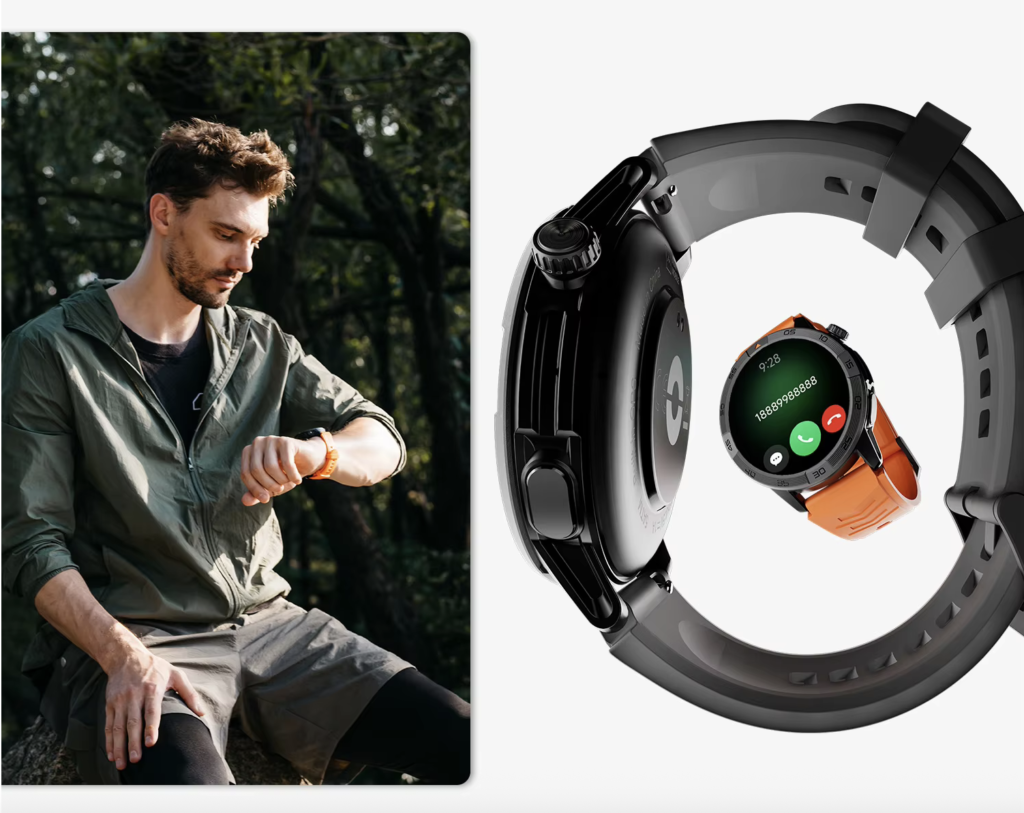
If any required stage is missing, the watch stays left of the vertical red line.
Choose the call level the buyer actually needs
Not every buyer requires the same call action.
The call-capability axis might progress through:
- Incoming-call alert only
- Caller identification and rejection
- Answer control
- Brief two-way wrist conversation
- Call initiation from contacts or a dial pad
A buyer who needs only caller identification should not use the same threshold as someone expecting a complete two-way exchange.
Readers still comparing category options can compare the wider under-$150 calling-and-battery market before fixing the exact line.
Keep call quality inside the threshold
The conversation must be understandable enough to complete the required action. This article does not rank speaker richness, maximum volume, microphone tone, or premium audio performance.
The call line asks one pass-or-fail question:
Can the watch complete the required call action under the buyer’s normal conditions?
If yes, the candidate moves right of the line. If not, it stays left.
Draw the Minimum Battery-Reserve Line
The reserve line should be set after expected call use, not before it.
Complete a second sentence:
After the required calls, the watch must still ______________________________.
For the referral coordinator:
After brief referral and appointment calls, the watch must continue delivering priority notifications through the afternoon without an emergency recharge.
The reserve may need to support:
- Priority notifications
- Another brief call
- Calendar or appointment alerts
- Time checks
- Vibration and screen activity
- The remaining hours before the next normal charge
Use a task-based reserve instead of one universal percentage
A single remaining percentage does not mean the same thing for every buyer.
Twenty percent may be adequate when charging is one hour away. The same percentage may be insufficient when the watch must stay active through the afternoon and evening.
The useful question is:
Can the remaining power complete the rest of the required period with the necessary functions still active?
A candidate that reaches the next charging opportunity passes the reserve line. One that forces an unplanned recharge stays below it.
Do not use standby duration as the reserve result

Advertised standby time may assume limited screen use, few notifications, no calls, reduced health tracking, or other low-activity conditions.
The chart should use remaining battery under the buyer’s enabled functions. Standby duration does not move a candidate upward unless the buyer’s normal routine genuinely resembles standby use.
Plot the First Candidate Without Averaging Its Strengths
Every watch receives two coordinates:
- Its position on the call-capability axis
- Its position on the remaining-reserve axis
Consider Candidate A:
| Chart condition | Candidate A |
|---|---|
| Completes the required two-way call | Yes |
| Preserves the required afternoon reserve | No |
| Final position | Lower-right quadrant |
The watch is a calling-only winner. Its call result cannot pull the battery coordinate above the horizontal line.
Do not move the candidate because it also offers GPS, health tools, sport modes, watch faces, or a bright display. Those features can be compared after qualification. They do not change either threshold.
Upper-Left Quadrant: Remove the Battery-Only Winner
A candidate enters the upper-left quadrant when its reserve passes but its required call action fails.
Possible results include:
- The watch lasts through the day but only displays call alerts
- Caller identity appears, but two-way speech is unavailable
- The wearer can reject calls but cannot answer them
- Call audio stays on the phone
- The call opens, but the wearer cannot end it from the watch
The endurance result may be excellent. It still does not solve the communication requirement.
Mark the candidate:
Battery-Only Winner: sufficient reserve, incomplete required call action.
Remove it unless the buyer intentionally lowers the call threshold. Do not rewrite the requirement merely because the battery result looks attractive.
Lower-Right Quadrant: Remove the Calling-Only Winner
A calling-only winner completes the required wrist conversation but falls below the reserve line afterward.
This may happen when:
- Afternoon notifications become uncertain
- The watch needs an earlier-than-planned recharge
- Battery-saving mode disables required functions
- Another priority call may no longer be possible
- The watch drops below the defined reserve during normal call use
The call feature succeeds at the moment of use but weakens later availability.
Calling-Only Winner: required call action completed, remaining reserve insufficient.
A complete comparison should balance call performance with practical endurance instead of treating those benefits as unrelated.
Lower-Left Quadrant: Stop Comparing the Double Failure
The lower-left quadrant contains candidates that fail both thresholds.
Examples include:
- Call alerts only, combined with frequent charging
- Two-way audio unconfirmed and weak afternoon reserve
- Unstable audio routing plus an emergency midday recharge
- Calling and notifications both becoming unreliable before the next charge
Do not continue comparing secondary features after both minimum requirements fail.
A discounted price, attractive case, or large display does not create a qualifying reason.
Below Both Lines: the candidate leaves the shortlist immediately.
Upper-Right Quadrant: Enter the Dual-Threshold Zone
A candidate qualifies only when it sits above both red lines.
For the Little Rock coordinator, the watch should:
- Receive the referral call
- Identify the caller
- Support a brief two-way exchange
- End the call from the wrist
- Continue delivering priority notifications
- Remain available through the afternoon
- Avoid an emergency recharge
The watch does not need the longest advertised battery life or the highest call-quality score in the category.
It only needs to cross both buyer-defined minimums during the same use period.
Inside the Dual-Threshold Zone: call capability and usable reserve both passed.
Border Zone: Do Not Qualify a Dot Touching the Line
Some candidates land directly on or near one threshold.
A borderline result may appear when:
- The call works once but has not been repeated
- Battery reserve reaches the minimum with no useful margin
- Notifications remain active, but another call may not be possible
- Audio routing changes during one attempt
- Reserve varies widely across similar use periods
Do not move the threshold to make the candidate pass.
Mark it:
Borderline—Repeat the Hardest Block
A small margin matters because real use can change with longer calls, heavier screen activity, more notifications, weaker phone signal, or battery aging.
Watch the Candidate Move During the Hardest Daily Block
The most revealing test combines expected calls with limited charging access.
A realistic Little Rock block may contain:
- One brief referral call
- One appointment-confirmation call
- Several priority notifications
- Normal screen and time checks
- No midday charging
- Continued availability through the afternoon
The candidate’s chart position may change during this block.
- It moves right when the required call action is confirmed.
- It moves left when audio leaves the watch or a required call stage fails.
- It moves upward when reserve exceeds the minimum.
- It moves downward when expected use pushes the battery below the line.
| Hardest-block evidence | Result |
|---|---|
| Required calls completed | Yes / No |
| Call action remained on the watch | Yes / No |
| Priority notifications stayed active | Yes / No |
| Remaining reserve passed the line | Yes / No |
| Emergency recharge became necessary | Yes / No |
| Final quadrant | __________ |
Separate call availability from continuous talk time
The coordinator needs the watch to remain available for several brief calls. That does not mean the watch must support hours of continuous conversation.
Readers can separate call availability from continuous calling before setting an unrealistic test load.
The hardest block should reflect the buyer’s normal demanding period, not an artificial stress test unrelated to the intended use.
Apply the $150 Ceiling Inside the Qualifying Quadrant
Price comparison begins after qualification.
For each watch inside the upper-right quadrant, record only:
- Exact model
- Current selling price in USD
- Whether the tested configuration matches the listing
- Phone compatibility relevant to the call path
- Whether the result can be repeated before the return deadline
Choose the lowest-priced candidate that:
- Crosses the call line
- Crosses the reserve line
- Remains qualified through the hardest block
- Works under the buyer’s phone conditions
A candidate far above the battery line is not automatically better. Extra endurance may add little value when charging is regularly available and the required reserve has already been met.
The same rule applies to call features. Dial pads, contact initiation, or other advanced controls should not increase the buying value when the buyer needs only brief incoming calls.
Complete the Little Rock Plotting Board
Set the call line
The watch must support one brief two-way referral or appointment-confirmation call from the wrist.
Set the reserve line
After expected calls, the watch must continue delivering priority notifications through the afternoon without emergency charging.
Plot Candidate A
- Call threshold: Passed / Failed
- Battery threshold: Passed / Failed
- Hardest-block result: Passed / Failed
- Final quadrant: __________
- Current price: $__________
Candidate B
- Call threshold: Passed / Failed
- Battery threshold: Passed / Failed
- Hardest-block result: Passed / Failed
- Final quadrant: __________
- Current price: $__________
Candidate C
- Call threshold: Passed / Failed
- Battery threshold: Passed / Failed
- Hardest-block result: Passed / Failed
- Final quadrant: __________
- Current price: $__________
Remove every candidate outside the upper-right quadrant. Compare price and secondary preferences only among the watches that remain.
Frequently Asked Questions
Should call performance or battery life be prioritized?
Neither should automatically receive priority when both are required. Set a minimum for each and reject any candidate that fails one of the two thresholds.
How much battery should remain after smartwatch calls?
Enough should remain to complete the required period with notifications and other necessary functions active. Use the next charging opportunity and remaining tasks instead of one universal percentage.
Does advertised standby duration count?
Not by itself. Standby estimates may involve limited calling, screen activity, notifications, GPS, or health tracking. Use reserve measured under the buyer’s normal enabled functions.
Can one weak threshold disqualify the watch?
Yes. Strong call capability cannot compensate for insufficient reserve, and long battery duration cannot compensate for an incomplete call action.
How many calls should be included in the test?
Use the number and approximate duration expected during the buyer’s hardest normal block. The Little Rock coordinator may test two brief calls rather than one continuous conversation.
What happens when a watch barely clears both lines?
Repeat the hardest block and look for a small practical margin. A candidate that passes only under ideal conditions should remain borderline.
Can the cheapest qualifying watch be the best choice?
Yes. Once both thresholds are crossed, the lowest-priced compatible candidate may offer the strongest value.
Only One Quadrant Qualifies
Return to the two crossing red lines.
The urgent-care referral coordinator needs brief referral and appointment calls without sacrificing afternoon notifications or creating an emergency charging stop.
A watch does not qualify because it dominates one axis. It qualifies only when it remains above both minimum lines during the same demanding block.
Draw the call line, draw the reserve line, remove every candidate outside the upper-right quadrant, and test whether this watch enters the dual-threshold zone before allowing one exceptional feature to decide the purchase.
The winning watch is not the strongest caller or the longest runner alone. It is the option that stays inside the intersection.