
A smartwatch can cost $79.99, $99.99, or $129.99 and still qualify as a budget model—but those prices do not buy the same experience.
Some inexpensive watches offer Bluetooth calling but need frequent charging. Others last nearly two weeks but provide a weaker communication experience. The best smartwatch under $150 with calling and battery should do both jobs well enough that you do not feel forced to choose between staying reachable and avoiding another nightly charging routine.
For most U.S. shoppers, the Amazfit Bip 6 offers the strongest overall value. The Amazfit Active 2 is the more polished choice, while the CMF Watch 3 Pro is compelling for shoppers who prioritize GPS and battery endurance.
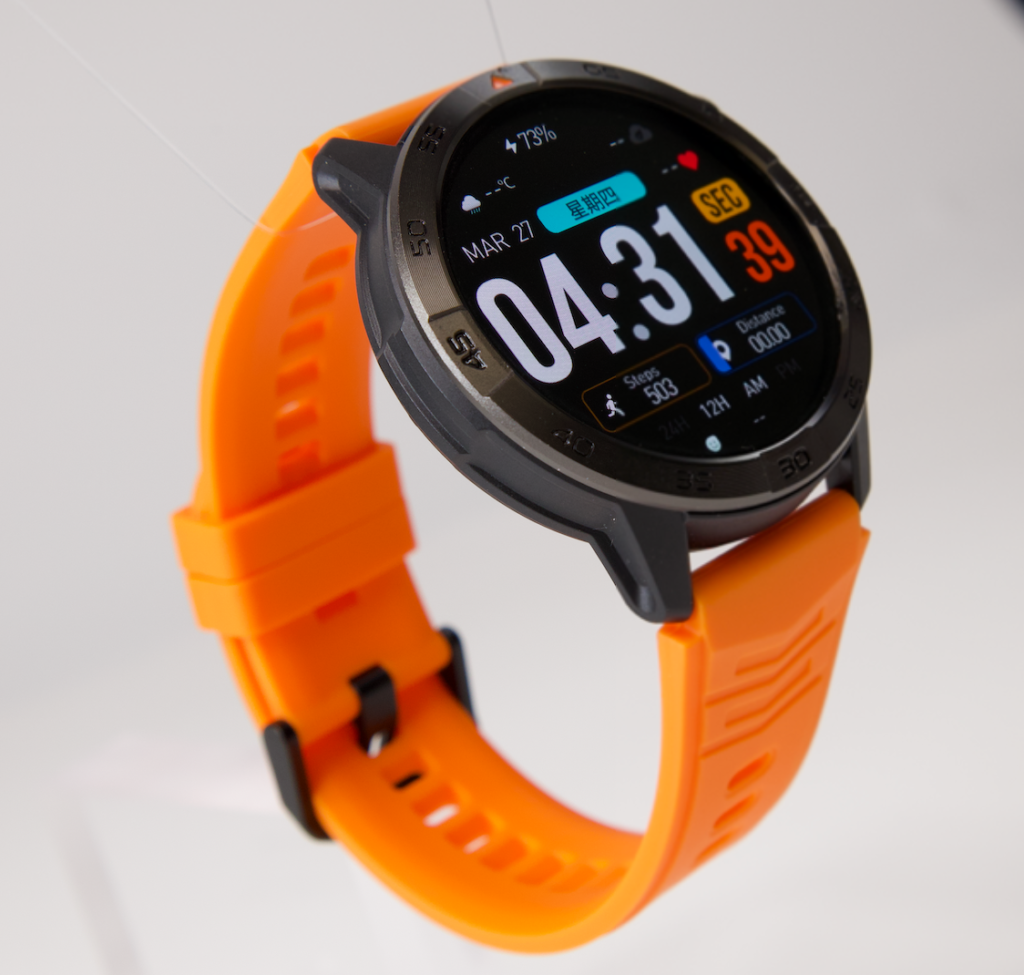
What $150 Gets U.S. Smartwatch Buyers Today
The under-$150 category has improved considerably. American shoppers no longer have to settle for a dim screen, one-day battery, and basic notification alerts simply because they are avoiding flagship prices.
A strong budget smartwatch can now include:
- Bluetooth calls from the wrist
- A built-in speaker and microphone
- AMOLED display technology
- Multi-day battery life
- Built-in GPS
- Health and activity tracking
- Sleep monitoring
- Phone notifications
- Android and iPhone compatibility
- Water and dust resistance
That sounds like a complete package, but the quality of each feature still varies.
One watch may provide a sharper display but shorter runtime. Another may offer excellent battery specifications while using a less refined companion app. A third may have built-in GPS but limited support for messages or third-party functions.
The goal is not to find the longest feature list. It is to find the combination that delivers the most practical value below the price ceiling.
Under $150 Means $149.99 or Less
For this guide, “under $150” means a listed price of $149.99 or lower before sales tax and optional accessories.
A watch priced at exactly $150 sits at the budget ceiling, but it is not technically below it. That distinction matters for shoppers following a firm spending limit.
U.S. sales tax can also push the final checkout total higher. Depending on the buyer’s state and local tax rate, a $129.99 watch may cost noticeably more by the time the order is completed.
Temporary discounts create another complication. A watch with a normal price above the limit may qualify during a legitimate sale, then fall outside the category once the promotion ends.
For that reason, budget recommendations should separate:
- Regularly priced models below $150
- Models that qualify only during a sale
- Watches priced at exactly $150
- Products that exceed the limit after required add-ons
That approach prevents a supposedly affordable recommendation from turning into a more expensive purchase at checkout.
What You Should Not Expect at This Price
Below $150, Bluetooth calling is realistic. Fully independent cellular calling is less common.
Most watches in this range use a nearby paired phone for calls. That is usually acceptable for buyers who already keep their phones in a pocket, bag, vehicle, or nearby room.
You should not automatically expect:
- Independent LTE service
- A complete third-party app store
- Premium voice-assistant integration
- Medical-grade health measurements
- Advanced athletic analytics
- Perfect call clarity in loud environments
- Years of guaranteed software support
Budget smartwatches can still provide excellent everyday value. The important step is separating useful core features from premium extras that may not fit the price.
Features Worth Paying For Below $150
A smartwatch should pass several basic tests before it earns a recommendation for calling and battery life.
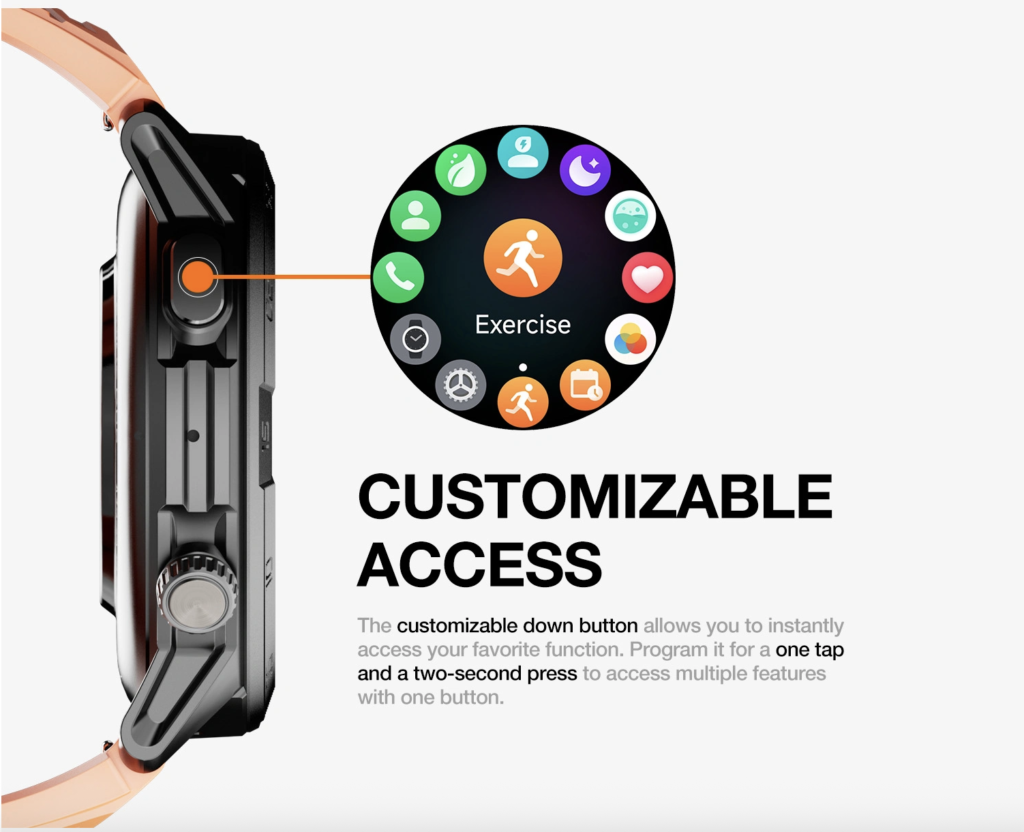
Real Calling Hardware
A call notification is not the same as a wrist conversation.
The watch should have:
- A built-in microphone
- A built-in speaker
- Incoming-call controls
- A clear caller display
- The ability to answer calls
- Stable Bluetooth connectivity
Some product listings use vague phrases such as “call reminder” or “call support.” These may mean the watch only displays an alert.
Buyers who want to understand the hardware difference can review what a speaker and microphone add to a budget calling watch.
At Least One Week of Realistic Battery Life
A watch advertised for ten or fourteen days gives the buyer more flexibility than a device that needs power every night.
However, maximum battery claims should not be treated as guaranteed everyday results. Frequent calls, high brightness, GPS tracking, an always-on display, and constant notifications can reduce runtime.
For this buying guide, a strong battery candidate should offer at least seven days of typical advertised use. That provides a reasonable buffer for real-world activity.
A buyer who values runtime above every other feature can compare the dedicated guide to long-battery smartwatches below $150.
Phone Compatibility That Matches Your Device
Budget buyers should confirm iPhone or Android compatibility before ordering.
Even when a watch supports both platforms, certain functions may differ. Android users may receive quick replies or broader message controls that are unavailable on iOS. Companion apps can also behave differently depending on background permissions and phone settings.
Check:
- Minimum operating-system version
- Companion-app requirements
- Call support
- Contact synchronization
- Notification controls
- Quick-reply availability
- Health-app integration
A cheap watch becomes poor value if the features you bought it for do not work properly with your phone.
A Screen You Can Read Easily
The display affects nearly every interaction.
An AMOLED screen usually provides strong contrast, vivid color, and clearer outdoor visibility than many basic LCD panels. Screen size matters too, especially for reading caller information and tapping answer or decline controls.
Bigger is not always better, though. A large watch may feel uncomfortable on a smaller wrist, while a compact display can make call controls harder to use.
The right display should balance readability, comfort, and battery demand.
Built-In GPS When You Actually Need It
Built-in GPS adds value for walkers, runners, travelers, and people who want route tracking without relying entirely on phone location data.
Not every buyer needs it. Someone purchasing a watch mainly for calls and notifications may prefer a lower price over advanced positioning.
But when two watches cost roughly the same, built-in GPS can make one of them a better long-term purchase.
A Return Policy You Can Use
Call quality, wrist comfort, app stability, and screen visibility are difficult to judge from a specification sheet.
A practical return policy gives U.S. consumers time to check whether:
- The speaker is loud enough
- The microphone works in their normal environment
- The strap remains comfortable
- The app stays connected
- The battery meets expectations
- Notifications arrive reliably
The lowest price is not automatically the best deal when returning a disappointing product is difficult.
Best Smartwatch Under $150 With Calling and Battery: Top U.S. Picks
To qualify, each main recommendation must meet three conditions:
- Regular U.S. price below $150
- Bluetooth calling from the wrist
- At least seven days of typical advertised battery life
The comparison focuses on published features and value rather than claiming identical real-world test conditions.
| Model | Regular U.S. price | Typical advertised battery | Calling | Best fit |
|---|---|---|---|---|
| Amazfit Bip 6 | $79.99 | Up to 14 days | Make and answer Bluetooth calls | Best overall value |
| Amazfit Active 2 | $99.99–$129.99 | Up to 10 days | Bluetooth calls | Best polished experience |
| CMF Watch 3 Pro | $99 | Up to 13 days | Bluetooth calls | Best GPS-focused value |
| GPS calling watch with 30-day claim | $150 | Up to 30 days advertised | Bluetooth calling | Stretch option; not strictly under $150 |
Best Overall Value: Amazfit Bip 6
The Amazfit Bip 6 is the strongest overall choice for most budget-conscious buyers.
Its regular U.S. price is $79.99, leaving substantial room below the $150 ceiling. It supports making and answering Bluetooth calls and advertises up to fourteen days of typical battery life.
It also includes:
- A 1.97-inch AMOLED display
- Built-in GPS
- Downloadable maps
- More than 140 activity modes
- Health and sleep tracking
- Android and iPhone compatibility
- Up to 26 days in battery-saver mode
The Bip 6 wins because it does not merely qualify—it does so at nearly half the maximum budget.
A buyer could purchase the watch and still have room for an extra strap or other accessory without approaching flagship pricing.
Its main limitation is not battery or calling availability. It is that buyers seeking a more premium-looking case or a smaller round design may prefer another option.
Best for: Shoppers who want the strongest combination of price, calls, battery, display size, and GPS.
Best Polished Choice: Amazfit Active 2
The Amazfit Active 2 is the better option for buyers who care about appearance, materials, compact size, and fitness features.
The standard version is regularly listed at $99.99, while the premium version is $129.99. Both remain below the strict limit.
It offers:
- Bluetooth calling
- Up to ten days of typical battery life
- Up to nineteen days in battery-saver mode
- A 1.32-inch AMOLED display
- Built-in positioning
- Downloadable maps and route guidance
- A stainless-steel bezel
- More than 160 workout modes
- iPhone and Android support
The premium version adds higher-end materials, including sapphire glass and a leather strap, while remaining below $150.
Its display is smaller than the Bip 6 screen, and its typical battery estimate is shorter. In return, it provides a more compact round-watch appearance and a more premium finish.
Best for: U.S. buyers who want a budget watch that looks less like a low-cost fitness tracker.
Best GPS-Focused Value: CMF Watch 3 Pro
The CMF Watch 3 Pro is a strong alternative for buyers who prioritize location tracking and battery endurance.
Its regular U.S. price is $99, although temporary sale prices may be lower. It advertises thirteen days of typical use and ten days under heavy-use conditions.
Key features include:
- Bluetooth voice calls
- A 1.43-inch AMOLED display
- Built-in dual-band GPS
- Activity and health tracking
- Android and iPhone support
- IP68 protection
- Up to thirteen days of typical battery life
The published typical-use scenario includes weekly Bluetooth calling and GPS activity, which gives buyers useful context for the battery estimate.
Android users may receive broader quick-reply support than iPhone users, and third-party app calls are not supported. Those limitations should be considered before purchase.
Best for: Buyers who want dual-band GPS, respectable calling features, and long advertised runtime at a low regular price.
What About the 30-Day GPS Calling Watch?
A watch priced at exactly $150 does not qualify under a strict $149.99 ceiling.
However, it becomes relevant in two situations:
- A legitimate sale reduces the price below $150.
- The buyer defines the budget as “$150 or less.”
Its listed features include:
- Bluetooth calling
- A 370mAh battery
- Up to 30 days of advertised battery life
- Built-in GPS
- Offline maps
- A 1.43-inch AMOLED display
- iPhone and Android compatibility
- IP68 and 5ATM protection
On paper, that is a strong feature combination. The issue is not the feature set—it is the exact listed price.
If it drops below $150, it becomes a competitive option for buyers who place battery potential and navigation above brand familiarity. At exactly $150, it should be treated as a stretch alternative rather than an under-$150 winner.
One Budget Decision in Real Life
Consider a dog-grooming receptionist in Boise, Idaho, who cannot reach for a phone every time a client calls.
The watch needs to show the caller clearly, allow a brief wrist conversation, and remain powered through several busy workdays. The buyer also wants to stay below $150 after purchasing a replacement strap.
The Bip 6 leaves the most room in the budget and offers the longest typical battery estimate among the three qualifying recommendations. The Active 2 provides a more polished appearance for front-desk work. The CMF Watch 3 Pro makes more sense if reliable outdoor route tracking is also important.
The “best” answer changes slightly based on the secondary priority, but all three solve the central problem without exceeding the stated price.
Reserved example: Dog-grooming receptionist in Boise, Idaho. Do not reuse this scenario in another article.
Common Buying Mistakes American Shoppers Make
The biggest budget mistakes happen when buyers compare marketing phrases rather than complete feature sets.
Treating Call Alerts as Bluetooth Calling
A watch that vibrates when the phone rings may not let you speak from the wrist.
Look for explicit confirmation of:
- Making calls
- Answering calls
- Built-in microphone
- Built-in speaker
For a calling-first comparison, see the guide to phone-call smartwatches below $150.
Choosing the Highest Battery Number Automatically
A larger maximum estimate does not always create the best everyday experience.
Battery-saver modes may disable functions you planned to use. GPS, wrist calls, display brightness, and health monitoring also affect runtime.
Compare typical-use estimates whenever possible.
Ignoring the Regular Price
A temporary sale can make a watch look like a permanent under-$150 recommendation.
Check whether the displayed price is:
- The standard price
- A limited sale
- A coupon price
- Available only in one color
- Tied to a membership or trade-in
An article can become outdated quickly when it treats a temporary discount as the normal price.
Forgetting Sales Tax
A $149.99 listing can exceed $150 at checkout after state and local taxes.
The title describes the product’s listed price category, not necessarily the buyer’s final total. Shoppers with a hard all-in budget should leave room for tax and optional shipping.
Paying for Features You Will Not Use
Hundreds of sports modes sound impressive, but they may not matter to someone buying primarily for calls and battery.
Budget shoppers should prioritize:
- Reliable phone pairing
- Actual wrist calling
- Sufficient battery life
- Comfortable fit
- Readable display
- Useful GPS, when needed
Everything else is secondary.
Assuming Budget Health Features Are Medical Tools
Heart-rate, sleep, stress, and blood-oxygen features can provide general wellness information, but consumer smartwatches should not replace medical equipment or professional advice.
Buy the watch for convenience and personal tracking—not diagnosis.
Budget Questions U.S. Buyers Ask
Which smartwatch gives the best balance of calls and battery below $150?
The Amazfit Bip 6 offers the strongest overall value based on its $79.99 regular price, Bluetooth calling, fourteen-day typical battery estimate, AMOLED display, and built-in GPS.
Does a watch priced at exactly $150 count as under $150?
No. Under $150 technically means $149.99 or less. A watch priced at exactly $150 belongs in a “$150 or less” category unless a sale reduces its price.
Is ten days of battery good for a budget calling smartwatch?
Yes. A typical estimate of seven to fourteen days is strong for a budget smartwatch that also supports Bluetooth calls, notifications, health tracking, and GPS.
Do budget Bluetooth calling watches work with iPhones?
Many do, including the main recommendations in this guide. However, functions such as quick replies, app integration, and notification controls may differ between iPhone and Android.
Will phone calls reduce the advertised battery life?
Yes. Active calls use the microphone, speaker, display, processor, and Bluetooth connection. Occasional brief calls have a smaller impact than frequent long conversations.
Should I choose longer battery life or a more premium design?
Choose battery life when charging frequency is your main frustration. Choose the more polished design when comfort, case materials, screen size, and appearance matter more than gaining several additional days between charges.
The Best Use of a $150 Budget
The best smartwatch under $150 with calling and battery is the Amazfit Bip 6 for most U.S. shoppers. It combines a low regular price, Bluetooth calls, strong advertised battery life, AMOLED visibility, and built-in GPS without using the entire budget.
Choose the Amazfit Active 2 when design and a more polished experience matter most. Choose the CMF Watch 3 Pro when dual-band GPS and long typical battery life are higher priorities.
Buyers willing to stretch from “under $150” to “exactly $150” can also review the complete battery, GPS, display, and calling specifications before deciding whether the additional feature combination justifies using the full budget.