
The tour lasted several days. The battery problem lasted one night and most of the next day.
For an intercity motorcoach tour coordinator in Nashville, Tennessee, a smartwatch battery lasts during long trips only when it can cross the longest interval between two confirmed charging opportunities. The complete itinerary may include several hotels, terminals, stops, and possible outlets, but one unpowered span usually creates the meaningful risk.
The Longest Unpowered Leg Span turns that interval into a bridge. A verified charging opportunity forms each anchor. Required watch functions travel across the bridge, uncertain outlets receive warning flags, and a reserve marker waits beyond the far side.
This article does not ask whether the watch can remain powered for every calendar day of the trip. It asks whether the watch can leave one dependable charger, cross the most exposed leg with the necessary functions active, and reach the next dependable charger with enough power for the immediate arrival period.
The long trip becomes measurable when the two real charging anchors are known.
Return to the Transit Sector Before Building the Bridge
The Travel Power Exposure Compass should identify Transit Duration as the dominant travel concern before this bridge is built.
Departure readiness, overnight continuity, and return reserve may still matter elsewhere in the trip. Article 241 begins only after the reader determines that the first meaningful watch failure is most likely to occur during a transportation or charger-to-charger interval.
The parent guide helps travelers place the trip on the Travel Power Exposure Compass first. Once Transit Duration receives the Dominant Exposure Marker, four narrower questions remain:
- Where does the exposed interval begin?
- Where does practical charging become available again?
- Which functions must operate between those points?
- How much reserve must remain after the crossing?
The article should not reopen the whole travel plan and blend every sector together. The compass chose the direction. The Longest Unpowered Leg Span now measures one bridge inside it.
Verify the Departure Charging Anchor
The left side of the bridge is the last confirmed opportunity to prepare the watch before the selected unpowered leg begins.
A Departure Charging Anchor needs more than a visible wall socket. Record:
- The confirmed charging source
- The compatible cable, puck, and adapter
- The practical time available
- The watch’s starting charge condition
- The selected operating mode
- The phone-connection state
- Required alerts and permissions
- Maps or data needed during the span
- Alarms or overnight functions
- The safe moment when preparation is completed
A quick connection to power does not automatically create a strong starting anchor. The available window must produce the reserve needed for the complete bridge.
Configuration also matters. A fully charged watch may begin the leg with disabled notifications, missing offline data, broken pairing, or a power mode that removes a required function. Battery preparation and operational preparation belong at the same anchor.
Use one of four departure states:
- Verified anchor: access, compatibility, preparation time, reserve, and setup are confirmed.
- Verified but short window: charging is available, but the achievable starting condition remains limited.
- Compatible equipment missing: power exists, but the required charging path does not.
- Access conditional: the opportunity depends on an uncertain room, vehicle, seat, venue, or schedule.
Only a verified anchor can define the beginning of the honest span.
Reject Every Unconfirmed Outlet as a Bridge Anchor
Travel plans often contain possible charging locations that look dependable on paper.
A hotel may have outlets. A motorcoach may have USB ports. A terminal may include charging stations. A café may allow customers to use a wall socket. A power bank may be packed in the luggage.
None of those possibilities becomes a confirmed anchor until access and compatibility are established.
Hotel outlets can remain conditional
A lodging outlet is not dependable when the room is inaccessible until later, the outlet location is unknown, the required adapter is missing, or charging conflicts with a protected overnight function.
Motorcoach ports can remain conditional
A vehicle port may be unavailable, shared, incompatible, or difficult to use safely with a proprietary charging puck. Its presence should not be assumed from a general vehicle feature list.
Terminal and café outlets can remain conditional
Seats may be occupied, the stop may be too short, the watch may need supervision while charging, or the outlet may not be accessible during the actual travel transition.
Unconfirmed Outlet Anchor occurs when one of these possibilities is used to shorten the bridge without enough evidence.
Replace the false anchor with a Conditional Outlet Flag. Then extend the bridge to the next charging opportunity that is genuinely available, compatible, practical, and safe to use.
The longer measurement may look less convenient, but it represents the trip more accurately.
Measure the Bridge Instead of the Whole Trip
The Unpowered Leg Bridge begins when the watch leaves the verified departure charger and ends only when the next confirmed charging source becomes practically usable.
The span may include:
- Transportation time
- Transfers and waiting periods
- Required overnight wear
- Walking between transport and lodging
- Arrival coordination
- Check-in or access delays
- The time required to retrieve the charging equipment
The bridge does not necessarily end when a motorcoach reaches its destination. The watch may still be needed while passengers disembark, luggage is handled, directions are checked, or the coordinator reaches the confirmed charger.
Earlier trip segments ending at dependable chargers should remain outside this span. Later sections beginning after a completed recharge also belong elsewhere.
Trip-Length Distraction appears when the buyer compares the watch with the entire multi-day itinerary and never isolates the charger-to-charger interval causing the risk.
A long vacation may contain several dependable charging windows. A shorter tour can include one difficult gap with no confirmed power. Calendar days do not reveal which trip creates the harder bridge.
Travelers facing a much longer separation can separate one unpowered leg from a weeks-long charger gap. The present test permits charging before and after the selected span.
Lay the Required-Function Load Across the Bridge
The bridge must carry the watch functions needed during the exposed interval.
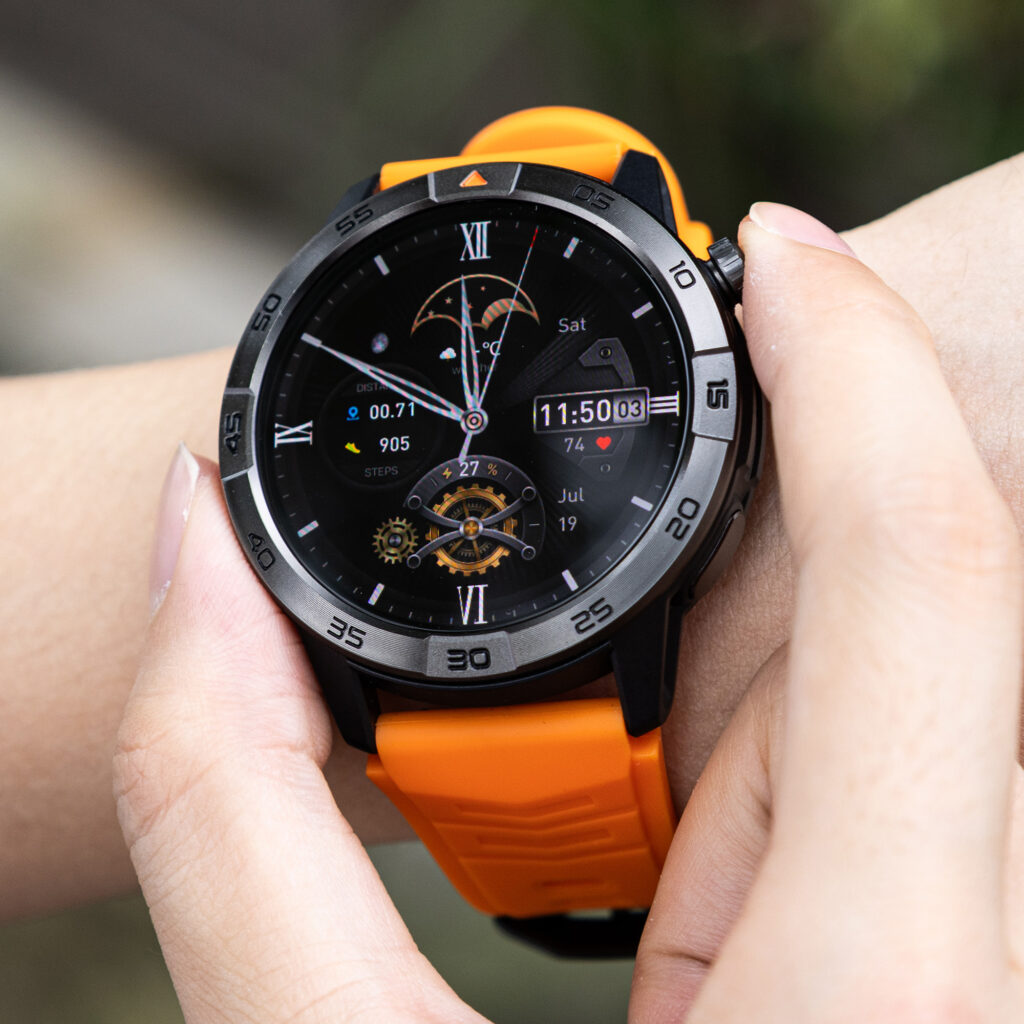
Possible load pieces include:
- Time checks
- Alarms and scheduled reminders
- Selected notifications
- Brief calls
- Phone connectivity
- Navigation support
- GPS activity
- Display use
- Activity tracking
- Wellness sensors
- Overnight wear
- Arrival communication
Do not place every available smartwatch function on the bridge. Optional features should not make the test artificially difficult.
The opposite shortcut is equally misleading. A required function cannot be removed merely because including it makes the battery result less favorable.
Classify each load piece as:
- Continuous: required throughout most of the span
- Scheduled: needed at known points
- Occasional: used briefly when circumstances require it
- Arrival-only: needed near the far side
- Not required: excluded from this crossing
The real-use framework can help the traveler define the function load carried across the travel leg. Article 241 does not recreate the entire Battery Loadprint; it selects the parts active on this specific bridge.
Feature Load Omission occurs when a necessary alert, connection, overnight role, location function, or display demand is left behind to create an easier span.
Add Overnight Use Only When the Leg Contains a Nighttime Role
An overnight period should not enter the bridge automatically.
Include it when the watch must provide:
- Sleep tracking
- An alarm
- Overnight wellness monitoring
- Continuous timekeeping
- Morning reminders
- Wear continuity until the far-side charger becomes available
If none of those functions matters, overnight wear may remain optional. Removing the watch for a confirmed charging window would not represent a failure when no protected nighttime role exists.
The Nashville coordinator’s selected span may begin before an overnight travel or lodging period and continue through much of the next day. In that situation, the battery load must include the real nighttime function and the morning demand that follows it.
Ask:
- Must the watch remain on the wrist?
- Would charging interrupt the required nighttime role?
- Does the day begin before a confirmed charger becomes usable?
- Is the alarm or morning reminder essential?
- Does the bridge continue through the following transportation block?
A separate article will own the complete campsite evening-to-morning chain. Here, overnight use is one segment carried inside the longer bridge.
Place Midspan Pressure Markers Where the Load Changes
The workload may shift while the watch remains between the same two charging anchors.
A Midspan Pressure Marker identifies those changes without inventing an exact percentage of battery consumed.
Pressure may increase when:
- Display checks become more frequent during a transfer
- Navigation becomes necessary near arrival
- Notifications increase after connectivity returns
- Overnight sensor use begins
- An alarm and morning routine activate
- Calls or messages become necessary at a meeting point
- The watch changes into a documented lower-power mode
A pressure marker does not become a new anchor. The bridge remains unpowered unless a dependable charging opportunity is confirmed.
These markers reveal why two legs of similar length may create different battery requirements. One can remain quiet for most of the crossing, while another contains several short but essential demand peaks.
Verify the Arrival Charging Anchor
The right-side anchor ends the unpowered leg only when charging can practically begin.
Confirm:
- Physical access to the charging source
- Compatibility with the watch charger
- The cable, puck, and adapter required
- The time available before the next demand
- Whether the watch can be removed safely
- Whether the outlet is shared or occupied
- Whether charging begins before the next required function
Transportation arrival and charger access are not always the same event.
The interval may continue while the coordinator handles luggage, checks passenger arrangements, walks to lodging, completes check-in, reaches the room, and retrieves the charger. These possible steps explain the boundary without inventing a specific Nashville tour schedule.
If access depends on an uncertain room assignment, vehicle port, venue space, or shared outlet, the far-side anchor remains conditional. The bridge must continue until a more dependable point is reached.
Place the Far-Side Reserve Marker Beyond the Anchor
A watch should not receive the strongest verdict merely because it reaches the charging location with almost no usable power.
The Far-Side Reserve Marker protects the period immediately beyond the bridge.
That margin may cover:
- A delay in accessing the outlet
- An occupied charging point
- Check-in or arrival logistics
- One required message or reminder
- Travel from the stop to the lodging
- Temporary charger unavailability
- The first post-leg obligation
No universal reserve percentage applies to every trip. The correct margin depends on the next realistic need.
Use three practical states:
- Protected margin: the watch clears the bridge and can absorb the defined far-side need.
- Thin margin: the watch appears to reach the anchor, but a modest delay or added function may create failure.
- No practical margin: charging must begin immediately, or the next required action cannot be protected.
Margin-Free Arrival occurs when the watch technically reaches the far side but has no usable reserve for accessing the charger or completing the next immediate task.
Decide Whether a Power Bank Becomes a Real Anchor
A power bank can shorten the bridge, but only when the complete charging path is confirmed.
It may qualify as an anchor when:
- The bank is available during the leg
- The watch can charge from it
- The compatible cable or puck is carried
- The required adapter is available
- The bank has adequate usable power
- Charging can occur at a safe, stationary moment
- Removing the watch does not interrupt a protected function
- The charging window is practical
The power bank remains conditional when compatibility is assumed, the charging puck depends on equipment left elsewhere, the bank is reserved for a phone, or the cable is inaccessible in stored luggage.
A plan requiring the traveler to handle charging equipment while boarding, walking through a terminal, crossing traffic, or supervising passengers also fails the practical-use requirement.
A verified bank can become a charging anchor. An uncertain bank receives the same Conditional Outlet Flag as an uncertain wall socket or vehicle port.
Walk the Nashville Span From One Anchor to the Next
The illustrative motorcoach coordinator begins at a confirmed charging opportunity before the exposed interval.
The watch may then need to carry:
- An overnight timekeeping or alarm role
- Morning schedule information
- Selected notifications
- Ordinary display use
- Transit coordination
- Arrival communication
Possible vehicle ports, terminal outlets, and informal charging stops remain outside the bridge calculation unless their access and compatibility are confirmed.
The Arrival Charging Anchor appears only when the following day’s activity and arrival process have ended at a point where the correct charger can actually be used.
No departure time, passenger count, route length, hotel procedure, battery percentage, or measured runtime is assumed. The scenario demonstrates the span method rather than reporting a completed test.
The central question remains unchanged: does the watch carry the required function load from the last dependable charger to the next one and preserve the far-side margin?
Route Four Broken Spans to the Correct Failure Point
Unconfirmed Outlet Anchor
A possible hotel, vehicle, terminal, café, venue, or power-bank charge is used to shorten the bridge without verified access, compatibility, timing, and safe practical use.
Margin-Free Arrival
The watch reaches the far-side charging location but cannot absorb an access delay or complete the next immediate requirement.
Feature Load Omission
A required notification, call, location function, overnight role, connection state, display demand, or other load is removed from the crossing.
Trip-Length Distraction
The owner focuses on the complete number of travel days and never identifies the longest confirmed charger-to-charger interval.
These failures do not subtract points from a general travel score. Each one identifies a broken part of the bridge.
Stamp One Longest-Leg Verdict
Span Cleared
Use Span Cleared when both charging anchors are verified, the selected interval is measured honestly, all required functions remain on the bridge, and useful reserve remains beyond the far side.
Margin Thin
Use Margin Thin when the crossing appears possible but the remaining reserve offers little protection against an access delay, small workload increase, or immediate arrival task.
Conditional Outlet Dependence
Use Conditional Outlet Dependence when the bridge clears only if an unverified hotel outlet, vehicle port, terminal socket, café connection, or power bank becomes usable.
Leg Exceeds Reserve
Use Leg Exceeds Reserve when the required workload cannot cross the verified span, charging becomes necessary before the far anchor, or an essential function would need to be removed.
The verdict applies to one selected leg. It does not declare the watch suitable or unsuitable for every long trip.
Once the span is defined, readers can compare the selected span inside the correct battery mode. A normal-use claim should not be replaced by standby, saver, or reduced-GPS evidence without clear separation.
Record the Longest Unpowered Leg Span Receipt
| Span field | Required entry |
|---|---|
| Parent exposure | Transit Duration selected on the Travel Power Exposure Compass |
| Departure Charging Anchor | Confirmed source, compatibility, preparation time, and starting setup |
| Arrival Charging Anchor | Confirmed source and the point when practical charging can begin |
| Conditional Outlet Flags | Assumed charging opportunities excluded from the bridge |
| Unpowered Leg Bridge | The exact charger-to-charger boundary |
| Required-Function Load | Functions active during the selected span |
| Overnight role | Required, optional, or absent |
| Midspan pressures | Documented workload changes without invented drain |
| Far-Side Reserve Marker | The next realistic need after arrival |
| Final verdict | One Longest Unpowered Leg Span result |
Do not add route maps, daily itinerary entries, assumed charging stops, estimated charging speeds, invented battery percentages, product rankings, or generic travel scores.
Questions Asked at the Bridge Anchors
How is the longest unpowered leg selected?
List the confirmed charging opportunities and measure the intervals between them. Select the longest relevant span carrying required watch functions and a defined arrival-reserve need.
Can a power bank count as a confirmed charging point?
Yes, when the bank, compatible charger, required cable or adapter, practical timing, and safe use are all verified.
Should overnight tracking be included?
Include it when sleep tracking, an alarm, wellness monitoring, or another nighttime role is required during the selected bridge.
What if a hotel outlet is occupied or inaccessible?
The hotel cannot serve as a dependable anchor unless practical access is confirmed. Keep a Conditional Outlet Flag or extend the bridge to the next verified charging opportunity.
Does the watch need to reach zero before the leg fails?
No. The crossing fails when a required function cannot remain available or the watch cannot preserve the defined far-side reserve.
Should a motorcoach outlet count?
Only when its availability, compatibility, timing, and safe use are verified. Otherwise, it remains a conditional anchor.
Can a shorter battery claim still clear a long trip?
Yes. A shorter but well-supported duration may cross the relevant bridge when dependable charging anchors divide the trip into manageable spans.
The Long Trip Shrinks to One Honest Bridge
The motorcoach tour covered several days, but most segments ended near dependable charging. One overnight-to-next-evening gap created the meaningful exposure.
The bridge method removed the distractions. Assumed outlets could not become anchors. Required functions stayed on the crossing. Overnight demand counted only when it served a real role. Reaching the destination did not erase the far-side reserve requirement.
A long trip is cleared one confirmed charging span at a time, not by matching the watch to the itinerary’s total number of days.
Mark the last confirmed charge before the exposed leg and the first dependable charge after it. Place every required function across that bridge, flag each uncertain outlet, and define the reserve needed beyond the far side. To evaluate the featured option using the same span, compare this battery claim with your longest unpowered leg.