
A long-lasting watch does not become emergency equipment simply because its screen stays on. Battery duration cannot guarantee communication, alert delivery, navigation, medical accuracy, or rescue. A smartwatch for emergencies long battery plan needs a much narrower purpose: protect one small battery portion for one verified support function while suitable equipment and official procedures remain outside the watch plan.
An apartment emergency-preparedness coordinator in Newark, New Jersey, can apply that limit through an Emergency Reserve Partition. The coordinator divides expected battery use into a Daily Use Chamber and a sealed Reserved Slice. The reserved portion receives one job, one release condition, and one evidence standard. Readers who have not yet identified the main battery risk can first identify the travel battery exposure before reserving power.
Long Battery Life Does Not Create Emergency Equipment
Battery life answers one question: how long the watch may retain power under stated conditions. It does not answer whether a network works, a phone stays nearby, an alert reaches the device, or another person responds.
A watch may display the time while communication fails. It may contain a calling feature while cellular service remains unavailable. A stored screen may open even though the information has become outdated. Each function requires its own evidence and dependencies.
Marketing language often compresses these distinctions. Words such as “emergency-ready,” “always connected,” or “safety companion” can encourage buyers to treat general smartwatch features as guaranteed protection. Battery endurance alone cannot support those conclusions.
The Emergency Reserve Partition allows one limited contribution. The owner chooses a narrow function, protects a battery portion for it, and states every external condition honestly. The watch remains supplementary throughout the process.
This article therefore does not test whether a watch can keep someone safe. It asks whether the owner can protect enough battery for one documented support role after reducing routine use.
Readers who need a broader explanation of battery purpose can name the routine that long battery life should protect. Article 246 narrows that idea to one small reserve and one limited role.
Divide Daily Use From the Reserved Slice
The Emergency Reserve Partition uses two conceptual chambers. Daily Use consumes the first chamber. The owner protects the second chamber from ordinary activity until a predefined release condition occurs.
Record the Daily Use Chamber
Start by listing the functions that normally consume watch power. These might include notifications, screen checks, activity tracking, connection activity, optional health features, alarms, or other owner-defined uses.
Classify each function before setting the reserve:
- Continue: The function remains part of routine use.
- Reduce: The owner limits its frequency before reaching the reserve boundary.
- Stop before reserve: The owner turns it off before routine use reaches the protected slice.
- Outside the test: The function has no role in this plan.
- Unknown behavior: Documentation does not explain its battery or mode effect clearly enough.
The coordinator should not invent exact battery costs for these functions. Instead, the classification shows which routine demands may threaten the reserve and which actions the owner plans to reduce first.
Draw the Reserve Boundary
The owner sets the boundary before normal use begins. No universal percentage works for every device, workload, or support role. One person may choose a conservative threshold, while another may need a different margin because the selected function uses more power or depends on a different mode.
A valid boundary answers five questions:
- At what battery condition should routine use begin to shrink?
- Which ordinary functions stop first?
- What single support role does the reserve protect?
- What event releases the reserved power for use?
- Which external systems must still work?
A boundary chosen after the battery has already fallen cannot produce a strong verdict. The owner would simply redefine the reserve to match whatever remains.
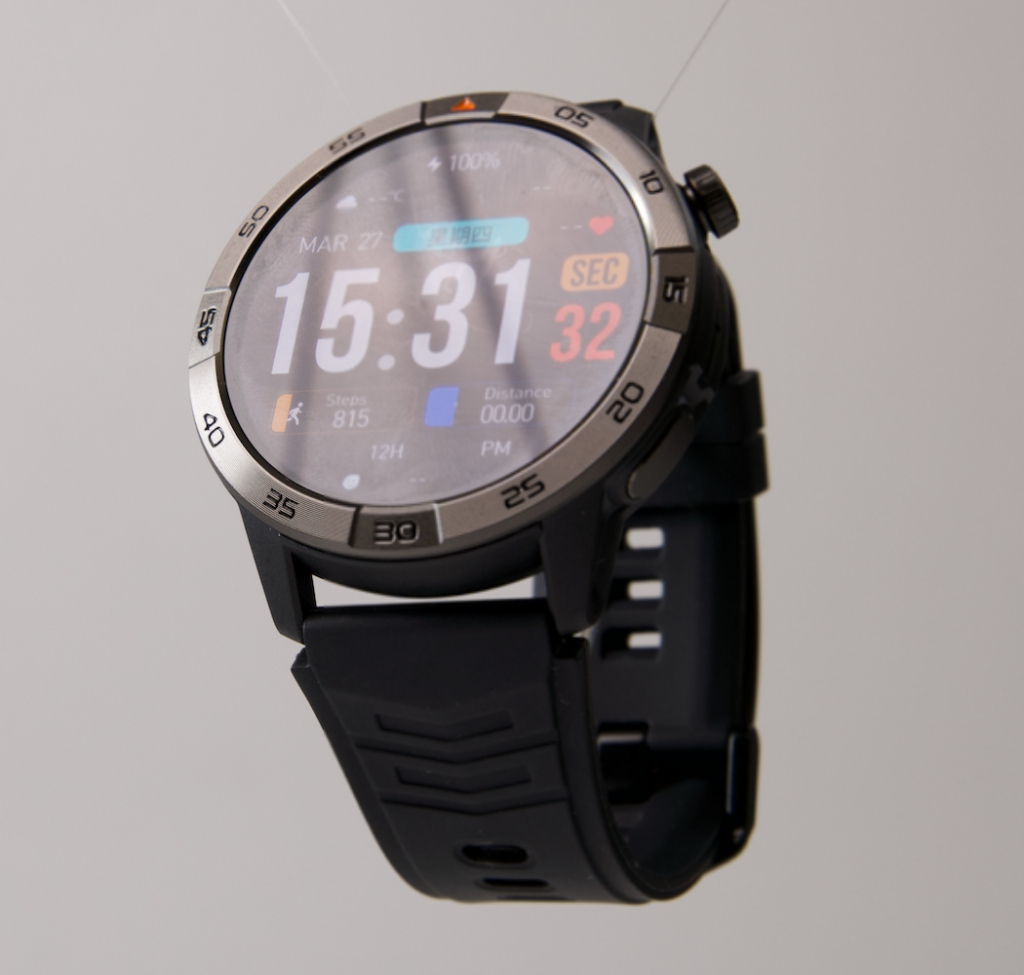
Seal the Reserved Slice
The Reserved Slice has one job. Routine notifications, optional tracking, repeated screen checks, or other ordinary functions should not spend it.
The slice also needs a practical margin. A watch that reaches the selected role with almost no usable reserve afterward may not support the intended condition for long. The owner should define that margin before evaluating the result.
Even a well-protected slice cannot guarantee that a phone, network, server, service plan, app, or official alert system remains available. The partition protects battery capacity, not the outside world.
| Partition element | Required question | Evidence state | Result |
|---|---|---|---|
| Daily Use Chamber | Which routine functions consume battery? | Defined, partial, or unknown | Load visible or unclear |
| Reserve Boundary | When must routine use shrink? | Predefined, vague, or absent | Seal strong or weak |
| Support-Role Token | What single function does the slice protect? | Narrow, broad, or undefined | Role accepted or rejected |
| Connection Seal | Which external dependency must exist? | Verified, conditional, absent, or unknown | Role available or conditional |
Assign One Narrow Support Role
The Reserved Slice should protect one function that the owner can describe in a single sentence. A broad bundle creates too many battery demands, connection assumptions, and failure points.
Time Reference
The owner might reserve power so the watch can continue showing the current time. This role stays narrow and easy to understand.
A time display does not provide communication, navigation, official instructions, or emergency response. It simply supports time reference while the battery and selected mode retain that function.
The owner should still verify whether the chosen reduced-power mode preserves the correct time display and whether the watch needs a phone or connection to update time under the planned condition.
Stored Information Access
Another possible role involves opening information that already resides on the watch. The coordinator might consider a short, non-sensitive reference that the watch can access locally.
This role requires careful verification. The owner must confirm that the information actually remains on the device, opens without a phone, survives the selected mode, and does not require an active app session or internet connection.
Stored information should not replace authoritative instructions. The owner should also avoid placing confidential building, medical, or personal details on the watch without considering privacy and access risks.
Receiving a Selected Alert When Connection Exists
The owner may want the Reserved Slice to support one selected alert category. This role remains conditional because alert delivery can depend on several external systems.
The watch may need a nearby phone, Bluetooth connection, Wi-Fi, cellular service, an active account, internet access, app synchronization, or a working server. The owner must name those dependencies instead of treating alert reception as guaranteed.
The wording should remain precise: “The watch may receive the selected alert when the required connection and service remain available.” It should never become “The watch will always deliver emergency alerts.”
Reject Multi-Role Bundles
A claim such as “the reserve will handle calls, alerts, maps, health monitoring, navigation, and rescue” does not define one testable role. Each function has a different workload and dependency chain.
The Emergency Reserve Partition rejects that bundle rather than trying to score it. The owner can create a separate, evidence-based plan for another function, but one battery slice should not carry an undefined emergency package.
Pass the Support Role Through the Verification Gate
A narrow role still needs proof. The Function Verification Gate checks whether the watch can perform the selected job under the exact mode and connection conditions in the plan.
Verify the Function
Use current official product documentation, manuals, and support pages to confirm that the function exists. Marketing graphics or general feature names do not explain how the feature behaves at low reserve or inside a restricted mode.
The owner should confirm:
- The watch supports the selected function.
- The planned mode retains it.
- The user can reach it without restoring a larger feature set.
- The function does not require an omitted setup step.
- The documentation reflects the current software or firmware behavior.
Verify the Connection Condition
Write every external dependency beside the role. A connection-dependent function may require Bluetooth, Wi-Fi, cellular service, a nearby phone, internet access, app synchronization, or an active service plan.
Do not assume that apartment walls, building conditions, a power interruption, network congestion, or service outages will preserve connectivity. The article does not predict those conditions.
When the role depends on an external system, the verdict cannot describe the support function as unconditional.
Verify the Selected Power Mode
A battery-saving setting may extend runtime by removing functions. The owner must verify that the selected support role survives the exact mode used to protect the slice.
Before relying on a reduced-power setting, check whether the reserved function survives the selected power mode. A longer duration has no value when the mode disables the one function the reserve was meant to support.
Verify the Access Path
The owner should also confirm how to reach the function. Some features may require leaving a low-power mode, reconnecting to a phone, opening an app, or restoring a setting.
Do not invent reconnection time or assume instant restoration. When official documentation leaves the access path unclear, keep the role conditional.
Protect the Slice From Daily-Use Encroachment
Routine watch activity can consume the Reserved Slice before the owner intends to release it. The Encroachment Meter makes that pressure visible.
Possible sources of encroachment include:
- Optional tracking that remains active
- Frequent screen checks
- Excess notifications
- Connection searching
- Background synchronization
- Delayed reduction of routine functions
- A mode change that uses more power than expected
The article should not assign a universal percentage to any of these actions. Device behavior, settings, usage, environment, and software can change the result.
The owner can classify the reserve status as:
- No Encroachment: Daily use remains outside the protected slice.
- Approaching Boundary: Routine use nears the point where reductions should begin.
- Boundary Crossed: Daily use has consumed protected power.
- Status Unknown: The available evidence cannot show whether the reserve remains intact.
The owner must act before crossing the line. Reducing functions after routine use has already consumed the slice does not restore the original reserve plan.
This method differs from protecting a broad set of functions until a charger returns. Readers with that separate need can protect a broader function set during charger separation.
Keep Standby and Active Reserve Separate
Standby figures can make a reserve appear larger than it really is. Standby usually describes inactivity under specific conditions, while an active support role may require screen use, processing, connections, or alerts.

Power-off storage creates an even wider mismatch. A powered-off watch may preserve battery, but it cannot provide immediate access to an active function until the user turns it on and restores the necessary setup.
Battery-saver and low-power watch modes also need separate treatment. One mode may retain only time display. Another may keep selected functions with reduced behavior. A third may remove the chosen role completely.
The reserve estimate must use the mode that actually supports the Support-Role Token. Do not substitute:
- Standby duration for active alert reception
- Power-off storage for stored-information access
- Saver-mode duration when the role becomes unavailable
- Typical-use duration for a restricted-mode plan
“Still powered” and “support role available” remain different outcomes. Readers who want to evaluate readiness after inactivity can test whether the watch returns ready after an idle period.
Apply the Partition to an Illustrative Newark Apartment Plan
Consider an illustrative apartment emergency-preparedness coordinator in Newark. This scenario does not represent a real building, landlord, utility provider, emergency office, outage, evacuation policy, or local procedure.
The coordinator begins with one narrow sentence: “The Reserved Slice should preserve access to the current time.” That statement avoids promises about calls, alerts, navigation, rescue, or medical support.
Next, the coordinator lists routine functions inside the Daily Use Chamber. General notifications continue during normal conditions. Optional tracking and frequent screen activity move into the “reduce” category as the watch approaches the Reserve Boundary.
The coordinator sets the boundary before using the plan. At that threshold, optional activity stops, and the selected power mode begins only after official documentation confirms that time display remains available.
The Support-Role Token then passes through the Function Verification Gate. The coordinator checks mode retention, access steps, and whether the displayed time depends on any external synchronization under the planned condition.
The Connection Dependency Seal records the answer. If the role needs a nearby phone or network, the plan labels that dependence clearly. If current documentation cannot confirm offline behavior, the role remains conditional.
The coordinator also keeps suitable resources outside the watch plan. Phones, official alerts, radios, printed information, medical equipment, building procedures, and other situation-appropriate systems do not become part of the Reserved Slice.
The Partition Receipt records the role, threshold, routine-use reductions, mode behavior, connection dependence, backup status, and final verdict.
| Evidence object | Coordinator’s question | Possible state | Effect |
|---|---|---|---|
| Support-Role Token | Does one narrow, documented role exist? | Verified, broad, or unknown | Role accepted or rejected |
| Reserve Boundary | Did the owner define it before routine use? | Sealed, vague, or absent | Reserve protected or weak |
| Connection Seal | Does the role need an external system? | Available, conditional, absent, or unknown | Role available or conditional |
| Encroachment Meter | Did daily use consume protected power? | Clear, near, crossed, or unknown | Slice preserved or breached |
| Backup Rail | Do suitable systems remain outside the watch? | Present, incomplete, or absent | Supplementary boundary maintained or failed |
Find the Four Failures in the Emergency Reserve Partition
Emergency-Device Overclaim
This failure appears when the buyer treats long battery life as proof of emergency capability. Claims about guaranteed communication, rescue, navigation, medical monitoring, or alert delivery exceed what battery duration can establish.
The watch may offer useful features, but those features do not create guaranteed outcomes. The correct verdict is Emergency Claim Rejected.
Undefined Reserve Role
An undefined role gives the Reserved Slice no measurable job. Statements such as “help in an emergency” or “keep me protected” do not identify a function, mode, dependency, or success condition.
The owner should reduce the role to one precise sentence. When that remains impossible, the partition cannot produce a meaningful reserve verdict.
Daily-Use Encroachment
This failure occurs when ordinary watch use consumes the protected portion. Optional tracking, repeated screen checks, excess notifications, or delayed reduction may push Daily Use across the boundary.
The problem does not require a complete battery drain. Once routine use spends the reserved portion, the original plan has failed. The verdict becomes Daily Use Breached Reserve.
Connection Assumption
This failure appears when the selected role depends on a network, phone, app, service, or account that the plan treats as guaranteed.
A watch cannot ensure cellular coverage, Bluetooth continuity, internet access, server operation, or alert delivery. The owner must label those dependencies. When the claim relies on guaranteed external systems, the emergency promise fails.
Assign the Verdict Without Turning the Watch Into Safety Equipment
Reserve Sealed
Use this verdict when the owner defines one narrow role, sets the boundary in advance, and prevents routine use from crossing it. Official evidence must support the selected function and mode.
The plan must also state connection dependence honestly and preserve suitable backup systems outside the watch. Reserve Sealed describes battery allocation only; it does not guarantee safety or emergency performance.
Conditional Reserve Role
This verdict fits a protected slice whose function depends on an unresolved external condition. The watch may need a phone, network, service, app, or mode behavior that current evidence does not fully confirm.
The role remains narrow, and the article makes no broad safety promise. The conditional label tells the owner exactly which dependency still needs verification.
Daily Use Breached Reserve
Use this verdict when routine activity crosses the predefined boundary. The support role may remain valid in theory, but the protected battery portion no longer exists as planned.
The owner can create a new partition later, but that new plan must start with a new threshold and new evidence. It cannot retroactively repair the breached reserve.
Emergency Claim Rejected
This verdict applies when the plan treats the smartwatch as emergency equipment or expects guaranteed communication, rescue, navigation, medical support, or alert delivery.
It also applies when the watch replaces necessary independent systems. Battery life cannot justify that substitution.
| Verdict | Reserve boundary | Support role | Connection status | Safety claim |
|---|---|---|---|---|
| Reserve Sealed | Protected | Narrow and verified | Documented | Supplementary only |
| Conditional Reserve Role | Protected or likely | Narrow | External dependency unresolved | No guarantee |
| Daily Use Breached Reserve | Crossed | May remain valid | Irrelevant to consumed reserve | No guarantee |
| Emergency Claim Rejected | Invalid or irrelevant | Broad or unsupported | Assumed or overstated | Watch treated as emergency equipment |
Emergency Reserve Questions to Resolve
Can a Smartwatch Replace an Emergency Radio or Beacon?
No. A consumer smartwatch should not replace purpose-built emergency communication equipment, a radio, a personal locator beacon, a phone, or another situation-appropriate system.
Long battery life does not create guaranteed communication, transmission range, rescue coordination, or emergency-services access.
Should Cellular Service or Internet Access Be Assumed?
No. Coverage, account status, network operation, phone proximity, service plans, device setup, and server availability may all affect a connected function.
Label any alert or communication role as connection-dependent. Never promise delivery.
How Should the Reserved Slice Be Protected?
Set the threshold before routine use begins. Name one support role, identify which ordinary functions stop first, and confirm that the selected mode retains the role.
Monitor encroachment through the owner’s chosen battery threshold, but do not apply one universal reserve percentage to every watch.
Can the Reserve Support Several Emergency Functions?
This method protects one narrow role. Several functions create different workloads, mode requirements, and connection dependencies.
A broad bundle weakens the evidence and encourages unsupported emergency claims. Evaluate another function separately rather than loading everything into one reserve.
What Other Backup Equipment Remains Necessary?
Keep situation-appropriate communication, official alerts, medical equipment, printed information, building procedures, and other preparedness resources outside the watch calculation.
No universal equipment list fits every household or emergency. Follow authoritative guidance that applies to the actual location, people, and risks.
The Reserve Has One Job, Not an Emergency Promise
A watch with long battery life may support one limited function, but power duration does not transform it into emergency equipment. The Emergency Reserve Partition keeps that distinction visible.
Daily Use occupies one chamber. A predefined boundary protects the Reserved Slice, and one Support-Role Token gives that slice a measurable purpose. Connection dependencies, mode restrictions, and independent backup systems remain explicit.
A reserve earns trust by protecting one verified role, not by carrying an emergency promise the watch cannot prove.
Name one support function, seal its battery boundary, and reject every claim that depends on guaranteed communication, rescue, navigation, or safety. Use that limited standard to test one reserved function against this watch while keeping proper emergency equipment and official procedures outside the smartwatch plan.