
A remote worker in Ohio starts the day with the phone charging on a kitchen counter, then moves between breakfast, email, a short walk, work calls, lunch errands, and an evening routine. The phone is nearby most of the day, but not always in hand. A smartwatch for everyday use and calling becomes useful in that kind of normal American day because it keeps alerts, short calls, reminders, activity tracking, and basic daily awareness closer to the wrist without making the phone the center of every moment.
That is the best way to judge an everyday smartwatch. Not by asking whether one feature sounds impressive, but by asking whether the watch quietly helps across the whole day.

What Everyday Use Means for U.S. Buyers
For many U.S. consumers, a smartwatch is not bought for one dramatic moment. It is bought for small, repeated moments that happen every day. The phone rings while it is charging. A reminder appears while hands are busy. A short walk becomes easier to track. A family call comes in during errands. A sleep summary appears the next morning.
Those moments are not separate problems. They are part of one routine.
That is why an everyday smartwatch should feel useful from morning to night. Calling matters, but it should not be the only reason the device earns a place on the wrist. A watch that fits daily life should support communication, movement, reminders, activity tracking, simple navigation, and comfort without making the user feel managed by another screen.
In my view, this is where many buyers make the wrong comparison. They compare smartwatches only by feature lists. A better comparison is to look at one normal day and ask, “Where would this actually reduce friction?”
Waking Up Without Starting the Day on the Phone
The Ohio remote worker begins the day with the phone on the kitchen counter. That small distance matters. If the first action is grabbing the phone, the morning can quickly turn into email, messages, social media, or news before breakfast is even finished.
A smartwatch helps by keeping the first few checks simple. Time, alarm, weather, calendar reminder, and basic notifications can appear on the wrist without opening the full phone.
This is not a flashy use case, but it is one of the most practical. Many American users want fewer unnecessary phone pickups, especially in the morning. A smartwatch can create that little buffer between waking up and falling into the phone.
Calling is not the focus at this stage of the day. Awareness is. The watch gives enough information to know whether something needs attention, while the phone can stay where it is.
Morning Movement Before the Workday
After breakfast, the same user takes a short walk before opening the laptop. This is where the smartwatch shifts from quiet awareness to movement tracking.
Steps, calories, heart rate, and activity tracking can help users see whether they are actually moving during the day. These features should be understood as general wellness tools, not medical devices or diagnostic systems. Still, they can be useful for everyday awareness.
For a remote worker, this matters because workdays can become physically still. A smartwatch does not force better habits, but it can make patterns visible. That visibility often helps. If the watch shows that the morning walk added meaningful movement, the user may be more likely to repeat it.
This is a practical reason to choose a smartwatch for everyday use, not just for calling. The watch becomes part of the routine before the first meeting begins.
Calls and Alerts During a U.S. Remote Workday
Once work starts, the phone is still nearby, but it may be face down, on silent, or in another room. That is a common situation for American remote workers who try to stay focused without missing important communication.
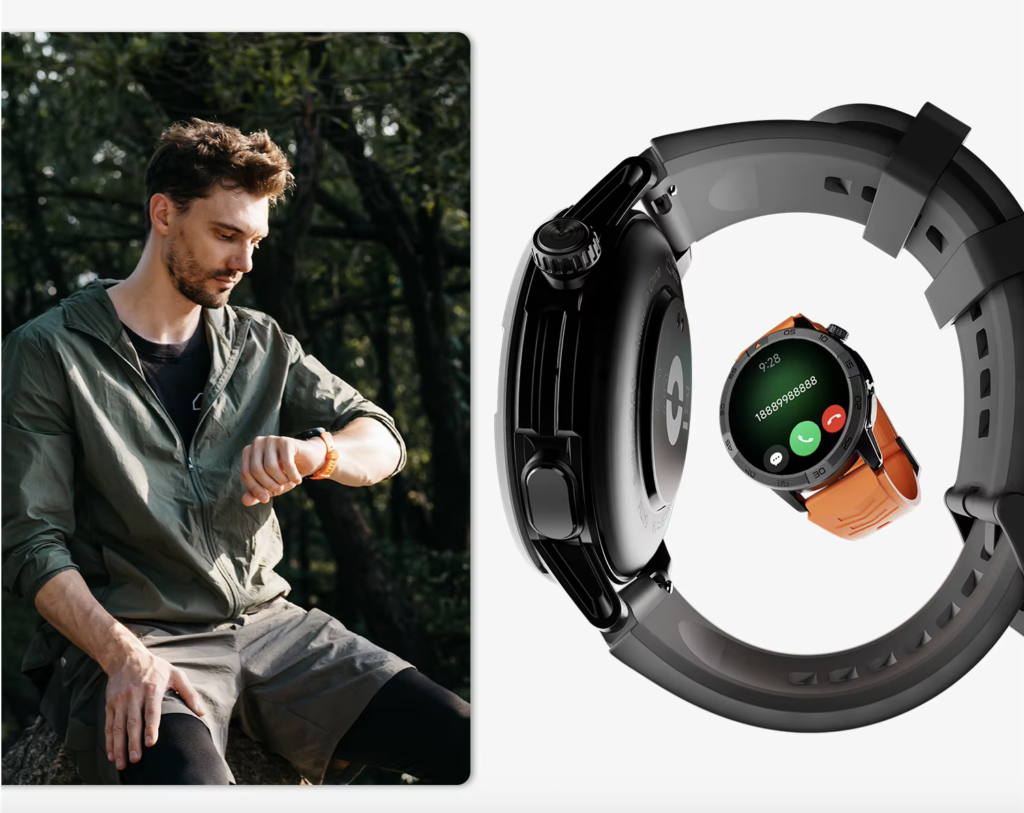
A smartwatch can help by filtering attention. A wrist alert is less disruptive than picking up the phone. The user can glance, decide whether the notification matters, and return to work.
This is especially useful for calls. Bluetooth calling can help when the paired phone is nearby, but it is not the same as LTE or cellular calling. The watch depends on the phone connection. That means it is best for short, practical calls rather than long conversations away from the phone.
For work use, the strongest benefit is not “talking from the wrist all day.” It is knowing whether a call is worth interrupting focus.
For more call-focused work guidance, see smartwatch for work and phone calls.
Lunch Errands: When the Phone Is Nearby but Inconvenient
By lunch, the Ohio worker steps out for a quick errand. The phone goes into a jacket pocket or small bag. It is close, but not convenient to pull out every few minutes.
This is where everyday smartwatch value becomes easy to understand. A call alert appears on the wrist. A reminder shows up without digging through the bag. A message can be noticed without stopping in the middle of a checkout line.
The watch does not need to replace the phone here. It simply reduces the number of times the phone has to come out.
That difference sounds small, but daily convenience is built from small reductions. Less reaching, less unlocking, less checking, fewer missed alerts. For many U.S. users, that is exactly what makes a smartwatch feel worth wearing.
Grocery Shopping and Hands-Busy Moments
Later in the day, the same person stops for groceries. This is one of the clearest everyday examples because both hands are often occupied. A cart, bags, keys, wallet, and shopping list all compete for attention.
A smartwatch helps by giving quick visibility. If a family member calls, the user can see who it is before searching for the phone. If the call can wait, it can be rejected. If it is important, the user can answer briefly or call back from a better place.
This is also where privacy matters. A smartwatch speaker is not ideal for a long personal conversation in a store. A good everyday smartwatch should make call handling easier, but users still need judgment. Some calls are better handled later, on the phone, or through earbuds.
The practical role of the watch is call screening and quick awareness. That is usually enough.
Family Calls as the Most Practical Calling Use
For everyday users, the most important calls are often not business calls. They are family calls. A parent, spouse, school office, delivery driver, or close friend may call during the part of the day when the phone is not easy to grab.
This is where Bluetooth calling becomes useful in a realistic way. The watch can help the user notice the call and respond quickly, as long as the paired phone is nearby.
The key word is “quickly.” A smartwatch is best for short calls: “I saw your call,” “I’ll call you back,” “Yes, pick that up,” or “Give me five minutes.” It is not always the best device for private or emotional conversations.
That balance keeps the feature honest. Calling is valuable because it fills small gaps in the day, not because it turns the watch into a full phone replacement.
For a deeper article on daily call use, read smartwatch for daily phone calls.
Evening Walks, GPS, and Outdoor Routine
After work and errands, the evening walk becomes another moment where the watch has a different job. It is no longer only about alerts. It can support activity tracking, outdoor awareness, and GPS-supported movement.
For U.S. users who walk around neighborhoods, parks, apartment communities, or local trails, built-in GPS and offline maps can add value. The phone may still be nearby, but the watch keeps basic movement information on the wrist.
This is also a good time to notice how the smartwatch changes phone behavior. Instead of holding the phone for every step, route check, message, or call alert, the user can let the watch handle the light awareness layer.
That is the best version of everyday smartwatch use: connected enough to be helpful, but not so demanding that it steals the walk.
Night Routine and Sleep Tracking
At night, the smartwatch becomes quieter again. The same device that handled alerts and activity during the day can shift into sleep tracking and general rest awareness.
Sleep tracking can help users notice patterns in bedtime, wake time, and rest consistency. It should not be treated as medical diagnosis, but it can still be useful for everyday reflection.
Comfort matters most here. If the watch feels bulky or the strap becomes irritating, sleep tracking will not last as a habit. A smartwatch for everyday use should feel wearable, not only feature-rich.
That is an important buying point. The best daily device is not always the one with the longest spec sheet. It is the one the user actually keeps wearing.
Charging Routine for American Daily Life
Charging is part of the routine, so it should be judged realistically. If a smartwatch needs attention too often, it becomes another device to manage. That weakens the everyday experience.
For this Ohio remote worker, the question is not just how long the battery can last under ideal conditions. The better question is whether the charging rhythm fits a real day: morning, work, errands, calls, walking, sleep tracking, and the next morning.
Calls, GPS use, display brightness, notifications, and tracking habits can all affect battery use. That is normal. What matters is whether the watch can support the way the user actually wears it.
A good charging routine should feel predictable. It should not create anxiety before every errand, walk, or overnight tracking session.
For more battery-focused everyday guidance, see best smartwatch battery life everyday use.
What Everyday Calling Should and Should Not Do
By the end of the day, the calling feature has appeared several times, but it has not controlled the whole article. That is exactly the point.
Everyday calling should help with:
- Seeing who is calling
- Answering short calls
- Rejecting calls quickly
- Reducing missed calls
- Staying aware when the phone is nearby
- Handling simple communication without constant phone pickups
It should not be expected to replace LTE calling, private earbuds, or the phone itself. Bluetooth calling usually needs the paired phone close enough to stay connected.
This realistic expectation is important for U.S. buyers. The feature is valuable when it matches real habits. It disappoints when buyers expect it to do something it was not meant to do.
Where This Smartwatch Fits Into a Complete Daily Routine
This smartwatch fits users who want one device to support the ordinary flow of the day. It is not only for calls, and it is not only for fitness. Its value comes from the mix: alerts, short calls, reminders, activity tracking, GPS-supported movement, sleep awareness, and a manageable charging routine.
For American consumers comparing smartwatches around the $150 range, that mix can be more meaningful than one premium feature. The question is whether the watch supports enough parts of the day to justify wearing it consistently.
For the Ohio remote worker, the answer depends on routine fit. If the watch helps in the morning, during work, through errands, on walks, and at night, then it is doing what an everyday smartwatch should do.
Final Routine Check
Before buying, do not start with the longest feature list. Start with one normal day.
Would the watch help before you pick up your phone in the morning? Would it support a short walk? Would it keep calls and reminders visible during work? Would it help during errands or grocery shopping? Would it be comfortable enough for evening use and sleep tracking?
If the answer is yes across several parts of the day, the smartwatch has a stronger case as an everyday device. You can review the smartwatch details and compare its calling, GPS, display, tracking, and routine features against the way you actually move through a typical American day.
Frequently Asked Questions
Is a smartwatch useful for a normal work-from-home day?
Yes. A smartwatch can help remote workers see calls, reminders, messages, activity progress, and basic alerts without constantly picking up the phone during the workday.
Can a smartwatch replace my phone for everyday calls?
No. A Bluetooth calling smartwatch usually works with a nearby paired phone. It is best for short calls, caller ID, and quick responses, not full phone replacement.
How does a smartwatch help during errands?
It helps by keeping calls, reminders, and notifications visible when the phone is in a pocket, purse, bag, or car console. This is useful during grocery shopping, lunch errands, and other hands-busy moments.
Is fitness tracking useful for everyday users?
Yes, if used for general awareness. Steps, calories, heart rate, and activity tracking can help users notice movement patterns, but these features should not be used for medical diagnosis.
Should I wear a smartwatch at night?
You can wear it at night if it feels comfortable. Sleep tracking can help show general rest patterns, but comfort is important because an uncomfortable watch will not become part of a long-term routine.
What should I check before buying a smartwatch for everyday use and calling?
Check whether it fits your full day: morning routine, work alerts, short calls, errands, activity tracking, GPS needs, sleep tracking, charging habits, and phone compatibility.