
The phone is two rooms away. That sounds like the problem until the call appears on the wrist beside the shared printer. Distance has been solved; privacy has not.
A smartwatch for office workers calling convenience should be judged by office zones, not desk distance alone. The real test is whether the worker can identify the caller, choose the right place to speak, avoid a phone hunt, and keep private audio out of shared spaces.
Consider an architectural specification librarian in Hartford, Connecticut, moving between a desk, a records shelf, a printer, and a meeting room. The watch can make the call visible before the phone is reached. That helps only if the office floor plan contains a place where the conversation belongs.
The Private Office Call Zone Map turns office calling into a location decision. It separates the personal desk, shared corridor, meeting room, records or print area, and private call pocket so convenience and privacy can be measured together.
Why Office Calling Convenience in the United States Starts With the Floor Plan
Many American office workers leave their phones on a desk while they move through the workday. They pick up printed documents, step into meetings, check records, refill coffee, or stop by a colleague’s workstation. A smartwatch notification can reduce missed calls, but it cannot make every office area suitable for speech.
Office calling convenience has two sides. The first side is access: can the worker notice the call without walking back to the phone? The second side is privacy: can the worker speak without exposing caller audio, client details, coworker information, or personal conversation in the wrong area?
Desk-Return Dependence appears when the watch shows calls but the worker still returns to the desk almost every time. The device may reduce alert delay, yet the office has not gained real call convenience if no better zone exists.
That boundary connects to the broader work-call question. Before judging any office call, the worker should start with a permitted work-call pause before judging convenience. This article adds the office-floor-plan layer after that safe pause exists.
Zone note: Does the phone need to stay at the desk?
Not always. The phone can stay at the desk only when the watch shows enough caller information and the office has a suitable place for the worker to handle or decline the call.
Mark the Hartford Office Zones Before Testing Wrist Calls
The Private Office Call Zone Map begins with a walk, not a feature list.
In a Hartford office, the architectural specification librarian may leave a desk to check a binder, collect a marked-up print set, pass a meeting room, and pause near a shared kitchen. A wrist alert in each place creates a different decision. The watch has answered “who is calling?” only partly. The map still asks, “Where should this conversation happen?”
| Office zone | Convenience question | Privacy question |
|---|---|---|
| Personal desk | Does the worker still need the phone? | Is the desk private enough? |
| Shared corridor | Can the call be noticed while moving? | Will audio spill to coworkers or visitors? |
| Meeting room | Can the call happen between meetings? | Is the room available and suitable? |
| Records or print area | Can the worker avoid a desk return? | Could documents, tasks, or nearby people make audio inappropriate? |
| Private call pocket | Can a brief call finish here? | Does the zone protect the conversation? |
The map does not require a perfect office. It needs honest labels. When a corridor leaks audio, mark it shared. A meeting room with glass walls or constant bookings belongs in the conditional category. For a quiet corner that works only for short non-sensitive calls, write that limit plainly.
Zone 1 — Personal Desk Anchor for American Office Workers
The personal desk looks like the obvious call zone. The phone may sit there. The calendar may sit there. A headset, notes, or desk phone system may also live there.
Yet the desk can still fail the convenience test. In many U.S. offices, desks sit near other people. A call at the desk may distract coworkers or expose information the caller did not expect others to hear. The desk also fails when every wrist alert sends the worker back across the office just to decide whether the call matters.
The Personal Desk Anchor earns a good map rating when the worker can handle brief, appropriate calls without disrupting nearby people and without exposing private audio. It earns a weak rating when the desk works only because the phone is there.
Measure the desk by desk-return frequency. If ten calls appear during a week and nine require a walk back to the phone, the watch may help with notice, but the office calling workflow remains desk-bound.
Zone 2 — Shared Corridors and Kitchens in U.S. Offices
Shared corridors, kitchens, copy paths, lobbies, and open walkways feel convenient because the worker is already there. They often create the highest privacy risk.
Shared-Space Privacy Spill occurs when the worker answers in a shared area because the watch made the call easy to accept. The problem may not be volume alone. The caller’s name, the worker’s response, or a few words from the conversation can reveal too much in the wrong place.
Caller identification helps triage the call. It does not protect privacy by itself. A visible name can tell the worker to move, decline, or wait. It cannot turn a shared kitchen into a private room.
Zone note: Should calls be answered in shared offices?
Only when the call suits that shared space and workplace expectations allow it. Many calls should move to a private pocket, return to the desk, or wait.
For example, a worker may glance at the watch near a printer and see a call from a vendor. A quick “I’ll call you back from a better spot” may fit. Discussing project details beside the printer does not.
Zone 3 — Meeting Room Boundaries in a Connecticut Workplace
A meeting room can look like the perfect office call zone. It has a door, chairs, and quiet. That does not make it a default phone booth.
Meeting rooms carry boundaries. They may be booked, occupied, visible through glass, needed by a team, or tied to a meeting that just ended. A worker who answers at the room door may carry meeting context into the hallway. A worker who stays too long may block the next group.
Meeting Carryover happens when the call begins, continues, or gets discussed at the edge of a meeting space. The watch may make the call easier to notice, but the worker still needs to separate meeting audio, project notes, and caller privacy.
Office privacy differs from mobile business context. A worker comparing those two problems can separate office call location from business-call context. Article 269 cares about the room where the call happens.
Zone note: Is a meeting room always appropriate?
No. Availability, office norms, glass walls, room purpose, nearby people, and call content all matter.
Zone 4 — Records and Print Areas Where Convenience Can Mislead
The records shelf and printer station often sit between the desk and the rest of the office. For an architectural specification librarian, those areas may hold binders, plan sheets, product notes, archived details, or marked-up documents.
That makes the zone useful for work but risky for calls. The worker may have both hands occupied. A document may need attention. Coworkers may pass by to collect prints. The area may feel quieter than a corridor while still exposing audio to the next person who walks in.
A records or print area is not private just because it sits away from the desk. It should receive its own map rating.
| Records/print condition | Call decision |
|---|---|
| Hands occupied with documents | Defer or move before answering |
| Shared printer traffic nearby | Avoid speaker audio |
| Caller only needs a brief callback confirmation | Move to a private pocket if one is close |
| Call requires project, client, or internal details | Use an approved private setting |
This differs from post-call task recovery. If a worker wants to measure what happens after a call interrupts detailed work, they can separate call-zone choice from post-call task recovery. Here, the main decision happens before the call starts.
Zone 5 — Private Call Pockets for Brief Office Calls in the USA
The Private Call Pocket is the zone where wrist calling can prove its value.
A good private pocket does not need to be fancy. It may be a permitted quiet corner, small alcove, desk-adjacent nook, focus booth, phone area, or low-traffic hallway segment that the workplace treats as suitable for brief calls. The worker can speak, keep audio contained, finish quickly, and return to the office path without hunting for the phone.
The pocket should meet four conditions:
- The worker can reach it without disrupting the current task.
- The caller audio will not spill into a shared area.
- The call can stay brief.
- The worker can return to the office route without losing the next task.
Zone note: Does caller identification protect privacy?
No. Caller ID helps the worker decide whether the call deserves a private zone. Privacy comes from location, volume, workplace expectations, and the content of the conversation.
When a private pocket exists, the watch can reduce phone hunting. The worker sees the caller, chooses the pocket, handles a short call, and returns to the office path. That is real convenience.
Build the Private Office Call Zone Map
Once the five zones are labeled, score each one for caller visibility, phone retrieval, privacy risk, and best action.
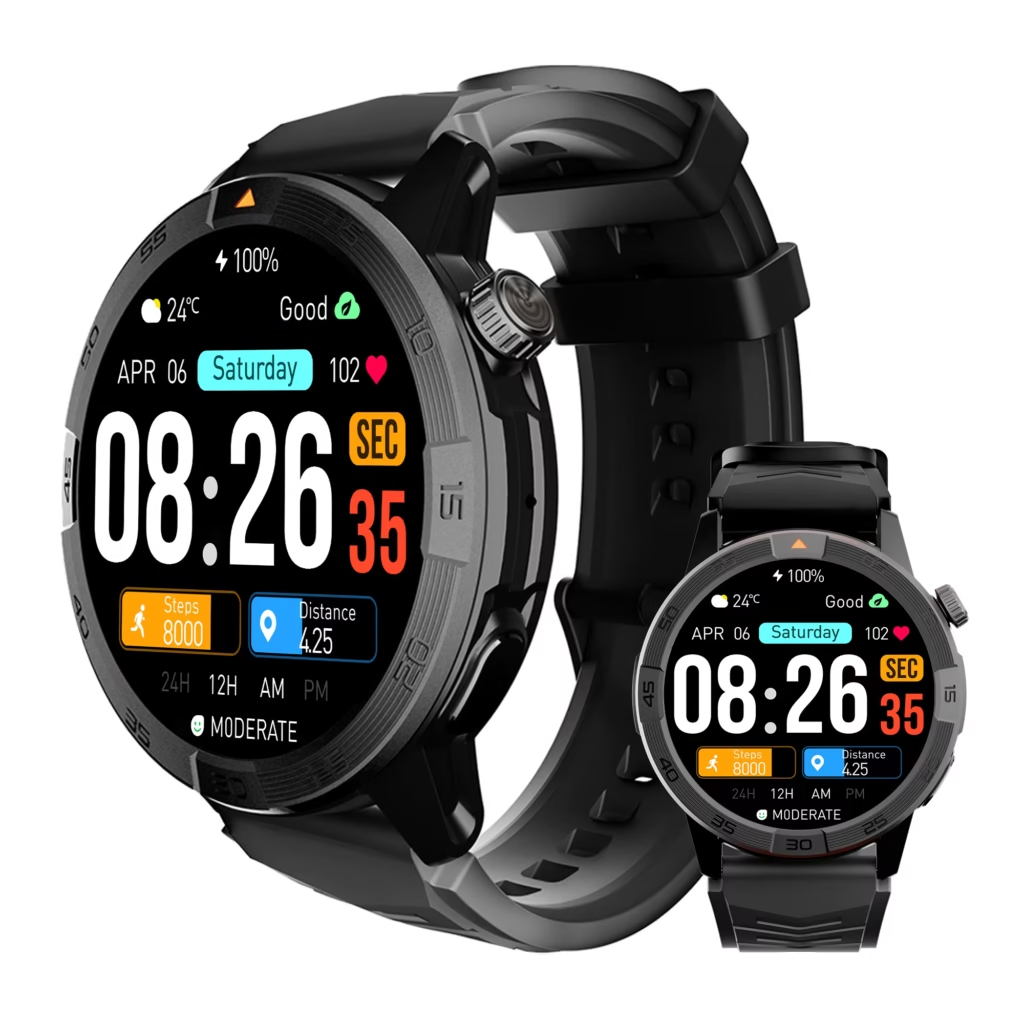
| Zone | Caller visible? | Phone retrieval needed? | Privacy risk | Best action |
|---|---|---|---|---|
| Personal desk | Yes or No | Low to High | Low to Medium | Answer, move, or defer |
| Shared corridor | Yes or No | Low | High | Move or decline |
| Meeting room | Yes or No | Low | Variable | Use only if appropriate |
| Records or print area | Yes or No | Medium | Medium to High | Defer or move |
| Private call pocket | Yes or No | Low | Low | Short call fit |
The watch earns office convenience when it shortens the decision path: notice caller, choose zone, handle or defer, return to the office route.
If the worker still wanders back to the desk, searches for the phone, or answers in shared areas, the calling feature has not solved the office problem. It has only moved the alert from pocket to wrist.
Zone-Map Results for American Office Calling
The finished map receives one of four results.
Office Roam Fit
Use this result when caller information is visible enough to triage, repeated desk returns drop, a private call pocket exists, brief calls finish without privacy spill, and the worker can rejoin the office path cleanly.
Private-Zone Only
Choose this result when the watch helps with call notice, but shared areas remain unsuitable. The worker may answer only after moving to a private pocket or approved quiet area.
Desk-Bound Calling
Use this result when the worker still needs the phone, desk system, headset, records, or approved communication tool for most calls. The watch may help identify the caller, but it does not create enough office mobility.

Convenience Claim Rejected
Apply this result when the watch encourages shared-space speaker calls, privacy spill becomes common, phone hunting continues, meeting-room carryover creates problems, or the office map has no appropriate call zone.
Some office workers do not miss calls because they lack alerts; they miss them because the next step is unclear. To keep those issues separate, readers can distinguish caller notice from private call handling.
Office Zone Notes: Questions Workers Ask Before Answering
Should calls be answered in shared offices?
Only when the call suits a shared area and workplace expectations allow it. A quick callback promise may fit better than a full conversation. Private, client-related, personal, or detailed calls should move to a better zone or wait.
Does caller identification protect privacy?
No. Caller identification tells the worker who is calling. It does not make a corridor, kitchen, lobby, print area, or shared desk private.
Is a meeting room always appropriate?
No. A meeting room may be booked, occupied, visible through glass, or needed by a group. The room may also carry meeting context that should not spill into a call.
Does the phone need to stay at the desk?
The phone can stay at the desk only when the watch provides enough call information and the office has suitable call zones. Some workflows still require the phone, desk system, voicemail, collaboration tool, or employer-approved process.
What if the private call pocket is too far away?
Then wrist calling may reduce missed alerts but not deliver full convenience. The worker may still need to defer the call, return to the desk, or use another approved communication method.
A Convenient Office Call Needs the Right Room, Not Just the Right Watch
Read the floor plan before judging the feature. Where is the phone? Where did the call appear? Which zone is the worker standing in? Is that zone private enough? Can the worker avoid phone retrieval? Can the office path resume cleanly after the call?
The smartwatch is convenient for office calls only when the worker can choose the right microzone before the conversation exposes audio or sends them back to the desk.
Before calling wrist communication convenient, draw the office map: desk, corridor, records or print area, meeting room, and private call pocket. Mark which calls can happen where, then compare this watch with your private office call map instead of judging the feature from caller display alone.