
MORNING, LEFT SIDE: Walking activity, daily progress, and a break reminder.
MORNING, RIGHT SIDE: A pet owner calling to change an afternoon pickup time.
Both screens could help a Portland pet-boarding front-desk manager. They solve different problems, though.
A smartwatch with calls vs Fitbit comparison should not begin by counting features. One option may create immediate value by keeping customer and staff communication visible at the wrist. The other may be more valuable because it builds activity awareness, habit reminders, and wellness context across repeated days.
Before comparing products, divide the decision in two:
What needs attention now?
What becomes valuable over time?
Put Communication and Wellness on Opposite Sides
The buyer needs a two-column priority card rather than a conventional specifications contest.
| Communication side | Wellness side |
|---|---|
| Pet-owner calls | Walking activity |
| Staff updates | Daily progress |
| Caller identification | Break reminders |
| Brief wrist response | Habit awareness |
| Immediate operational effect | Value accumulated over time |
The columns are not direct substitutes.
Communication is usually judged by whether information arrives soon enough to change the current situation. Wellness tracking earns its place when repeated measurements, reminders, and reviews help the user notice a pattern.
Trying to make both sides equally important produces a vague comparison. One must lead.
What gives communication immediate value?
A call or message matters now when it changes:
- A pickup time
- A pet’s preparation schedule
- Staff availability
- A customer arrival
- A vendor handoff
- A front-desk task
Its value depends on timing. An update received an hour late may no longer be useful.
What gives wellness cumulative value?
Activity and habit information may become useful after:
- A complete shift
- Several workdays
- A weekly review
- Repeated break reminders
- Comparison between busy and desk-heavy days
The individual data point may feel small. The pattern provides the value.
Morning: Give Wellness Tracking One Clear Job
The manager begins the day by opening the boarding desk, confirming arrivals, checking kennel notes, and walking through the facility.
That movement creates several possible wellness uses, but the buyer should select one main purpose.
Perhaps the watch should help the manager:
- Notice long periods without a break
- Record walking during the shift
- Review daily movement
- Maintain a simple activity habit
- Compare active and desk-heavy days
Choosing every available metric makes the wellness side difficult to evaluate.
Ask when the information becomes useful
A walking total may matter at the end of the day. A break reminder needs to appear during the shift. Weekly progress becomes valuable only when the manager reviews it consistently.
Usefulness therefore depends on both the data and the moment it influences.
Complete this sentence:
By Friday, wellness tracking should help me notice __________.
Possible answers include missed breaks, low movement during front-desk blocks, or greater consistency across the week.
A number that never changes a decision has limited personal value.
Keep wellness claims realistic
Activity data can support awareness and habit review. It should not be treated as a medical diagnosis, guaranteed health improvement, or replacement for professional healthcare.
The buyer must also compare the exact Fitbit model. Devices within the same brand may differ in display, sensors, notifications, call controls, companion-app behavior, and optional services.
Midday: Define the Communication Job
Around midday, the desk becomes busier.
Owners call with arrival questions. Staff members need timing updates. Pickup plans change. The manager may be speaking with one customer while another priority contact calls.
The communication side needs a precise job.
It might be:
- Display the caller’s identity
- Show that a priority owner is calling
- Allow a brief stationary answer
- Decline and return the call later
- Preserve missed-call awareness
- Show a staff message without retrieving the phone
Full wrist calling is not automatically required.
Separate awareness from conversation
For some buyers, caller identification creates most of the value.
Seeing Miller Pickup — 3:30 PM may be enough to decide whether to reach for the phone. Another manager may need to acknowledge a short change without leaving the desk.
Write the minimum communication requirement:
The watch must identify priority callers and allow a short response while the paired phone remains nearby.
A different buyer might stop after “identify priority callers.”
Keep phone dependence visible
Many call-capable watches use a compatible nearby phone for the underlying call. Exact behavior can depend on:
- Phone platform
- Companion app
- Bluetooth pairing
- Notification permissions
- Microphone and speaker availability
- Background-app operation
- Phone distance
A call label should not be interpreted as independent cellular service unless the exact watch and service arrangement support it.
Readers who need that distinction can separate wrist calling from true phone independence.
Test One Urgent Pet-Owner Contact
One call is enough to expose the difference between the two priorities.
A pet owner phones the Portland facility to move pickup from 5:30 to 3:45. The change affects front-desk expectations, staff timing, pet preparation, and departure paperwork.
What happens on the communication side?
Ask:
- Did the watch identify the owner?
- Could the manager acknowledge the change?
- Was the paired phone available?
- Did the wrist alert prevent a missed update?
- Was speaking aloud appropriate at the front desk?
- Did the conversation need to move to the phone?
The communication feature earns value when it protects a time-sensitive operational change.
What happens on the wellness side?
If wellness information becomes temporarily unavailable, the manager might lose:
- Part of the walking record
- One break reminder
- A complete daily progress view
- A data point in the weekly pattern
That loss can matter. Its consequence usually develops on a different timetable.
Write the consequence sentences
Missing the pickup call would __________.
Missing today’s activity record would __________.
The more serious ending points toward the correct primary purpose.
This is not an argument that communication always matters more. It is a method for comparing consequences rather than product labels.
Afternoon: Decide Whether Activity History Changes Anything
After the main pickup period, the manager reviews the day’s movement and break pattern.
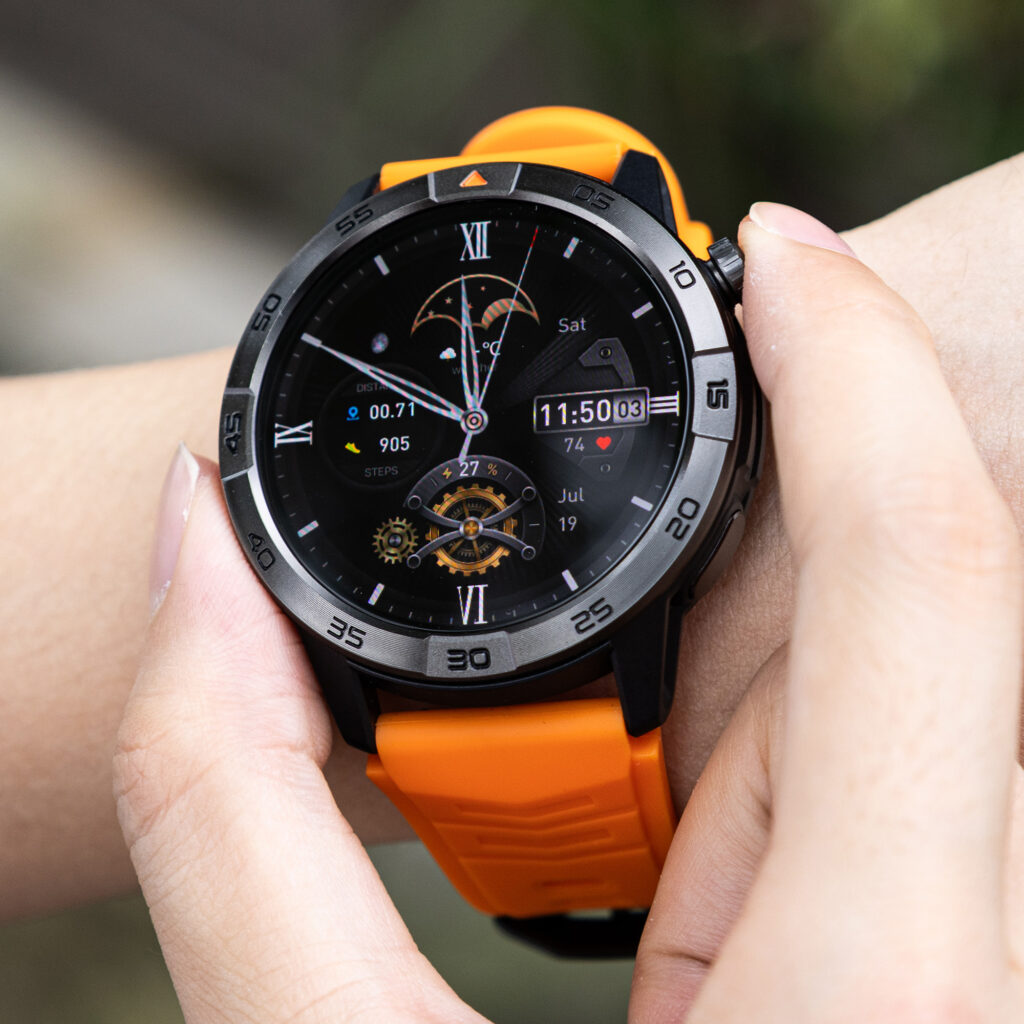
A step count or progress ring becomes useful only when the buyer does something with it.
Questions worth asking include:
- Is the information reviewed regularly?
- Does it reveal desk-heavy periods?
- Do break reminders produce actual breaks?
- Does the manager compare several days?
- Is consistency more valuable than one high total?
- Would a simpler movement summary be enough?
Separate attractive data from actionable history
A large collection of wellness metrics can look valuable during shopping.
The practical question is narrower:
Which repeated record would change a habit?
For this manager, the answer might be afternoon break consistency rather than maximum detail across every possible wellness category.
Keep migration outside this comparison
Existing Fitbit account history, years of stored data, platform migration, and continuity after switching are separate concerns.
They should not control this article.
Here, activity history is judged only by the value it creates in the current weekly routine. A later Fitbit comparison can handle preservation and migration directly.
Declare the Primary Purpose
The buyer now has evidence from both sides.
It is time to choose a leader.
Let communication lead when
Communication should control the purchase when:
- Owner updates frequently change same-day operations
- Staff coordination cannot wait
- Caller identification prevents service mistakes
- The phone is not always immediately accessible
- Brief wrist responses reduce missed information
- Delayed contact creates customer frustration
- Communication problems appear repeatedly
In this case, wellness remains useful but secondary.
Let wellness lead when
Wellness should control the purchase when:
- Activity history is reviewed consistently
- Habit reminders influence the routine
- Break tracking has a defined purpose
- Weekly progress matters more than instant wrist contact
- The phone already handles calls adequately
- Call access would add little practical value
- Detailed wellness context is used repeatedly
Here, communication can remain a supporting function.
Refuse the convenient tie
Many buyers say they want both equally because that avoids making a hard choice.
Use one question to break the tie:
Which missing function would create the larger problem by the end of the week?
That answer should lead the purchase.
Buyers still carrying several attractive but unused features can identify which watch functions earn repeated daily use before choosing a side.
Give the Secondary Side a Minimum Allowance
Choosing a primary purpose does not require abandoning the other category.
The secondary side simply receives a smaller requirement.
When communication comes first
The minimum wellness allowance might include:
- A basic movement summary
- A break reminder
- Simple daily progress
- A limited activity history
- A few clearly presented trends
The buyer does not need every wellness feature to equal the leading Fitbit-oriented experience.
When wellness comes first
The minimum communication allowance might include:
- Incoming-call alerts
- Caller identification
- Missed-call awareness
- Staff-message previews
- Phone retrieval when a response is needed
Full wrist conversations may be unnecessary.
Apply the allowance rule
The secondary category must remain useful without overruling the primary purpose.
That sentence prevents feature creep.
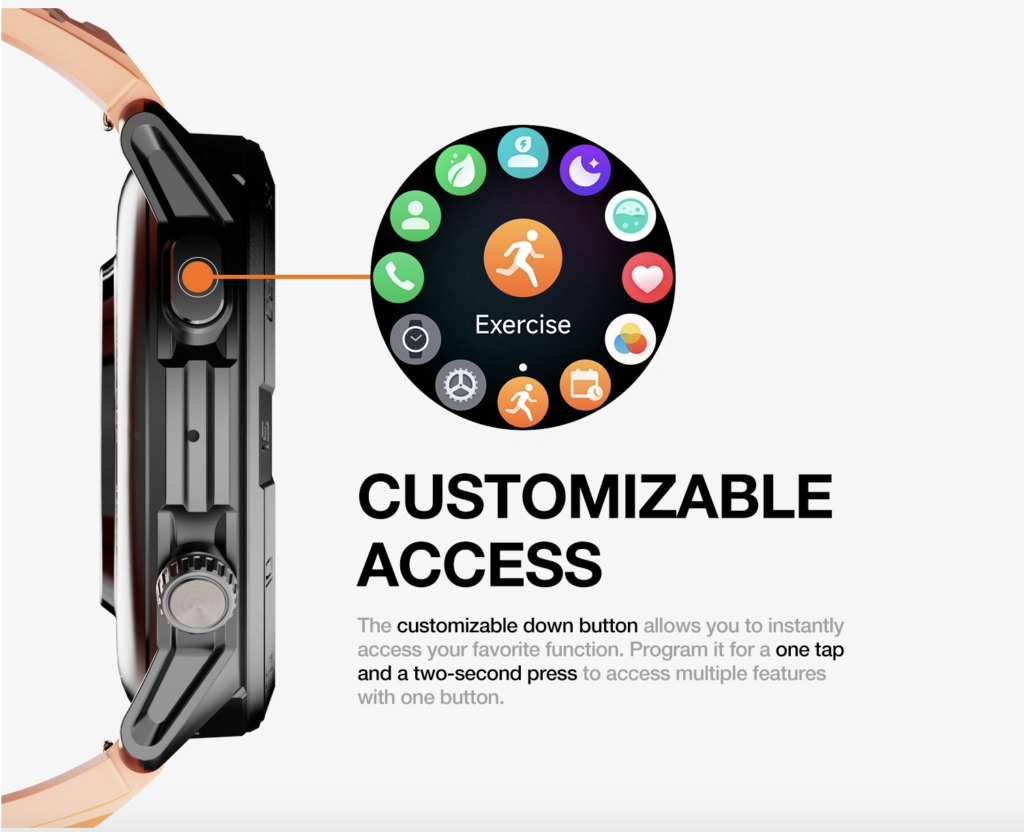
A communication-first buyer should not reject a suitable watch because its secondary wellness detail is less extensive than a dedicated tracker. Likewise, a wellness-first buyer should not sacrifice the preferred activity experience for calling features that would rarely be used.
Compare Exact Devices, Not Brand Stereotypes
“Fitbit” represents several devices rather than one fixed capability set. Calling smartwatches also vary widely.
Build the comparison around the exact models under consideration.
| Priority field | Call-capable smartwatch | Exact Fitbit model |
|---|---|---|
| Caller awareness | Verify name, number, and alert behavior | Verify model-specific notifications |
| Wrist conversation | Verify microphone, speaker, and phone dependence | Verify whether two-way calls are supported |
| Staff messages | Check previews and controls | Check available notifications and replies |
| Activity history | Review depth and presentation | Review depth and presentation |
| Break reminders | Confirm controls and scheduling | Confirm controls and scheduling |
| Secondary allowance | Does wellness remain useful? | Does communication remain sufficient? |
Judge behavior rather than reputation
Verify what the device actually does:
- Which alerts appear
- Whether calls can be answered
- Where the audio conversation occurs
- How close the phone must remain
- Which activity records are available
- How reminders behave
- Whether the app adds useful context
- Which functions require optional services
A familiar brand name is not a substitute for exact model behavior.
Do not assume every Fitbit has the same communication role
Some Fitbit devices may support richer call handling, while others provide notification awareness or depend more heavily on the nearby phone. Screenless or wellness-focused models may make an entirely different tradeoff.
This variation is why “Fitbit versus calling watch” is incomplete until the exact devices are named.
Compare the Time Horizon of Value
Communication and wellness should also be judged across different time horizons.
Communication value can appear in minutes
A call may prevent:
- A missed pickup change
- Staff confusion
- Delayed pet preparation
- An unnecessary customer wait
The benefit is immediate and visible.
Wellness value may appear across days
A repeated record can reveal:
- Missed breaks
- Lower movement during certain shifts
- An inconsistent routine
- Improvement across the week
The benefit builds gradually.
Choose the time horizon that matters more
A customer-facing role can still prioritize wellness. A fitness-focused buyer can still need call alerts.
The deciding factor is which time horizon contains the more important consequence.
Run the Friday Missed-Function Test
At the end of the week, imagine that one side failed completely.
Week without useful wrist communication
The manager may have experienced:
- Missed pickup changes
- More phone searches
- Slower owner responses
- Harder staff coordination
- Less reliable caller awareness
Week without useful wellness tracking
The manager may have lost:
- Walking history
- Break consistency
- Daily progress
- Habit reminders
- A clearer view of active and desk-heavy periods
Now complete one sentence:
By Friday, I would regret losing __________ more than __________.
The first blank names the primary purpose.
Reject the wrong leader
A call-capable smartwatch is a weak choice when the manager rarely benefits from wrist contact and consistently values wellness history.
A Fitbit-oriented option may be the wrong lead when delayed owner communication repeatedly affects service.
The better device protects the larger consequence.
Verify Only What Could Reverse the Decision
The priority card does not need a generic shopping checklist.
Confirm the facts that could move the buyer from one column to the other:
- Exact Fitbit model
- Exact calling smartwatch
- Phone compatibility
- Call alert versus two-way conversation support
- Nearby-phone requirement
- Microphone and speaker availability
- Activity-history depth
- Reminder behavior
- Companion-app requirements
- Optional subscription effects
- U.S. return terms when a realistic trial is needed
For communication-first buyers, a broader everyday test can separate occasional call alerts from communication-led daily convenience.
Wellness-first buyers should pay closer attention to the quality and usefulness of activity history rather than assuming that more metrics automatically provide more value.
Questions About Smartwatch With Calls vs Fitbit
Is a smartwatch with calls automatically better than Fitbit?
No. It is the better choice only when timely wrist communication creates more value than the wellness functions offered by the Fitbit model being considered.
Can Fitbit devices show incoming calls?
Many Fitbit devices can show phone-based call notifications, but call controls and two-way wrist conversation support vary by model, phone, permissions, and setup.
Does every buyer need full wrist calling?
No. Caller identification, an incoming-call alert, or reliable missed-call awareness may be enough.
When should wellness tracking lead the decision?
Let wellness lead when the buyer reviews activity history, acts on reminders, values repeated progress, and remains satisfied using the phone for communication.
Can a calling smartwatch still track activity?
Many calling smartwatches provide activity functions, but the depth, history, sensors, presentation, and app experience differ. Compare the exact secondary wellness allowance.
What is the clearest decision test?
Ask which loss would matter more by Friday: missed communication or missing wellness history.
Should existing Fitbit history decide this comparison?
Not here. Account history, data migration, and platform continuity require a separate switching analysis.
Choose the Function You Would Miss First
Return to the split-screen morning.
On one side, walking activity and a break reminder build a picture of the manager’s routine. On the other, a pet owner calls with a change that affects staff, timing, preparation, and customer service.
Both sides offer value.
One side must lead.
Choose communication first when missed owner or staff contact disrupts the day. Choose wellness first when activity history and habit awareness provide the greater weekly benefit and the phone remains an acceptable communication tool.
Complete both columns, remove the loss you could tolerate for one week, and hold the surviving communication priority beside the available call controls.
The better watch protects the function the buyer would notice missing first.