
Three missed-call names sit on the watch screen while a medical-specimen courier is safely parked outside a Baltimore pickup site.
Dispatch called once. A receiving laboratory called twice. A family member left the third alert.
All three contacts matter, but only one may change where the courier drives next.
A smartwatch for delivery drivers who need calls becomes useful when caller identity leads to a priority decision rather than an automatic answer. The courier needs to know which contact can alter the active route, which call must be returned before the next handoff, and which interruption belongs in a later callback window.
The answer is a five-level priority-caller ladder.
It does not tell the driver to handle more calls. It decides which callers deserve the first safe response opportunity.
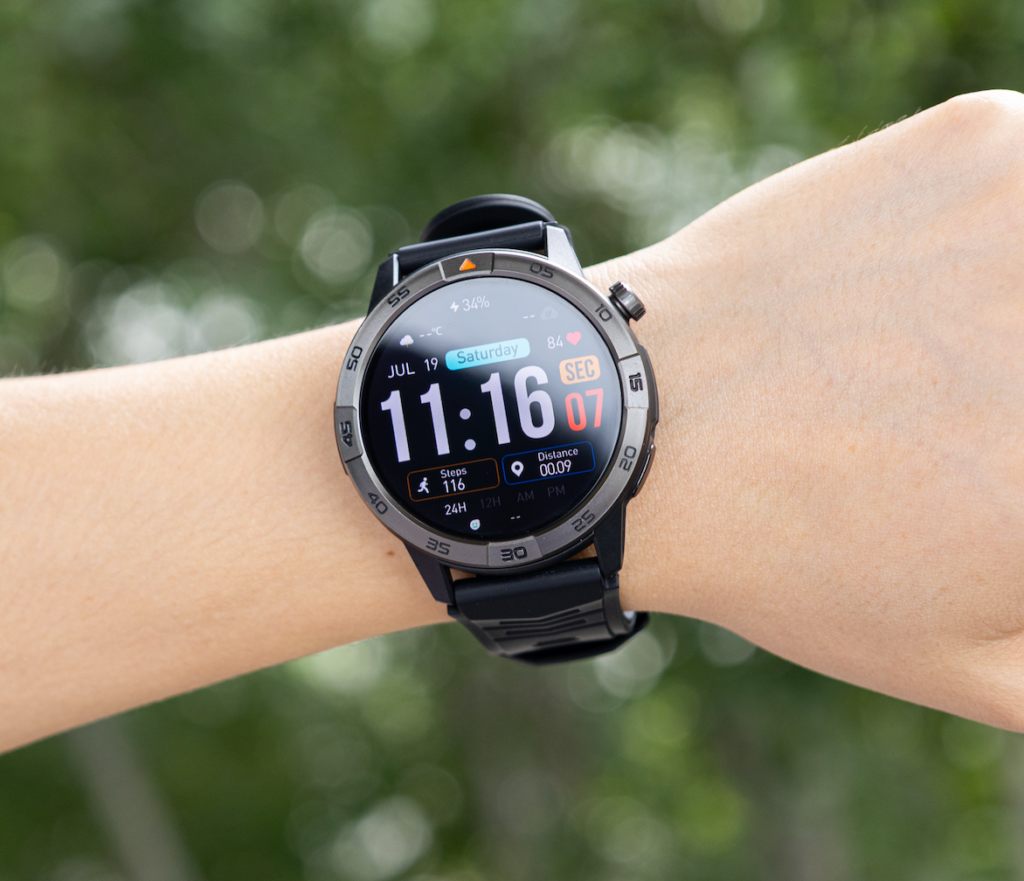
One Baltimore Caller Can Change the Entire Route
A medical-specimen route is built around scheduled pickups, designated handoffs, receiving instructions, and time-sensitive coordination.
During one shift, the courier may hear from:
- Dispatch
- A receiving laboratory
- A current pickup site
- The next scheduled stop
- An operations supervisor
- A family contact
- An unknown number
Those callers should not compete equally for attention.
Dispatch may need to replace the next pickup. Laboratory staff could change the receiving entrance. A pickup site might report that the specimen is not ready. Meanwhile, a routine administrative call may have no effect on the current run.
The caller’s name starts the decision, but the possible route consequence sets the priority.
Caller identity is only the first filter
Seeing “Dispatch” on the watch does not reveal whether the call is urgent.
The contact may be calling to:
- Redirect the courier
- Confirm a routine detail
- Discuss a later shift
- Ask a question that can wait
- Correct an active handoff problem
The same is true for laboratory calls. A receiving lab connected to the next stop may deserve quick attention, while another facility connected to a completed handoff may belong in a later callback queue.
Before assigning a tier, the courier should ask:
- Can this caller redirect the vehicle?
- Can the contact change the next pickup?
- Will a delay affect an upcoming handoff?
- Does the issue need resolution before leaving the current area?
- Can the conversation wait for a planned break?
These questions prevent the ladder from becoming a simple favorites list.
High priority does not mean instant wrist access
Even the most important caller does not justify interacting with the watch while the vehicle is moving.
The courier may need to:
- Continue through traffic
- Complete a turn
- Find lawful parking
- Secure the vehicle
- Finish an active pickup
- Move away from a loading area
Priority determines response order at the next safe stationary window. It does not create permission to answer while driving, backing, entering traffic, or handling a specimen.
Build the Five-Level Priority-Caller Ladder
The ladder should be created before the Baltimore route begins.
Each level needs four elements:
- A caller category
- A possible route consequence
- A safe response window
- A default callback rule
This removes the need to improvise after every vibration.
Level 1: Immediate operational priority
The top tier is reserved for contacts who may change what the courier must do before reaching the next planned destination.
Possible Level 1 contacts include:
- Active route dispatch
- The designated operations supervisor
- An approved urgent route contact
These callers may need the courier to:
- Hold the current route
- Stop the planned sequence
- Accept a reassignment
- Correct an active handoff problem
- Receive instructions before continuing
The default rule is:
Return the call at the first safe and lawful stationary opportunity.
The watch helps the courier recognize that the interruption belongs at the top of the queue. It does not require the conversation to remain on the wrist.
Level 2: Route-changing priority
The second tier includes callers who may affect an upcoming stop without requiring the current route to pause immediately.
Possible contacts include:
- The next receiving laboratory
- The current pickup site
- An upcoming handoff location
- An approved route coordinator
A Level 2 call may involve:
- A revised receiving entrance
- A pickup-readiness update
- A changed handoff time
- A different contact person
- Resequencing of the next few stops
The response rule becomes:
Return the call before committing to the affected stop.
That may mean calling from a parking area outside the current pickup site, from the courier company’s staging point, or from another approved stationary location.
Level 3: Callback priority
Some business calls matter without affecting the active route.
Examples may include:
- A routine administrative office
- A scheduling contact for a later day
- A supervisor with a nonurgent question
- A pickup site not connected to the current run
- A general business contact
These calls should not receive the same interruption status as dispatch or the next laboratory.
The default rule is:
Add the caller to the next planned callback window.
That window could occur during an authorized break, at a staging point, or after the urgent queue is clear.
Level 4: Personal nonurgent
Family and personal contacts may be important without belonging in the medical-delivery workflow.
A practical rule can separate routine calls from genuine personal emergencies:
- One ordinary call waits
- A text or voicemail is reviewed at the next appropriate stop
- Repeated calls may trigger a safe-stop check
- Longer conversations wait for a personal break
- An agreed family emergency signal receives separate treatment
The default instruction is:
Review during the next appropriate personal window unless a separate emergency signal applies.
This preserves personal accessibility without allowing every familiar name to compete with route-changing communication.
Level 5: Unknown
Unknown numbers stay at the bottom until the caller’s role is verified.
The person may eventually prove important, but the courier does not yet know whether the call is connected to:
- Dispatch
- A pickup
- A laboratory
- A routine sales call
- A wrong number
- A personal contact using another phone
The safest default rule is:
Let the call end, identify the caller at a safe stop, and return it only after the role is known.
The courier should not disclose route, specimen, pickup, laboratory, or recipient information to an unidentified caller.
Match Each Caller Tier to a Route Consequence
The ladder becomes practical when every level leads to a predictable action.
| Caller tier | Possible consequence | Safe response deadline | Default action |
|---|---|---|---|
| Immediate operational | Active route may need to stop or change | First safe stationary opportunity | Return first |
| Route-changing | Upcoming pickup or handoff may change | Before the affected stop | Return at the next staging point |
| Callback priority | No immediate route effect | Planned pause or break | Add to callback queue |
| Personal nonurgent | No work-route consequence | Personal break or after route | Delay |
| Unknown | Consequence cannot be confirmed | After identification | Screen first |
Rank the consequence, not the number of missed calls
Two missed calls from one laboratory do not automatically outrank a single call from dispatch.
Call frequency may signal that the contact wants attention, but it does not explain what will happen if the courier waits.
A stronger test is:
What decision becomes harder or impossible if this call is delayed?
When dispatch may redirect the active route, the answer is immediate. When a routine office call concerns paperwork for next week, the consequence is much smaller.
Job titles should not control the ladder
A supervisor does not automatically outrank every pickup-site contact.
Suppose the supervisor is asking about next month’s schedule while the current pickup location is calling to report that the specimen will not be ready. The pickup-site call has the greater route consequence.
Priority should reflect the active run, not organizational status alone.
Caller tiers may change during the shift
A contact does not need to remain on one level all day.
For example:
- A laboratory connected to the final stop may begin at Level 3
- As the courier approaches that handoff, the contact may move to Level 2
- After the transfer is complete, it may return to callback priority
This route-aware adjustment keeps the ladder useful without turning it into the earlier call-destination model used for another delivery article.
Find the First Safe Response Window Between Maryland Stops
The ladder identifies who should receive attention first. The route determines when that response can happen.
Possible safe windows include:
- Lawfully parked outside a pickup site
- Stationary in an approved receiving area
- Parked at the company’s Baltimore staging point
- Waiting in a designated handoff location
- Taking an authorized break
- Completing the final stop
The watch should never create the impression that a priority call must be handled while the vehicle is moving.
Level 1 gets the first safe window, not an immediate answer
An immediate operational caller receives the first safe callback opportunity.
Several minutes may pass while the courier clears traffic, locates parking, secures the vehicle, or finishes a required handoff. That delay does not weaken the ladder. It respects the difference between urgency and safe access.
Level 2 must be returned before the route decision
A route-changing call should be returned before the courier:
- Leaves a useful staging point
- Enters the wrong receiving area
- Drives toward a canceled pickup
- Commits to the next stop sequence
- Misses an updated handoff instruction
The response deadline is connected to the route consequence rather than a fixed number of minutes.
Level 3 calls belong in a grouped callback window
Routine business calls can be handled together.
Grouping them may reduce:
- Repeated stops
- Constant context switching
- Unnecessary route fragmentation
- Competition with operational callers
One planned callback period is often more manageable than treating every routine call as a separate interruption.
Give Every Caller Level a Callback Rule
A caller ladder works best when the courier can state the response rule without reconsidering it each time.
Immediate operational rule
Return the call from the first safe stationary location before continuing the affected route.
Route-changing rule
Call back before leaving the next useful staging point or committing to the affected stop.
Callback-priority rule
Return during the next planned pause after the operational queue is clear.
Personal nonurgent rule
Review during a personal break or after the route unless an agreed emergency signal applies.
Unknown-caller rule
Identify the caller first and return the call only after the role is verified.
These rules create a sequence that remains useful when several names appear at once.
Run the Three-Name Test on the Baltimore Route
Return to the three missed calls from the opening:
- Dispatch
- Receiving laboratory
- Family contact
The courier is safely parked outside the current pickup site and must decide who receives the first callback.
First place: Dispatch
Dispatch belongs at Level 1 when the contact may redirect the active route or replace the next pickup.
The courier returns this call first.
Second place: Receiving laboratory
The lab belongs at Level 2 when the call may change the next handoff.
It should be returned before the courier commits to that destination.
Third place: Family contact
The family call belongs at Level 4 when there is no separate emergency signal.
It remains important, but it waits for an appropriate personal window.
Now change one detail.
Suppose the dispatch call concerns next week’s paperwork while the laboratory is reporting a new receiving entrance for the next handoff. The laboratory moves above dispatch because the route consequence has changed.
The ladder ranks the effect of the call, not the prestige of the caller.
Configure the Watch Around the Top Two Tiers
Only after the ladder is built should the courier adjust the watch and phone.
Make route-critical contacts easy to identify
Useful contact labels may include:
DISPATCH — ACTIVE ROUTELAB — NEXT HANDOFFPICKUP — CURRENT STOPSUPERVISOR — ROUTINEFAMILYUNKNOWN

Short, clear labels reduce the time needed to understand an alert while safely parked.
The watch should display enough caller information to distinguish one tier from another. A phone number alone may not be enough.
Give top-tier contacts priority only where supported
Some phones and watches allow selected contacts or repeated callers to receive different notification treatment.
Where those options exist, the courier may choose to prioritize:
- Level 1 contacts
- Level 2 contacts
Lower tiers can remain visible without receiving the same interruption status.
Do not assume that every smartwatch supports automatic caller tiers, custom vibration patterns, or route-aware alert filters. The ladder is a human decision system first. Device settings only support it.
Confirm the nearby-phone requirement
Bluetooth wrist calling typically relies on the paired phone remaining connected and nearby.
Before depending on the watch during a Baltimore run, the courier should confirm what phone-assisted wrist calling requires.
The real test should use:
- The courier’s normal iPhone or Android phone
- The usual phone-storage location
- The same vehicle
- The regular companion app
- The actual contact labels
Preserve enough battery for the callback queue
Battery reserve should cover:
- Repeated priority alerts
- Bluetooth connection
- Safe-stop call handling
- The final delivery
- The planned callback window
- Travel to dependable charging
Drivers comparing communication with broader route endurance can review smartwatch demands across a delivery shift.
Battery supports the ladder, but it does not decide who belongs at the top.
Keep Lower-Tier Calls From Controlling the Shift
The watch becomes distracting when every caller is allowed to create the same urgency.
The five-level ladder helps prevent:
- Routine business calls from interrupting route decisions
- Personal calls from competing with active handoffs
- Unknown callers from gaining access to sensitive information
- Repeated low-priority callbacks from breaking the route into unnecessary stops
Couriers seeking broader control over wrist interruptions can reduce low-value wrist interruptions during everyday work.
The medical-specimen courier must still follow employer procedures, dispatch systems, route software, and official handoff requirements. The watch supports caller recognition and callback order; it does not replace operational records or approved communication channels.
Smartwatch for Delivery Drivers Who Need Calls: Practical Questions
Which callers should receive immediate operational priority?
Contacts who can pause, redirect, or materially change the active route belong at the top of the ladder.
Should dispatch always be Level 1?
No. Dispatch often has high operational priority, but the likely route consequence should determine the tier for that specific call.
Can one laboratory move between levels?
Yes. A lab connected to the next handoff may be Level 2, while a completed or later-stop contact may belong at Level 3.
Should a courier answer a top-tier call while driving?
No. The top tier receives the first safe callback window; it does not authorize watch interaction while the vehicle is moving.
How should an unknown caller be handled?
Allow the call to end, identify the caller while safely parked, and return it only after the caller’s role is known.
Can family contacts receive higher priority?
Yes, when the courier has defined a separate emergency signal, repeated-call rule, or another clear personal protocol.
Let Route Consequence Decide Who Gets the First Callback
Three names appeared on the watch, but they did not deserve equal access to the courier’s attention.
Dispatch could change the active run. The receiving laboratory might alter the next handoff. A family contact could wait for an appropriate personal window unless an agreed emergency signal applied.
A smartwatch for delivery drivers who need calls is most useful when the courier ranks the caller before deciding how to respond. Caller identity begins the process, route consequence sets the tier, and a safe stationary location determines when the callback happens.
Use one rule throughout the Baltimore shift:
The caller who can change the route gets the first safe response window.
Which Caller Will Earn the First Safe Stop?
Before the next specimen run, place dispatch, the next laboratory, the current pickup site, family contacts, and unknown numbers on the five-level ladder. Reserve the top two tiers for callers who can change the active route or the next handoff.
Once the ladder is ready, test this watch against your five-tier caller plan and decide whether it keeps the right names visible without letting every ring take control of the route.