
Check. Review. Move. Answer.
After the last evening program in Reno, a community recreation coordinator writes those four verbs in the corner of a dry-erase schedule.
The first three describe habits that already work. Daily steps are checked before the facility closes. Weekly progress is reviewed on Sunday. A movement reminder breaks up long registration sessions.
The fourth verb—answer—is the reason another watch is being considered. Short staff calls often arrive while equipment is being moved between program rooms.
A Fitbit vs Bluetooth calling smartwatch decision cannot be settled by comparing calling with step tracking. The coordinator must decide where each existing habit will go. Some may Carry Forward. Others will need to be Recreated, replaced with a Substitute, or deliberately Retired.
Before the watch changes, every useful habit needs a destination.
Inventory the Habits Already Shaping a Reno Recreation Week
A feature becomes important only after it changes what someone does.
The coordinator’s daily step total matters because it is checked after the final program. When the number looks low, one more lap through the building may follow. Without that action, the total is simply stored information.
Sunday’s weekly review serves another purpose. It shows whether registration work crowded out movement and helps the coordinator set a realistic goal for the next schedule.
Movement reminders earn their place during long desk periods. They matter less during youth activities, equipment setup, or an evening class when the coordinator is already moving.
Write each established habit as a complete loop:
Trigger → wrist action → useful result → follow-up behavior
The evening step habit might read:
Final program ends → daily steps are checked → a sedentary day becomes visible → the coordinator walks another lap.
The reminder habit has a different path:
Registration work continues too long → the wrist prompt appears → sitting is interrupted → the coordinator checks another room on foot.
This format exposes the difference between having a feature and having a working routine.
A replacement watch may record steps but place the result somewhere the coordinator rarely looks. It may offer reminders that arrive during the wrong part of the day. A weekly chart may exist without becoming part of Sunday planning.
Only habits that still influence an action, decision, or goal belong on the migration map.
Decide What the Existing Activity History Still Does
A year of activity records looks valuable because it is large. Size alone does not make the full archive essential.
The coordinator should classify the history by how it is used now.
Active reference
This information is reviewed regularly and changes a goal or behavior.
A recent weekly pattern may show that three administrative days produced very little movement. That observation could lead to scheduled walking breaks the following week.
Occasional reference
The information becomes useful during certain seasons or unusual work periods.
The coordinator might compare a busy summer-program month with a quieter winter schedule without checking that comparison every week.
Stored archive
The record is worth preserving but does not need to appear inside the new watch platform during ordinary use.
Low-value history
The information has not influenced a decision for months and should not control the purchase.
Once the history has a working label, separate three questions:
- Does the old record need to remain accessible?
- Does any part of it need to appear inside the destination platform?
- Can the habit continue if the earlier history stays in a separate account or archive?
Those are different outcomes.
Preserving or exporting information does not prove that another watch platform can rebuild the same timeline. Even when selected data can be shared between services, familiar goals, reminders, summaries, and review screens may still require a fresh setup.
The Reno coordinator may keep the twelve-month record available for occasional reference while beginning a new activity history. The graph would restart, but the daily step check could still continue.
That habit should be judged by its trigger and follow-up action, not by whether every old data point appears in one continuous chart.
Define the New Calling Habit During U.S. Recreation Programs
Bluetooth calling should earn its place by solving one repeated interruption.
For the coordinator, useful calls are short and operational:
- A staff member reports a room change
- The front desk asks where equipment should go
- A coworker needs the coordinator’s location
- A supervisor confirms a delayed start
- A participant-arrival question needs a quick response
One of those calls arrives while cones and a portable speaker are being carried from storage to the gym. Answering the phone means stopping, setting everything down, and interrupting the room transition.
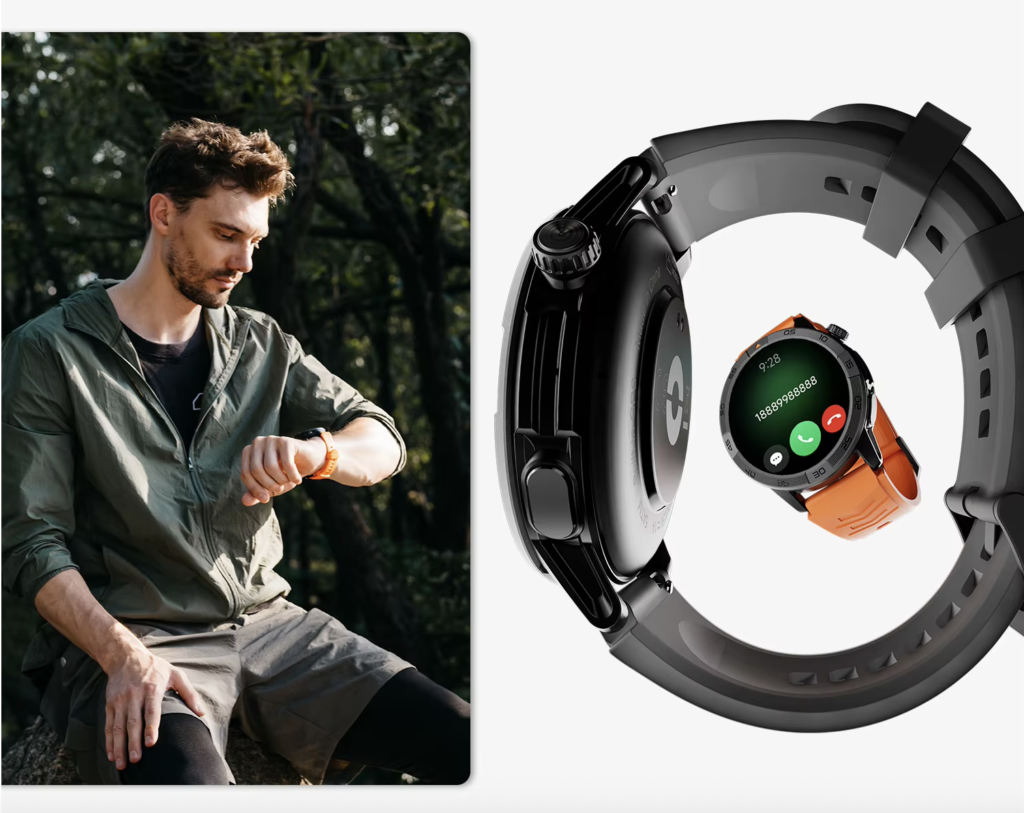
A brief wrist response could settle the issue without breaking the task.
That creates a new habit loop:
Program issue → wrist alert → short answer → current task continues.
Long or private conversations do not belong in this comparison. A staffing concern, participant complaint, or complicated schedule discussion should still move to the phone.
The calling benefit counts only when it solves a recurring program problem. A feature that might be used occasionally is a weak reason to disturb habits that already shape the coordinator’s week.
Before giving calling any value, verify the minimum needed for this exact routine:
- The incoming call reaches the watch
- The caller can be identified
- A brief answer can be completed
- The coordinator’s phone is supported
- The phone can remain where it is normally carried
Anyone expecting the watch to handle calls while the handset is elsewhere should check what happens when the phone is not nearby.
The article does not need a complete calling tutorial. It only needs enough evidence to show whether the new habit is real.
Build the Fitbit Habit-Migration Map
Put the established routines and the desired communication habit in one worksheet.
| Habit | Trigger | Wrist action | Useful result | Follow-up behavior | History value | Destination evidence | Verdict |
|---|---|---|---|---|---|---|---|
| Daily step check | Final program ends | View progress | Daily movement becomes visible | Walk if the day was too sedentary | Active reference | Test required | Assign after testing |
| Weekly goal review | Sunday planning | Open weekly view | Pattern across several days | Adjust the next goal | Active reference | Test required | Assign after testing |
| Movement reminder | Long registration session | Respond to prompt | Sitting is interrupted | Walk through the facility | Active or occasional | Test required | Assign after testing |
| Activity record | Selected program begins | Start recording | Session is logged | Review later | Buyer-specific | Test required | Assign after testing |
| Short staff call | Program interruption | Answer at wrist | Immediate issue is clarified | Continue the current task | New need | Test required | Communication gain |
Each existing habit receives one of four verdicts.
Carry Forward
Use this verdict when the trigger, wrist action, useful result, and follow-up behavior continue with little disruption.
The old history does not have to move perfectly. A habit can Carry Forward while its previous records remain elsewhere.
Recreate
Choose Recreate when the purpose survives but the routine must be built again.
The coordinator may need to enter a new goal, configure another reminder, learn a different screen, start a fresh timeline, or create a new review trigger.
Substitute
Use Substitute when another tool or process preserves the habit’s purpose.
A calendar prompt might replace a missing movement reminder. A short written review could replace a familiar weekly summary.
Retire
Choose Retire only when the coordinator understands the loss and decides the routine no longer deserves a place.
A habit should not disappear merely because the destination watch cannot reproduce it.
Test Which Daily Habits Can Carry Forward
Begin with the routines that occur most often.
For the evening step check, four conditions must remain intact:
- The usual trigger still occurs.
- The result is easy to find.
- The number remains useful.
- The coordinator still takes the follow-up action.
Suppose the replacement records steps but hides the total inside an unfamiliar companion app. The feature is present, yet the quick wrist check has disappeared.
That habit may still survive, but it needs to be Recreated around another watch screen or end-of-day prompt. Calling it Carry Forward would hide the rebuilding work.

Movement reminders need a separate test because their timing matters.
A useful prompt should appear during a long registration block, remain quiet during active programs, and lead to a real break. A reminder that vibrates during equipment setup may have the correct label and the wrong effect.
Run the test during a normal Reno workweek:
- Wait for a genuine desk-heavy period
- Observe whether the destination creates a useful prompt
- Check whether the coordinator notices it
- Record whether movement follows
- Assign the verdict from the resulting behavior
A familiar feature name is not enough. Habit continuity depends on what happens after the wrist responds.
Readers still deciding between immediate communication and longer-term activity support can compare short call access with established wellness value.
This page starts from a later decision point: the old habits already matter, and each one now needs a destination.
Recreate the Sunday Review Without Copying the Old Platform
The daily check and Sunday review are separate habits.
The weekly routine may help the coordinator:
- See active and sedentary days together
- Connect movement with the program schedule
- Recognize an unusually desk-heavy week
- Set the next activity goal
- Plan walking breaks before the week becomes crowded
A destination watch may preserve daily information without presenting the same weekly view. That does not automatically destroy the habit.
The coordinator first needs to identify what the review actually produces. In this case, the useful outcome is not a particular graph. It is one practical decision about the next week.
A Recreated version might look like this:
Sunday calendar prompt → review the available seven-day information → note one pattern → set one movement priority.
The note could be simple:
Registration dominated three afternoons. Add a walking break before the evening programs.
The old interface has not transferred, but the decision process has survived.
Technical setup may take only a few minutes. Behavioral rebuilding takes longer because the coordinator must remember to repeat the new process until Sunday review feels normal again.
Use Carry Forward when the routine continues almost naturally. Choose Recreate when the same purpose requires a new screen, trigger, or sequence.
Replace Lost Prompts With Purpose-Matched Substitutes
An exact copy of the old feature is not always necessary.
Suppose the calling watch does not provide a suitable movement reminder. A calendar alert scheduled for the longest registration period could preserve the behavior.
The revised loop becomes:
Long desk session → calendar alert → walk through the facility → sitting is interrupted.
That is a Substitute. The original tool has changed, but the useful action remains.
A missing weekly summary could be handled in a similar way:
Sunday reminder → review available totals → record one observation → choose the next week’s priority.
A substitute should pass four tests:
- It appears at the right moment
- It requires reasonable effort
- It provides enough information
- It still produces the useful action
Reject workarounds that rely on constant manual entry, are easy to forget, or create more effort than the habit deserves.
Keeping the old history accessible outside the destination platform may also be an acceptable substitute. The coordinator can consult seasonal records when needed without forcing the new app to reproduce every past view.
The goal is not to imitate the old platform. It is to preserve the reason the routine mattered.
Retire Only Habits That No Longer Change Behavior
A platform move can reveal routines that have outlived their usefulness.
Possible retirement candidates include:
- A reminder dismissed every day
- An activity type no longer recorded
- A chart that never affects a goal
- A streak maintained without a practical reason
- A summary opened but never acted upon
Before assigning Retire, complete this sentence:
I am willing to lose this habit because __________.
A clear answer might be:
I have not used this monthly chart to change a goal in the past year, so rebuilding it would preserve a screen rather than a useful behavior.
“The new watch does not have it” is not a sufficient reason. That would let the destination make the decision.
High-value habits deserve more protection. If the Sunday review still changes the coordinator’s plans, a calling feature should not quietly push it into retirement.
Compare the Calling Gain With the Rebuilding Burden
The migration decision now contains one new habit and several established ones.
Track the communication need during a normal recreation week:
- How often does a short staff call occur?
- What task does it interrupt?
- Can the answer remain brief?
- Would wrist access prevent a real delay?
- Does the calling setup work under normal facility conditions?
Readers focused specifically on response speed can see when rapid wrist answering removes a meaningful delay.
Next, record the destination and rebuilding burden of each existing routine.
| Habit | Possible verdict | Rebuilding burden |
|---|---|---|
| Daily step check | Carry Forward or Recreate | Light or manageable |
| Sunday goal review | Recreate | Manageable or significant |
| Movement reminder | Carry Forward or Substitute | Light or manageable |
| Low-use activity chart | Retire | None |
| Historical reference | Preserve separately or Substitute | Manageable |
Use simple burden labels:
- Light
- Manageable
- Significant
- Unacceptable
These labels describe the work involved. They do not replace the four migration verdicts.
The comparison is now precise:
Does short wrist communication improve the coordinator’s program day enough to justify the useful habits that must be rebuilt, replaced, or abandoned?
Counting features cannot answer that question.
One valuable weekly review may outweigh several low-use screens. A recurring staff-call interruption may justify rebuilding a few minor routines.
Issue the Migration Verdict
Move to the Bluetooth calling smartwatch
The move is justified when:
- Short program calls solve a recurring problem
- The required calling behavior works in the real facility
- High-value habits Carry Forward or can be Recreated
- Substitutes preserve the purpose of lost routines
- Retired habits no longer influence behavior
- Important historical information remains accessible
Delay the move
Wait when:
- The communication gain remains hypothetical
- Important habits still lack destinations
- Reminder behavior has not been tested
- Historical continuity is being assumed
- The replacement routine has not survived a normal workweek
Remain with the current Fitbit routine
Staying makes more sense when:
- Wrist calls would be rare
- Existing history still shapes meaningful decisions
- A high-value habit has no workable destination
- The rebuilding burden feels unacceptable
- The communication gain is smaller than the disruption
The move succeeds only when the new calling habit earns the work required to relocate the old ones.
Questions About Fitbit Habit Migration
Can Fitbit history move to any Bluetooth calling smartwatch?
No automatic transfer should be assumed. A record may be exportable or shareable without becoming a usable history inside the destination platform. Check what the receiving service accepts and how imported information will appear.
Can the daily step habit continue without the old history?
Yes. The previous record can remain accessible elsewhere while the coordinator starts a new timeline and keeps the same evening check and follow-up walk.
Will goals and movement reminders transfer automatically?
They may need to be Recreated. The destination may use different goal settings, reminder controls, screens, or permissions.
Does Bluetooth calling mean the new watch can preserve the same activity routine?
No. Calling support does not establish equivalent daily tracking, weekly reviews, reminders, goals, or history. Each habit loop needs its own test.
What is the difference between Recreate and Substitute?
Recreate keeps the habit inside the destination watch or companion platform through new setup. Substitute uses another tool or process to preserve the habit’s purpose.
When should a Fitbit habit be Retired?
Retire it when the routine no longer changes an action or decision and the buyer knowingly accepts its loss.
How much calling value justifies rebuilding the old routine?
The new habit should solve a recurring program problem often enough to outweigh the disruption attached to high-value routines that require rebuilding or replacement.
Give Every Habit a Destination Before Moving the Watch
Check. Review. Move. Answer.
The four verbs are still on the Reno schedule, but they no longer need to belong to one device.
The daily check may Carry Forward. Sunday’s review may need to be Recreated. A movement prompt could receive a Substitute. An old chart that no longer changes anything can be Retired.
Answering a short staff call is the new habit asking for a place.
The switch makes sense only when that communication gain is valuable enough to justify where every existing routine must go.
Put each daily check, weekly goal, reminder, and short staff call onto the migration map. Once every high-value habit has a destination, trace the retained routines through the documented communication and tracking functions before replacing a system that already shapes the week.
Move the habits on paper before moving the watch to a new platform.