
The pairing animation ends, the watch face appears, and the Providence university admissions operations manager says, “That was easy. This one is good.” Three minutes later, a generic priority alert reaches the iPhone, but the wrist stays silent. No applicant name or confidential detail is shown; the missing signal alone changes the judgment. A good smartwatch for iPhone must prove more than a successful first connection. It must carry the manager’s required actions through the day without a critical permission, synchronization, reconnection, or comfort gap.
A good smartwatch for iPhone should pair correctly, deliver every required alert, maintain background synchronization, allow safe wrist actions, reconnect after a controlled interruption, and remain comfortable through the full day. It is good for that iPhone only when the buyer’s essential actions finish without a critical permission, connection, or usability gap.
Pairing creates an opportunity to test daily fit; it does not establish the result. The manager removes the premature “good” label and starts an iPhone Daily-Fit Proof Strip instead.
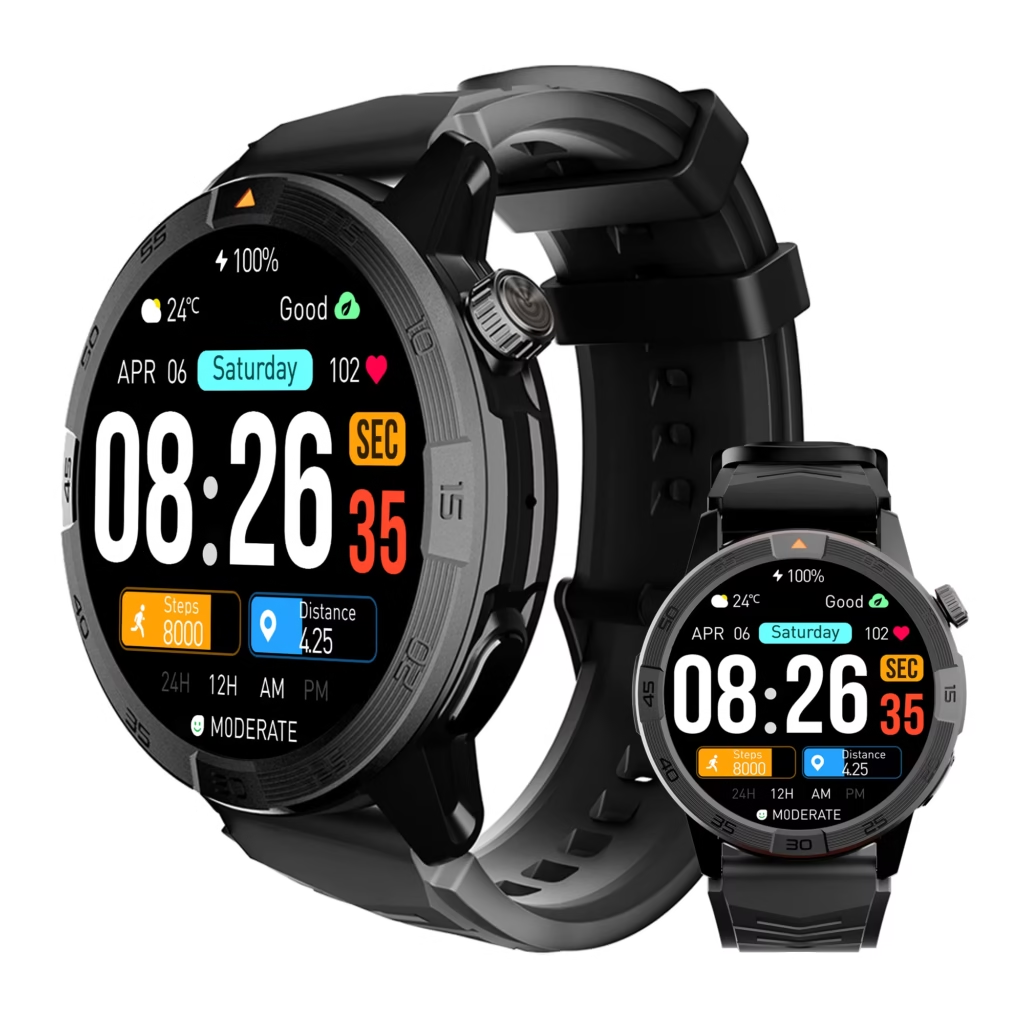
Write the Providence Admissions Requirements Before Testing
A useful test starts with the work that matters, not the features that happen to look impressive. The Providence manager writes six requirements on the strip: receive a generic priority alert, receive a scheduled coordination notice, maintain background synchronization during desk work, complete one documented wrist action while stationary, recover from a planned connection interruption, and remain comfortable until the evening review.
Nothing else can compensate for a missing requirement. Decorative watch faces, sports menus, wellness screens, and optional tools stay outside the test because they do not solve this admissions-office problem. That boundary keeps the article focused on whether the candidate is a good smartwatch for iPhone in one defined U.S. workplace.
Broad product quality still matters, but it is a separate decision. A buyer can separate general smartwatch quality from the iPhone actions required today before treating daily compatibility as proof of everything else.
Set the Exact iPhone Baseline Before the U.S. Workday
The next section of the strip records the starting state. The manager identifies the exact watch candidate, the exact iPhone being used, the companion app shown in the product documentation, the Bluetooth state, any required account, the permissions already granted, and the network conditions present at setup.
This record matters because a second attempt made under different settings would not be the same test. Calling a candidate a good smartwatch for iPhone before recording that baseline creates Good-by-Logo: trust in a familiar-looking interface, recognizable product style, or smooth pairing screen before the daily evidence exists.
The listing, app name, and watch identity must agree. When those details are unclear, the buyer should first confirm that the listing, model, and companion app describe one exact watch. Only then can the Proof Strip show what that specific configuration does.
Trace Every Permission Behind the First Admissions Alert
The opening failure does not automatically prove that the watch is poor. It proves that the notification path is incomplete. The manager follows the missed alert backward from the wrist to the companion app, the iPhone’s app-specific notification settings, any active Focus rules, and the watch’s own notification selection.
This is where Permission Blind Spot appears. One version of the mistake blames the watch before checking the required settings. The opposite version grants every available permission without asking whether the access is necessary or acceptable. A sound test uses only the permissions required for the defined functions and keeps confidential admissions content off the wrist.
The manager finds one missing step in the alert path, documents the correction, and sends the same category of generic priority notice again. Randomly changing several toggles would make the repair impossible to explain or repeat.
Repeat the Morning Alert Before Providence Office Work Moves On
The second priority alert reaches the watch. That earns a Repaired mark, not an unconditional pass. The original failure remains visible because it reveals a setup condition that the manager must understand and preserve.
Timing also matters. An alert that arrives after the admissions decision moment may be technically delivered but operationally weak. The Proof Strip therefore distinguishes Continuous, Delayed, Missing, and Repaired outcomes rather than reducing everything to “works” or “doesn’t work.”
One successful alert still cannot prove the whole day. A good smartwatch for iPhone must keep the connection useful after the manager stops actively watching the app and returns to ordinary desk work.
Keep Background Sync Alive Through a U.S. Desk Block
For the next work block, the manager reviews records and scheduling materials without repeatedly opening the companion app or forcing manual refreshes. The watch should remain useful under the accepted iPhone settings, not only while setup screens are open.
The manager observes whether required information continues to arrive, whether the watch merely looks connected, and whether reopening the app becomes necessary. A delayed or stalled trace creates Daily Sync Drift: the connection icon survives while practical iPhone-linked value quietly fades.
Cause should be assigned carefully. Notification choices, Focus settings, Bluetooth access, power-saving behavior, and companion-app requirements may all influence the observed result. A good smartwatch for iPhone should be judged under documented conditions, not declared reliable or unreliable from one unexplained delay.
Test One Safe Wrist Action in the Admissions Office
Receiving an alert is not the same as acting on it. While seated at a private desk, the manager performs one low-risk action that the exact model documentation supports—dismissing a generic reminder. No reply, call control, or message composition is assumed merely because an icon appears.
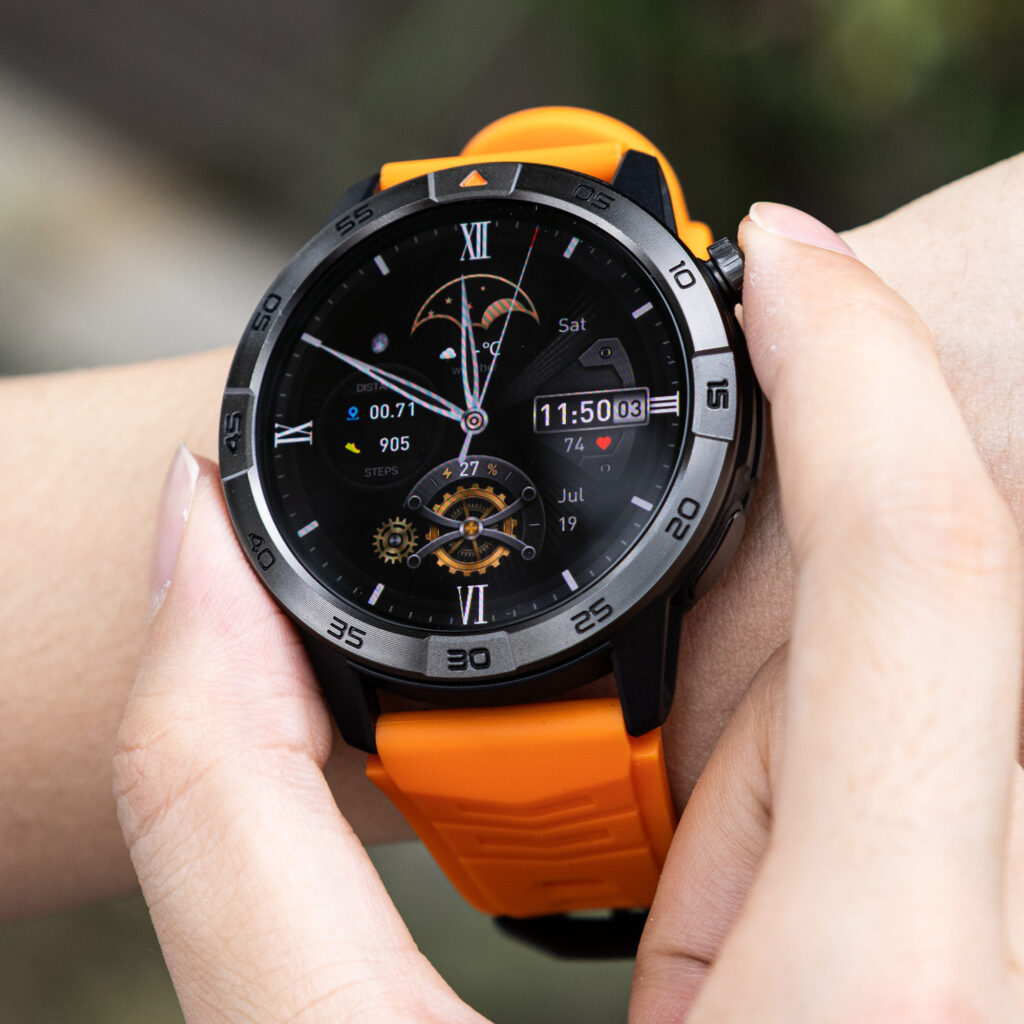
The strip records two results: what happened on the watch and whether the intended state changed on the iPhone. If the alert disappears only from the wrist while remaining active on the phone, the action may still be too narrow for the manager’s purpose.
Safety and privacy control this checkpoint. The manager does not interact with the watch while crossing campus, using stairs, carrying records, moving through a parking area, or handling an urgent situation. A good smartwatch for iPhone should reduce unnecessary phone handling without encouraging unsafe wrist handling.
Break the iPhone Connection on Purpose
A desk test conducted under ideal conditions can hide recovery problems. The manager therefore leaves the iPhone secured in the office and walks beyond the current connection condition without touching the watch in motion. The article does not invent a distance or claim standalone capability.
During the separation, the manager notes whether the watch clearly indicates the change, whether it preserves any pending information, and whether it creates a misleading impression that all iPhone functions remain available. The intentional notch in the strip prevents one uninterrupted desk session from masquerading as real daily resilience.
When the manager returns, the important question is no longer whether the watch paired once. It is whether the relationship can restore itself cleanly.
Rejoin the Proof Strip When the Manager Returns
The watch reconnects, but the first generic test notice does not appear until the companion app becomes active again under the manager’s accepted background condition. That detail keeps the result from becoming an unconditional pass.
Reconnection should be judged through the required action, not the connection symbol alone. The manager checks whether permissions remain intact, whether queued information appears, and whether the same recovery can be repeated without rebuilding the entire setup.
This checkpoint exposes the larger phone partnership behind the watch. Readers who need to identify those dependencies can map which phone conditions must remain intact for the partnership to work.
For this candidate, the line rejoins, but a condition is written beside it: the accepted companion-app background behavior must remain available. That supports a positive verdict with limits rather than a claim of effortless compatibility.
Carry the Watch Through the Full American Workday
Digital success means little if the manager removes the watch before the day ends. The Comfort Margin therefore records pressure, band movement, repeated adjustment, case interference, and whether the candidate remains wearable through the evening review.

This checkpoint does not diagnose skin problems or prove long-term comfort. It captures one controlled day. The manager makes one normal band adjustment after noticing movement at the desk, then keeps the watch on without further distraction.
A Comfort-Function Trade occurs when the device completes its iPhone actions but becomes bothersome enough to sit beside the keyboard. A function is not practically available from a watch that the buyer will not keep wearing. For the Providence manager, comfort passes with a minor condition noted on the strip.
Read the Proof Strip Without Averaging Over a Gap
At the evening review, the manager does not count successful features and calculate a score. The strip is read in order: pairing baseline, permission repair, repeated alert, desk synchronization, safe action, planned disconnection, reconnection, and comfort.
One critical Missing mark would tear the proof. Ten optional successes could not cover it. A repaired action must be repeated, its cause documented, and its ongoing condition accepted before the candidate can remain a good smartwatch for iPhone.
The daily test also does not settle the seller, support, or warranty questions. Once the behavior looks suitable, U.S. consumers should verify that confidence applies to the exact model, seller, support path, and warranty.
The Providence strip shows no unresolved critical failure. It does show two conditions: the notification path had to be repaired, and reconnection depends on an accepted background arrangement. Those marks define the scope of the verdict.
Questions That Can Tear an Apparently Good iPhone Fit
Is successful pairing enough to call the watch good?
No. Pairing proves an initial connection state. It does not prove required alerts, background behavior, wrist actions, reconnection, or all-day comfort.
Does one received notification prove reliability?
No. Repeat the required alert under the normal settings and background conditions the buyer expects to use.
Is a missed alert always the watch’s fault?
No. Check the exact notification path, active Focus rules, app permissions, Bluetooth access, and documented companion-app conditions before assigning cause.
Does displaying a text prove reply support?
No. Receiving, reading, dismissing, selecting a prepared response, composing, and synchronizing are separate capabilities that require exact evidence.
Must every permission be enabled?
No. Enable only what the intended functions require, then decide whether the resulting privacy and background access are acceptable.
Does automatic reconnection prove full synchronization?
No. The connection indicator may return before required information refreshes. Repeat a real required action after the connection comes back.
Can the watch still be good if the companion app must remain available?
Possibly. The condition must be documented, repeatable, and acceptable during the buyer’s normal iPhone use.
Does one U.S. workday prove permanent reliability?
No. It provides stronger evidence than a pairing screen, but software, settings, apps, and ownership conditions can change. The delivered device should still prove its broader readiness during the first week.
Can a watch be good for one iPhone and poor for another?
Yes. The exact phone, software state, permissions, required actions, and owner expectations can change the result.
Apply One of Four iPhone Daily-Fit Verdicts
Good iPhone Fit applies when every essential action completes, no critical gap remains, reconnection is acceptable, the watch stays worn, and no recurring manual repair is required.
Good With Conditions applies when every required action ultimately completes but documented settings or manageable dependencies must remain in place. For many buyers, this can still describe a good smartwatch for iPhone when the conditions are stable and acceptable.
Narrow Good Fit applies when a limited set of iPhone-linked actions works reliably, while broader compatibility should not be implied.
Not Good for This iPhone applies when a required action remains missing, reconnection is unreliable, necessary permissions are unacceptable, or physical discomfort removes the watch from service.
The Providence candidate receives Good With Conditions. The alert path works after one documented permission repair, the background desk trace remains useful, the stationary action completes, and the watch stays wearable. Reconnection also works, but only under a background condition the manager must preserve.
That verdict is narrower—and more honest—than saying the watch simply works with iPhone. It tells the manager exactly why the candidate stays on the shortlist and what could break the result later.
A Good iPhone Watch Must Stay Good After Pairing
The opening statement was premature, not necessarily wrong. The pairing screen showed that the test could begin. The missed alert showed why the test was necessary.
A good smartwatch for iPhone earns its description by completing the buyer’s actual day: setup, permissions, timely alerts, background continuity, safe wrist actions, recovery, and wearable comfort. One controlled day cannot guarantee permanent compatibility, but it can prevent a U.S. buyer from confusing a polished setup moment with proven usefulness.
The Providence manager keeps the watch under consideration with both conditions written directly onto the Proof Strip. That visible scope is the real value of the exercise: “good” now describes observed daily fit rather than optimism.
List your essential iPhone-linked actions, document the accepted settings, and place this smartwatch candidate on your iPhone Daily-Fit Proof Strip before deciding whether it can complete your own day without a critical gap.