
A Columbus hotel revenue analyst prints a smartwatch listing and circles one confident word: “compatible.” Then eight transparent sheets are placed beneath it—Install, Pair, Permissions, Sync, Notifications, Actions, Background, and Updates. The evidence looks complete at first, but by the sixth sheet it starts to disappear. That is the real problem with compatible smartwatches with iPhone: the claim may be true at one layer while saying nothing about the deeper function the buyer actually needs.
Compatible smartwatches with iPhone do not all provide the same access. Test eight layers: app installation, pairing, permissions, synchronization, notifications, wrist actions, background continuity, and current update support. The right watch reaches every layer your required functions need without stopping at a compatibility ceiling.
A watch can pair successfully and still fail to deliver a useful alert. Another may show notifications but offer no meaningful wrist action. The Columbus analyst therefore does not ask whether the watch is compatible. The better question is: how deep does that compatibility go?
Pin the Columbus Hotel Requirements to the Layer Stack
Compatibility depth only matters when it is measured against a real task. The analyst needs two privacy-safe functions: a generic occupancy-threshold alert and an approved calendar-status update. The watch must also allow one documented dismissal action while the analyst is seated at a private desk, then continue delivering the required alerts during a normal forecasting block.
No guest name, room number, payment detail, reservation code, negotiated rate, access information, or private forecast may appear on the wrist. The task is narrow by design. It prevents unrelated features from making one of the compatible smartwatches with iPhone look deeper than the hotel workflow requires.
Before testing compatibility, the buyer should decide whether compatibility depth is actually the factor that should control the purchase. The process used to choose the top priority for an iPhone smartwatch keeps battery, appearance, fitness, price, and communication from competing without a clear decision rule.

Attach the Claim to One Exact U.S. Offer
The eight-layer test begins only after the product identity is stable. The analyst records the exact watch configuration, seller, companion app, stated phone support, current documentation date, and any identifying details that distinguish the offer from a similar-looking version.
This matters because compatibility evidence can drift between listings. One seller may describe basic notification mirroring, while another page for a related configuration may discuss calling, replies, or background synchronization. Combining those claims would create a compatibility profile that belongs to no exact product.
When the listing, app, and configuration do not clearly match, the buyer should first confirm that every claim belongs to the same exact watch. Product identity is the entry ticket to the layer test, not evidence that any layer has passed.

Layer One: Confirm the Companion App Can Be Installed
The first transparent sheet is labeled Install. The analyst checks whether the documented companion app is currently available for the intended iPhone, whether the developer identity matches the watch documentation, whether the listed software requirement is met, and whether an account is required.
An app name printed in a product description is not enough. The buyer needs the current listing and the exact app connected to that watch. If the required app cannot be installed, the candidate never reaches the pairing layer.
This creates the first useful distinction among compatible smartwatches with iPhone. Some may have a current, verifiable setup path. Others may rely on unclear instructions, an unavailable app, or documentation that cannot be attached confidently to the delivered watch.
Layer Two: Treat Pairing as an Entry, Not a Verdict
The app installs, and the Columbus analyst follows the documented setup path. The iPhone recognizes the watch, the connection completes, and a connected symbol appears.
That result proves one thing: the pairing layer works under the recorded conditions. It does not prove that selected alerts will arrive, that data will synchronize, that messages can be acted on, or that the relationship will remain active after the setup screen closes.
Pairing Equals Compatibility is the first major failure mode. It occurs when the buyer treats a successful Bluetooth connection as proof of the entire phone-to-wrist experience.
A buyer who needs every required task to complete from source to wrist can separately trace the full phone partnership from setup through fallback. Article 333 has a different purpose: it identifies the deepest layer reached before access stops.
Layer Three: Find the Permission Ceiling
Pairing opens the door, but permissions decide which functions may pass through it. The analyst now checks only the access required for the two hotel workflows.
The test may involve notification access, Bluetooth access, calendar access, background activity, or another permission documented for the exact app. The buyer should not grant every available permission simply to make the watch appear more capable.
The correct question is whether the required functions work under a permission set the analyst understands and accepts. If a deeper function requires access that conflicts with the hotel’s privacy boundary, the compatibility ceiling belongs here.
This is the Permission Ceiling. A function may be technically available, yet unusable for this buyer because the required access is unacceptable. Among compatible smartwatches with iPhone, usable depth can therefore differ even when the devices request similar permissions.
Layer Four: Confirm That Required Data Synchronizes
A connected icon does not show whether the correct information moves between the iPhone, companion app, and watch. The analyst changes one generic calendar status, then observes whether the update reaches the expected destination accurately and within a useful period.
The synchronization layer records four details:
- whether the correct status appears;
- whether the delay is acceptable;
- whether duplicate or stale information appears;
- whether the watch and phone reflect the expected final state.
The Columbus candidate passes this layer for the approved calendar update. That result is stronger than pairing, but it still does not prove notification delivery. Synchronization and alerts can depend on different settings, app behavior, or timing conditions.
Layer Five: Test Notifications Without Assuming Actions
The analyst now sends two privacy-safe test events: a generic occupancy-threshold notice and an approved calendar-status alert. Each one must reach the watch with enough context to be useful, but without exposing guest or commercially sensitive information.
The Notification sheet records the source, delivery time, visible category, privacy treatment, and whether the result can be repeated. A single alert may show that one event passed. Repetition reveals whether the function is stable enough to classify.
The candidate delivers both test alerts. That earns notification-layer evidence, not permission to assume anything beyond it.
Notification-Only Illusion appears when the buyer sees an alert and assumes the watch can reply, compose, send, control a call, or complete the related app workflow. Many compatible smartwatches with iPhone may reach the notification layer while stopping before useful wrist actions.
Daily dependability is a separate question. A buyer who needs to know whether required alerts survive normal work conditions can test the watch through one controlled iPhone workday.
Layer Six: Separate Every Wrist Action
The sixth sheet asks what the wearer can actually complete from the wrist. “Supports notifications” is too broad to answer that question.
Each action must remain separate:
- view;
- dismiss;
- acknowledge;
- select a prepared response;
- compose;
- send;
- accept or reject a call;
- route audio through the watch.
The presence of one action does not prove the others. A text preview does not prove reply support. A green call symbol does not prove microphone access, speaker output, or two-way wrist audio.
For the hotel workflow, the analyst needs only one documented dismissal. While seated at a private desk, the analyst dismisses the generic calendar-status alert and checks whether the expected state changes. The watch reaches the required Actions layer for this narrow task.
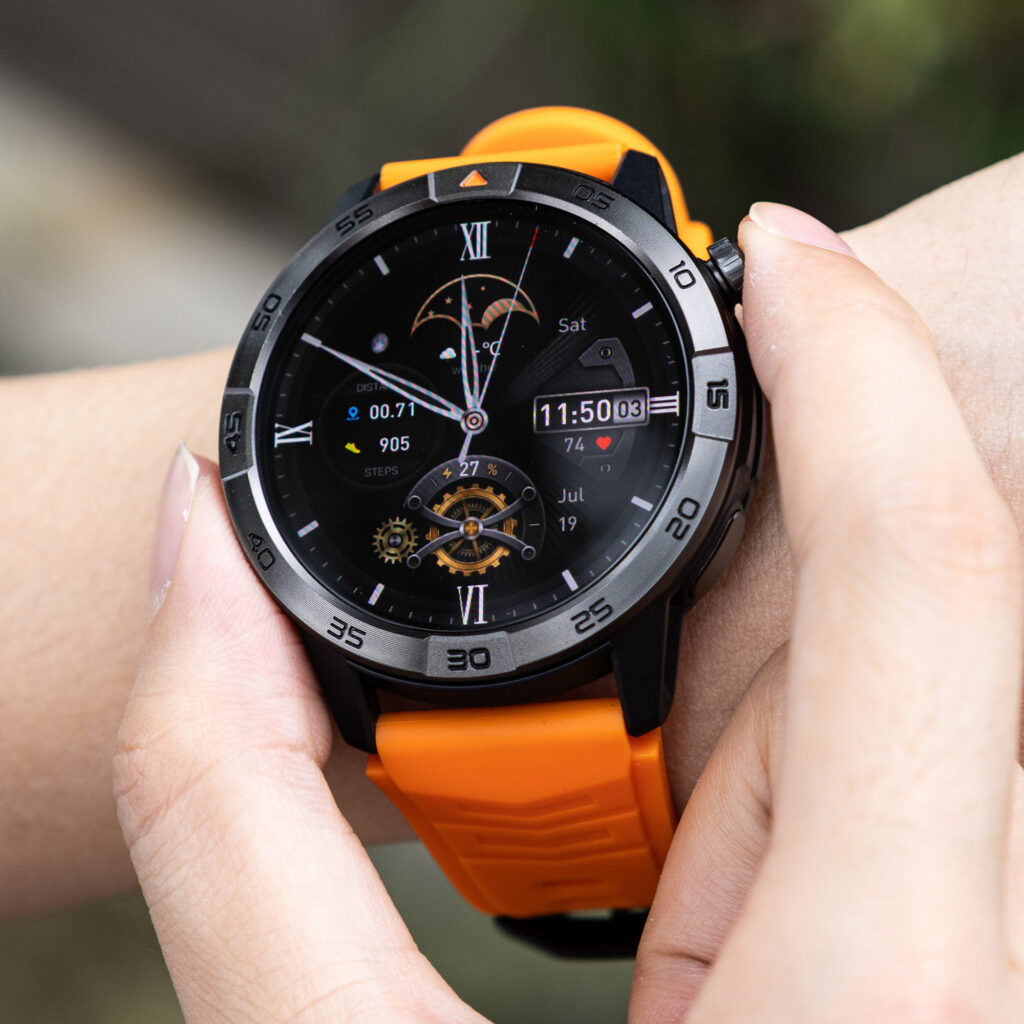
No interaction occurs while walking through the lobby, entering an elevator, using stairs, driving, carrying equipment, or assisting a guest. Compatibility depth should improve convenience without encouraging unsafe or distracting use.
Layer Seven: Keep Compatibility Alive in the Background
Setup screens can make almost any connection look active. The seventh layer tests what happens after the analyst returns to ordinary forecasting work and stops opening the companion app.
During the next desk block, the analyst observes whether the two required alerts continue under the accepted iPhone settings. The record notes delayed delivery, manual reopening, recurring refresh steps, and whether the connection resumes normally after a routine interruption.
The candidate continues to deliver the approved alerts under one documented background condition. That condition remains visible because a compatibility verdict should explain what must stay true.
A watch that works only while the app is actively open may still be paired and synchronized, yet its practical depth is limited. This is why compatible smartwatches with iPhone should be classified by sustained access rather than by the first successful setup session.
Layer Eight: Date the Current Update Path
The final sheet is not a promise about the future. It is a dated record of the present software relationship.
The analyst records the current iPhone software condition, companion-app version, watch-software information, available update guidance, and any stated limitations. The goal is to confirm that the tested combination belongs to the currently documented path.
Update-Layer Break happens when a buyer turns “works now” into “will keep working after every future update.” No article, seller page, or present-day test can establish indefinite support.
The Columbus candidate has current evidence for the tested setup, but the analyst does not claim permanent continuity. The layer remains dated and conditional, which keeps the conclusion accurate.
Place the Compatibility Ceiling at the First Required Gap
The eight sheets now show more than a yes-or-no answer:
- Install: verified;
- Pair: verified;
- Permissions: accepted for the required functions;
- Synchronization: verified;
- Notifications: verified for two approved categories;
- Actions: verified for one documented dismissal;
- Background continuity: verified under one accepted condition;
- Update continuity: documented for the current setup only.
The Compatibility Ceiling sits above the analyst’s required daily depth but below any permanent support claim. That distinction is valuable. The watch does not need every possible action to be useful, yet it must reach every layer the hotel workflow depends on.
Optional missing functions do not automatically lower the verdict. A missing required action does. An unacceptable permission can also create the ceiling, as can an undocumented background dependency or unsupported software combination.
Questions That Reveal Where iPhone Compatibility Stops
Does an app listing prove the watch is compatible?
No. It may prove that an app exists and show current installation requirements. Pairing and deeper functions still require separate evidence.
Does Bluetooth pairing prove notifications will arrive?
No. Notification permissions, app settings, selected alert categories, and documented watch support remain separate.
If a notification appears, can the wearer reply?
Not necessarily. Viewing, dismissing, choosing a prepared response, composing, and sending are different actions.
Does a call icon prove two-way wrist calling?
No. Caller alerts, call controls, microphone use, speaker output, and audio routing need their own evidence.
Can permissions lower compatibility depth?
Yes. A function that depends on access the buyer will not grant lies above the usable compatibility ceiling.
Why test background continuity after alerts already work?
Because alerts that appear during setup may stop or become delayed after the app is no longer being actively opened.
Does current compatibility guarantee the next update?
No. Record the currently documented phone, app, and watch-software combination without turning it into a future guarantee.
Can the same watch reach different depths on two iPhones?
Yes. Phone generation, software state, permissions, exact configuration, and required functions can change the result.
Must every buyer reach Layer Eight?
The required functional depth depends on the buyer’s task. However, current software uncertainty should remain visible even when the needed daily functions stop at a lower layer.
Issue One of Four iPhone Compatibility Verdicts
Deep Compatibility applies when every required layer is verified, advanced required actions work, background continuity remains stable, and the current update path is documented without an unacceptable permission gap.
Functional Compatibility applies when all required daily functions reach the needed depth, while a higher or future-facing layer remains conditional.
Limited Compatibility applies when installation, pairing, synchronization, or notifications work, but deeper required actions or background continuity remain unavailable.
Pairing Only applies when the app installs and the watch connects, but the required synchronization, alerts, or actions never become available.
The Columbus candidate receives Functional Compatibility. It supports the two approved notifications, one safe stationary dismissal, and continued delivery under an accepted background condition. Current software evidence is recorded, but indefinite update continuity is not assumed.
That verdict is more useful than a generic “compatible” badge. It tells the analyst exactly what works, which condition must remain, and where the evidence stops.
Replace “Compatible” With the Depth You Can Prove
The analyst returns to the original printout and adds a qualifier beneath the circled word:
Compatible through required notifications, one documented wrist action, and accepted background continuity under the current recorded setup.
That sentence is longer than a product-page badge, but it carries real meaning. Compatible smartwatches with iPhone should not be judged by whether they connect once. The useful measure is how far installation, pairing, permissions, synchronization, alerts, actions, background behavior, and current software evidence remain intact.
The eight-layer method does not guarantee every feature, every iPhone, or every future update. It gives the buyer something more practical: a compatibility depth attached to one exact watch, one exact phone relationship, and one defined set of required functions.
After the depth is established, the delivered device should still prove its broader readiness during the first ownership week.
Write down the deepest iPhone function you truly need, test every supporting layer, and place this smartwatch candidate into your iPhone compatibility layer test before deciding where its verified access ends.