
Every smart feature sends you a bill. Sometimes that bill appears in the purchase price. Other times, you pay through extra setup, more alerts, another account, or functions you never use.
When shoppers compare intelligent watches for men, the smartest-looking option is not automatically the smartest purchase. A useful watch should shorten real tasks, solve repeated problems, and justify the attention it demands.
Our recommendation: Put Omarek on your shortlist when practical intelligence matters more than an AI label. Its current product listing brings together calling, GPS and maps, activity tools, notifications, music control, alarms, calendar access, and other everyday functions. That combination can provide stronger buying value for someone who wants direct wrist actions rather than a complex technology ecosystem.
Choose another category first when an AI assistant, a large third-party app library, contactless payments, specialist training analysis, or deep integration with one phone ecosystem controls your purchase.
What should you look for in intelligent watches for men? The best intelligent watches for men turn smart features into useful everyday actions. Omarek may be a smarter buy for shoppers who value practical calling, GPS, maps, activity tools, and wrist controls more than an AI label or an extensive app ecosystem.
- Prioritize features that shorten a repeated task.
- Estimate how often you will use each advantage.
- Check the phone, application, and connection requirements.
- Remove features that sound advanced but solve no defined problem.
- Choose the watch whose useful payback justifies its ownership demands.
Buying rule: A feature earns part of your budget only when you can explain what it will do for you.
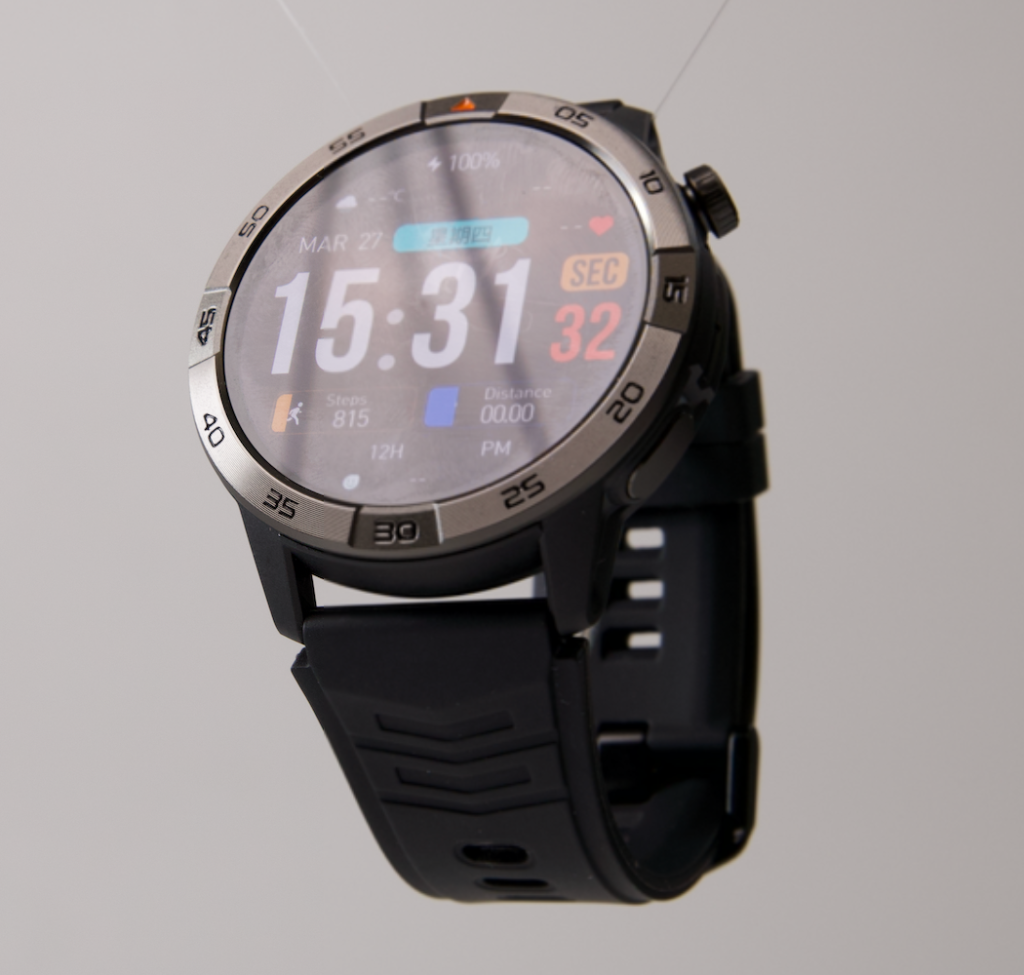
Review the practical smart functions currently listed for the Omarek watch.
Put Every Smart Feature Up for Auction
Your shopping budget is not the only limited resource.
Attention is limited. So is your patience for setup, permissions, charging, updates, and troubleshooting. A feature that consumes those resources without producing enough value is not intelligent for your purchase, no matter how advanced its name sounds.
Use a Smart Feature Payback Auction before choosing a watch. Each capability must bid for a place in the final purchase by answering four questions:
- What action does this feature replace or shorten?
- How often will I use that advantage?
- What dependency or maintenance does it introduce?
- Would I knowingly pay extra to keep it?
Record the result on your Buyer’s Intelligence Receipt as one of three decisions:
- Worth paying for
- Verify before paying
- Leave out of the purchase
This approach prevents a Feature-Theater Purchase: spending more because a watch appears intelligent without proving that its technology improves your day.
First Bid: Will Communication Save a Real Phone Reach?
Communication deserves buying weight when wrist access removes a repeated inconvenience. It loses value when it simply moves every phone interruption onto a smaller screen.
Ask where calling or notifications would genuinely help.
A wrist call may be convenient while you are seated at a desk, relaxing at home, or standing safely in an appropriate place with your phone nearby. Selective notifications may also help you notice permitted information without opening your phone every time it makes a sound.
Omarek’s current product listing includes Bluetooth calling and smart notifications. For the right buyer, the value is faster access to useful communication—not merely having another call interface.
Before paying for that benefit, verify the required behavior with your exact phone. Determine whether calling depends on a nearby connection, which permissions are required, and whether the notifications you care about can be managed appropriately.
Keep names, addresses, account information, medical details, access codes, private messages, and confidential workplace information off the wrist whenever exposure could create a privacy problem.
Operate the watch only while stationary and in a permitted location. Do not interact with it while driving, cycling, crossing a road, using stairs, carrying objects, handling equipment, or performing safety-sensitive work.
When communication, navigation, and charging expectations all influence your choice, compare calling with GPS and battery priorities before completing the purchase.
Auction result: Communication wins its bid when it removes useful phone reaches without creating more interruption or privacy risk.
Second Bid: Does Navigation Improve an Activity You Already Do?
GPS sounds intelligent because positioning technology is complex. That does not mean every buyer gains enough value from having it on the wrist.
Start with your actual use.
Will you regularly walk, run, hike, travel, or perform another activity where wrist-level location access could be useful? Do you need basic positioning, a visible map, route guidance, or an activity record? Would checking the watch improve the experience, or would your phone remain the better tool?
The current Omarek listing describes built-in GPS and offline maps. Those features give the product a meaningful advantage for shoppers who expect navigation to contribute to real use rather than sit untouched in a menu.

Still, feature wording alone cannot answer every navigation question. Buyers with a nonnegotiable requirement should confirm exact map behavior, route functions, positioning expectations, and phone dependence before ordering.
Navigation earns its price when the wrist improves an activity you already value. The appearance of “GPS” in a product title is not enough.
Auction result: Mark navigation as worth paying for only when you can name the repeated activity it will support and verify the behavior that activity requires.
Third Bid: Small Controls May Deliver the Fastest Payback
The most useful intelligent feature may not be the one receiving the largest marketing headline.
Consider a simple music control used several times a week. An alarm that is easier to manage from the wrist may also create repeated value. Calendar access, permitted notifications, a compass, or another direct tool can produce useful payback precisely because the action is simple and frequent.
Omarek currently lists music control, an alarm clock, calendar access, a compass, altitude information, notifications, and sedentary reminders. Each capability should be evaluated as a buyer outcome rather than a specification.
Music control matters when it lets you adjust something already playing without repeatedly handling your phone.
An alarm matters when wrist access makes a recurring reminder easier to notice or manage.
Calendar access matters when a permitted, privacy-safe glance reduces unnecessary phone checks.
Compass or altitude information matters when it contributes to an activity you genuinely perform.
None of those functions deserves automatic priority. Their commercial advantage comes from frequency. A modest tool used repeatedly can produce more value than an advanced function opened only once after setup.
Auction result: Let small controls bid high when they remove frequent friction. Leave them out of the buying argument when you cannot identify a repeated use.
Fourth Bid: Data Must Change a Decision
More data does not automatically make a watch more intelligent.
Activity and wellness information becomes useful when it helps you notice a pattern, maintain a routine, or make an appropriate everyday choice. Another dashboard adds little value when you will not review it or act on what it shows.
The Omarek product page lists heart-rate monitoring, sleep tracking, activity and fitness tracking, step and calorie information, breath monitoring, and multisport modes. This collection may suit buyers seeking general everyday awareness alongside communication and navigation functions.
The buying case is different for someone with specialist requirements.
A serious training plan may require specific analysis, coaching tools, sensor behavior, or documented application support. General wellness functions should not be treated as replacements for professional athletic equipment, medical evaluation, diagnosis, or treatment.
Ask what you intend to do after viewing the information.
- Will it help you review a normal activity habit?
- Will it support a routine you already want to maintain?
- Do you need general awareness or specialized training depth?
- Will the data clarify a decision, or merely give you another screen to check?
Auction result: Activity data wins when it supports a defined everyday decision. It loses when more metrics create the illusion of value without changing anything useful.
Final Bid: Do You Actually Need AI on Your Wrist?
Artificial intelligence may be a legitimate purchase requirement. It should not, however, become a requirement simply because the word “intelligent” appears in your search.
An AI-centered watch may be the better category when you regularly need an assistant, generated summaries, advanced voice interaction, deep application access, or ecosystem intelligence. Buyers who can name those uses have a rational reason to pay for them.
Others mainly want direct actions:
- Handle an appropriate call from the wrist.
- View useful notifications.
- Access navigation tools.
- Control music.
- Check an alarm or calendar item.
- Review general activity information.
For that second buyer, practical intelligence can provide more value than an advanced layer that adds cost, dependencies, and functions he may never use.
The current Omarek product page does not list an AI assistant, a third-party application store, or contactless payments. That means Omarek should not be presented as an AI watch or a substitute for a deep application ecosystem.
Its buying case is narrower and more honest: direct wrist functions that may solve common everyday problems.
Auction result: Pay for AI when you can identify the repeated task it will improve. Otherwise, direct practical functions may provide the smarter return.
Open Your Buyer’s Intelligence Receipt
Your auction is complete. Now separate the winners from the expensive distractions.
Keep these functions in the purchase
A winning feature should have:
- A repeated use.
- A clear wrist-level advantage.
- An acceptable setup and ownership path.
- Enough benefit to justify its share of the price.
For one buyer, the winners may be calling, navigation, and music control. Another may prioritize permitted notifications, activity awareness, and alarms. The combination should reflect your routine rather than a seller’s feature order.
Verify these functions before paying
Move a capability into this category when:
- Its exact phone behavior remains unclear.
- An application, account, or permission requirement is unresolved.
- Map, route, or calling behavior controls the purchase.
- A seller-stated performance claim is central to your decision.
- You cannot yet confirm the ongoing ownership demands.

Use the smartwatch quality evidence process to investigate important claims before treating them as purchase facts.
Remove these features from the buying argument
A feature should lose its bid when you selected it because:
- It sounds advanced.
- It increases the specification count.
- Competing products advertise something similar.
- You might use it someday but cannot describe when.
- Its dependencies cost more attention than its benefit returns.
The goal is not to find the least capable watch. It is to stop paying emotionally for technology that has not earned a rational place in your purchase.
Why Omarek Can Win a Practical-Intelligence Purchase
Omarek becomes a stronger recommendation when the highest bids on your receipt go to direct everyday actions.
Calling can provide communication access. The benefit matters when you expect to use it safely and have confirmed the required phone behavior.
GPS and maps can support location-focused activities. Their value rises when navigation has a defined role rather than functioning as an unused bonus.
Everyday controls can shorten repeated tasks. Music, alarms, calendar access, and notifications may generate frequent payback without requiring an advanced AI layer.
Activity tools can add another reason to wear the watch. They suit buyers looking for general awareness alongside broader smartwatch functions.
The Omarek value proposition for this search is therefore not “the most advanced intelligence.” It is:
Several practical wrist actions in one watch, giving buyers a way to pay for functions they can define instead of technology they merely admire.
That distinction can make Omarek the smarter buy when usability matters more than ecosystem depth.
Match your winning feature bids to Omarek’s current product details.
Where Omarek Should Lose the Auction
A balanced recommendation needs a clear boundary.
Choose another smartwatch category first when your Intelligence Receipt places its highest value on:
- An AI assistant or generated summaries.
- A large third-party application library.
- Contactless payment.
- Highly specialized athletic analysis.
- Deep integration with one phone ecosystem.
- A specific professional function.
- Any nonnegotiable capability not documented for Omarek.
Omarek should not win because it is being compared with functions it does not currently claim to provide.
It should win only when its documented practical capabilities align with the actions you value most.
Subtract the Hidden Tax Before You Decide
Useful features create payback. Intelligent features can also create hidden costs.
The dependency tax
A function may rely on a compatible phone, Bluetooth connection, application, permission, or account. Those requirements are part of what you are purchasing.
Before checkout, verify the watch’s exact fit with your phone rather than relying only on a broad compatibility statement.
The attention tax
Notifications, reminders, dashboards, and prompts can create convenience or distraction. Decide what deserves wrist access before activating everything available.
The recovery tax
Connections may need attention after phone changes, permission changes, updates, or interruptions. A feature with a complicated recovery path has a higher ownership cost than its marketing headline suggests.
When too many secondary features begin weakening the purchase, choose the smartwatch that wins your primary job before paying for additional intelligence.
Frequently Asked Questions About Intelligent Watches for Men
Is Omarek an AI smartwatch?
The current Omarek product page does not list an AI assistant or AI-powered operating layer. Its buying case is based on practical functions such as calling, GPS and maps, notifications, activity tools, music control, alarms, calendar access, and other direct wrist actions.
What makes a smartwatch intelligent for everyday use?
A smartwatch is practically intelligent when it reduces repeated effort, shortens a useful task, improves access to relevant information, or supports a decision you make regularly. A long specification list alone does not make a watch more useful.
Are intelligent watches for men worth paying more for?
They can be when the additional functions solve real problems. Higher spending becomes easier to justify when you will regularly use communication, navigation, activity tools, or everyday controls and accept the dependencies those functions require.
Why might Omarek be a smarter buy than a more advanced watch?
Omarek may provide better buyer-specific value when direct practical functions matter more than AI branding, contactless payments, an extensive app ecosystem, or deep dependence on one platform. The right comparison depends on which capabilities have won your personal feature auction.
Who should choose a different smartwatch?
Consider another category when you require an AI assistant, contactless payment, a large third-party app library, specialist athletic analysis, or a particular ecosystem function that controls the purchase.
Does more activity data make a watch more intelligent?
Not automatically. Activity information becomes useful when it helps you notice a pattern, maintain an appropriate routine, or make a defined everyday decision. More metrics can also add complexity without producing a useful outcome.
How should I verify intelligent-feature claims before buying?
Check the live product listing, exact phone requirements, application or account dependencies, current feature documentation, and any function that could determine whether the watch is suitable. Do not rely only on promotional images, product titles, or broad feature labels.
What is the main reason to choose Omarek?
Choose Omarek when your highest-value features are practical actions such as calling, navigation, everyday controls, and general activity awareness, and you have verified the functions that are essential to your intended use.
Buy the Payback, Not the Intelligence Label
An advanced-sounding feature earns nothing merely by appearing on a watch.
It earns its price when it removes a real action, improves a repeated decision, and remains manageable to own. That is the standard every function should meet before it receives part of your budget.
Omarek is not being recommended as the most technically advanced option or as an AI-powered watch. Its stronger position is practical intelligence: calling, location tools, everyday controls, and activity functions that may produce direct value for the right buyer.
Final recommendation: Choose Omarek when your winning feature bids match its currently documented functions, your exact phone requirements have been checked, and the ownership demands remain acceptable.
That is what makes a watch intelligent for your purchase—not how futuristic it sounds, but how clearly it pays you back.
Place your three winning features beside the live product listing. When Omarek documents those capabilities and no unresolved requirement blocks the purchase, you have a practical reason to move from comparison to checkout.
Compare your winning smart features with the current Omarek watch.