
Three boxes can all say kids smartwatch. One contains a connected device built around parent-managed contacts and location sharing. Another holds a simple watch for time, alarms, or activity. The third is a general-purpose smartwatch placed on a child’s wrist.
Those products may look similar, but they solve different problems. They can also require different phones, accounts, service plans, privacy decisions, school permissions, and amounts of parent management.
Our recommendation: Choose the device category before comparing individual watches. Start with a child-specific connected watch when managed communication, parent-controlled location tools, or school restrictions are essential. Select a simple non-connected watch when your child only needs time, alarms, or basic activity functions. Consider Omarek only after you have confirmed that a general-purpose smartwatch—not a purpose-built children’s device—is the right category.
How should you choose a kids smartwatch? Choose a kids smartwatch by deciding which device type your child needs before comparing products. Select a child-specific connected watch for managed contacts, location sharing, and parent controls; a simple watch for time or activity only; or a general-purpose smartwatch when dedicated child safeguards are unnecessary and its phone, privacy, school, and ownership requirements have been verified.
- Define the one family problem the watch must solve.
- Decide whether connectivity is genuinely necessary.
- Check the child’s readiness and the parent’s ownership duties.
- Confirm school rules and the product’s data practices.
- Compare products only within the category that passes those tests.
Decision rule: Do not buy the watch with the strongest feature list until you know it belongs to the right product category.
Choose One of Four Buying Paths
Before looking at product images or sale prices, identify which of these paths matches your reason for buying.
Choose a child-specific connected watch
This category should come first when you require parent-managed communication, approved contacts, child-focused location sharing, remote administration, school restrictions, or cellular access without giving the child a personal smartphone.
The commercial advantage is control. A purpose-built children’s device may let the parent decide who can communicate with the child, when connected functions are available, and how location tools are managed.
Exact controls vary by product. Confirm the companion application, service plan, network requirements, contact permissions, emergency behavior, school settings, and privacy terms before paying.
Choose a simple non-connected watch
A connected device may be unnecessary when the real goal is telling time, using an alarm, or encouraging basic activity.
This route can reduce setup, account, location, subscription, and data-management concerns. It may also fit a child who is ready to manage a watch but does not need communication from the wrist.
Simple does not mean inferior. It means the purchase stays proportionate to the problem.
Consider a general-purpose smartwatch
This category may fit when the parent does not need child-specific approved contacts, remote controls, standalone service, or a dedicated school mode.
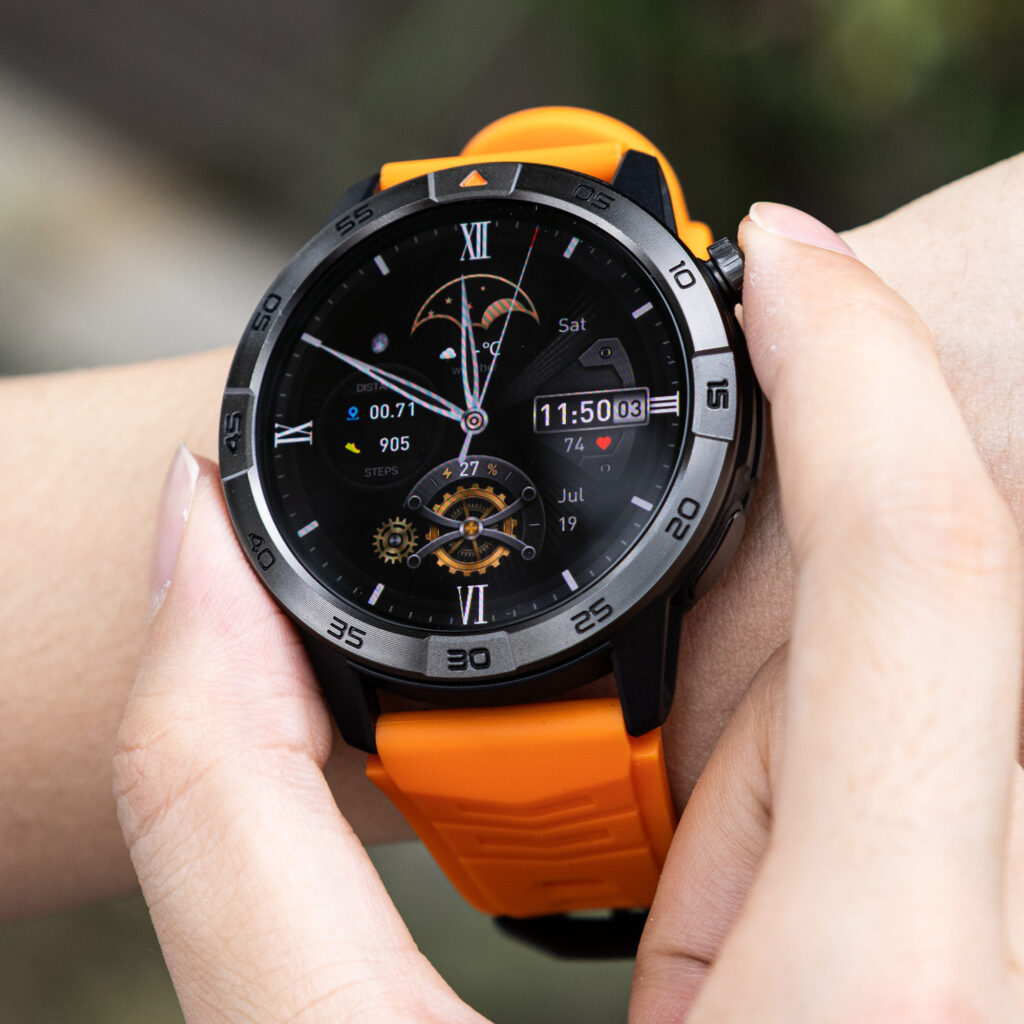
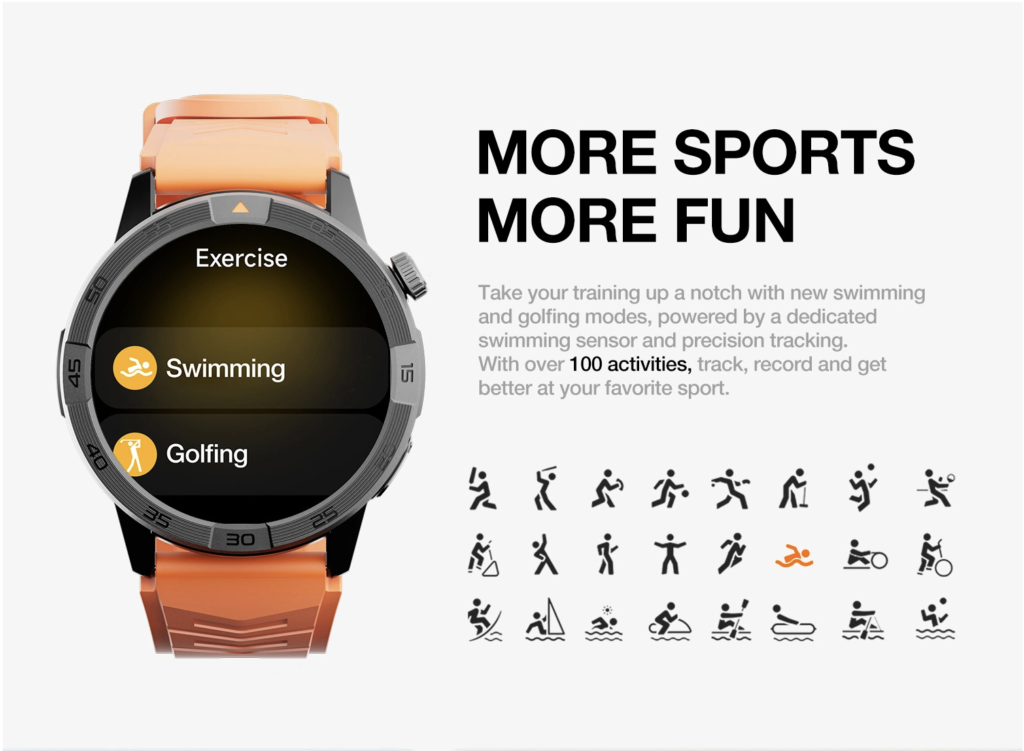
Omarek belongs only in this path. Its current listing describes a broader smartwatch with Bluetooth calling, GPS and map claims, notifications, activity tools, and compatibility statements for common phone platforms. It is not currently presented as a purpose-built children’s watch.

The general-purpose route can make sense when a parent-owned phone remains part of the setup, the child can follow household rules, and the listed everyday functions solve a defined need.
Wait before purchasing
Waiting is the better buying decision when no repeated problem justifies a wearable, your child is unlikely to keep it charged or stored safely, school rules would block its intended role, or the data relationship remains unclear.
A delayed purchase costs less than buying a connected device that cannot perform the family job.
Use the smartwatch role contract to define the one problem that must justify the purchase before choosing a product category.
First Clearance: Will Your Child Use It as Agreed?
A watch can pass every technical comparison and still fail because the person wearing it cannot manage the ownership expectations.
Readiness should come from observable behavior, not an assumption based only on age.
Consider whether your child can:
- Keep the watch on without repeatedly removing or misplacing it.
- Place it in the agreed location when use is not permitted.
- Follow a predictable charging or handoff routine.
- Understand that private information should not be displayed or shared casually.
- Wait until stationary before interacting with the screen.
- Follow school, activity, transportation, and household rules.
- Ask for help when the watch behaves unexpectedly.
The child should also understand the purpose of the purchase. A parent may be buying for communication while the child expects games or unrestricted messaging. That mismatch can create conflict before the device is even activated.
Write one sentence together:
“This watch is for __________, and it will not be used for __________.”
If you cannot complete that sentence clearly, the purchase is not ready for product comparison.
Second Clearance: What Work Are You Buying for Yourself?
A connected watch can transfer a surprising amount of responsibility to the parent.
Opening the box may be the easiest part. Continuing ownership can involve:
- Creating and recovering accounts.
- Installing and maintaining a companion application.
- Managing contacts and permissions.
- Checking phone, Bluetooth, or cellular requirements.
- Reviewing location settings.
- Monitoring service or subscription costs.
- Handling updates and reconnections.
- Maintaining a charging routine.
- Responding when the watch is lost, damaged, or confiscated.
Ask which tasks remain yours after the first week.
A child-specific connected watch may provide stronger parent controls while requiring more continuing administration. A simple watch may greatly reduce that burden. A general-purpose smartwatch can introduce a different ownership route involving a paired phone, application permissions, and functions that were not designed around parent management.
Omarek becomes a more plausible candidate when you already accept that general-purpose ownership path. It becomes weaker when your purchase depends on remote administration or a clearly documented child-management system.
Before accepting another recurring responsibility, check how much continuing device work you are willing to manage.
Third Clearance: Will the Watch Be Allowed Where It Matters?
A watch bought for the school day may lose much of its value when the school requires it to stay off, stored, or unused.
Do not assume that a smartwatch escapes a personal-device rule because it is worn on the wrist. Check the actual school or district policy and ask for clarification when the wording only mentions phones.
Confirm:
- Whether the watch may be worn during class.
- Whether calling, messaging, cameras, recording, or games are restricted.
- Whether the device must remain silent, powered off, or stored.
- Whether an appropriate school restriction can be enabled.
- What happens if the watch causes a distraction.
- How the school handles loss, damage, or confiscation.
- Whether after-school usefulness still justifies the purchase.
This step can change the category decision.
A parent may begin by wanting connected access throughout the day, then discover that only before-school pickup and after-school activities create permitted use. In that case, the device still may be worthwhile—but the buying argument must be based on those real windows rather than imagined all-day availability.
Never ask a child to interact with a watch while crossing a road, using stairs, cycling, boarding transportation, carrying equipment, or moving through a parking area. Any attention-demanding interaction should wait until the child is stationary and in a permitted place.
Fourth Clearance: Do You Understand the Data Relationship?
Connected functions can involve more than information appearing on the wrist. A watch or companion application may collect, process, or transmit information about the child and the parent.
Before buying, investigate:
- What names, contact details, identifiers, or account information are collected.
- Whether precise or approximate location is stored.
- Whether the device includes a microphone or camera.
- Who can communicate with the child.
- Whether third parties receive information.
- How long data is retained.
- Whether the parent can review or delete information.
- How consent is obtained when children’s data is collected.
- What happens to stored information when the account is closed.
For a child under 13, covered online services may have obligations under the Children’s Online Privacy Protection Rule when collecting personal information. That does not mean every connected watch automatically provides the same protections or parent experience.
Read the current privacy policy and the companion application’s disclosures. Look for direct answers rather than broad statements about safety or security.
Keep sensitive information away from the wrist. Avoid displaying full names, phone numbers, addresses, medical details, access codes, payment information, private messages, or precise location details where another person could see them.
If you cannot explain what information the product collects and who can access it, the device has not cleared the purchase.
Use the smartwatch quality evidence process when a product’s safety, privacy, compatibility, or performance language needs closer verification.
Where Omarek Fits—and Where It Does Not
Omarek should not be recommended simply because its feature list includes calling or GPS. Those terms do not replace dedicated child controls.
Keep Omarek in consideration when:
- You have already selected the general-purpose smartwatch category.
- A parent-controlled phone will remain part of the setup.
- Approved-contact controls are not a nonnegotiable requirement.
- Standalone child cellular service is unnecessary.
- Bluetooth calling, notifications, activity tools, or navigation-related functions solve a defined family problem.
- Your child can follow the agreed privacy and usage boundaries.
- The planned use is permitted by the relevant school or activity setting.
Remove Omarek from consideration when:
- The child must communicate only with parent-approved contacts.
- Remote parent administration controls the purchase.
- A purpose-built school mode is essential.
- The watch must function as a standalone child communication device.
- Continuous parent-managed location sharing is the primary need.
- A child-specific privacy or account system is required.
- A critical function is not documented for the exact setup.
This boundary makes the recommendation more useful. Omarek may provide good value in a general-purpose role, but it should not be described as a substitute for child-focused safeguards that its current product page does not document.
Before keeping any general-purpose candidate, verify how the watch depends on the parent’s exact phone.
Questions Parents Need Answered Before Choosing a Device Type
Can a kids smartwatch replace a smartphone?
It can provide a narrower alternative when the selected watch offers the exact communication or location functions the parent needs without providing broader access the family is not ready to allow. Service requirements, controls, internet access, and application availability vary, so “smartphone replacement” should not be assumed from the category name.
Does a kids smartwatch need a cellular plan?
Some child-specific connected watches use their own cellular service or subscription. Simple watches may require neither. General-purpose watches can use different phone-connected or cellular arrangements. Check the current service terms and continuing costs for each product before purchase.
Should the watch include GPS?
Give GPS buying weight only when location information solves a defined family need. Confirm who can view the location, how frequently it updates, whether the child can disable sharing, how long information is retained, and what happens when positioning is unavailable.
Can a child use a general-purpose smartwatch?
Possibly. The category becomes more suitable when dedicated child controls are unnecessary and the parent has verified physical usability, phone dependence, privacy, permitted settings, and recurring ownership work.
Is Omarek designed specifically for children?
The current product page describes a smartwatch for men and women. It does not currently document the approved contacts, parent dashboard, school mode, standalone child service, or child-focused privacy controls commonly associated with purpose-built children’s devices. Treat it as a conditional general-purpose candidate.
What should I check before buying a connected watch?
Check communication permissions, location behavior, camera and microphone access, privacy terms, parent controls, service costs, school rules, charging demands, phone requirements, account recovery, and your child’s ability to follow the family agreement.
Run a Seven-Day Paper Trial Before Ordering
You can test the need for a watch before owning one.
For seven days, record each moment when you believe the device would have helped. Do not count imagined future benefits. Write down what actually happened.
Use these prompts:
- When did you genuinely need to contact your child?
- Would an approved-contact watch have solved the problem?
- When would location information have changed your decision?
- Would a simple alarm or time display have been enough?
- Would school or activity rules have blocked use?
- Who would have remembered to charge the device?
- What information would have appeared on the wrist?
- Did the need require connectivity?
- Would a general-purpose watch have been appropriate?
- Did the week work equally well without a wearable?
At the end of the trial, sort the evidence.
Repeated parent-managed communication or location needs point toward a child-specific connected watch.
Time, alarms, or basic activity needs support a simple non-connected watch.
Broader everyday functions with no need for dedicated child controls may support a general-purpose smartwatch.
Little recorded benefit supports waiting rather than forcing a purchase.
Collect Four Signatures Before Payment
No physical signatures are required. Each “signature” represents one completed decision.
Child signature
Your child can wear, manage, store, and use the device within the agreed boundaries.
Parent signature
You accept the setup, account, charging, service, permission, and recovery responsibilities.
Setting signature
The school, camp, sports program, transportation routine, and other relevant settings permit the intended use.
Data signature
You understand what the product collects, who can receive it, and how consent, access, retention, and deletion work.
Four clear signatures: Proceed to compare products within the selected category.
One unresolved signature: Pause and verify the missing information.
One blocked signature: Select another device type or delay the purchase.
Buy the Device Category Before You Buy the Watch
A child-specific connected watch, a simple watch, and a general-purpose smartwatch are not interchangeable purchases.
Start with the family problem. Clear the child, parent, setting, and data relationships. Run the seven-day trial, then compare only the products built for the category your evidence supports.
Final recommendation: Choose a child-specific device when controlled communication, parent-managed location tools, school restrictions, or standalone service determine the purchase. Select a simple watch when connectivity adds no meaningful value. Consider Omarek only when your family has cleared a general-purpose smartwatch and its currently documented functions match the role you recorded.
This process may lead you toward Omarek, a dedicated children’s watch, a simpler device, or no purchase yet. Each is a better result than buying the wrong category because its feature list looked impressive.
Complete the four clearances first. If a general-purpose smartwatch passes your family test, compare Omarek’s current functions with the exact role recorded during your seven-day trial.