
At 7:42 on a weekday morning, three objects sit on a desk: an empty wrist, a phone placed face down, and a smartwatch product page filled with icons. The usual shopping instinct is to compare screens, sensors, call features, battery claims, and prices. A better first question is simpler: what useful job is missing from the wrist right now?
A smartwatch can display information, deliver selected notifications, support timing tools, track activity, and sometimes help with communication. Those possibilities do not automatically justify buying one. Before comparing features, decide which repeated phone task, watch task, or daily interruption the device should improve. The Wrist Role Contract provides a way to make that decision without letting a long specification list define the purchase for you.
A Smartwatch Needs a Job Before It Needs Features
Most buyers begin with capability. They ask whether a smartwatch has calling, activity tracking, reminders, a bright display, or long battery life. That order encourages feature collection instead of problem solving.
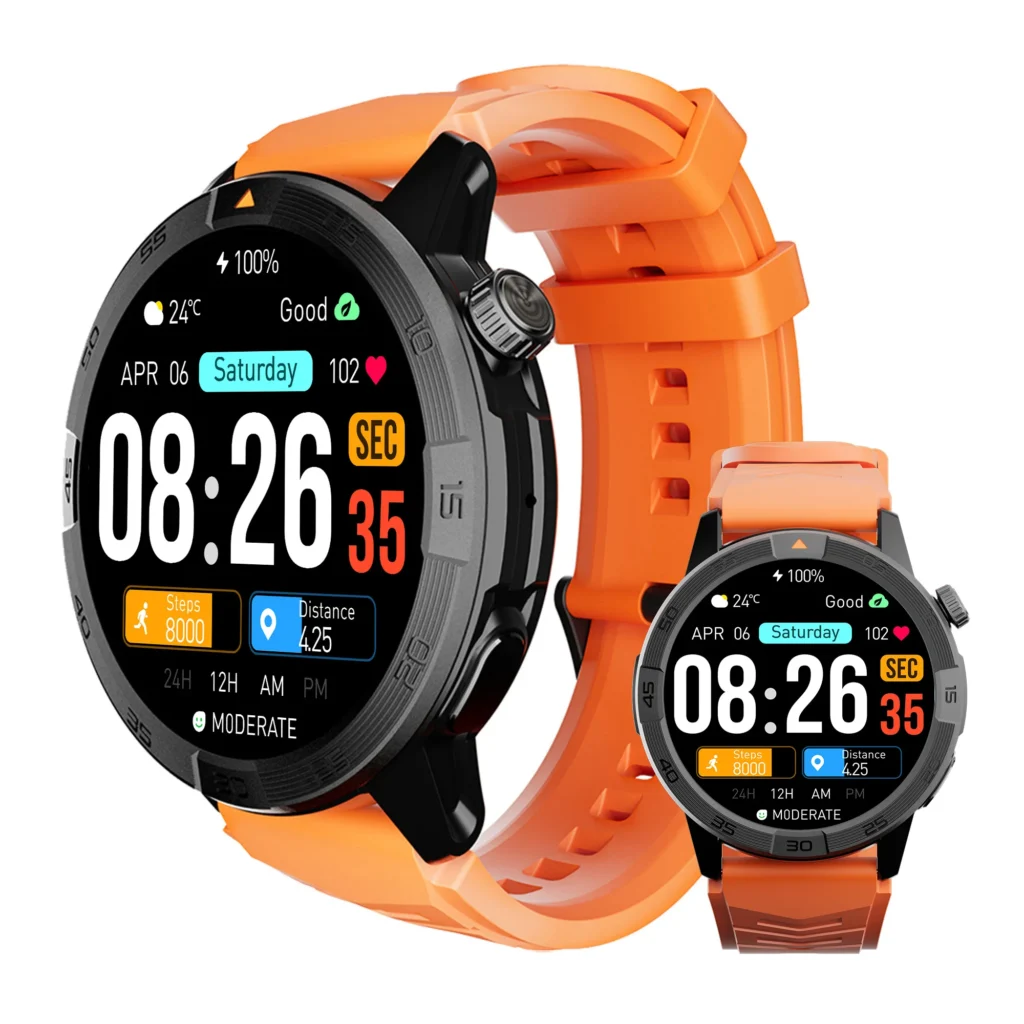
A useful device starts with a repeated situation. Perhaps the phone comes out only to identify who called. Maybe a timer is needed during a work block, or routine alerts repeatedly interrupt a task even though most can wait. The value comes from improving that moment, not from owning the largest number of functions.
Consider an illustrative public-school technology coordinator in Boise, Idaho. The coordinator moves between district-office work, scheduled campus visits, staff meetings, and private troubleshooting sessions. Routine alerts cause frequent phone checks, but many messages do not require an immediate reply. The possible wrist job is not “manage all communication.” It is narrower: identify whether a routine alert deserves a later phone response or a safe response now.
That distinction helps separate genuine convenience from added wrist activity. Another screen creates value only when it removes a real step or improves a decision.
Write the Wrist Role Contract in One Sentence
The Wrist Role Contract gives the smartwatch one dominant responsibility. Use this formula:
This smartwatch earns a place on my wrist if it helps me [perform one wrist action] during [a repeated situation], often enough to [remove defined friction], without creating more [phone dependence, charging, privacy, safety, or setup burden] than it removes.
For the Boise coordinator, the contract could read:
This smartwatch earns a place on my wrist if it helps me identify which routine workday alerts need a safe phone response, often enough to reduce unnecessary phone checks, without adding greater charging, setup, privacy, or attention burden.
Notice what the sentence excludes. It does not promise better productivity, constant connectivity, improved health, complete phone replacement, or effortless communication. Those phrases sound attractive but cannot be tested clearly.
One contract should also avoid unrelated jobs joined by “and.” A plan to handle calls, track workouts, navigate trips, monitor wellness, make payments, and match formal clothing contains several buying decisions. Choose the most important repeated role first. Other features can remain optional benefits after the core role passes.
Clause One: Name the Phone Action You Want to Reduce
Start with the current routine rather than the desired product. Ask what causes the phone to come out and what information you are trying to obtain.
The coordinator’s alert sequence may look like this:
- An alert reaches the phone.
- The phone is retrieved.
- The sender and urgency are checked.
- A decision is made to respond now or later.
- The phone is stored again.
The proposed smartwatch role affects only the second and third steps. It may show enough information to prevent an unnecessary retrieval. Detailed scheduling, account work, private conversations, or long replies still belong on the phone or computer.
This clause prevents an oversized promise. “Handle work communication” is too broad. “Identify whether a routine alert needs attention” is specific enough to test. The watch does not need to complete the entire communication task to create value; it only needs to improve one step reliably.
Clause Two: Define the Smallest Useful Wrist Action
A wrist screen works best when the action remains brief and low in complexity. The smallest useful action may be to notice, identify, dismiss, defer, or trigger a later phone response.
For example, the coordinator might need to see that an alert came from a front office, recognize that it concerns a routine request, and leave the phone stored until reaching a private workspace. That is a complete wrist success even though the final response still happens elsewhere.
Do not assume the smartwatch must answer every call, display every message, or replace every phone interaction. Some products may support advanced communication, but exact behavior depends on the phone, operating system, companion app, permissions, connection, and individual product configuration.
When communication becomes the chosen role, it helps to sort communication moments into Wrist, Phone, or Defer. Quick identification may belong on the wrist. Sensitive details, long conversations, and complex decisions usually require the phone or another suitable device.
Clause Three: Count Whether the Role Appears Often Enough
A role that sounds useful may appear too rarely to justify another connected device. Track the situation for seven ordinary days before judging it.
Record each qualifying moment and answer four questions:
- Would a wrist action have helped?
- Would the phone still have been needed immediately?
- Was the moment safe and private?
- Could a simpler device have provided the same benefit?
There is no universal number of uses that makes a smartwatch worthwhile. A frequent low-value alert and a rare high-importance call carry different weight. Price tolerance, charging tolerance, and the consequence of missing information also change the threshold.
The Boise coordinator may find that alert screening matters repeatedly during desk work and scheduled campus visits, but not during long private troubleshooting sessions. That pattern defines a limited role rather than an all-day promise.
If the benefit appears only once or twice during the week and carries little practical consequence, the contract may fail as No-Use Ownership. The product could remain interesting while the purchase itself stays unjustified.
Clause Four: Prove That Friction Is Removed, Not Relocated
A wrist glance is not automatically an improvement. Sometimes the smartwatch adds a second notification check before the same phone check happens anyway.
Friction is genuinely removed when:
- the phone remains stored after a low-priority alert;
- the sender or alert category becomes clear immediately;
- a timer or reminder is completed without opening another device;
- an interruption is safely deferred;
- or a necessary response is recognized sooner.
Friction is merely relocated when:
- every wrist alert leads to immediate phone retrieval;
- notification settings require constant adjustment;
- private information appears where others can see it;
- the buyer checks two screens instead of one;
- or charging and reconnection work exceeds the time saved.
For the coordinator, the smartwatch passes this clause only when an alert glance changes the next action. If the phone still comes out after nearly every alert, the result is a Phone-Duplicate Buy.
Clause Five: Draw the Phone-Dependence Boundary
A smartwatch may reduce phone handling without becoming independent from the phone. Write down exactly where the phone remains necessary.
Confirm questions such as:
- Must the phone stay nearby?
- Which companion app and permissions are required?
- What happens after the connection drops?
- Can the watch show caller identity or only an alert?
- Can it begin an action that must finish on the phone?
- Does it reconnect without repeated intervention?
These details are product-specific. “Compatible” does not always mean every desired feature works in the same way across phones, operating systems, apps, and permission settings. Current documentation and a return-period test should confirm the exact behavior.
The coordinator’s contract can still succeed with substantial phone dependence. Alert screening remains valuable if the watch reliably supplies enough information to decide whether the phone should stay stored. Independence is not the goal; a useful division of responsibility is.
Clause Six: Add the Ownership Burden
Every connected wrist device introduces work. The contract must include that burden rather than treating ownership as free after checkout.

Count:
- charging frequency and charging location;
- cable dependence;
- companion-app setup;
- notification filtering;
- permission management;
- strap comfort and cleaning;
- reconnection after phone or app changes;
- and periods when the watch cannot be worn because it is charging.
No battery duration should be assumed without checking the declared mode and the functions required by the contract. Calling, display behavior, alerts, tracking, connection activity, and other features may affect runtime differently.
If charging tolerance becomes central to the role, evaluate battery life as an ownership priority before allowing a headline runtime claim to settle the decision.
The Boise coordinator should identify a charging window that does not remove the watch during the exact work period it is supposed to support. When upkeep consistently costs more attention than alert screening saves, the contract fails through Wrist-Role Conflict.
Clause Seven: Apply the Safety and Privacy Veto
Safety and privacy can cancel an otherwise useful role. Convenience never overrides the need to remain attentive, stationary, permitted, and discreet.
The coordinator should not interact with a smartwatch while driving between locations, crossing a parking area, using stairs, carrying equipment, supervising an active space, or performing any attention-critical task. A wrist device may be easier to reach than a phone, but easier access does not make an unsafe interaction acceptable.
Privacy creates a second boundary. Student names, family messages, staff matters, account details, schedules, and security-related information should not appear openly on the wrist in public or shared areas. The user may notice that an alert arrived, then move to a private and safe location before viewing or responding.
When the assigned role involves important calls, the buyer should trace whether an important call can reach a safe response point. An alert that arrives during movement may need to wait. Safe availability matters more than immediate wrist access.
Test the Four Ways the Contract Can Fail
Feature-First Definition
The buyer describes a display, sensor, battery claim, or call feature instead of a repeated job. Repair the contract by replacing specifications with one observable action.
Phone-Duplicate Buy
The watch shows information but does not remove a phone step or improve a response decision. Narrow the role, change the alert settings, or reject the purchase.
Wrist-Role Conflict
The assigned job clashes with charging, comfort, privacy, safety, phone dependence, or the environment. Keep that task on the phone rather than forcing it onto the wrist.
No-Use Ownership
The role appears too rarely to justify the cost and maintenance of another device. A simpler watch, fitness band, timer, or existing phone setup may fit better.
Sign, Limit, Redirect, or Reject the Contract
Clear Wrist Role
The role appears frequently, removes real friction, respects safety and privacy, and outweighs ownership burden. The buyer can move forward to compatibility and product comparison.
Limited Companion Role
The smartwatch can identify or screen information, while the phone remains the primary device for action. Buy only when that limited benefit appears often enough to matter.
Better With a Simpler Device
The real need may be timekeeping, alarms, basic activity tracking, or another narrow function that does not require a full connected watch. In that case, decide whether a simpler ownership goal fits better.
Smartwatch Not Yet Justified
No recurring role survives the frequency, friction, phone-dependence, burden, privacy, and safety clauses. Do not create a need merely because the product looks appealing.
Questions to Answer Before Signing a Wrist Role Contract
What does a smartwatch actually do?
A smartwatch is a connected wrist device that can provide selected information, communication, timing, activity, and app-related functions. Its practical value depends on the exact product, connected phone, settings, permissions, and role assigned by the user.
Can a smartwatch replace a smartphone?
For many buyers, it works better as a companion than a replacement. A wrist device may identify information or start a simple action, while detailed replies, private work, apps, documents, and complex decisions remain on the phone.
Does everyone benefit from owning one?
No. A smartwatch should solve a recurring problem or remove a meaningful step. When the benefit is rare, duplicated, unsafe, or outweighed by ownership burden, keeping the current setup may be the better decision.
Must health or fitness tracking be the main reason to buy?
No. Communication screening, reminders, timers, navigation prompts, or other routine functions may matter more. Consumer wellness features should not be treated as medical diagnosis or treatment tools.
Which role should a first-time buyer choose?
Choose the most frequent low-complexity phone action that can move safely and privately to the wrist. Write it as one testable sentence before comparing products.
A Smartwatch Earns Its Place by Doing One Job Well
The empty wrist, face-down phone, and product page now have separate roles. The phone keeps complex communication, private information, detailed work, and tasks that need a larger screen. The wrist receives only one clearly defined action that appears often enough to matter.
A smartwatch does not earn its place through the longest feature list. It earns that place when one repeated wrist action removes more friction than charging, setup, phone dependence, privacy limits, and attention costs introduce. For the Boise technology coordinator, alert screening may qualify as a limited companion role—but only after the exact product proves it can perform that role safely and reliably.
Place the candidate beside your completed contract and check whether this watch can perform the one wrist job you assigned before allowing extra features to influence the purchase.