
By 8:15 a.m., the neighborhood association program coordinator has already handled a family confirmation. Before lunch, a vendor calls about arrival time. Midafternoon brings a neighborhood update, a private resident concern, and a noisy outdoor call during event setup. Every call reaches the same wrist, but none of them deserves the same response.
A smartwatch for daily phone communication is most useful when it helps with the right calls instead of pulling every conversation onto the wrist. A short confirmation may fit perfectly. A sensitive discussion may need the phone. A call that arrives while carrying supplies should wait until the coordinator is stationary.
The decision tool is the Daily Call Mix Wheel. It divides daily communication into six call sectors, then assigns each moment to Wrist, Phone, or Defer. The goal is not to maximize wrist use. The goal is to reduce unnecessary phone handling without losing privacy, context, safety, or control.
What Calls Fit a Smartwatch for Daily Phone Communication?
A smartwatch for daily phone communication fits short, simple, low-privacy calls best when the wearer is stationary and does not need records, messages, maps, or detailed follow-up. Longer, sensitive, complex, noisy, or attention-heavy conversations should move to the phone or wait.
Build the Daily Call Mix Wheel for One Minneapolis Day
The Daily Call Mix Wheel has six outer sectors:
- Quick incoming confirmation
- Outgoing short call
- Private conversation
- Work-related call
- Noisy or outdoor call
- Moving or time-sensitive context
Each sector receives one of three inner decisions:
- Wrist: The call is brief, simple, safe, and suitable for open audio.
- Phone: The conversation needs privacy, detail, records, or better control.
- Defer: The current setting makes any call response unsafe, distracting, or inappropriate.
Before assigning a call, ask five questions:
- How long is the conversation likely to last?
- Does it involve private or sensitive information?
- Will the wearer need messages, a calendar, notes, an address, or another record?
- Is the environment quiet enough for both people to communicate?
- Can the wearer respond safely without dividing attention?
The contact label alone does not decide the result. A vendor call could be a five-second arrival confirmation or a scheduling problem. One fits the wrist; the other does not.
Sector One: Put Quick Incoming Confirmations on the Wrist
The first Minneapolis call is a family confirmation about whether the evening schedule still stands. The answer is short, the content is not sensitive, and the coordinator is stationary.
That moment earns a Wrist decision.
A quick incoming confirmation usually has four traits:
- The caller is familiar
- The question is narrow
- The reply is short
- No lookup or written follow-up is required
This is where a smartwatch for daily phone communication can remove unnecessary phone handling. The wearer can answer, confirm, and continue without searching through a bag for the handset.
Know when the confirmation changes shape
A short call should move to the phone when the caller introduces a new issue, the discussion becomes emotional, private details appear, or the wearer needs to check a calendar or message thread.
When response speed is the main concern, use a separate method to measure the alert-to-voice path. Fast answering and correct device choice are related, but they are not the same question.
Sector Two: Use the Wrist for a Deliberate Short Outgoing Call
Later, the coordinator calls a local vendor to ask whether the delivery vehicle has arrived. The purpose is specific, the expected reply is brief, and no records are needed.
That call also fits the Wrist.
Short outgoing calls work best when:
- The contact is already known
- The purpose can be stated in one sentence
- The answer is likely to be brief
- The wearer is stationary
- No address, order detail, or written confirmation is needed
Use a switch point for rising complexity
The vendor may answer with a new problem: the unloading location changed, the schedule is unclear, or a purchase detail needs verification. At that point, the coordinator should move to the Phone.
A smartwatch for daily phone communication can handle the opening exchange and reveal when the phone is necessary.
Readers who want the handset to remain stored throughout a complete interaction should check the complete phone-stowed call loop.
Sector Three: Move Private Conversations Away From the Wrist
During the afternoon, a resident calls about a concern that should not be overheard near volunteers or event participants. The caller may be familiar, but the content and surroundings create a privacy problem.
This moment earns Defer, followed by Phone in a private location.
Private material may include:
- Resident disputes or complaints
- Personal family matters
- Financial information
- Health information
- Addresses, access details, or contact data
- Work decisions that should not be public
A quiet watch speaker is not a private room
Nearby people may still hear wrist audio, especially outdoors or in a busy room.
A smartwatch for daily phone communication should reduce friction without weakening confidentiality. When the content becomes sensitive, move the conversation to the phone or wait until an appropriate setting is available.
For a more detailed workplace boundary, map a private call zone before using wrist audio.
The failure mode here is Privacy Spill: the call remains on the wrist after the content or environment requires a more private device and location.
Sector Four: Match Work Calls to Their Complexity
A volunteer calls with a neighborhood-program update. “The tables are ready” is a wrist-sized message. “The room changed, the delivery needs a new entrance, and three people need updated instructions” is not.
| Work call type | Likely decision | Reason |
|---|---|---|
| Simple status confirmation | Wrist | Brief and low-context |
| Short coordination | Wrist or Phone | Depends on detail and follow-up |
| Schedule or location change | Phone | May require records, maps, or messages |
| Detailed problem-solving | Phone | Needs sustained attention and context |
| Call during another active task | Defer | Attention is already committed |
Watch for context loss
The wrist becomes a poor fit when the coordinator needs email, a calendar, contact history, written numbers, maps, notes, or several participants. The call may technically work, yet the user lacks the tools to complete it well.
That is Context Misfit. A smartwatch for daily phone communication should not force a detailed task into a small, audio-only interaction.
For broader mobile work-call decisions, separate quick coordination from complex mobile work calls.
Sector Five: Let Noise Change the Device Decision
The next call arrives during outdoor event setup. Volunteers are talking, vehicles are moving nearby, and wind adds another layer of sound.
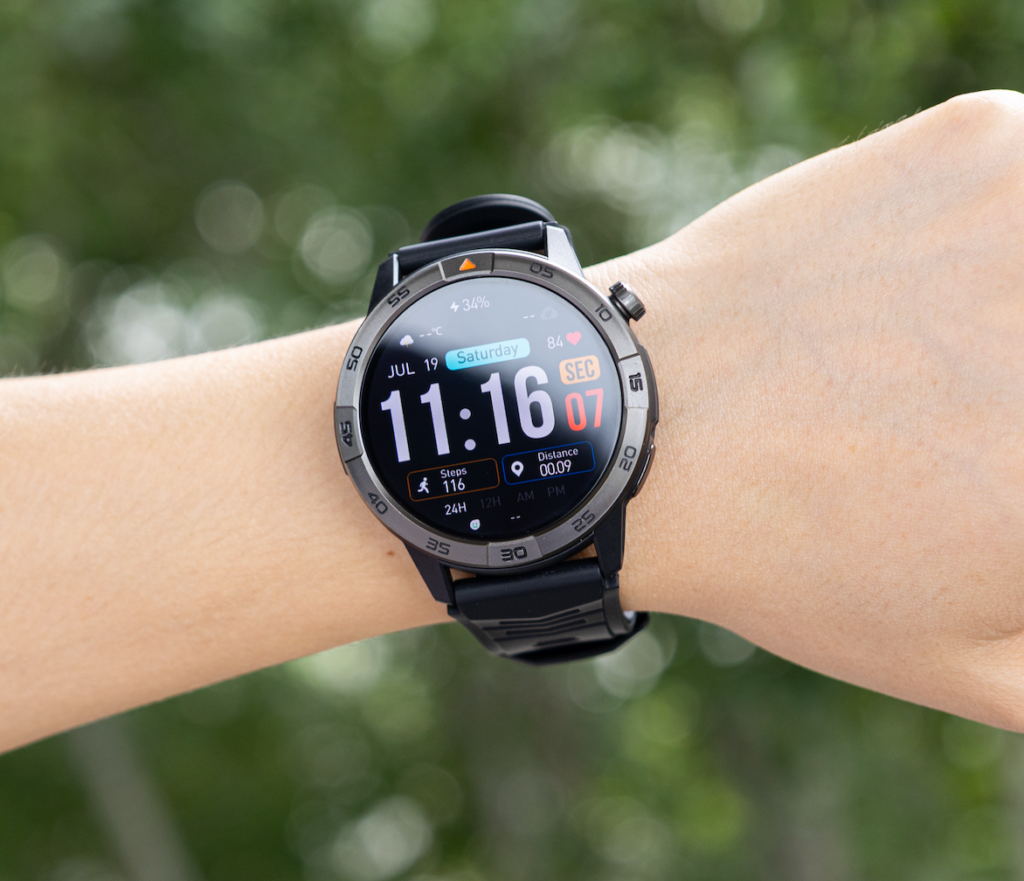
The correct decision depends on whether the coordinator can move safely to a quieter, stationary area.
- Wrist: A brief acknowledgement from a quiet edge of the site
- Phone: A longer call from a controlled location
- Defer: No safe or clear place is available
A vendor confirmation that worked indoors may fail outdoors because the wearer cannot hear, cannot be heard, or cannot protect the conversation.
A smartwatch for daily phone communication must be judged in context. For a focused environmental test, check whether background noise breaks the conversation. Once the connection holds, readers can also score both sides of the call.
Sector Six: Put Safety Ahead of Time Pressure
A call may feel urgent while the coordinator is carrying event supplies across a setup area. That urgency does not make wrist interaction safe.
The decision is Defer until the items are placed and the coordinator is stationary.
Do not answer or manage a watch call while:
- Driving or cycling
- Crossing a street or parking lot
- Using stairs
- Carrying equipment
- Supervising active movement
- Handling another attention-critical task
Hands-free does not mean attention-free
A watch can reduce physical phone handling while still requiring visual, verbal, and mental attention. Safety acts as an override on the Daily Call Mix Wheel. When the surroundings demand full attention, the correct answer is Defer.
Complete the Minneapolis Daily Call Mix
| Call moment | Duration | Privacy | Complexity | Environment | Decision |
|---|---|---|---|---|---|
| Family schedule confirmation | Short | Low | Low | Quiet and stationary | Wrist |
| Vendor arrival check | Short | Low | Low | Quiet | Wrist |
| Supply-location change | Medium | Low | Higher | Quiet | Phone |
| Resident concern | Unknown | High | Medium | Other people nearby | Defer, then Phone |
| Outdoor event call | Unknown | Medium | Variable | Noisy | Defer or Phone |
Two well-chosen wrist moments may create more value than five unsuitable ones.
This is the core measure for a smartwatch for daily phone communication: how many calls are assigned correctly without context loss, privacy spill, unsafe interaction, or unnecessary phone handling?
Detect Four Daily Call Mix Failures
Wrist-Everything Assumption
Every call goes to the watch simply because the feature exists. Correct it by checking duration, privacy, complexity, environment, and safety before answering.
Context Misfit
The conversation stays on the wrist even though the user needs records, messages, maps, or detailed follow-up. Move it to the phone before information is lost.
Privacy Spill
Sensitive content becomes audible to nearby people. Defer the call or move to a private phone setting.
Device-Dependency Blindness
The wearer assumes the watch can handle the call without verifying phone proximity, permissions, routing, or connection continuity. When a wrist-assigned call drops or returns to the phone, trace the full Bluetooth call lifecycle.
Use the Wheel to Choose the Right Follow-Up Test
| Wheel problem | Next question | Best next test |
|---|---|---|
| Wrist answer takes too long | How quickly does speech begin? | Alert-to-voice timing |
| Call moves back to phone | Does the route remain stable? | Call-link stability trace |
| Conversation sounds unclear | Can both people understand speech? | Two-way clarity test |
| Caller cannot hear the wearer | Is microphone capture adequate? | Microphone test |
| Wearer cannot hear the caller | Is speaker output adequate? | Caller-audibility test |
| Phone must stay stored | Can the full call loop remain on the wrist? | Phone-stowed call test |
| Call is private | Where can wrist audio be used appropriately? | Private call-zone review |
Issue the Daily Communication Verdict
Balanced Daily Call Mix
Use this when short calls go to the wrist, private or detailed conversations move to the phone, and unsafe moments are deferred.
Wrist for Short Calls
Choose this when the watch mainly helps with confirmations and brief outgoing calls.
Phone-Dominant Day
Use this when privacy, complexity, long conversations, noise, or information needs make the phone the correct device for most calls. The watch may still help with caller identification and brief confirmations.
Communication Fit Unclear
Choose this when compatibility, call stability, audio quality, privacy conditions, or normal call patterns remain unverified. A smartwatch for daily phone communication should not receive a broad lifestyle verdict while those unknowns remain.
Smartwatch for Daily Phone Communication FAQs
Which daily calls fit a smartwatch best?
Short, simple, low-privacy calls fit best when the wearer is stationary and does not need records, maps, messages, or detailed follow-up.
Can a smartwatch replace the phone for short calls?
It may replace phone handling for some brief calls, but the phone still matters for connectivity, compatibility, privacy, detailed information, and longer conversations.
Should private calls move to the phone?
Yes. Sensitive conversations should move to the phone in a private location or wait until privacy is available.
How long should a wrist call last?
There is no universal limit. Duration is only one factor; privacy, complexity, comfort, noise, and follow-up needs also matter.
Can a work call begin on the wrist and continue on the phone?
Yes. Move the call when it becomes longer, more detailed, or dependent on messages, records, maps, or written information.
How does noise change the decision?
Noise can reduce audibility, speech capture, and privacy. Move to a quieter location, use the phone, or defer the call.
Is a smartwatch useful on a phone-dominant day?
Yes. It may still help identify callers, handle a few quick confirmations, and decide whether to answer now or later.
Does a smartwatch for daily phone communication work without the phone nearby?
That depends on the watch, phone, connection method, software, and supported calling mode. Verify the exact setup rather than assuming independent calling.
Should a time-sensitive call always be answered immediately?
No. Safety and attention come first. Wait until the user can stop and respond without creating a risk.
Finish the Wheel Before Judging Daily Value
The Minneapolis day ends with a balanced mix: the family confirmation and vendor arrival check stay on the wrist; the supply change moves to the phone; the private resident matter waits for a suitable setting; the noisy outdoor call is deferred or handled from a quieter place.
A smartwatch for daily phone communication earns its place by handling the right moments, not the greatest number of moments. Sort one ordinary day into Wrist, Phone, and Defer, then look for the calls where the watch reduces phone handling without losing privacy, context, or safety. Once the mix is clear, compare this watch with your Wrist-Phone-Defer mix.