
A blue correction note is clipped to the permit packet when the return call appears on the watch. The home renovation permit runner has stepped away from the active work area and reached a safe, stationary spot in Raleigh, North Carolina. The caller needs an answer within ten minutes, but the wrist alert looks no more important than a routine call that could wait until late afternoon.
That single call exposes the real problem behind a smartwatch for people missing important calls. The call may reach the watch successfully. The screen may wake, the contact may appear, and an answer control may be available. Even so, the time-sensitive caller can receive the same treatment as every other name in the call log.
The solution is not to make every alert louder or more persistent. It is to build a Priority Call Escalation Ladder that identifies selected callers, recognizes a meaningful repeat attempt, applies a distinct escalation signal, protects a declared response window, and ends with a safe callback or other approved action.
The Raleigh situation used throughout this article is illustrative. It does not describe a real permit office, employer, homeowner, contractor, project, policy, or incident. Its purpose is to test one communication rule: can the important call climb the full ladder before its ten-minute response window closes?
Build the Priority Call Escalation Ladder Before Changing Alerts
Many buyers begin at the wrong end of the problem. They increase vibration strength, enable more notifications, or search for a larger answer button before defining which calls deserve elevated treatment. That can make the watch more disruptive without making priority communication more reliable.
The ladder reverses that order. It begins with the caller and ends with a completed action.
- Caller tier: Decide whether the caller belongs in the standard or priority group.
- Initial alert: Verify that the first alert provides enough information to recognize that tier.
- Repeat-call signal: Define what a second call means and when it should trigger escalation.
- Alternate alert pattern: Reserve a distinguishable signal for a verified priority condition.
- Response window: State how long the user has to act.
- Callback or escalation action: Choose the safest sufficient response before the deadline.
The comparison unit is the number of priority calls recognized, escalated, and acted on within their declared response windows. A specification sheet cannot supply that result by itself. The buyer needs a written rule, verified device behavior, and a controlled test using the intended phone and watch setup.
| Ordinary alert path | Priority escalation path |
|---|---|
| Every caller receives similar treatment | Selected callers enter a declared priority tier |
| A repeat call may look like another routine attempt | A qualified repeat call has a predefined meaning |
| The user checks when convenient | The user works within a stated response window |
| Success means the notification appeared | Success means an approved action occurred before the deadline |
This distinction protects the article’s intent. It does not diagnose why an alert never reached the wrist, measure the speed from alert to spoken conversation, or claim that the watch can replace emergency communication systems.
Define Priority Callers for a Raleigh, North Carolina Workday
A home renovation permit runner may move among document preparation, homeowner coordination, project stops, and administrative handoffs. During that routine, several legitimate calls can arrive. Their presence in the same workday does not give them the same consequence or response deadline.
For the continuing Raleigh example, the permit-correction caller qualifies for priority treatment because the answer affects a pending project step and the user has assigned it a ten-minute response window. The classification comes from a declared consequence, not from anxiety, call frequency, or the caller’s job title.
Write a response contract for the caller
A response contract is a small record that states what should happen when the selected caller tries to make contact. It can be kept in a personal worksheet, provided that doing so does not conflict with workplace procedures or privacy requirements.
- Caller or caller group: The person or category allowed to enter the priority tier.
- Reason for priority: The specific consequence that justifies faster treatment.
- Normal response window: The maximum time allowed for the first approved action.
- Repeat-call rule: The condition under which a second attempt changes the alert level.
- Safe first action: Answer, acknowledge, retrieve the phone, or call back.
- Fallback action: The next step when the first response is not possible.
In this scenario, “important” does not mean “answer instantly.” The permit runner may be crossing a parking area, driving between stops, using stairs, carrying documents, or moving near active renovation work when the alert arrives. Recognition can occur at the wrist, but interaction must wait until a safe, stationary, permitted moment.
Use consequence instead of familiarity
A familiar contact name can feel important without carrying a short deadline. Conversely, a number that calls infrequently may represent the one project question that needs prompt action. The ladder should therefore ask, “What happens if this call waits?” rather than “How often does this person call?”
That question gives American workers, independent contractors, parents, and small-business users a more stable way to create priority rules. It also keeps the priority tier narrow enough to remain meaningful. When nearly every contact receives special treatment, the alternate alert becomes another ordinary signal.
Rung One: Place the Caller in a Declared Tier
The first rung is a classification decision. Before evaluating vibrations or call controls, identify the people or call categories that deserve a different response path.
For the permit-correction call, the user records one rule:
If this declared project contact returns a correction question during the active submission period, begin a ten-minute response window.
The rule has boundaries. The rule has clear boundaries. Construction-related numbers do not automatically qualify as urgent, and separate calls from the same contact may carry different response requirements. Priority treatment begins only when the declared condition exists.
Create a Priority Caller Card
The card should contain enough information to test the call without becoming an unofficial project record.
| Priority Caller Card field | Raleigh permit-call entry |
|---|---|
| Caller tier | Priority during the active correction period |
| Recognizable information | Verified contact name or known number presentation |
| First response window | Ten minutes |
| Repeat condition | A second call within the open response window |
| Approved action | Respond from a safe stationary location or return the call by phone |
| Fallback | Use the previously agreed non-emergency contact route |
The card does not prove that a particular watch can implement the rule. It defines what the buyer needs to verify.
Failure mode: Importance-Blind Alert
An Importance-Blind Alert occurs when the selected call receives no different treatment because no operational priority tier exists. The vibration may work perfectly. The connection may remain active. The caller may still be missed because the system offers no reason to treat that alert differently from a routine interruption.
Increasing the intensity of every notification does not repair this rung. The fix begins with a smaller, clearer set of priority callers and a reason each one belongs there.
Rung Two: Make the Initial Alert Identifiable
The caller can enter the right tier on paper and still fail at the wrist. The first alert must show enough information for the permit runner to connect the incoming call with the Priority Caller Card.
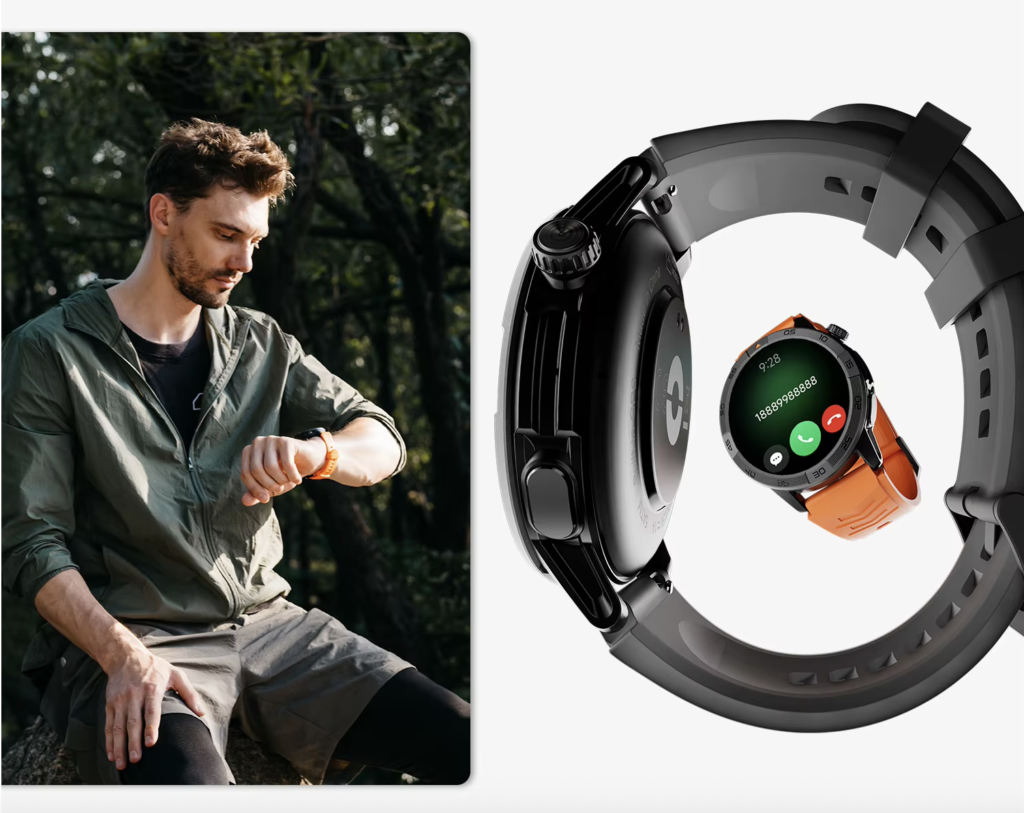
Useful recognition may depend on the contact name, number presentation, screen layout, phone permissions, contact synchronization, software state, and connection status. Exact behavior varies by device and phone ecosystem. A promotional image showing a call screen does not prove that names always appear correctly or that the same information remains available under every condition.
Test the caller information you will actually use
A controlled test should use the intended phone, the actual contact format, and the normal watch connection. The user can then record:
- What appears on the first incoming-call screen
- Whether the contact name remains readable at a glance
- Whether the number appears when the name does not
- How unknown or shared numbers are presented
- Whether similar contact names can be distinguished
- What changes when the phone is locked, silenced, or using interruption controls
Do not infer Bluetooth stability, caller-identification accuracy, phone independence, or answering support from the appearance of one interface. Each claim needs current official documentation or direct testing under the buyer’s intended conditions.
Failure mode: Caller-ID Ambiguity
Caller-ID Ambiguity means the alert arrives but does not provide enough dependable information to assign the call to its declared tier. A truncated name, number-only display, shared business number, unknown-caller label, or inconsistent contact match can all create uncertainty.
In the Raleigh example, the user should not assume that a vaguely familiar number is the permit-correction caller. If the watch cannot make the distinction reliably, the correct finding is Caller Recognition Weak, not a confident priority pass.
Rung Three: Give Repeat Calls Meaning in American Phone Routines
A repeated call often feels more urgent than a single attempt, but repetition alone does not prove importance. Automated calls, accidental redials, persistent sales calls, and routine follow-ups can also arrive more than once.
The repeat-call rung works only when the user declares who may trigger it, how quickly the second attempt must occur, and what the second attempt changes.
For the permit-correction call, the rule might read:
A second call from the verified priority contact within the open ten-minute window moves the call to the escalation rung.
This is a user-defined test rule, not a claim that every watch or phone automatically supports it. Some systems may offer repeat-caller exceptions, priority contacts, focus controls, or distinctive notification settings. The buyer must confirm whether those controls apply to incoming calls, whether they reach the paired watch, and whether their behavior matches the intended rule.
Keep the repeat condition narrow
A useful repeat rule answers four questions:
- Which declared caller can trigger it?
- How close together must the attempts occur?
- Does the second call change the alert, the response deadline, or both?
- What happens when the caller information cannot be verified?
For many Americans balancing work and family communication, a repeat-call agreement can be useful only when everyone understands its meaning. The second attempt should represent a predefined request for attention, not a general instruction to call repeatedly until someone answers.
Failure mode: Repeat-Call Collapse
Repeat-Call Collapse occurs when the second attempt adds no recognizable information or escalation. The first and second calls may appear as separate records, yet the user receives no clear indication that the declared repeat condition has occurred.
That failure cannot be solved by measuring answer speed. The question is not how quickly the permit runner can tap the call control. It is whether the second attempt changes the priority path before the response window closes.
Rung Four: Reserve an Alternate Alert Pattern for Escalation
An alternate alert pattern gives the qualified repeat call a distinct signature. Depending on verified device support, that distinction could involve a different vibration, sound, repeated signal, priority-contact behavior, or phone-side interruption exception that reaches the watch.
The buyer should never assume that a menu label guarantees the desired result. A contact setting on the phone may not behave identically on the watch. A distinctive vibration may apply to messages but not calls. A focus exception may permit the alert without creating a unique pattern.
Make the pattern different, not merely stronger
A stronger version of every alert can create more interruption without adding meaning. The alternate pattern should answer a specific question: “Has this declared priority caller reached the escalation rung?”
For the Raleigh call, the permit runner tests the selected pattern from a safe stationary location. The result should be recognizable without requiring prolonged screen inspection. If the signal is easy to confuse with ordinary calendar, message, or app alerts, it does not provide a dependable escalation marker.
Do not let escalation override safe behavior
A distinct alert changes awareness, not the rules of movement. The permit runner must not interact with the watch while driving, crossing traffic, climbing stairs, carrying tools or materials, supervising active work, or moving through an attention-critical area.
When the wearer cannot respond safely, the ladder continues to the next permitted stationary moment. A priority call can have a short response window without demanding an unsafe instant answer. Readers who need a broader method for choosing that moment can use a safe work-pause gate.
Rung Five: Protect the Declared Response Window
The ten-minute window begins when the permit runner receives enough information to recognize the priority call. It ends when an approved action occurs, not merely when the watch records a missed call.
Possible completion points include:
- Answering from the watch at a safe and permitted moment
- Retrieving the phone and returning the call
- Sending an approved acknowledgment through the normal communication channel
- Moving to an appropriate location for a private or complex conversation
- Using a previously agreed non-emergency fallback route
This timing unit differs from quick call answering. An alert-to-voice test measures elapsed seconds and required actions before understandable two-way speech begins. The priority ladder asks whether the selected caller received the right treatment before the declared deadline. Buyers concerned specifically with answer speed should separately time the alert-to-voice path.
Choose the window from the consequence
Ten minutes fits the illustrative permit-correction call because that is the declared rule for this scenario. It is not a universal standard for project communication, family calls, municipal work, or American workplaces.
A practical response window should account for:
- The consequence of waiting
- The user’s normal travel and work pattern
- Safe opportunities to stop and respond
- The privacy and complexity of the expected conversation
- The availability of an approved fallback
A deadline that cannot coexist with safe behavior is poorly designed. The response contract should either allow a safe stationary interval or use a different communication path.
Failure mode: Response-Window Miss
A Response-Window Miss occurs when no approved action takes place before the declared deadline. Earlier rungs may still have worked: the watch displayed the contact, the repeat call appeared, and the alternate pattern activated. The full system nevertheless fails if the call remains unaddressed after ten minutes.
This failure shows why notification success is not the final comparison unit. The ladder ends with action.
Rung Six: Preselect the Callback or Escalation Action
An important alert can still create delay when the wearer has not decided what to do next. The final rung removes that uncertainty by choosing the smallest sufficient response in advance.
For the Raleigh permit runner, the expected conversation may be too detailed or private for a wrist call. In that case, the watch can support recognition while the phone remains the better tool for completing the discussion. A short acknowledgment may also protect the response window when an immediate full conversation is not possible and workplace procedures allow it.
Separate acknowledgment from resolution
Responding within the window does not always mean resolving the entire project question. The first action may simply confirm that the call was recognized and state when a proper callback will occur.
The response contract should distinguish among:
- Acknowledged: The caller knows the message or call was received.
- Connected: Two-way communication has begun.
- Resolved: The underlying question has been answered through the appropriate process.
A smartwatch does not replace official records, permit documentation, workplace systems, project files, or professional judgment. Any decision that must enter an official record still belongs in the required system.
Create a non-emergency fallback
If the priority call cannot be completed through the watch, the fallback might direct the user to retrieve the phone, move to a quieter or more private location, or use an agreed work communication route.
Do not convert this convenience ladder into an emergency-call promise. Emergency communication depends on separate hardware, phone, network, service, location, account, and backup conditions. The watch must remain secondary to official emergency systems. Readers evaluating that separate problem should verify emergency-call dependencies and backups.
Test One Priority Call Across a U.S. Work Routine
A controlled trial should make the same illustrative permit-correction call climb every rung. Testing one declared path produces clearer evidence than collecting impressions from unrelated notifications.
- Save or verify the contact information used for recognition.
- Place the phone and watch in the normal connected state.
- Apply the intended interruption, focus, sound, or notification settings.
- Initiate the first call from the declared contact.
- Record exactly what appears and which alert pattern occurs.
- Leave the first attempt unanswered during the controlled test.
- Initiate the qualifying repeat call within the declared interval.
- Record whether the second attempt creates a distinguishable escalation.
- Complete the approved action from a safe stationary position.
- Mark whether the action occurred before the ten-minute window closed.
Do not place test calls while driving or moving through traffic. The user should also avoid testing during active construction work, tool use, lifting, climbing, crowd management, or any situation that requires undivided attention.
Create a Priority Call Receipt
| Ladder checkpoint | Evidence to record | Pass condition |
|---|---|---|
| Caller tier | Written priority rule | The caller clearly qualifies under the rule |
| Initial alert | Displayed caller information | The user can identify the declared caller confidently |
| Repeat signal | Second-call behavior | The qualified repeat attempt is recognized |
| Alternate pattern | Observed vibration, sound, or alert difference | The escalation signal is distinguishable |
| Response window | Start and completion times | An approved action occurs before the deadline |
| Final action | Answer, callback, acknowledgment, or fallback | The selected action follows safety and workplace rules |
American users should repeat the test after meaningful changes to the phone operating system, watch software, contact settings, permissions, or connection method. A result from one setup does not prove permanent behavior across future configurations.
Mark the Exact Rung Where the Important Call Failed
A useful diagnosis names the broken rung instead of saying only, “The watch missed the call.” That broad statement can hide several different failures.
| Failure mode | Broken rung | Diagnostic question |
|---|---|---|
| Importance-Blind Alert | Caller tier | Was the caller given a declared priority rule? |
| Caller-ID Ambiguity | Initial alert | Could the wearer identify the priority caller confidently? |
| Repeat-Call Collapse | Repeat signal | Did the second attempt create a recognizable escalation? |
| Response-Window Miss | Window or final action | Did an approved response occur before the deadline? |
Each failure requires a different correction. Louder vibration does not repair an ambiguous caller display. Faster answering does not create a missing priority tier. A repeat signal has little value when no response window or approved action exists.
When the call never reaches the wrist or the alert is not noticed at all, the problem sits outside this ladder. In that situation, trace the full missed-call pathway before changing priority behavior.
Issue the Priority Call Verdict
The verdict should come from completed trials, not from the presence of a priority setting in a menu or a call screen in a product image.
Priority Calls Protected
Use this verdict when the declared caller can be recognized, the repeat condition produces the intended escalation, the alternate signal is distinguishable, and an approved action occurs within the response window.
One Escalation Needed
Choose this result when the initial caller recognition works but one added step, such as a repeat-call rule, distinct alert pattern, or clearer fallback, is necessary to protect the deadline.
Caller Recognition Weak
This verdict applies when alerts arrive but the information shown does not identify the caller reliably enough to select the correct tier. Missing evidence should be labeled unverified or undisclosed rather than treated as proof that a feature is absent.
Important Call Still Missed
Use the final verdict when the declared response window closes without an approved action. Some ladder rungs may pass, but the complete priority path does not.
Keep Priority Calling Separate From U.S. Emergency Systems
A priority call is a personally or professionally selected communication that has a declared response window. An emergency call involves official services, urgent safety procedures, and dependencies that a convenience workflow cannot guarantee.
The permit-correction call in this article may be important to a project schedule, but it is not an emergency-service scenario. The ladder must never encourage casual emergency test calls or imply that a watch replaces a phone, dispatcher, radio, employer procedure, public-safety system, or trained judgment.
The same boundary applies to other neighboring intents:
- Alert never arrived: Diagnose the phone-to-wrist notification path.
- Answering took too long: Measure the alert-to-voice sequence.
- Notification and answering capabilities are unclear: Verify those capabilities separately.
- The call may involve immediate danger: Follow official emergency procedures and verified backup plans.
Priority Call Escalation Ladder FAQs
How should priority callers be selected?
Select them by consequence, response deadline, and the need for a predefined action. Call frequency and personal familiarity alone do not create a dependable priority rule. Keep the tier narrow enough that its escalation signal remains meaningful.
Should every repeat call trigger escalation?
No. A repeat attempt should trigger escalation only when it matches a declared caller, timing rule, and situation. Repetition by itself does not prove urgency or importance.
Does caller ID show enough information to classify an important call?
That depends on the watch, paired phone, contact format, permissions, software, and connection state. Test the intended setup directly and consult current official documentation. A marketing image does not prove consistent caller-identification behavior.
Is this the same as fixing missed-call alerts?
No. General missed-alert diagnosis asks whether the call reached the wrist and became noticeable. The Priority Call Escalation Ladder begins with a delivered alert and asks whether a selected caller receives elevated treatment before a declared deadline.
Is a priority caller the same as an emergency contact?
No. A priority caller belongs to a personal or work response rule. Emergency communication requires separate verification, official procedures, and dependable backups.
Does answering from the watch complete the ladder?
Only when wrist answering is supported, safe, permitted, private enough, and suitable for the expected conversation. A phone callback or brief acknowledgment may be the better approved action.
What happens when the caller name is unclear?
Do not guess. Record Caller-ID Ambiguity, use the approved fallback, and test whether contact formatting or verified device settings improve recognition. If the evidence remains insufficient, issue the Caller Recognition Weak verdict.
How often should the ladder be retested?
Retest after meaningful changes to the watch, paired phone, operating-system version, permissions, contact records, interruption settings, connection method, or normal work routine. The goal is to confirm the complete path under the setup the user currently relies on.
Define the People and Deadlines Before Adjusting the Watch
The Raleigh permit runner does not need every call to become louder, longer, or more intrusive. The one permit-correction call needs a declared route: recognized caller, qualified repeat attempt, distinguishable escalation, ten-minute response window, and safe final action.
Write those rungs first. Test them in order, mark the exact failure point, and reject any setup that treats notification arrival as the final proof. Once the caller tier and response contract are complete, compare this watch with your priority escalation ladder.