
Cross out the watch carrying the “best overall” badge. The independent insurance-agency operations manager in Charlotte, North Carolina, has not compared its screen, sensors, or app list yet. The candidate is removed because its phone pathway cannot reliably support the manager’s required caller-screening role. That single conflict is enough. The best smartwatch for this manager is not the product with the highest general score; it is the last candidate left after every incompatible, distracting, or ownership-breaking option has been eliminated.
The Best-Fit Elimination Compass makes that decision in four directions: Must Have, Must Avoid, Phone Fit, and Ownership Fit. Candidates do not earn points for surviving a direction. They simply remain qualified. One critical failure removes them, even when reviewers praise everything else.
Why “Best Overall” Can Fail One U.S. Buyer
A broad award represents priorities chosen for a large audience. The Charlotte manager has a narrower job: screen incoming agency calls and selected staff alerts during safe, stationary moments, then decide whether the phone needs immediate attention. A watch can lead a national roundup yet fail that exact assignment.
The manager therefore separates discovery from qualification. Popular rankings may surface candidates, but they cannot issue the personal verdict. Phone support, caller identity, privacy, comfort, and charging tolerance remain pass-or-fail conditions.
The sequence also depends on work already completed. The manager must first define the one wrist job every candidate must perform, then enter the correct smartwatch category before building the shortlist. Article 305 begins only after those two decisions are stable.
Fix the Charlotte Manager’s Elimination Rules Before Comparing
The manager writes the four compass filters before opening more product pages. This prevents attractive specifications from changing the rules halfway through the comparison.
Must Have
- Verified support for the manager’s exact phone
- Selected staff alerts
- Incoming caller identity
- A noticeable vibration or visual alert
- Comfort through a full office day
- A charging pattern that fits the home routine
Must Avoid
- Client details exposed in previews
- Uncontrolled notification duplication
- Charging during core work hours
- Setup complexity with no agency value
- An unclear app, seller, or offer identity
Everything else is labeled preferred or irrelevant. A preferred feature can break a tie. It cannot rescue a failed requirement. This protects the decision from Must-Have Dilution.
North: Eliminate Any Candidate That Misses a Must Have
The north direction asks one question: can this candidate perform every required part of the manager’s wrist role?
Candidate C appears attractive because its ownership burden looks low and its battery language sounds favorable. Caller identity, however, remains unverified. An incoming-call icon may prove only that the watch notices a call, not that it identifies the caller or supports the next action the manager needs.
The candidate leaves the compass. “Unverified” is not a temporary pass. It is a failed qualification until reliable evidence resolves it.
The manager can separate a call alert from the complete caller-and-answer path before allowing any calling claim into the Must Have column. The best smartwatch cannot depend on an assumed function.
South: Remove Watches That Breach the Must-Avoid Line
The south direction protects the manager from a product that can technically perform the task but creates an unacceptable conflict while doing it.
Candidate B supports the phone and delivers alerts. Its default behavior, however, duplicates nearly every phone notification, exposes too much preview text, and requires repeated settings management. Those burdens defeat the manager’s narrow screening purpose.
Candidate B is removed even though its feature list is longer than the remaining options. The manager is not buying a feature collection; the manager is buying a controlled alert pathway.
Every evidence card must also belong to the exact offer being compared. Before a candidate survives, the manager should verify that each evidence card belongs to the exact offer. A lower price from one listing, stronger battery wording from another, and better return terms from a third cannot be merged into a fictional winner.
East: Verify Phone Fit Before a U.S. Candidate Survives
The east direction tests the complete phone-to-watch relationship. A general compatibility label is not enough. The manager needs evidence for the exact phone, operating system, companion app, required permissions, notification delivery, caller information, reconnection behavior, and phone-proximity conditions.
Candidate A is widely praised and appears strong across many categories. Its phone pathway, however, does not fully support the manager’s required caller-screening behavior. The best smartwatch label cannot override that gap, so Candidate A is eliminated.
This filter stays narrow. It does not become a complete ecosystem comparison. It asks only whether the phone relationship required by the Charlotte manager works without an unresolved link.
A candidate remains alive only when the full path is documented and testable. Basic pairing, an app-store listing, or a shared Bluetooth label does not prove that the required alerts and caller details will reach the wrist correctly.
West: Test Ownership Fit Across a Charlotte Workweek
The west direction asks whether a technically qualified watch can live inside the manager’s real routine. The Charlotte week includes morning agency-opening checks, staff scheduling, private client-call blocks, conference-room meetings, desk work, brief movement between office areas, and evening charging at home.
The manager evaluates:
- strap and case comfort across a full office day;
- whether charging removes the watch during the role it must support;
- whether notification previews protect client and staff privacy;
- how often settings or reconnection require attention;
- whether the seller provides usable written terms;
- and whether the product can be tested before the confirmed return deadline.
Candidate D appears balanced. It has no known phone conflict, the alert pathway fits the role, and its ownership demands look manageable. It still does not win yet. Comfort, charging, privacy controls, package contents, and seller protection must be verified in the exact offer.
When charging tolerance becomes the deciding ownership issue, the manager can decide whether charging tolerance should control the final fit. Long battery matters only when it protects the required work role under the relevant mode.
Keep Popularity Outside the Elimination Compass
Popularity can identify a candidate, but it cannot qualify one. Bestseller badges, review volume, awards, and social visibility describe market attention. They do not prove personal fit.
The Charlotte manager records popularity in a separate discovery note and never places it inside Must Have, Must Avoid, Phone Fit, or Ownership Fit. This prevents Popularity Substitution, where reputation quietly replaces evidence.
A celebrated watch may still be excellent for another purpose. Removing it does not declare it poor. It declares it unsuitable for this one manager’s H1.
Prevent Optional Features From Diluting the Agency Requirements
The manager divides remaining specifications into three groups.
- Required functions: selected alerts, caller identity, exact phone support, comfort, and workable charging
- Useful extras: features that may improve ownership without deciding it
- Feature noise: capabilities unrelated to the agency alert role
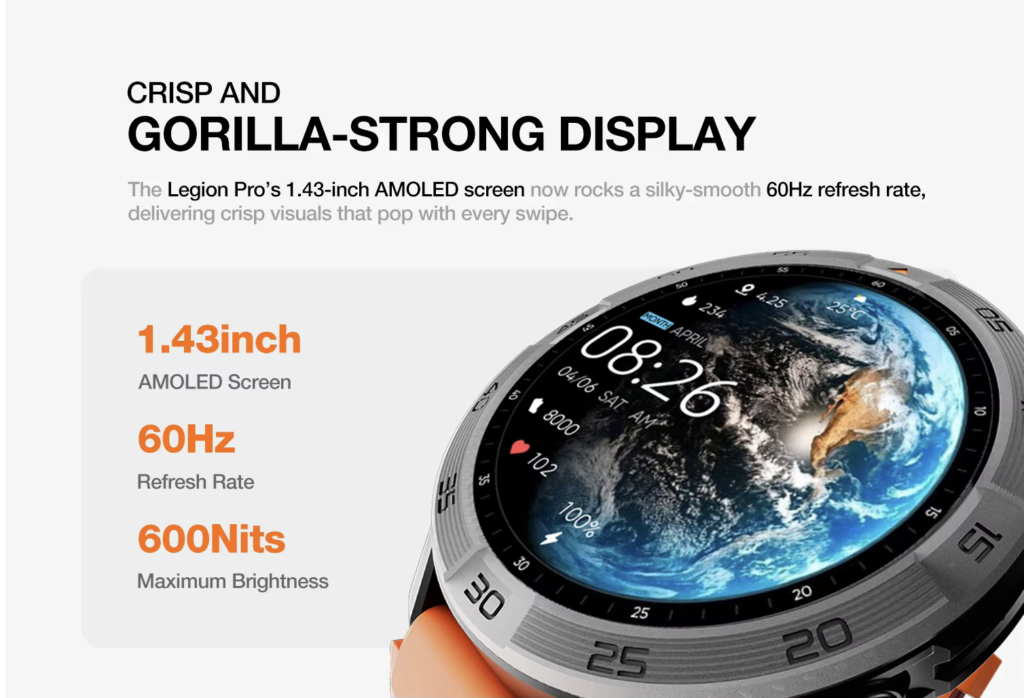
Extensive workout data, decorative interface options, specialized navigation tools, or other advanced functions may be valuable elsewhere. They do not belong in this comparison unless they change the manager’s exact decision.
This discipline keeps the best smartwatch question from expanding into “Which watch has the most impressive page?” The H1 asks which qualified candidate remains, not which candidate can claim the largest feature count.
Use One Tie-Breaker When Two Candidates Remain
If two candidates survive all four directions, the manager does not reopen the full specification lists. One tie-breaker was selected before the comparison:
Which survivor protects the required alert role with less charging and notification management?
This rule may leave Candidate D ahead of another fully qualified option because its ownership burden better fits the Charlotte routine. The losing candidate becomes a Strong Second Choice, not a failed watch.
Changing the deciding rule after seeing the outcome creates Tie-Breaker Drift. The manager must not replace charging burden with display style, then replace style with app count, until a preferred product finally wins.
Verify the Surviving U.S. Offer Before Naming It Best
The last candidate still needs a current offer check. The manager confirms the exact seller, delivered price, package contents, phone and app documentation, written warranty, return terms, and evidence date.
A candidate cannot receive Personal Best Fit when a critical field is stale, copied from another listing, or attached to a different configuration. The final offer must match the evidence card that survived the compass.
The manager can run a current offer and seller-protection review for its evidence discipline, while recognizing that the linked page uses a narrower price context.
Only after the exact offer passes may the manager call it the best smartwatch for this decision.
Correct Four Best-Smartwatch Selection Failures
Best-Overall Trap
A broad winner is treated as the manager’s winner. Correction: apply all four compass directions before considering awards.
Must-Have Dilution
Several optional strengths are allowed to compensate for one missing requirement. Correction: keep every must-have pass-or-fail.
Tie-Breaker Drift
The deciding rule changes whenever the result feels inconvenient. Correction: declare one tie-breaker before reviewing the survivors.
Popularity Substitution
Review volume or market fame replaces direct fit evidence. Correction: use popularity for discovery only.
Issue the Best-Fit Elimination Verdict
Personal Best Fit
One candidate passes Must Have, Must Avoid, Phone Fit, Ownership Fit, and the current-offer check.
Strong Second Choice
Two candidates qualify, but one loses the predeclared tie-breaker.
Category Winner Only
A candidate appears strong generally but still lacks proof for the manager’s personal requirements.
No Defensible Best
Every candidate fails a critical filter or retains an unresolved field.
Candidate D receives Personal Best Fit only when its phone path, caller screening, privacy controls, comfort, charging routine, seller identity, and return terms are verified. Until then, the disciplined verdict is No Defensible Best.
Questions U.S. Buyers Ask Before Naming the Best Smartwatch
Does the best smartwatch need the most features?
No. It needs every function required by the Charlotte manager without breaching a critical limit.
Should phone compatibility be checked first?
It is an early elimination filter, but it does not replace Must Have, Must Avoid, or Ownership Fit.
Can a popular smartwatch still be the wrong choice?
Yes. Popularity cannot repair a phone conflict, privacy problem, charging mismatch, or missing required function.
How many must-have features should the list contain?
Only requirements whose absence would cause the manager to reject the watch.
What should break a tie?
One factor declared before comparison and tied directly to the manager’s wrist role.
Can the result be no best smartwatch?
Yes. A failed or unresolved critical field means no defensible winner exists yet.
The Best Smartwatch Is the Last Qualified Candidate
The “best overall” badge from the opening remains valuable as a discovery signal, but it no longer controls the Charlotte manager’s decision. That watch was crossed out because it failed a personal requirement, not because it lacked general quality.
Must Have preserves the required agency role. Must Avoid protects privacy and attention. Phone Fit confirms operation. Ownership Fit confirms that the watch belongs in the manager’s actual workweek.
The best smartwatch is not the candidate with the tallest pile of advantages. It is the candidate with no disqualifying conflict for this one manager. When no watch clears every direction, No Defensible Best is more accurate than forcing a winner.
Place the available candidate at the center of the compass and run this watch through your four personal-fit filters before allowing popularity or extra features to decide.