
The vendor’s name appears on the watch while the Miami front-desk supervisor is handing a room key to a guest. The call can be answered, but the public lobby may still make answering the wrong choice.
To answer do smartwatches work for phone calls at work, technical connection is only the first test. The workplace must permit the interaction, both people must be able to hear clearly, the conversation must remain appropriate for the setting, and the employee must be able to pause without neglecting a guest or active desk duty.
A smartwatch can make caller identification faster and support a brief Bluetooth call through a nearby paired phone. It cannot override hotel policy, protect private information automatically, remove lobby noise, or make divided attention appropriate during guest service.
The useful question is not simply whether the call connects.
It is:
Does this workplace allow the call, and can the employee handle it without creating a service, privacy, noise, or safety problem?
Build the Workplace Suitability Grid Before a Miami Hotel Shift
The front-desk supervisor should evaluate every call across four dimensions:
| Dimension | Workplace question |
|---|---|
| Permission | Do employer rules and supervisor expectations allow wrist calls here? |
| Acoustics | Can both people hear without raised volume or repeated clarification? |
| Privacy | Could guests or coworkers hear or see information that should remain limited? |
| Task safety | Can the supervisor pause without neglecting a guest, payment, key, or urgent desk task? |
Each dimension receives one practical result.
Clear means the call is suitable under the current conditions.
Conditional means the call may be suitable only after the employee pauses, moves, lowers the volume, or changes to another audio method.
Blocked means the wrist conversation should not happen. The call should move to an approved phone, headset, private area, or later callback.
One blocked result is enough to stop the wrist call.
Permission comes before convenience
The first question is not whether the watch includes a speaker.
The Miami supervisor should confirm:
- Whether personal smartwatches are allowed at the desk
- Whether personal calls are restricted
- Whether work calls may be handled through a personal device
- Whether speaker audio is permitted in guest-facing areas
- Whether the hotel requires an approved headset or desk phone
- Whether work notifications may appear on a personal watch
A hotel may allow employees to wear a smartwatch while prohibiting public calls or work communication through an unapproved device.
The article cannot define the employer’s policy. The employee must check the actual rule.
Acoustics measure more than volume
A call is not suitable merely because the watch produces sound.
The supervisor should consider whether:
- The caller is understandable
- Normal speaking volume is enough
- Repetition is unnecessary
- Lobby sounds remain manageable
- Nearby guests are not disturbed
- The watch does not need to be held close to the face
Once the employee begins leaning toward the wrist, raising the voice, or repeatedly asking for clarification, the call has probably outgrown the watch.
Privacy begins before the call is answered
The screen itself may reveal:
- A guest name
- A manager’s identity
- A vendor
- A family contact
- A message preview
- A business notification
Answering can expose even more information through public speaker audio.
Privacy therefore belongs in the decision before the green call button is touched.
Task safety includes service quality
The front desk may not contain machinery, but active hotel duties still require complete attention.
A call should not interfere with:
- Guest check-in
- Payment handling
- Identification review
- Room-key issuance
- Complaint resolution
- Directions
- Lobby-line management
- An urgent property issue
The employee must be able to pause responsibly.
Review Calling Rules at a Miami Hotel Front Desk
Permission should be established before the busy afternoon begins.
A smartwatch may be acceptable for time checks and notifications while wrist calls remain restricted. Personal calls may be allowed during breaks but not at the counter. Vendor communication may need to stay on the hotel phone so the conversation remains inside approved systems.
Separate device permission from call permission
These are different questions:
- May the employee wear the watch?
- May the watch display notifications?
- May the employee answer personal calls?
- May work calls be handled through the watch?
- May speaker audio be used in the lobby?
A “yes” to the first question does not answer the remaining four.
Check expectations for guest-facing employees
Before enabling calls, the supervisor should ask:
- Must a guest interaction always be completed first?
- Are personal calls limited to a break area?
- Should vendors use the main hotel number?
- Is a hotel-approved headset required?
- Can the watch be used only for caller screening?
- Are message previews restricted?
Clear expectations prevent the employee from making an improvised decision during a crowded check-in period.
Record the permission result
An example might be:
Permission: Conditional. Caller identification is permitted, but answering is limited to approved quiet periods or a back-desk area.
That result becomes the first part of the workplace grid.
Screen Vendor, Manager, and Family Calls Before Answering
Caller screening may be the watch’s most useful workplace role.
The display can help the supervisor distinguish:
- Linen vendor
- Hotel manager
- Delivery contact
- Family member
- Unknown caller
Once the caller is identified, the employee can choose the correct channel.
Use the watch to route the call
The immediate options may include:
- Silence
- Reject
- Answer briefly
- Send the conversation to the phone
- Step into an approved private area
- Return the call after guest service
- Use the hotel phone
The watch does not need to host the full conversation to save time.
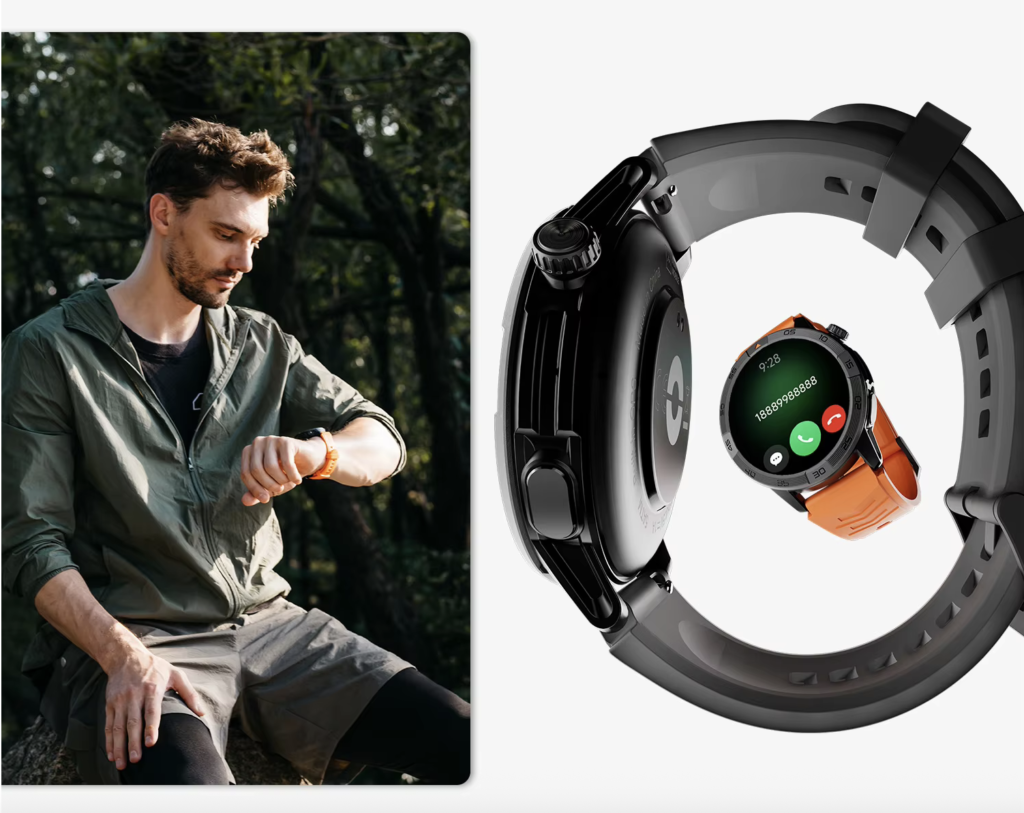
Evaluate caller-display clarity
A practical call screen should make it easy to see:
- Contact name
- Phone number
- Answer control
- Reject control
- Missed-call status
- Call duration
- Whether the phone remains connected
A crowded screen or unclear contact name increases visual demand at the desk.
Employees comparing the technical setup can understand how phone-assisted Bluetooth calls depend on the paired phone while keeping workplace suitability as the larger decision.
Keep caller screening separate from missed-call troubleshooting
This article is not about why a call failed to reach the wrist.
The relevant question is:
Now that the caller has been identified, is this the correct place and moment to respond?
A vendor may wait until check-in ends. A manager may need one quick acknowledgment. A family call may move to a private area. An unknown caller can be rejected.
Test Wrist-Call Audio in a Busy Florida Lobby
Audio should be tested in realistic conditions, not only in a quiet office.
A Miami hotel lobby may contain:
- Guest conversations
- Rolling luggage
- Opening doors
- Background music
- Desk phones
- Cleaning activity
- Groups arriving together
- Vehicle noise near the entrance
A call that sounds acceptable in an empty room may become difficult during afternoon arrivals.
Test both directions of the conversation
The supervisor should determine:
- Can the caller be heard clearly?
- Can the caller understand the supervisor?
- Is normal speaking volume sufficient?
- Does the microphone capture excessive lobby noise?
- Must information be repeated?
- Does the speaker become noticeable to guests?
The employee should not assume that hearing the caller means the caller can hear the employee.
Mark acoustics Conditional when volume rises
Move the call away from the wrist when the supervisor must:
- Speak unusually loudly
- Hold the watch near the face
- Ask for repeated clarification
- Increase volume enough for guests to hear
- Step away from the desk merely to understand the caller
The watch may still help identify the caller and arrange a callback.
Readers evaluating connected audio can compare smartwatch speaker and microphone demands during connected calls without treating loudness as the only measure of call quality.
Avoid universal call-quality claims
Audio performance may change with:
- Watch position
- Lobby layout
- Background noise
- Phone connection
- Speaker volume
- Microphone design
- The caller’s environment
A workplace test is more useful than a general promise that calls sound clear.
Protect Guest Privacy in a U.S. Hospitality Setting
A technically clear call may still be inappropriate.
Public speaker audio can expose information that nearby guests or coworkers should not hear.
Keep sensitive details off the wrist speaker
Avoid wrist conversations involving:
- Guest names
- Room numbers
- Reservation details
- Payment problems
- Complaint information
- Vendor pricing
- Staffing matters
- Personal family details
The supervisor should move these conversations to an approved hotel phone, headset, back-office area, or private callback.
Treat the display as part of privacy
The call screen may reveal caller identity or message content before the conversation begins.
Notification settings should be reviewed for:
- Contact names
- Message previews
- Calendar details
- Work-app notifications
- Family information
Employer expectations should guide what appears on a personal device in a guest-facing area.
Use a practical privacy rule
The article does not need to make a legal conclusion.
A useful workplace rule is:
When nearby guests or coworkers could hear or see information that should remain limited, wrist calling is blocked.
An example result might be:
Privacy: Blocked. The vendor needs to discuss pricing and a delayed shipment, so the call moves to the hotel phone.
Pause Calls During Check-In, Payment, and Key Handling
The active guest should not compete with a caller for the supervisor’s attention.
Use this guest-service pause rule:
When another person is already receiving the employee’s attention, the caller waits unless workplace procedure identifies a genuine emergency.
Block calls during active front-desk duties
Do not answer while:
- Checking in a guest
- Reviewing identification
- Handling a payment
- Issuing a room key
- Resolving a complaint
- Giving directions
- Managing a growing line
- Responding to an urgent hotel issue
A glance at caller identity may be allowed under policy, but answering remains a separate decision.
Protect the guest from divided attention
Even a short call can signal that the guest has become secondary.
The supervisor should complete the interaction or reach a clear stopping point before responding. That protects service quality and reduces the chance of an error involving payment, room access, or instructions.
Score the exact moment
The same call may receive different results during the afternoon:
- No guest at the counter: Clear
- Guest approaching: Conditional
- Payment in progress: Blocked
- Line forming: Blocked
- Quiet back-desk period: Conditional or Clear, depending on policy and privacy
Workplace fit changes with the situation.
Use Short Response Patterns During a Quiet Lobby Window
When all four dimensions allow a wrist call, the response should remain brief.
Suitable examples include:
- “Please use the service entrance.”
- “I am assisting a guest and will call back.”
- “The manager is available after 3:00.”
- “Please text the delivery number.”
- “Is this urgent?”
Each statement communicates one decision and closes the interruption quickly.
End the wrist call when details expand
Transfer or return the call when it requires:
- Reservation information
- Several instructions
- Vendor pricing
- Note-taking
- Guest details
- Complaint handling
- Staffing discussion
- Private family communication
A call that begins appropriately can become unsuitable when the lobby fills, a guest approaches, or the caller introduces private details.
Use a clear transfer sentence
The supervisor might say:
“I can confirm the entrance now, but I need to return the rest of the call from the hotel phone.”
That keeps the wrist interaction short and gives the caller a clear next step.
Choose Between the Watch, Hotel Phone, and Approved Headset
The watch should route communication to the correct destination.
Use the wrist for identification and one brief response
Appropriate actions may include:
- Identify the caller
- Silence the alert
- Reject a low-priority call
- Give one entrance instruction
- Confirm that a callback is coming
- Ask whether the matter is urgent
Use an approved headset for longer operational calls
A headset may fit better when:
- Several instructions must be exchanged
- Audio clarity matters
- Hands need to remain available
- The employer has approved the device
- The employee can maintain appropriate privacy
- The conversation lasts beyond one brief response
Use the hotel phone for business details
The hotel phone may be the best channel for:
- Vendor scheduling
- Manager updates
- Reservation problems
- Delivery coordination
- Pricing
- Information that should remain within hotel systems
Use the personal phone only where permitted
Family or personal conversations should move to:
- A scheduled break
- A back-office area
- Another approved private location
- A later callback
The employee should follow the hotel’s policy rather than assuming that a personal smartwatch creates permission.
Create the handoff rule before the lobby gets busy
Use this sequence:
- Identify the caller on the watch.
- Check permission, acoustics, privacy, and task safety.
- Give one brief response only when all four dimensions permit it.
- Transfer detailed conversation to the approved channel.
- Return attention to the guest-facing task.
Employees can see how brief smartwatch calls can fit a controlled work period while preserving a strict call-transfer boundary.
Buying Considerations for American Guest-Service Employees
A strong calling specification does not automatically create a good workplace fit.
American buyers should evaluate whether the watch makes call routing quick, quiet, and easy to control.
Verify the exact phone setup
Check iPhone or Android behavior for:
- Caller identification
- Bluetooth calling
- Answer and reject controls
- Notification delivery
- Contact synchronization
- Reconnection behavior
- Companion-app permissions
Bluetooth calling normally requires the paired phone to remain nearby and connected. It is not independent LTE calling.
Compare call-routing speed
A workplace-friendly interface should make it easy to:
- Identify
- Silence
- Reject
- Answer
- End
- Move to the phone
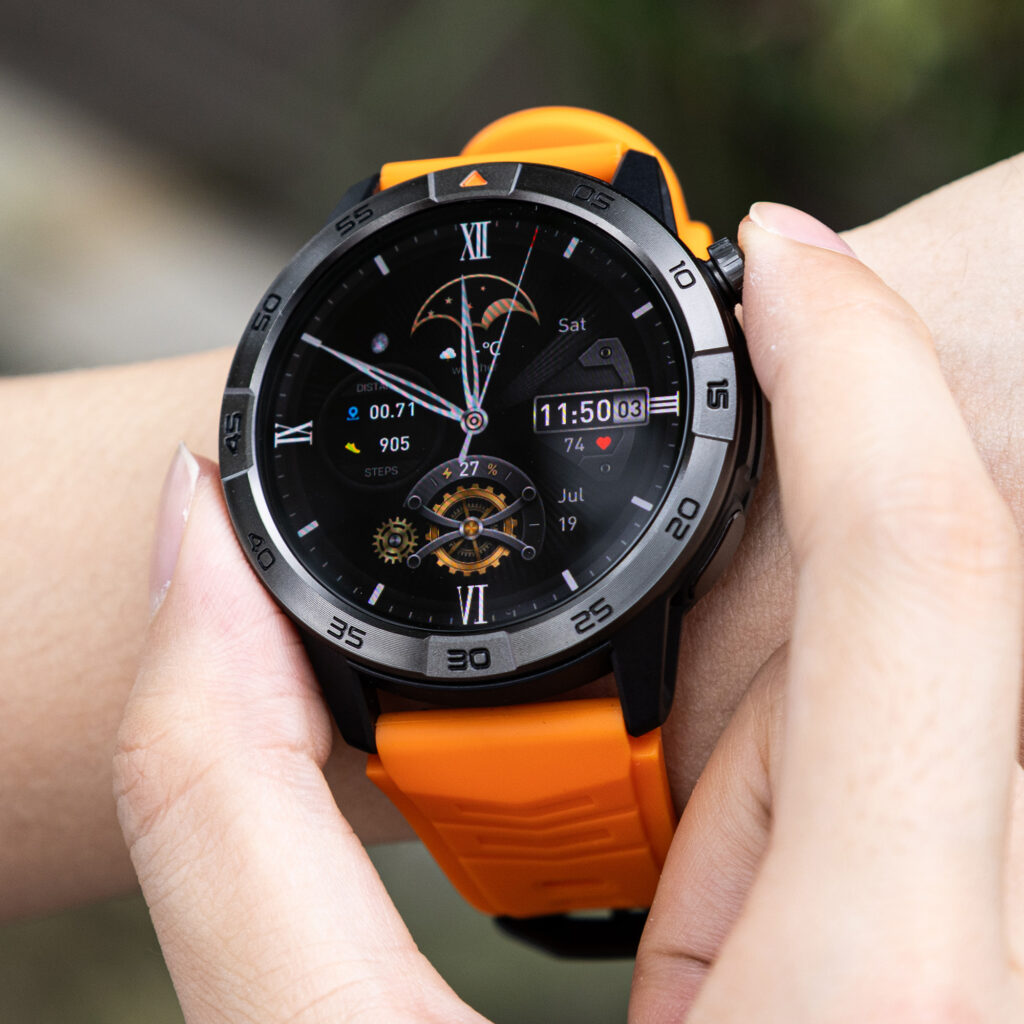
Several swipes or a crowded menu add attention cost during guest service.
Evaluate speaker volume responsibly
A louder speaker is not always better in a public lobby.
The better question is whether the call remains understandable at a volume that does not disturb guests or expose information.
Review total U.S. ownership value
American buyers may also compare:
- Price in USD
- Warranty support
- Replacement-charger availability
- Strap comfort
- Display readability
- Phone compatibility
- Companion-app quality
- Employer acceptance
- Headset and phone handoff options
Battery endurance supports shift availability, but it cannot solve blocked permission, poor acoustics, privacy risk, or unsafe timing.
Buyers can compare calling convenience with the rest of a practical everyday feature set before making wrist calling the only purchase criterion.
Do Smartwatches Work for Phone Calls at Work? Read the Miami Result
The final grid should produce one clear workplace configuration.
An illustrative Miami hotel result might be:
Permission: Conditional under hotel policy.
Acoustics: Suitable only during quieter lobby periods.
Privacy: Blocked for guest details, vendor pricing, staffing matters, and private family information.
Task safety: Blocked during check-in, payment, key handling, complaints, and line management.
Final setup: Screen calls on the wrist, give only brief responses during approved quiet periods, and transfer longer conversations to the hotel phone, approved headset, or private callback.
The most restrictive dimension controls the decision.
- Permission clear, privacy blocked: transfer the call.
- Audio clear, task safety blocked: wait.
- Privacy clear, acoustics poor: use another approved audio method.
- All four clear: one brief response may be appropriate.
A working speaker and microphone prove that the call can connect. They do not prove that the conversation belongs at the front desk.
Questions U.S. Employees Ask About Wrist Calls at Work
Can hotel guests and coworkers hear a smartwatch call?
They may hear the speaker depending on volume, distance, lobby layout, and background noise. Move detailed or private conversations to an approved phone, headset, or private area.
Are personal smartwatches allowed at a U.S. hotel front desk?
Policies vary by employer. Employees should verify rules for wearing the device, displaying notifications, answering personal calls, and using personal devices for work communication.
Do wrist calls work in a noisy lobby?
A call may connect but remain impractical when noise causes repetition, raised volume, or poor understanding. Test under realistic workplace conditions.
Should an employee answer while helping a guest?
The active guest interaction should normally be completed or safely paused first, subject to employer procedure and genuine emergencies.
When is a headset or hotel phone more appropriate?
Use an approved headset or hotel phone for longer conversations, operational details, note-taking, private information, or situations requiring clearer audio.
Can Bluetooth calling work when the paired phone is not nearby?
Bluetooth calling generally requires the paired phone to remain connected and within practical range. The watch does not provide independent cellular calling.
Workplace Fit Matters More Than Call Connection
A connected call proves that the watch can handle audio.
Permission determines whether the employee may use it. Acoustics determine whether the conversation can be understood. Privacy determines whether the information belongs in the lobby. Task safety determines whether the employee can pause responsibly.
The answer to do smartwatches work for phone calls at work depends on that workplace fit—not only the watch’s speaker, microphone, and call screen.
Before enabling wrist calls for the next Miami hotel shift, score the workplace on:
- Permission
- Acoustics
- Privacy
- Task safety
Any blocked dimension should trigger a callback, hotel phone, approved headset, or private area instead of a wrist conversation.