
“Compatible” disappears from the proposal.
An architecture-firm proposal coordinator in New Haven, Connecticut, deletes the word after a reviewer leaves one comment: “Which exact source supports this exact offer?” The seller badge says “Works With iPhone,” yet the available manual and companion-app record describe conditions the badge does not show. Before smart watches compatible with iPhone enter the recommendation, she creates three empty citation slots and refuses to fill one with evidence borrowed from another model, region, or date.
Smart watches compatible with iPhone have a credible claim only when the exact model documentation, current U.S. companion-app record, and exact seller offer identify the same watch, app route, and software conditions. If one source is missing, stale, or tied to another variant, treat the claim as unresolved. Source agreement permits testing; it does not prove that every function works.
This is the iPhone Compatibility Claim Triangle. The product is not yet being tested. The sentence is being audited.

Put the Claim Under New Haven Proposal Review
Compatibility language often looks harmless because it appears to answer a simple yes-or-no question. In a professional recommendation, however, that single word can carry several unstated assumptions. A reader may interpret it as proof that the application installs, the watch pairs, notifications arrive, actions work, and current software conditions are satisfied.
The New Haven coordinator does not allow those assumptions to enter the proposal. She first copies the seller’s wording exactly. Her comparison unit is not the watch, the seller, or the full feature list. It is one compatibility statement observed on one exact offer on one date.
That distinction places Article 347 between two earlier decisions. Buyers should first decide which iPhone tasks the watch is expected to support. They should also confirm that the evidence belongs to one stable product offer. Only then can the compatibility sentence receive a fair audit.
The coordinator records four boundaries beside the statement:
- Claimed platform: What phone relationship is actually named?
- Claimed scope: Does the wording promise compatibility generally or identify a function?
- Evidence date: When was the claim observed?
- Exact offer: Which seller page and configuration carried the wording?
She will not upgrade “Works With iPhone” into “all functions work with every iPhone.” The triangle can verify only the language placed at its center.
Freeze the Seller’s Exact Compatibility Sentence
For smart watches compatible with iPhone, the first discipline is simple: preserve the statement before searching for support. Rewording it during research can quietly turn a weak badge into a much stronger promise.
For example, an offer may say that an app is available for iPhone. That does not establish that the exact watch uses the app. A listing may mention notifications. That does not establish replies, synchronization, or background continuity. A badge may say “compatible” without naming an iOS requirement, supported model range, or application route.
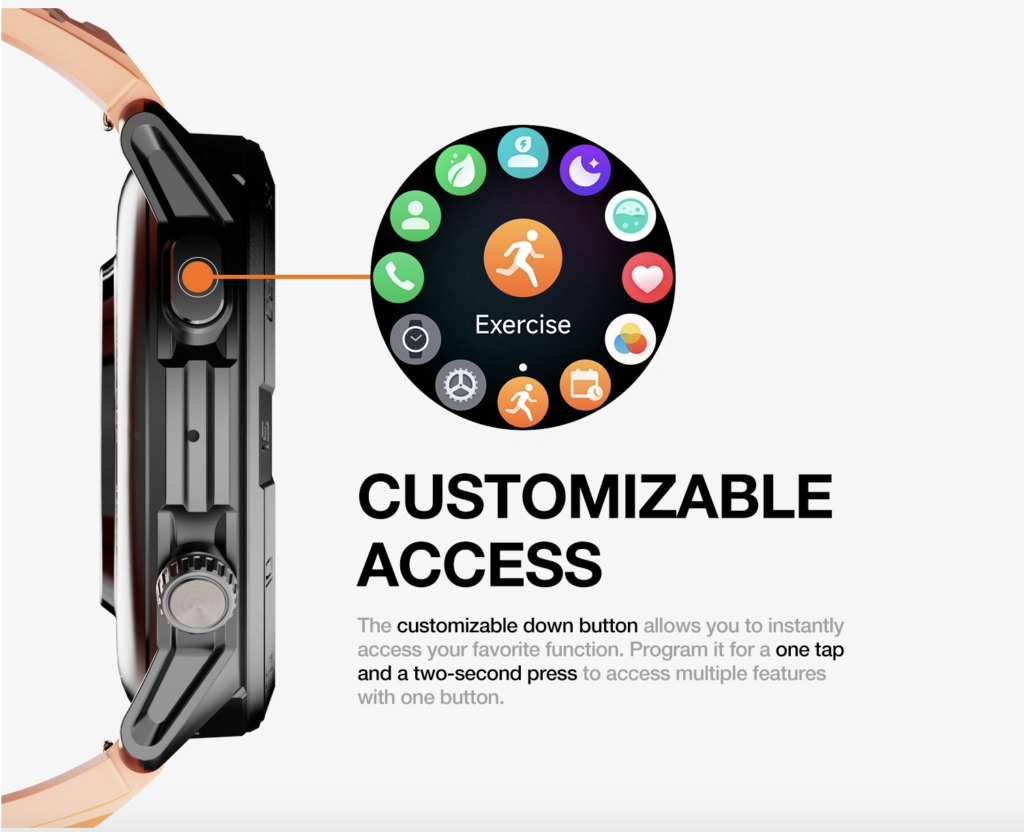
The coordinator creates a Compatibility Sentence Card containing the wording, page location, observation date, and any visible limitation. She also captures whether the claim identifies a model, application, region, or software condition.
This prevents the first failure mode: Seller-Only Claim. A seller may start the compatibility inquiry, but the same seller statement cannot serve as the claim, the documentation, and the application evidence. One source repeated three times does not close a three-corner triangle.
Smart watches compatible with iPhone need independent corroboration because an authentic seller page can still omit the conditions that determine which configuration the wording describes. The badge remains provisional until the other corners identify the same route.
Ask the Exact Model Documentation to Identify the Watch
The first triangle corner belongs to exact model documentation. Its job is not to prove performance. It must establish the documented identity and explain what phone relationship the product owner describes.
The coordinator looks for a stable model or configuration reference, document ownership, a stated companion-application route, phone or software conditions, and a revision or publication date when one is available. Regional or version limitations also belong in the record.
A generic family manual does not automatically support every watch that resembles its illustrations. An undated screenshot cannot bridge an unexplained model difference. Instructions linked from another variant may describe an application route that the exact seller offer does not use.
This creates the second failure mode: Model-Reference Mismatch. The document can be real and useful while still failing the claim audit because its identifiers do not connect to the purchased configuration.
In the continuing example, the manual names a companion route and states a software condition. It also contains a model reference. The seller offer, however, does not clearly display that same reference. The documentation corner therefore has evidence, but its line to the exact offer remains incomplete.
That gap should not be repaired by visual similarity. Case shape, button placement, watch-face artwork, packaging colors, and seller images cannot substitute for a shared identifier.
Check the Current U.S. Companion-App Record
For smart watches compatible with iPhone, the second corner examines the current U.S. companion-app record. The coordinator records the application title, displayed developer, present availability, listed iPhone compatibility information, current version information when shown, and privacy disclosures.
Those details describe the application record. They do not automatically prove that the exact watch model uses that application. The link between hardware and software still needs support from the documentation and seller offer.
This distinction exposes the App-Listing Gap. The gap appears when:
- The seller names no application.
- The manual and current record identify different applications or developers.
- The application’s software requirement conflicts with the product documentation.
- The record is unavailable in the relevant U.S. storefront.
- The application description cannot be tied to the exact model.
The New Haven coordinator finds a current application with a name related to the manual’s route. The record identifies a developer and provides current iPhone information. It does not name the exact watch model from the manual.
That evidence is useful but incomplete. The application corner suggests a plausible route; it does not certify the hardware relationship.
Buyers evaluating smart watches compatible with iPhone must also separate this claim audit from exact-phone eligibility. Once the sources agree, the buyer can match the corroborated route to the exact iPhone configuration. Article 347 does not assume that a generally supported software condition fits the buyer’s installed setup.
Return to the Exact U.S. Seller Offer
The third corner brings the investigation back to the page where the claim appeared. The seller offer must connect the model documentation and current application record to the exact item a U.S. buyer would receive.
The coordinator searches the offer for a stable model reference, configuration details, named companion application, regional context, and any stated phone or software condition. She also checks whether the written specifications, downloadable material, and product images point to the same variant.
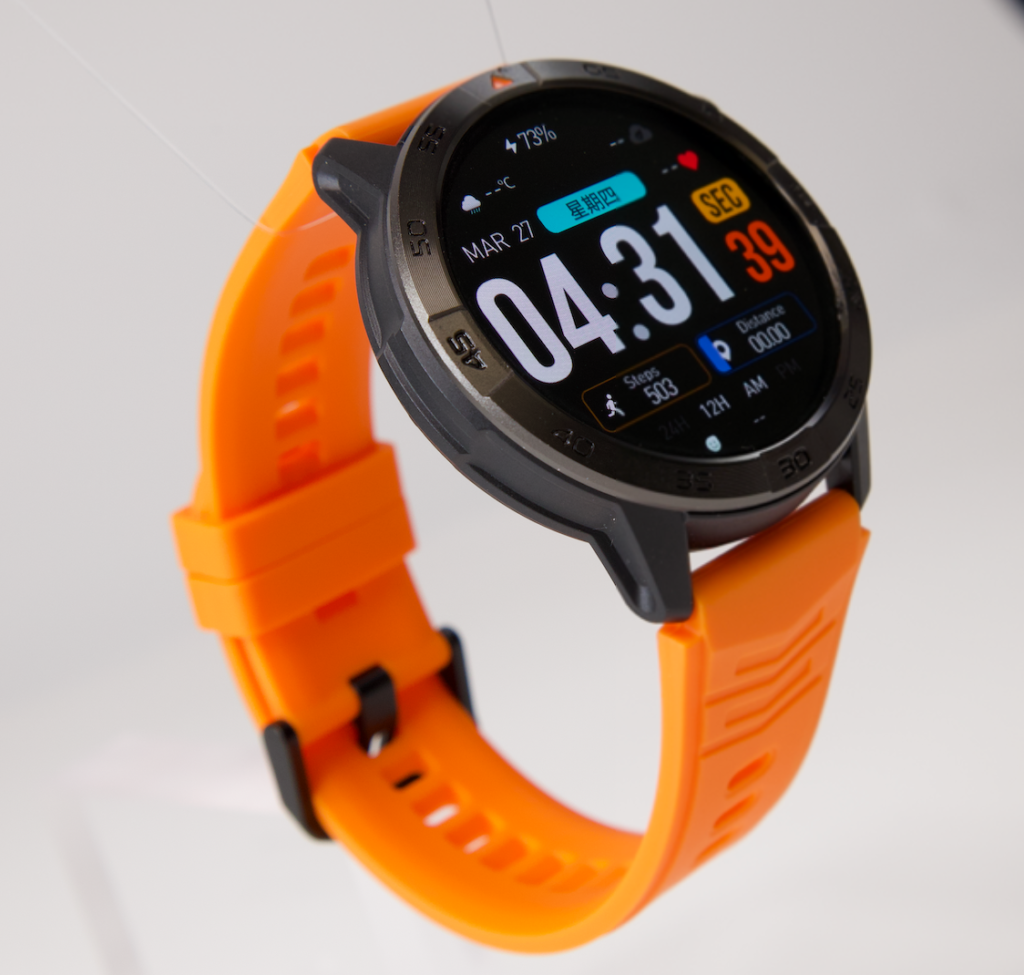
This is not a complete checkout audit. Price, fulfillment, warranty handling, returns, and recovery remain separate questions. Here, the seller has one narrower responsibility: show that its compatibility badge belongs to the documented watch and current application route.
The continuing offer fails to display the model reference found in the manual. It also omits the software condition and does not clearly name the application. Nothing on the page directly proves incompatibility, but nothing closes the identity thread either.
Smart watches compatible with iPhone should not receive a corroborated verdict when the seller corner depends on the buyer guessing which manual or app belongs to the offer. The exact seller page is not merely a shopping destination. It is one of the three required sources.
Hold the Three-Source Contradiction Hearing
When smart watches compatible with iPhone reach the hearing, the coordinator places the three source summaries together. The purpose is not to choose the most persuasive source. It is to determine whether all three sources support the same dated sentence.
Model documentation ruling: A plausible application route and software condition exist, but the model reference is not visible on the seller offer.
Application-record ruling: A current U.S. record exists and identifies a developer, but it does not name the exact watch described by the manual.
Seller-offer ruling: The compatibility badge appears, but the offer does not reveal enough identity or software detail to connect the other corners.
The triangle stays open. Two sources can suggest a route without proving that the route belongs to this item.
The hearing also checks for Stale Compatibility Copy. A seller may continue displaying broad wording after a manual, application requirement, developer identity, or regional record changes. An older source is not automatically false, but its date and conditions must be reconciled with the current evidence.
Current support also does not establish future support. The coordinator records what is documented now and avoids predicting application availability, software updates, or developer decisions.
Where the current update path matters, buyers should date and test the documented iOS update route separately. The compatibility triangle can flag stale language, but it does not run an update test.
Shortcuts That Leave the Triangle Open
Does an application’s existence prove that the watch uses it?
No. The application record identifies an app and its current listed conditions. Model documentation and the exact offer must still connect that app to the watch.
Can a seller badge override an older manual?
No. A newer seller claim does not silently rewrite product documentation. The conflict needs a current authoritative explanation tied to the same model.
Does a current app requirement automatically update the manual?
No. Record the discrepancy. It may reflect a changed software condition, another application route, or a different product variant.
Can visually identical watches share compatibility evidence?
Not without matching identifiers. Similar renders, controls, bands, and menus do not prove shared hardware, firmware, or companion software.
Does “iPhone compatible” mean every current iPhone?
No. The phrase alone does not identify phone generations, installed software, storage, permissions, or feature depth. Those conditions require separate verification.
Can customer reviews close a missing corner?
Reviews may reveal questions worth investigating, but they cannot replace exact documentation, a current application record, or an identified seller offer. Reviewers may own different variants and phone configurations.
Does a QR code prove the application belongs to the model?
Not by itself. A code can lead to a page or download route, but the documentation and offer still need to establish that the route is intended for the exact watch.
Can smart watches compatible with iPhone receive approval from two corners?
They may receive a partially supported or unresolved claim verdict, depending on what the third corner omits. Two corners cannot produce full corroboration.
When does a mismatch justify rejection?
Reject the claim when a current source directly identifies another model, application, region, or incompatible software condition. Use unresolved when the necessary connection is missing but no direct contradiction has been proved.
Issue the New Haven Claim Verdict
The iPhone Compatibility Claim Triangle produces four verdicts.
- Claim Corroborated: All three sources identify the same model, application route, exact offer, and current conditions.
- Claim Partially Supported: The sources support the general route, but one omits a necessary condition without contradicting it.
- Claim Unresolved: A required corner is missing or cannot be attached confidently to the exact offer.
- Claim Rejected: A current source directly contradicts the statement or belongs to another configuration.
The New Haven proposal receives Claim Unresolved. The coordinator does not write that the watch is incompatible. She writes that the seller’s compatibility sentence lacks enough corroboration to remain in the recommendation.
If the seller later supplies an exact model reference connecting the offer to the manual and application record, the triangle can be reopened. A closed triangle would permit the next stage, not complete it. The buyer would still need to test how deeply the corroborated compatibility route actually works.
Before purchase, the wider offer should also pass the separate process to complete the exact-offer proof review before checkout. A credible compatibility sentence cannot substitute for seller, support, warranty, return, or recovery evidence.
“Compatible” Returns Only When the Triangle Closes
The redlined word remains deleted from the New Haven proposal. In its place, the coordinator inserts a precise evidence request: identify the exact model, connect it to the current U.S. companion-app record, and show that the seller’s offer carries the same conditions.
That result is more useful than guessing. The model documentation suggests a route. The application record supports part of that route. The seller page fails to connect them conclusively to the exact offer. Claim Unresolved is therefore the correct verdict and the limit of the available evidence.
For smart watches compatible with iPhone, credibility begins when all three corners support the same statement. Functional compatibility begins later, through exact-phone and real-use testing. Neither current corroboration nor successful testing guarantees future software support.
Use the three empty citation slots to compare this smartwatch offer with your compatibility claim record, verifying the exact model, companion-app route, and seller evidence independently before deciding whether its iPhone wording can close your triangle.