
A smartwatch battery lasts longer than Apple Watch when it is built around efficient everyday features instead of a power-hungry app ecosystem. That difference matters if you are tired of charging every night, losing sleep-tracking data, or watching the battery drop during a long shift. The featured $150 smartwatch advertises up to 30 days of battery life while adding Bluetooth calling, built-in GPS, offline maps, an AMOLED display, and fitness tracking. This guide explains how it compares with current Apple Watch models, what convenience you may gain, and which Apple features you would give up.
Why Longer Battery Life Matters
Apple Watch is popular for good reason. It offers polished software, strong iPhone integration, useful health tools, third-party apps, and optional cellular service. For some buyers, however, the problem is how often it needs to return to the charger.
Frequent charging interrupts the features people use most. Charging overnight may create gaps in sleep tracking, while forgetting to charge before work can leave you without call alerts or workout data.
Longer battery life is especially useful for warehouse employees, delivery drivers, office workers, truck drivers, travelers, and gym users who want overnight sleep tracking. A watch that lasts for days or weeks can remain on your wrist instead of sitting on a charging puck.
People who have reached their limit with nightly charging may also find our guide for smartwatch users tired of charging every day useful.
Smartwatch Battery Lasts Longer Than Apple Watch: Why It Happens
The main reason is that the two watches have different priorities.
Apple Watch is designed to act like a small extension of an iPhone. It supports apps, smooth animations, advanced health functions, Wi-Fi, optional cellular connectivity, and deep interaction with Apple services. Those capabilities consume power.
The featured smartwatch uses a lighter platform focused on a smaller group of tasks:
- Calls and notifications
- GPS and offline maps
- Steps, sleep, and workouts
- Music controls
- Time, alarms, and reminders
A simpler operating system can run more efficiently because it is not trying to duplicate the full Apple Watch experience. The trade-off is fewer apps, less advanced software, and no listed cellular service.
Longer battery life does not automatically make it the better watch. It makes it more suitable for someone who values charging convenience over apps, payments, cellular independence, or deep iPhone integration.
Our guide to a smartwatch with a battery that lasts weeks explains that battery-first approach in more detail.
Featured 30-Day Smartwatch Overview
The featured smartwatch is listed at $150 with free shipping and works with both Android and iPhone according to the product page.
Its listed features include:
- Up to 30 days of advertised battery life
- 370mAh battery
- Bluetooth calling and wrist dialing
- Built-in GPS and offline maps
- 1.43-inch AMOLED touchscreen
- 466 × 466 display resolution
- Heart-rate and sleep tracking
- Step, calorie, and activity tracking
- Multiple sports modes
- Music controls and smart notifications
- Compass and altitude meter
- IP68 and 5ATM ratings
- Black and orange color options
The appeal is the combination. A basic tracker may last for weeks but lack calls or maps. Apple Watch offers a much richer software experience but needs charging far more often.
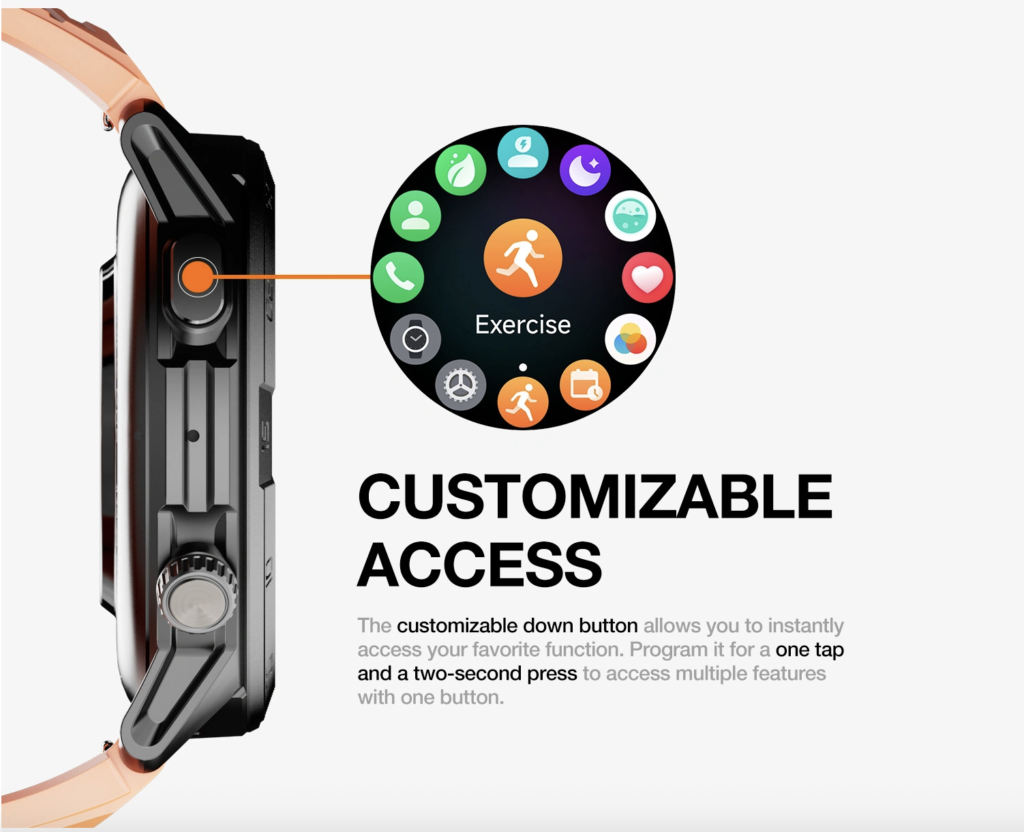
You can review the current details for the 30-day battery smartwatch with Bluetooth calling.
How Long Will the Battery Last in Real Life?
“Up to 30 days” is an advertised maximum, not a guarantee that every buyer will go a full month between charges. Battery performance depends on settings, temperature, Bluetooth use, GPS activity, and how often the screen turns on.
Light Use
You may get closer to the maximum if you mainly check the time, count steps, read occasional notifications, track sleep, use moderate brightness, and keep the always-on display off.
Moderate Use
A typical user may receive notifications throughout the day, take several short calls, monitor heart rate, track sleep, control music, and record a few GPS workouts each week.
Battery life will probably fall below the maximum claim. Even so, charging once every week or two could still feel much more convenient than charging nearly every day.
Heavy Use
Battery drain rises with:
- Long Bluetooth calls
- Hours of GPS tracking
- Offline navigation
- Maximum brightness
- Always-on display
- Frequent alerts
- Continuous sensor monitoring
A delivery driver using calls and GPS all day should expect a shorter interval than an office worker checking time and messages.
The safest approach is to treat 30 days as a best-case figure and ask whether the watch can remove nightly charging from your routine.
Our guide explaining how a smartwatch battery can last up to 30 days covers the settings that affect runtime.
Bluetooth Calling Without Daily Charging
Bluetooth calling makes this watch more useful than a basic long-battery tracker.
After pairing it with a compatible phone, you can typically see incoming callers, accept or reject calls, dial from the wrist, and speak through the built-in microphone and speaker.
That can help when your phone is nearby but inconvenient to reach.
At Work
A warehouse employee may keep a phone in a secure pocket. An office worker can handle a quick call while moving between rooms or while the phone remains on a desk.
The watch speaker may be difficult to hear in a loud warehouse, gym, or busy street. For longer conversations, your phone or Bluetooth earbuds may provide better privacy and audio quality.
During Commuting and Errands
The watch can display an incoming caller while your phone stays inside a backpack, purse, or coat pocket.
Wrist calling can also be convenient while cooking, carrying groceries, or doing yard work.
Important Calling Limitation
Bluetooth calling is not independent cellular service. The paired phone normally needs to remain nearby.
Anyone who wants to leave the phone at home and still make calls should choose a cellular Apple Watch or another LTE smartwatch.
Readers who prioritize both communication and endurance can compare more options in our guide to the best smartwatch for long battery life and calls.
Everyday Convenience for Work, Travel, and Fitness
For long shifts, a larger battery reserve reduces the chance that the watch dies during overtime. During commuting, it can show calls and messages while your phone stays inside a bag. On road trips, it means one less cable competing for a car charger or hotel outlet.
At the gym, you can record a workout and continue wearing the watch overnight. Built-in GPS and offline maps may also help with running, walking, hiking, or unfamiliar locations, although frequent navigation will shorten battery life.
Work and Long Shifts
The watch can keep time checks, alarms, call alerts, notifications, and activity tracking available throughout a long workday.
This may be useful for:
- Warehouse employees
- Delivery drivers
- Truck drivers
- Office workers
- Field-service employees
- People working overnight shifts
Travel and Road Trips
A longer charging interval means fewer cables to manage while traveling. For a weekend trip, you may be able to leave the watch charger at home.
That convenience becomes more noticeable when you are already charging a phone, earbuds, tablet, and navigation equipment.
Sleep and Fitness Tracking
A short-battery watch often gets charged overnight, creating gaps in sleep records. A longer-lasting model can stay on your wrist after a workout and continue tracking through the night.
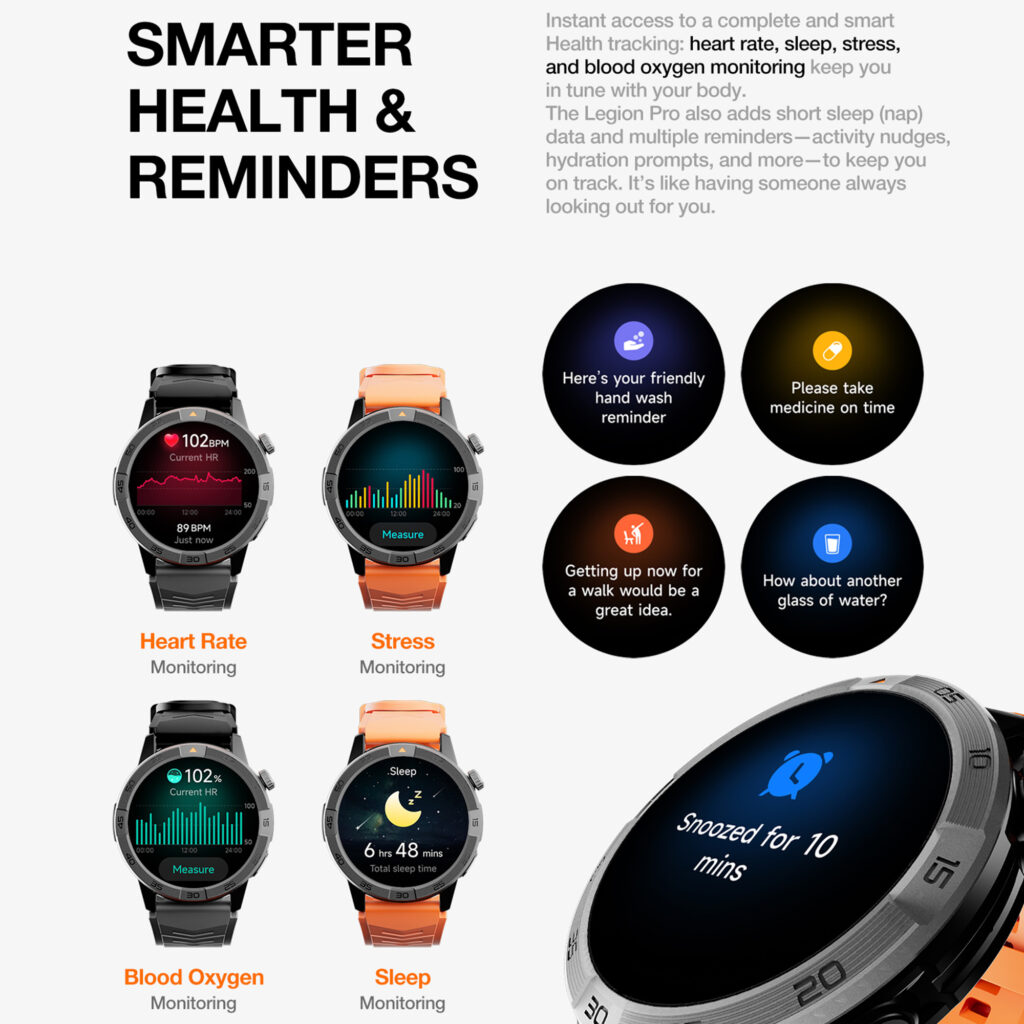
The health data should still be treated as general wellness information rather than medical measurements.
Battery Comparison: Featured Smartwatch vs. Apple Watch
Manufacturer claims use different test conditions, so the figures are not perfectly equal. Still, they show the difference in expected charging frequency.
| Watch | Advertised Battery Life | Calling | Compatibility | Best Reason to Choose |
|---|---|---|---|---|
| Featured 30-Day Smartwatch | Up to 30 days | Bluetooth calling | iPhone and Android | Fewer charging interruptions at a $150 price |
| Apple Watch Series 11 | Up to 24 hours | Bluetooth and optional cellular | iPhone | Strong Apple apps, health tools, and integration |
| Apple Watch Ultra 3 | Up to 42 hours; up to 72 hours in Low Power Mode | Bluetooth and cellular | iPhone | Rugged premium Apple experience |
| Apple Watch SE 3 | Up to 18 hours; up to 32 hours in Low Power Mode | Bluetooth and optional cellular | iPhone | Lower-cost entry into Apple’s ecosystem |
The featured watch clearly wins on its advertised charging interval. Apple Watch wins on software depth, iPhone integration, app support, cellular options, payments, and established health features.
The comparison should not be reduced to “30 days versus one day” without context.
Apple publishes detailed test conditions involving notifications, workouts, apps, sleep tracking, and cellular use. The featured product page does not provide the same level of battery-testing detail.
That makes the 30-day figure a maximum claim rather than a directly equivalent laboratory comparison.
Where Apple Watch Is Still Better
Deeper iPhone Integration
Apple Watch works as a natural extension of the iPhone. Messages, calls, apps, Focus modes, Apple services, and settings work together with a level of polish a general Bluetooth smartwatch may not match.
More Apps and Independent Features
Apple’s App Store provides productivity, fitness, travel, and communication apps.
Cellular Apple Watch models can also make calls, send messages, and use data without the iPhone nearby when connected to a supported plan.
Payments and Health Tools
Apple Watch supports Apple Pay and offers a broader range of established health and safety functions. Exact capabilities depend on the model and region.
Fast Charging and Support
Although Apple Watch needs charging more often, fast charging can make the routine easier.
Apple also has a clearer history of software updates, service, accessories, and repairs. The featured watch’s page does not clearly explain long-term software support and currently shows no customer reviews.
Those are meaningful limitations for buyers who value a mature ecosystem.
Pros and Cons
Pros
- Advertised battery life of up to 30 days
- Much less frequent charging than Apple Watch
- Bluetooth calling from the wrist
- Built-in GPS and offline maps
- AMOLED display
- Compatible with iPhone and Android
- Fitness and sleep tracking
- Useful for long shifts and travel
- $150 price with free shipping listed
- Premium feel without a premium price
Cons
- The 30-day figure is a maximum claim
- Calls and GPS shorten runtime
- No independent cellular service is listed
- Fewer apps and integrations than Apple Watch
- No Apple Pay
- Software-update policy is unclear
- No customer reviews are currently displayed
- Offline-map support should be confirmed
- Health readings are not medical-grade
Who Should Buy It?
This watch may suit:
- People tired of charging every night
- Buyers who prioritize battery life over apps
- Warehouse workers, drivers, and office employees
- Travelers and road-trip users
- Gym users who also want sleep tracking
- Android users who cannot use Apple Watch
- iPhone users willing to trade ecosystem features for endurance
- Shoppers seeking a premium-looking watch around $150
It makes the most sense when you primarily want calls, notifications, GPS, activity tracking, and sleep information.
Budget-focused readers can also review our guide to a long-lasting smartwatch around $150.
Who Should Avoid It?
Apple Watch is likely the better choice if you need:
- The strongest iPhone integration
- Independent LTE calling
- Apple Pay
- A large app ecosystem
- Advanced Apple health tools
- Clearer long-term software support
- A large selection of accessories
Serious runners and outdoor athletes may prefer Garmin, COROS, or another established sports-watch brand with deeper training analytics and more extensively reviewed GPS performance.
Buying Checklist Before You Order
Confirm these points before buying:
- What settings were used to reach the 30-day claim?
- Which Android or iOS versions are supported?
- Which companion app is required?
- Do offline maps cover the U.S. regions you need?
- Is the speaker loud enough for your usual environment?
- What do the return policy and warranty cover?
- Are battery, screen, and water-related problems included?
A specification list cannot fully show call quality, comfort, app reliability, or GPS accuracy.
Frequently Asked Questions
Which Smartwatch Battery Lasts Longer Than Apple Watch?
Many simplified fitness and outdoor watches last longer because they run lighter software. The featured smartwatch advertises up to 30 days, compared with up to 24 hours for Apple Watch Series 11 and up to 42 hours for Apple Watch Ultra 3 during normal use.
Does This Smartwatch Work With an iPhone?
The product listing states that it works with both iOS and Android. Confirm the required operating-system version and companion app before ordering.
Can It Make Calls Without an iPhone Nearby?
No independent LTE service is listed. Bluetooth calls normally require the paired phone to remain nearby.
Is 30-Day Battery Life Realistic?
It may be possible under lighter settings, but GPS, calling, brightness, notifications, and continuous health monitoring will reduce runtime. Treat 30 days as a maximum claim.
Is It Better Than Apple Watch?
It is better for charging convenience and cross-platform compatibility. Apple Watch is better for apps, iPhone integration, cellular service, payments, health tools, and long-term software support.
Is It Worth $150?
It may offer good value for buyers who prioritize battery life, calling, GPS, AMOLED display quality, and everyday tracking. The lack of published customer reviews and detailed software-support information should still be considered.
Conclusion: Should You Choose a Smartwatch Battery That Lasts Longer Than Apple Watch?
A smartwatch battery lasts longer than Apple Watch by using a simpler, more efficient platform focused on essential everyday features.
The featured $150 model advertises up to 30 days of battery life and includes Bluetooth calling, GPS, offline maps, an AMOLED display, and fitness tracking. For long shifts, commuting, travel, workouts, and sleep tracking, the reduced charging routine can be a genuine advantage.
Apple Watch remains stronger for iPhone integration, apps, cellular independence, payments, advanced health features, and software support. The featured watch is not a complete replacement for that ecosystem.
It is a battery-first alternative for buyers who want calls, notifications, navigation, and activity tracking without returning to the charger every night.
Ready to Trade Daily Charging for Multi-Week Convenience?
Keep Bluetooth calls, GPS, notifications, and fitness tracking available without organizing every day around a charging cable.
Shop the 30-Day Battery Smartwatch and choose the features that fit your routine rather than paying for an ecosystem you may not need.