
Open your cellphone’s call history before opening another smartwatch product page.
The number of calls you receive, the conversations you actually answer, and the minutes you expect to spend talking from your wrist can tell you more about future battery life than a headline promising “up to 30 days.”
A smartwatch with battery that lasts weeks and calls can be a strong choice for U.S. buyers who dislike frequent charging but still want faster access to important callers. The mistake is assuming that every buyer will get the same number of days from the same watch.
Multi-week endurance is not a fixed calendar promise. It is a battery budget divided among calling, screen use, GPS, notifications, health tracking, and everything else the watch does.
Before comparing products, calculate how much of that budget your calling habits are likely to use.
Multi-Week Battery Is a Usage Budget
A battery estimate represents a set of test conditions.
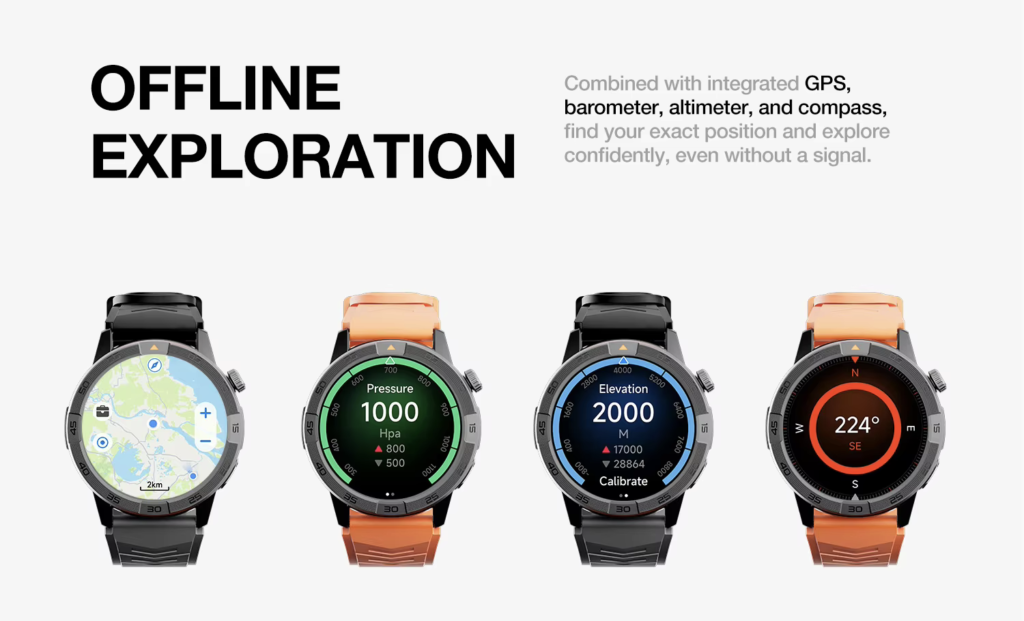
Your real result depends on how closely your routine matches those conditions.
Two people can wear the same watch and experience very different charging intervals.
One person may:
- Screen a few calls
- Check the time
- Receive selected notifications
- Use moderate brightness
- Avoid the always-on display
- Use GPS occasionally
Another may:
- Answer several wrist calls every day
- Keep the speaker loud
- Wake the display frequently
- Track outdoor activities with GPS
- Receive alerts from many apps
- Use continuous health features
- Keep the display active longer
Both own the same battery. They spend it differently.
That is why “weeks” should be understood as available capacity rather than a guaranteed deadline.
Buyers who need a broader explanation can review what multi-week smartwatch battery claims mean in real use.
Start With Seven Days of Real Calls
Do not estimate from memory.
Use the call history on your current cellphone and review one normal week. Avoid choosing a vacation week, unusually quiet period, or week filled with an emergency unless that pattern is typical for you.
For each day, record:
- Total incoming calls
- Total outgoing calls
- Calls you answered
- Calls you rejected
- Calls that lasted less than one minute
- Calls that lasted several minutes
- Calls that realistically could have been handled from a watch
The final category matters most.
A 20-minute call in your phone history does not automatically become a 20-minute wrist call. You may prefer the phone for detailed conversations, private subjects, poor audio conditions, or anything requiring notes.
Count only the calls you would genuinely answer or place through the watch.
Separate opportunity from actual use
Some buyers see a calling feature and assume they will use it for every conversation.
In practice, the watch is often most useful for:
- Identifying the caller
- Rejecting unwanted calls
- Checking whether something is urgent
- Giving a short acknowledgment
- Setting a callback time
- Requesting details by text
- Confirming an arrival or schedule change
These actions use the feature without turning the watch into the primary phone.
Your battery estimate should be based on how you will actually use wrist calling—not everything the watch technically allows.
Divide Calls Into Three Practical Categories
Calling behavior becomes easier to evaluate when it is divided by purpose.
Screening calls
These interactions may involve looking at the caller name, rejecting the call, or letting it continue to the cellphone.
Examples include:
- Unknown numbers
- Sales calls
- Routine calls that can wait
- Calls you cannot safely answer
- Conversations that require privacy
Screening uses the call interface but avoids an extended speaker-and-microphone session.
Bridge calls
A bridge call is a short conversation that establishes the next step.
Examples include:
- “I will call you after this meeting.”
- “Please text me the address.”
- “I received the update.”
- “I am five minutes away.”
- “Is this urgent?”
- “The new time works.”
These calls may last only a few seconds or less than a minute.
For many busy Americans, bridge calls provide most of the practical value of wrist calling.
Conversation calls
These are multi-minute discussions held through the watch speaker and microphone.
They may include:
- Coordinating a service appointment
- Discussing a work issue
- Speaking with a family member
- Handling a travel change
- Giving detailed instructions
Longer wrist conversations are more demanding than simply viewing or rejecting an incoming call.
They may also be less comfortable in loud, public, or private settings.
Build Your Personal Call-Budget Score
Use the following worksheet to classify your expected calling load.
This is a planning tool, not a laboratory battery formula. It helps compare buyers with different habits.
| Wrist activity | Planning points |
|---|---|
| View or reject an incoming call | 1 point |
| Bridge call under one minute | 2 points |
| Wrist call lasting one to five minutes | 4 points |
| Wrist call longer than five minutes | 6 points |
Review your seven-day call log and assign the appropriate points to the calls you would handle from the watch.
Add the points for the week, then divide by seven.
Light calling load
Average: 0–5 points per day
This buyer mainly screens callers and handles an occasional bridge call.
A typical day might include:
- Two caller checks
- One rejected call
- One brief acknowledgment
Calling is a convenience, but it is not a major part of daily battery use.
Moderate calling load
Average: 6–15 points per day
This buyer handles several short calls or an occasional longer conversation.
A typical day might include:
- Three caller checks
- Two bridge calls
- One two-minute conversation
Battery expectations should be based on active use rather than standby-style figures.
Heavy calling load
Average: more than 15 points per day
This buyer expects frequent or extended wrist conversations.
A typical day might include:
- Several incoming-call checks
- Multiple bridge calls
- One or more long conversations
For this user, calling performance may matter more than achieving the largest advertised number of days.
The buyer should look for evidence of real calling endurance and plan for more frequent charging than a light user.
Do Not Compare Advertised Days Without Comparing Test Conditions
A 20-day estimate and a 30-day estimate are not automatically comparable.
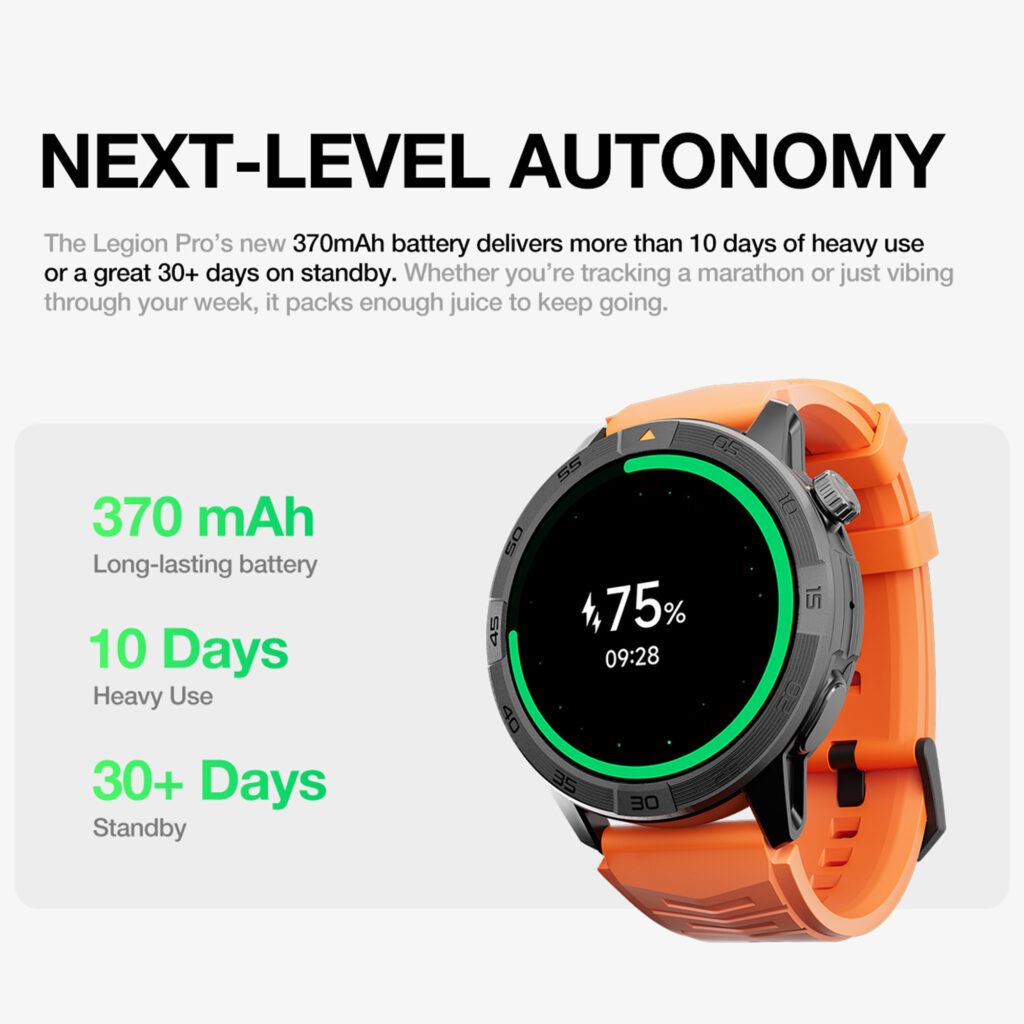
The two manufacturers may have used different assumptions about:
- Bluetooth connection
- Incoming-call frequency
- Wrist-call minutes
- Display brightness
- Always-on display
- Screen wake frequency
- GPS activity
- Notification volume
- Health monitoring
- Standby time
A larger number can look better while describing a much lighter usage pattern.
Look for more than the maximum figure
A useful product listing may provide separate estimates for:
- Standby use
- Typical use
- Heavy use
- GPS use
- Calling or communication use
Not every seller provides all of these. When information is limited, assume the maximum figure represents favorable conditions rather than your exact routine.
A related buying guide explains how to evaluate a smartwatch with a battery designed to last for weeks across different usage patterns.
Watch for vague language
Terms such as these need context:
- “Up to”
- “Extended battery”
- “Long-lasting”
- “Multi-week”
- “Typical use”
- “Normal mode”
- “Power-saving mode”
Ask what features remain active during the stated estimate.
A long figure achieved only with calling, GPS, notifications, and health monitoring disabled may not answer the needs of a buyer who wants those features every day.
Questions to Ask Before Comparing Options
A battery-focused buyer should ask specific questions instead of accepting one headline number.
Does the estimate include a continuous Bluetooth connection?
Bluetooth calling generally relies on the watch remaining connected to a nearby cellphone.
A battery estimate produced with limited connectivity may not represent normal calling use.
How many daily call minutes were included?
Many battery claims do not state this.
Even a rough calling assumption would help buyers understand whether the estimate reflects screening, short bridge calls, or extended conversations.
Does incoming-call alerting count as calling use?
Receiving and displaying an incoming call is different from conducting the entire conversation through the watch.
Ask whether the estimate includes only alerts or actual speaker-and-microphone use.
Were GPS and health tracking active?
A buyer using outdoor GPS workouts may experience a different charging interval from someone who mainly uses calling and notifications.
Was the display always on?
The display setting can substantially change the usage pattern described by the estimate.
What happens in power-saving mode?
Some battery-saving modes limit connectivity, background functions, display behavior, or notifications.
Confirm whether important call features remain available.
How quickly does the watch reconnect?
A watch with strong endurance can still cause missed calls if Bluetooth calling does not recover reliably after moving out of range or charging.
Buyers frustrated by that combination can review solutions for daily charging problems and missed calls.
Match the Watch to Your Calling Profile
A battery-first buyer should not automatically choose the watch with the highest advertised number.
Choose the model whose expected behavior fits your call budget.
Best fit for light wrist callers
Prioritize:
- Multi-week typical-use estimates
- Clear caller identification
- Reliable call rejection
- Strong Bluetooth reconnection
- Selective notifications
- Comfortable all-day wear
These buyers may be able to approach longer endurance because they use the call feature mainly as a filter.
Best fit for moderate wrist callers
Prioritize:
- Realistic heavy-use guidance
- Good speaker and microphone performance
- Easy call controls
- Visible battery percentage
- Fast charging
- Dependable multi-day reserve
A moderate user may accept fewer total days in exchange for a better calling experience.
Best fit for heavy wrist callers
Prioritize:
- Evidence of calling-specific endurance
- Speaker clarity
- Microphone quality
- Comfortable call controls
- Reliable connection recovery
- Convenient charging
- Honest battery information
Heavy callers should be skeptical of comparisons based only on maximum standby-style figures.
The better purchase may be the watch that offers fewer advertised days but provides more predictable performance under regular calling.
Validate the Claim During the Return Window
The product listing can narrow your choices. Your own testing should make the final decision.
Use the return period to measure battery life under the exact settings you intend to keep.
Day 1: Configure normal use
Set up:
- Caller access
- Bluetooth calling
- Notification permissions
- Display brightness
- Health monitoring
- GPS settings
- Watch-face behavior
Do not create an unrealistically minimal setup just to produce a better number.
Days 2–7: Track the battery
Each day, record:
- Starting percentage
- Ending percentage
- Wrist-call minutes
- Screened or rejected calls
- GPS use
- Unusually heavy notifications
- Any connection failures
Keep your behavior normal.
Estimate the practical charging interval
After several representative days, compare average daily battery use with the remaining capacity.
Do not wait for the watch to shut down if doing so would interfere with work, commuting, travel, or important calls.
The goal is to determine whether the watch comfortably reaches your preferred charging interval with reserve remaining.
Test one heavier day
Include one day with more realistic stress, such as:
- Several calls
- A longer commute
- GPS use
- Higher notification volume
- Extended time away from a charger
This shows how the watch behaves when the day does not follow the easiest possible pattern.
A Call-Budget Example From St. Louis
A commercial property claims adjuster in St. Louis, Missouri, spends the week moving between office work, property inspections, contractor calls, and policyholder updates.
The cellphone remains nearby, but pulling it out during every site visit is inconvenient.
A seven-day call review shows:
- Four to six incoming calls per workday
- Two or three calls that only need screening
- One or two bridge calls
- Most detailed conversations lasting several minutes on the cellphone
The expected wrist-calling pattern is therefore moderate rather than heavy.
The adjuster does not plan to conduct every contractor or policyholder conversation through the watch. The watch will mainly identify callers, confirm urgency, and provide short status updates.
That distinction changes the buying decision.
Instead of searching only for the largest advertised battery number, the adjuster compares:
- Whether calling is included in the endurance estimate
- How quickly the watch reconnects
- Whether caller names appear clearly
- Whether the battery percentage is easy to monitor
- Whether the speaker works outdoors
- Whether the return period allows a real workweek test
During the first week, the adjuster records wrist-call minutes and remaining battery after each day.
That evidence reveals whether the watch can realistically support several workdays without charging—not whether it can reach a maximum figure under a much lighter routine.
Questions Battery-First Buyers Ask
How many wrist-call minutes count as heavy use?
There is no universal industry threshold. As a practical planning guide, several multi-minute wrist conversations every day should be treated as heavy calling compared with simply screening calls or giving brief acknowledgments.
Does rejecting an incoming call use less battery than answering it?
Rejecting a call avoids the extended speaker, microphone, and active-call period. It still uses some power for the alert and display, but it is a lighter interaction than conducting a conversation.
Are short bridge calls better for battery than long conversations?
Generally, a brief call uses less active calling time than a long one. Moving detailed conversations to the cellphone can help preserve the watch’s battery budget.
Can louder speaker volume affect practical runtime?
Higher volume requires more speaker output during a call. The total effect depends on call length and frequency, but heavy callers should include speaker use when evaluating real battery performance.
How should I log calling during the return period?
Record the number of screened calls, actual wrist-call minutes, starting battery, ending battery, GPS use, and any unusually heavy notification activity each day.
What should I do when the seller provides no calling-specific estimate?
Assume the maximum figure may reflect lighter conditions. Ask the seller for test details, review the return policy, and validate endurance under your normal calling pattern before the return window closes.
Buy for the Battery Pattern You Actually Have
A smartwatch with battery that lasts weeks and calls should be evaluated against your real communication habits.
Start with your cellphone call history.
Separate caller screening from bridge calls and full conversations. Build a simple call-budget score. Compare product claims by their test conditions, not only by the largest number of advertised days.
Then validate the result during the return window.
A light wrist caller may come close to multi-week endurance. A moderate or heavy caller may charge more often—but still gain meaningful freedom from nightly charging.
The best option is not the watch with the most impressive calendar claim. It is the one that delivers predictable calling and enough reserve for the way you actually use it.
Before comparing your final options, review whether the battery, calling, display, GPS, and everyday features match your personal call budget.