
Three anonymous watch silhouettes sat on a conference table at a Charlotte public-relations agency.
There were no prices, colors, brand names, health badges, battery claims, or popularity labels. Only their physical profiles remained.
The first silhouette nearly disappeared beneath a blazer cuff. The second offered more visible text without dominating the wrist. The third provided the largest control area but remained conspicuous during client meetings.
The agency operations manager could not ask which watch was best yet. She first had to decide which type supported her day.
Android smart watches for women should not be treated as one decorative category. A buyer may need discreet physical presence, compact readability, generous controls, or movement-focused stability. The Women’s Wearability Profile Gallery identifies that priority before individual watches enter compatibility and exact-fit testing.
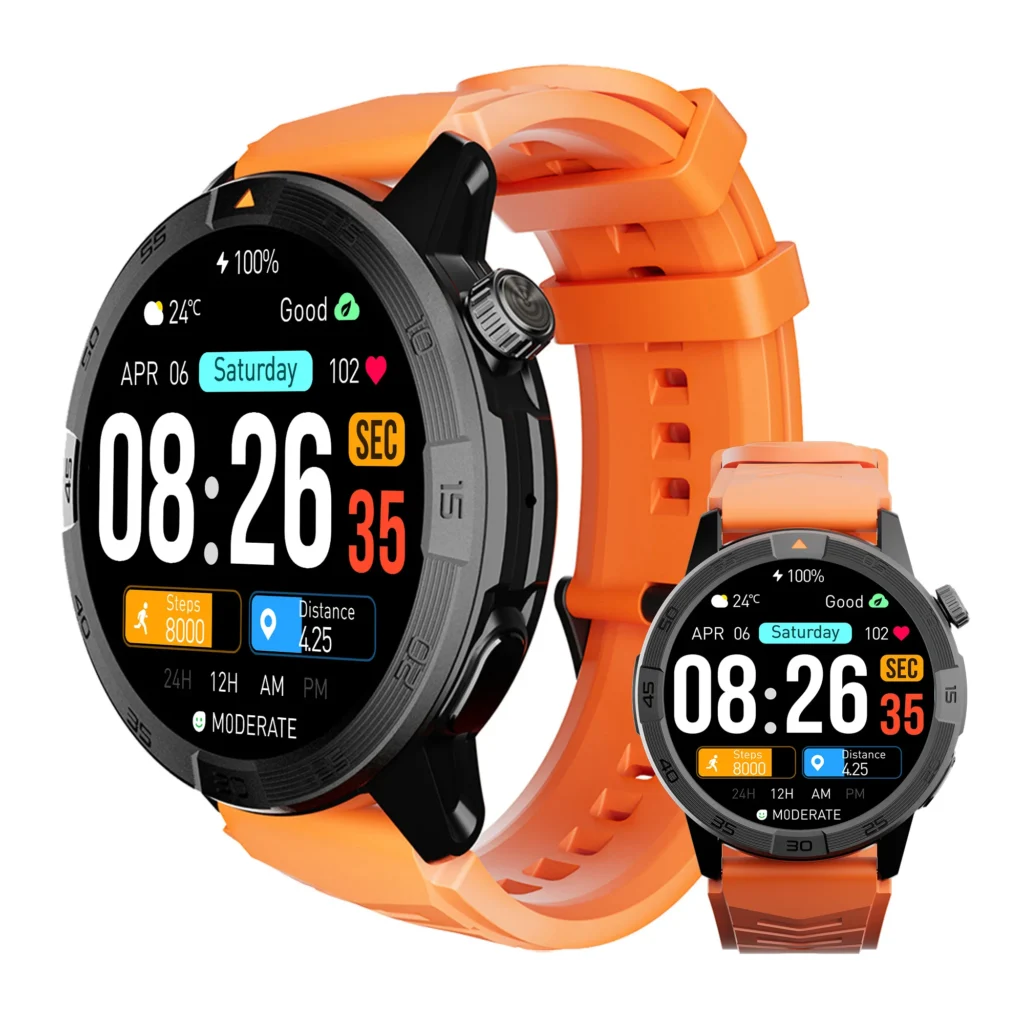
Choose a Wearability Problem Before a Watch
A wearability profile describes how a watch occupies and supports the buyer’s day. It is not a product recommendation, a universal wrist-size rule, or a claim that women share one preferred style.
The four profiles in this comparison are:
- Low-profile: minimizes visual and physical presence.
- Compact-readable: balances modest presence with useful glance visibility.
- Large-control: provides more room for text and stationary interaction.
- Activity-first: prioritizes movement-focused use over discretion.
Readers who have not established their broader requirements can begin with the Android smartwatch selection process. Article 370 narrows that larger market by physical-use profile.
Map the Charlotte Agency Workday
The Charlotte operations manager wrote her day before judging the silhouettes.
Her routine included:
- An early internal briefing.
- Laptop work and scheduling.
- Client conference-room meetings.
- Short media-monitoring alerts.
- A stationary event check-in.
- Limited movement through a venue.
- An evening client dinner.
She needed to read names and short status updates without moving the watch close to her face. One stationary tap had to acknowledge an alert. During meetings, the case should remain present but not unnecessarily prominent beneath a blazer or jacket cuff.
Activity was part of the day, but it did not dominate it. That distinction prevented occasional venue walking from automatically producing an activity-first shortlist.
Confirm Android Eligibility as an Entry Gate
A suitable physical profile cannot rescue an incompatible phone relationship. Before comparing silhouettes, the manager confirmed that each eventual candidate would have to support her approved Android environment and required companion application.
The exact Android setup certificate can verify the handset, software, permissions, services, alerts, and account route. Buyers should also confirm the companion application before purchase.
Those checks do not influence the wearability score. They decide whether an individual watch may enter the shortlist at all.
Write the Visibility Requirement
The manager used one generic alert:
“Media briefing moved to Room B.”
She selected the text setting she would actually use and defined a normal glance position. Leaning close, lifting the watch unusually high, or opening the phone did not count as an acceptable routine workaround.
Every profile had to show enough of the message for the buyer to understand the change. Additional scrolling was acceptable only when it remained brief and did not turn each alert into a multi-step task.
This requirement separated compact physical presence from genuinely usable readability.
Define the Charlotte Discretion Requirement
Discretion did not mean hiding the watch completely. The buyer wanted a device that looked appropriate during client conversations without becoming the most visually dominant object on her wrist.
She documented three checks:
- How much of the case remained exposed beneath a blazer cuff.
- Whether normal sleeve movement repeatedly caught the watch.
- Whether the physical profile drew more attention than its function justified.
Another buyer could prefer a highly visible watch. The Charlotte standard belonged only to this PR workday.
Define the Required Control Sequence
The manager limited interaction to one essential stationary sequence:
- Wake the display.
- Open the media alert.
- Read the complete message.
- Select “Seen.”
- Dismiss the item.
- Return to the watch face.
This task represented the control space she needed. It did not reward extra buttons, complex menus, or a long feature list.

The essential app-action method can later verify whether the actual software completes the sequence. Here, the question was whether the physical profile gave the buyer enough visual and control room.
Decide Whether Movement Is a Primary Need
The workday contained normal walking, venue transitions, and light event coordination. It did not require continuous exercise, outdoor navigation, exposed equipment use, or frequent interaction while moving.
The manager therefore classified her routine as mixed but desk-and-meeting dominant.
She would still inspect stability during ordinary movement, but she would not accept added physical presence merely because a silhouette appeared activity-oriented. The specialized profile had to solve a real primary requirement.
Open the Low-Profile Card
The most discreet silhouette offered an immediate advantage. It passed beneath the blazer cuff with little visual interruption and remained unobtrusive during the conference-room representation.
Its weakness appeared during the visibility test.
At the manager’s chosen text setting, the generic media alert became compressed. More of the message required scrolling, and the acknowledgment target allowed less comfortable visual separation from nearby controls.
The manager could complete the representation, but she had to study the interface longer than intended.
Profile result: Strong Discretion — Insufficient Visibility-and-Control Allowance.
Reject Discretion That Hides Useful Information
The low-profile card did not fail because small watches are inherently difficult to use. It failed because this particular representation did not satisfy the buyer’s chosen alert, text setting, glance position, and response sequence.
A different low-profile model could arrange information more effectively. That possibility belongs to product-level testing after profile selection.
For the Charlotte manager, however, discretion had begun to remove too much usable information. The profile could remain an optional reference, but it could not lead the shortlist.
Open the Compact-Readable Card
The balanced silhouette gave short alerts more breathing room while maintaining moderate physical presence.
During the representation:
- The complete location change was understandable at a normal glance.
- The “Seen” control remained visually distinct.
- The interaction finished without moving the watch close to the face.
- The profile remained compatible with the desired meeting presence.
- The cuff representation covered part of the watch without catching its outer boundary.
The card did not maximize any single category. Instead, it kept visibility, control, and discretion inside the manager’s acceptable range.
Profile result: Balanced Visibility, Control, and Professional Presence.
Open the Large-Control Card
The control-focused silhouette made text and target areas easier to distinguish in the representation. It provided the most generous visual space for the short alert and acknowledgment sequence.
That advantage was real, but the buyer had to decide whether she needed it.
During the conference-room comparison, the case remained more exposed below the cuff and created greater visual presence. The manager did not gain an essential function that the compact-readable profile lacked.
The profile could suit a buyer who values larger targets, longer text, gloves, greater visual separation, or another individual interaction need. It was not automatically easier for everyone.
Apply the Charlotte Presence Conflict
The large-control card passed the functional representation but exceeded the manager’s discretion requirement.
Its additional space would have been justified if the compact-readable profile had made alerts difficult to read or controls hard to select. Neither problem appeared in the comparison.
That produced a Profile Conflict Flag:
Control Benefit Verified — Additional Physical Presence Not Required.
The card remained valid for another buyer, but it did not become Charlotte’s primary profile.
Introduce the Activity-First Profile
A fourth profile entered only after the three general silhouettes were reviewed.
Activity-first wearability prioritizes a day in which movement, exposed use, or stability during permitted activity materially influences the purchase. The category may include a more substantial physical presence, prominent controls, or a band-and-case arrangement intended for movement-focused routines.
Those characteristics must still be verified on an actual product. The profile name does not prove durability, impact resistance, water resistance, GPS performance, or secure fit.
Reject Activity Overbuild for This PR Routine
The Charlotte manager spent part of her day moving through an event venue, but most required interactions occurred at a desk, conference table, or stationary check-in point.
She did not need to read or operate the watch while walking. Her alerts could wait until she stopped safely.
Activity-first therefore prioritized a secondary part of the routine while adding no necessary advantage to briefings, meetings, desk work, or dinner transitions.
Profile result: Valid Specialized Category — Wrong Primary Problem for This Buyer.
Run the Charlotte Workday Transition Map
| Work block | Low-profile | Compact-readable | Large-control | Activity-first |
|---|---|---|---|---|
| Agency briefing | Discreet | Balanced | More prominent | Movement priority unnecessary |
| Desk alerts | Visibility concern | Pass | Strong control space | Pass but specialized |
| Client meeting | Strong discretion | Pass | Presence conflict | Presence conflict |
| Event check-in | Compressed controls | Pass | Strong controls | Pass |
| Venue movement | Adequate for limited use | Adequate | Adequate | Highest movement priority |
| Client dinner | Discreet | Balanced | Prominent | Specialized presence |
These are anonymous profile-level observations from the continuing example. They are not measurements, product specifications, or universal results.
Select One Primary Wearability Profile
The manager returned to the dominant problem: she needed readable alerts and quick stationary control without unnecessary meeting presence.
The low-profile card protected discretion but compressed the interaction. Large-control supplied more room than the task required. Activity-first emphasized movement that did not dominate the workday.
The compact-readable card solved the complete requirement with the fewest profile conflicts.
Primary profile: Compact-Readable.
The selection narrowed the market. It did not approve a particular watch.
Allow a Secondary Profile Only When Needed
A buyer may maintain two profiles when her routines are substantially different. For example, one work context may prioritize discreet alerts while another genuinely centers on exposed movement.
The Charlotte manager did not need that split. Keeping four open categories would only postpone the decision and invite price, color, or feature marketing to reverse the buyer’s stated priorities.
One primary profile was sufficient.
Send the Shortlist to Exact Fit Testing
A compact-readable watch can still fail because of case overhang, band range, pressure, crown contact, sleeve interference, rotation, or awkward control reach.
Every candidate must therefore enter the All-Day Wrist Fit Envelope on the buyer’s actual wrist.
Wearability type and technical architecture must also remain separate. The Android watch architecture guide explains whether a candidate relies on the phone, its own applications, direct networking, or another arrangement.
A focused shortlist can use the distinct-finalist role method so every remaining watch earns a clear reason to stay.

Correct Twelve Wearability-Category Mistakes
All Women Want the Same Watch Style
Correction: Define the individual buyer’s visibility, discretion, control, and movement needs.
Small Means Comfortable
Correction: Test the actual case, band, controls, and wrist relationship.
Low-Profile Means Readable Enough
Correction: Use the buyer’s real text setting and alert length.
Large Means Easier for Everyone
Correction: Confirm that added control space solves a documented need.
Activity-First Is Automatically More Durable
Correction: Require verified product evidence for durability or resistance claims.
Occasional Walking Requires an Activity Watch
Correction: Reserve the profile for movement that materially changes ownership.
Screen Size Alone Determines Visibility
Correction: Inspect the actual layout, text, margins, shape, and content density.
Discretion Means Hiding the Watch
Correction: Define the acceptable degree of physical presence.
One Watch Represents an Entire Profile
Correction: Compare several eligible products inside the selected category.
A Profile Selection Proves Wrist Fit
Correction: Complete an actual case-and-band wear test.
Price Should Choose the Profile
Correction: Select the physical-use category before comparing cost.
Women’s Health Features Define Women’s Watches
Correction: Keep individual health requirements separate from gender-wide assumptions.
Protect Charlotte Agency Information
The representation used generic media and event text. It excluded client names, embargoed announcements, press lists, contracts, campaign plans, credentials, visitor data, private calendars, and internal schedules.
Actual agency information should remain inside approved systems rather than appearing in public test notes or screenshots.
Keep Every Control Check Stationary
The manager stopped before reading or dismissing an alert. She did not interact with the watch while walking through the venue, driving, crossing a parking area, carrying signs, moving equipment, or responding to an active event problem.
Physical-profile testing should never require unsafe watch use.
Questions U.S. Buyers Ask About Wearability Types
Does every woman need a smaller watch?
No. The appropriate profile depends on the individual buyer’s wrist, visibility needs, controls, clothing, movement, and preferences.
What is a low-profile smartwatch?
It minimizes physical and visual presence. The buyer must still confirm that its actual interface remains readable and controllable.
What makes a compact watch readable?
Readable content depends on the complete interface, including text setting, layout, margins, shape, and control arrangement—not the case label alone.
Who may benefit from larger controls?
Any buyer whose required task becomes more reliable with greater target separation or visual space may prefer that profile.
What is an activity-first profile?
It prioritizes movement-focused use. Its individual durability, stability, and resistance claims still require verification.
Can I select two profiles?
Yes, when two genuinely different routines justify separate shortlists. Do not keep multiple categories open merely to avoid choosing.
Does a profile replace trying on the watch?
No. It narrows the category. Exact case, band, sleeve, pressure, and control testing remains necessary.
Should battery life influence the profile?
Not initially. After profile and fit selection, use the connected Android battery ranking under the required service load.
What if I plan to wear the watch overnight?
Include physical overnight preference in the fit test and separately verify Android continuity across the long interval.
What if controls become annoying after purchase?
Use the Android ownership-friction budget to measure repeated adjustments and interaction burden.
Issue the Charlotte Profile Verdict
The Women’s Wearability Profile Gallery supports four outcomes:
- Primary Wearability Profile Selected: One category best solves the dominant use problem.
- Dual-Profile Shortlist Justified: Two substantially different routines require separate categories.
- Profile Evidence Incomplete: Visibility, discretion, control, or movement needs remain undefined.
- Wearability Category Rejected: No profile satisfies the buyer’s required balance.
The Charlotte verdict is:
Compact-Readable Profile Selected — Best Balance for the Charlotte Agency Workday
The low-profile card sacrificed too much visibility and control. Large-control offered useful space but created unnecessary meeting presence. Activity-first solved a movement problem that did not dominate the buyer’s routine.
The Right Type Must Fit the Buyer’s Day
When the prices, colors, brands, and feature badges disappeared from the Charlotte conference table, the decision became clearer.
The operations manager did not need the smallest silhouette, the largest display, or the profile that appeared most specialized. She needed short-alert visibility, reliable stationary control, professional discretion, and enough flexibility to move between desk work, client meetings, event check-in, and dinner.
Compact-readable best supported that balance.
The result applies to one PR-agency operations manager, one Charlotte workday, one chosen text setting, one alert sequence, one discretion limit, one control requirement, and one movement pattern.
The right category among Android smart watches for women is not determined by gender, color, or the smallest available case. It is the wearability profile that best supports the individual buyer’s visibility, discretion, control, and movement needs.
To evaluate a possible option, place this candidate smartwatch inside the same Women’s Wearability Profile Gallery. Independently verify its Android eligibility, actual interface, required text setting, physical presence, stationary controls, movement role, and exact wrist fit before assigning it to a profile.