
“The delivery van is at the side entrance.”
That sentence can probably finish on the wrist.
“We need to change the table count, entrée quantities, and service time.”
Before the caller finishes, the conversation has already outgrown the smartwatch. Asking can smartwatches replace phone calls makes sense only after defining what the conversation must carry.
A speaker and microphone make voice communication possible. They do not automatically provide privacy, a floor plan, reliable note-taking, or enough context for several connected decisions.
The practical rule is simple: let the call remain on the wrist until the first complication appears. Once privacy, a visual reference, written capture, or decision stacking enters the conversation, the phone should take over.
Start With What a Conversation Must Carry
Two phone calls can last the same amount of time and demand completely different tools.
One caller may need a single fact:
- Which entrance is open?
- Has the delivery arrived?
- Is a staff member on the way?
- Can unloading begin?
Another caller may need the listener to compare quantities, read an invoice, inspect a seating chart, record several times, or discuss information that people nearby should not hear.
Both are voice calls. Only the first type naturally fits the wrist.
Voice access is not the same as conversation capability
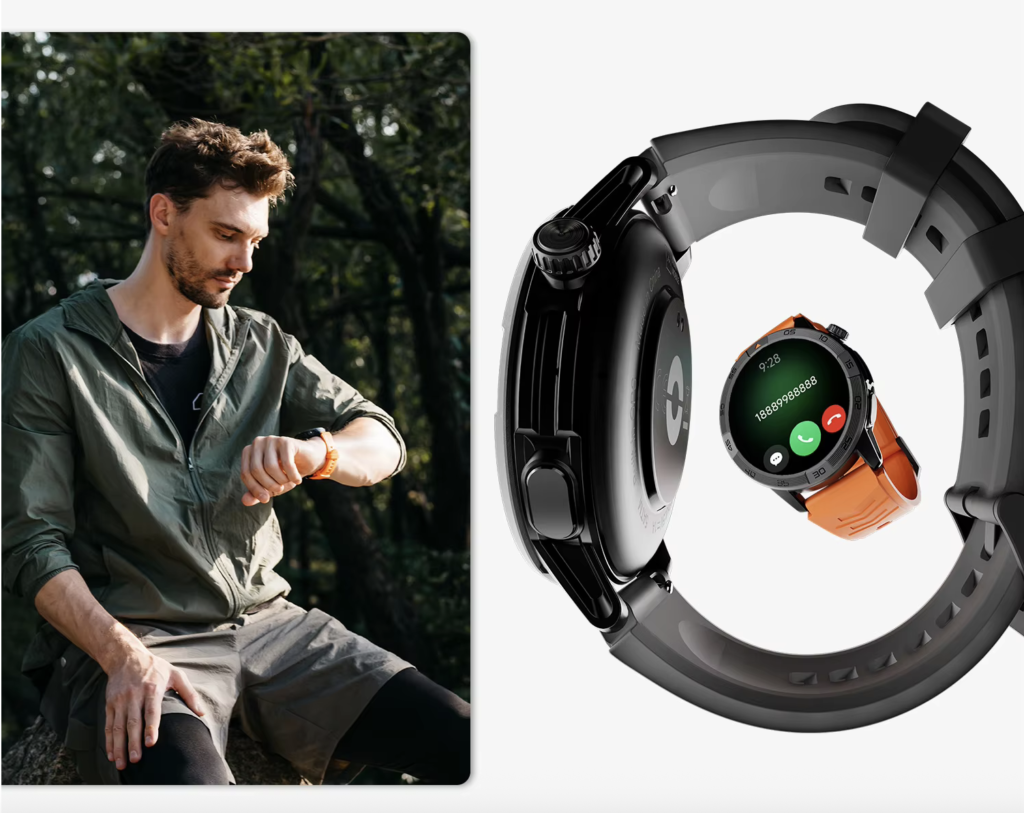
A smartwatch with calling support may let the wearer answer, speak, listen, reject the call, or end the conversation. Those functions establish access, but access alone does not make the watch the best device for every discussion.
Readers who need the basic capability explained can see what wrist-based call answering actually allows.
The larger question is whether the watch can support everything the conversation requires.
A simple confirmation may need only clear audio. A complicated event change may require:
- A document
- A larger screen
- Written notes
- Private space
- Several connected decisions
- Access to messages or scheduling tools
The device should change when the conversation’s requirements change.
Replace the time limit with a task limit
There is no universal maximum length for a wrist call.
A thirty-second conversation about a private billing dispute should move to the phone immediately. A longer public-safe update may remain manageable when it involves one clear subject and no supporting information.
Duration can influence comfort, battery use, and audio quality, but it does not define the substitution boundary by itself.
A better question is:
What new task just entered the call?
That task reveals whether the wrist can still carry the conversation accurately.
Let a New Orleans Setup Call Stay on the Wrist Until Something Changes
A catering-company owner in New Orleans, Louisiana, is moving between the service entrance, preparation area, dining room, and staff check-in point during the final 90 minutes before a reception.
A supplier calls with a simple question: Which entrance should the delivery van use?
The owner answers from the wrist:
“Use the side entrance beside the loading zone. A staff member will meet you there.”
Nothing else is required. The caller does not need private information, a document, written quantities, or several decisions.
The call closes on the watch.
The shape of a wrist-complete conversation
A call can often remain on the wrist when it has:
- One purpose
- One immediate decision
- A clear answer
- No sensitive information
- No visual reference
- No need to record several details
- No chain of dependent choices
The supplier confirmation meets all seven conditions.
The watch has replaced the phone for this conversation. That does not mean it can replace the phone for the owner’s entire reception setup.
Selective replacement is the realistic goal
Smartwatch calling works best as selective substitution.
The owner may complete an entrance confirmation from the wrist, then move the next call to the phone because the caller needs a revised order reviewed. Each conversation must earn its place on the smaller device.
This call-by-call boundary is more useful than asking whether a smartwatch can replace a phone completely.
Privacy Creates the First Immediate Handoff for U.S. Consumers
Later, the client calls to confirm the reception timeline.
The conversation begins with a public-safe question about guest arrival. It changes when the client mentions an invoice adjustment and a private accommodation for one attendee.
Privacy has become the first complication.
The call should move away from the watch before sensitive details are discussed through an external speaker.
Recognize the privacy trigger early
A wrist conversation may become unsuitable when it includes:
- Billing information
- Personal contact details
- Staffing disagreements
- Confidential client instructions
- Sensitive guest information
- Private family matters
- Information that nearby workers should not hear
The device transition should occur when the sensitive topic appears—not after several details have already been spoken aloud.
A clean response might be:
“I need to move this to the phone so we can discuss it privately.”
The sentence explains the transition without making the caller repeat the issue in public.
Workplace convenience does not replace judgment
American consumers often use smartwatches in offices, stores, event venues, loading areas, and public spaces. In those environments, the watch speaker may expose both sides of a conversation.
Clear audio is useful, but discretion still matters.
A smartwatch should reduce unnecessary phone handling without turning private communication into public audio.
Visual References End Wrist Substitution
Another call begins with a question about an additional table.
At first, the request sounds simple. Then the caller says, “Look at the floor plan near the service corridor.”
That visual reference becomes the first complication.
The catering owner now needs to inspect:
- The room layout
- Table numbers
- Service pathways
- Emergency access
- Guest seating
- Staff movement routes
Continuing only through the wrist would force the owner to make a layout decision without seeing the supporting information.
Spoken descriptions do not always replace the document
A caller may describe the table as “next to the back wall,” but that phrase can refer to several locations in a large reception room.
Guessing risks:
- Blocking a service route
- Moving the wrong table
- Reducing staff access
- Creating a correction later
- Giving incomplete directions
The conversation should move to the phone before the owner makes a decision based on memory or an unclear verbal description.
Change devices before accuracy declines
A useful transition would be:
“I need the floor plan in front of me. I’m moving this to the phone so I can confirm the correct location.”
The watch has still helped. It allowed the owner to receive the call, understand the initial request, and identify the point where a larger screen became necessary.
For related everyday limits, readers can review the practical boundaries of routine wrist conversations.
Written Capture Changes the Device
A supplier calls next with an arrival update.
The owner expects a simple confirmation, but the caller begins listing:
- Revised entrée quantities
- A later arrival time
- Two unavailable items
- A replacement product
- A different contact number
The conversation now requires written capture.
Even if the audio remains clear, the wrist is no longer the right place to continue.
Several details increase the risk of error
Remembering one number may be easy. Retaining five related changes while supervising event setup is far less reliable.
The call should move to the phone when details need to be:
- Written down
- Entered into an order
- Compared with a previous message
- Shared accurately with staff
- Confirmed in a specific sequence
- Saved for later reference
The phone does not automatically solve note-taking, but it provides better access to messages, documents, and whatever recording method the owner normally uses.
Memory is not a substitution strategy
A smartwatch should not be considered capable of replacing the phone merely because the wearer believes the details can be remembered.
Event setup divides attention among deliveries, staff, room access, timing, and client communication. Spoken numbers can disappear quickly when another task interrupts.
Written capture becomes the complication that changes the device.
Preserve the last understood detail
A clean handoff avoids restarting the call.
The owner might say:
“I have the revised arrival time. I’m moving to the phone now for the quantities and substitutions.”
That sentence confirms progress and tells the caller exactly where the conversation will continue.
Decision Stacking Makes the Phone Necessary
The most complex call arrives when the client asks to move the service time.
One timing change affects:
- Kitchen preparation
- Food holding
- Staff breaks
- Guest arrival
- Room access
- Cleanup scheduling
The conversation no longer involves one decision. It now carries several dependent choices.
Decision stacking is the fourth complication.
Identify when one answer changes another
A stacked decision appears when confirming one request creates consequences elsewhere.
The catering owner must consider:
- Which staff members are affected?
- Does the kitchen need a revised timeline?
- Can food remain at the required quality?
- Will room access still be available?
- What can be promised immediately?
- Which details require confirmation first?
The wrist may be adequate for acknowledging the request, but not for resolving the operational chain.
Do not solve a multi-part change from the wrist
The owner can respond:
“I understand the requested time change. I need to check the service schedule before confirming it.”
That answer protects the client from an inaccurate promise.
The full discussion belongs on the phone, with access to staff messages, schedules, and supporting information.
Complexity can appear in one sentence
A call does not need to become long before it becomes phone-required.
One sentence can introduce:
- A confidential detail
- A floor plan
- Several quantities
- A chain of operational decisions
The first complication matters more than the elapsed time.
Test the Phone Handoff Before Accuracy Declines
Moving from the wrist to the phone should feel like a continuation, not a restart.
A poor transition forces the caller to repeat information and makes the smartwatch seem like an unnecessary extra step.
A clean handoff preserves context.
Use a five-part transition
The catering owner can follow this sequence:
- Acknowledge the request.
- Identify the complication.
- State that the device is changing.
- Confirm the last understood detail.
- Continue from that point.
For example:
“I understand that the table count changed from 18 to 20. I need the seating plan for the remaining details, so I’m moving this to the phone.”
The caller knows what has already been understood and why the transition is necessary.
Move before the conversation becomes difficult
Do not wait until:
- Details are forgotten
- Private information is overheard
- The caller begins repeating instructions
- The owner loses track of the event task
- An inaccurate decision has already been made
The phone should take over at the first complication, not at the final frustration.
A transfer can be a successful wrist outcome
Moving the conversation does not mean the watch failed.
The smartwatch may have:
- Identified the caller
- Allowed an immediate response
- Started the exchange
- Clarified the purpose
- Revealed the need for another device
The watch succeeds when it helps the user reach the correct communication decision quickly.
Set a Personal First-Complication Boundary
American consumers can test this method by reviewing ten calls from one comparable period.
For each conversation, record:
- What the caller initially needed
- Whether the call began on the wrist
- Which complication appeared first
- When the phone became necessary
- Whether the transition happened early enough
- Whether any information had to be repeated
This creates a personal substitution boundary based on real communication rather than assumptions.
Use four labels
Mark the first trigger:
Privacy
Sensitive information entered the conversation.
Visual
A document, photo, plan, or message became necessary.
Capture
Several details needed to be recorded accurately.
Stacking
One decision created additional connected choices.
Some calls will never receive a label because no complication appears. Those conversations define the user’s realistic wrist-suitable zone.
Look for the calls that stayed simple
During the New Orleans reception setup, calls that may remain on the wrist include:
- Confirming the unloading entrance
- Saying a staff member is on the way
- Approving one delivery location
- Confirming that the preparation area is open
- Acknowledging one arrival update
Each example belongs to the same user, event, and setup window.
The purpose is not to create a universal rule for every profession. It is to discover which conversations this specific routine can move away from the phone.
What Smartwatch Call Replacement Means for American Consumers
A smartwatch can replace the phone for selected voice conversations.
It works best when the caller needs:
- One clear fact
- One immediate decision
- No private information
- No visual reference
- No written capture
- No chain of dependent choices
The phone should take over when any of those conditions changes.
Replacement is selective, not complete
The realistic goal is to reduce unnecessary phone handling while protecting:
- Privacy
- Accuracy
- Attention
- Communication quality
- Access to supporting information
A smartwatch may replace the phone for five calls in one day and none the next day. The result depends on what those conversations require.
Speaker quality is only one part of the decision
Clear sound helps, especially in a controlled environment. However, excellent audio cannot replace a floor plan, private setting, written record, or scheduling tools.
Communication capability is larger than speaker volume.
Questions U.S. Consumers Ask About Replacing Phone Calls
Can a smartwatch replace a phone for one-decision calls?
Yes, when the conversation needs one clear answer, contains no sensitive information, and does not depend on a document or written details.
Should a wrist call move when private information appears?
Move the conversation to the phone or another appropriate device before sensitive details are discussed through a public speaker.
What happens when the caller refers to a document or photo?
The visual reference becomes the first complication. Continue on the phone when a larger screen or document access is necessary for an accurate decision.
Are several spoken numbers enough reason to use the phone?
They can be. Quantities, times, names, and contact details are easier to lose when they must be remembered during another task. Use the phone and a reliable capture method when accuracy matters.
How can a call transfer without making the caller repeat everything?
Confirm the last detail understood, explain why the device is changing, and continue from that exact point.
Is call complexity more important than call duration?
Often, yes. A short call may require the phone immediately when it introduces privacy, visual information, written capture, or stacked decisions.
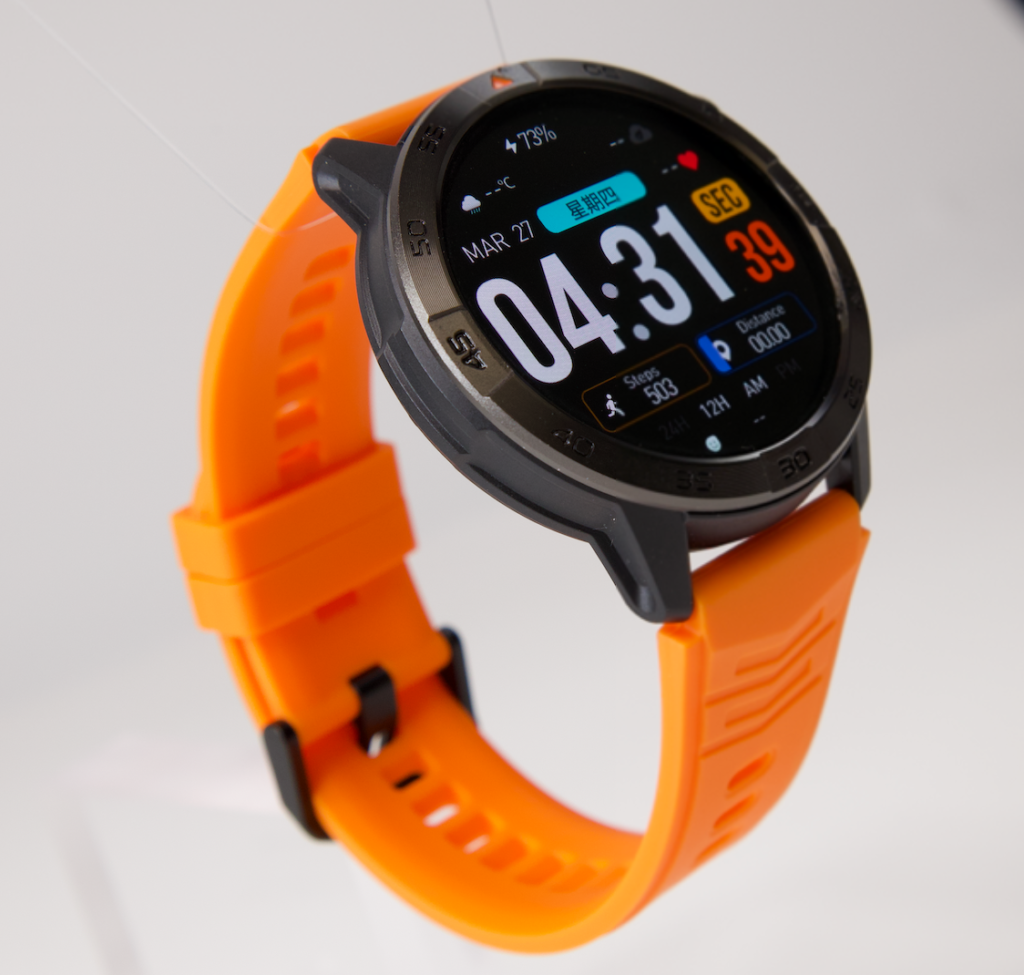
Name the Complication, Then Change the Device
Privacy. Visual. Capture. Stacking.
The first one to appear decides when the phone takes over.
The practical answer to can smartwatches replace phone calls is selective replacement. Let the wrist carry conversations that remain simple, then change devices before privacy, accuracy, or attention begins to suffer.
Review ten calls from one real setup period and compare the point where each conversation crossed from wrist-manageable to phone-required. Then compare those boundaries with the smartwatch’s call controls for quick handoffs before deciding how much phone handling the feature can realistically replace.