
PREMIUM GPS*
The asterisk changes the claim. Does the watch locate itself, or does it borrow the phone? Does it record a route, display one, guide the wearer, or store maps for use without a connection? Which mode must stay active, and what happens to battery use while that mode runs?
A coworking-space community manager in Phoenix, Arizona, sees the same hidden conditions behind nearly every badge on a cheap smartwatch with premium features. The labels sound complete. The operating rules are not. Instead of counting badges, the manager needs to learn which claims still deserve premium value after their dependencies, missing functions, mode limits, and proof gaps are exposed.
A cheap smartwatch with premium features is credible only when each advertised function remains useful after phone dependence, app requirements, missing subfunctions, mode limits, and evidence gaps are exposed. Display, GPS, calling, materials, tracking, controls, and software must each be verified separately.
The Premium Claim Discount Audit starts every badge at its full advertised meaning. Each limitation then removes only the portion of value it actually affects. A claim may remain fully useful, become conditional, shrink to partial value, retain appearance value only, or lose all proven premium value.
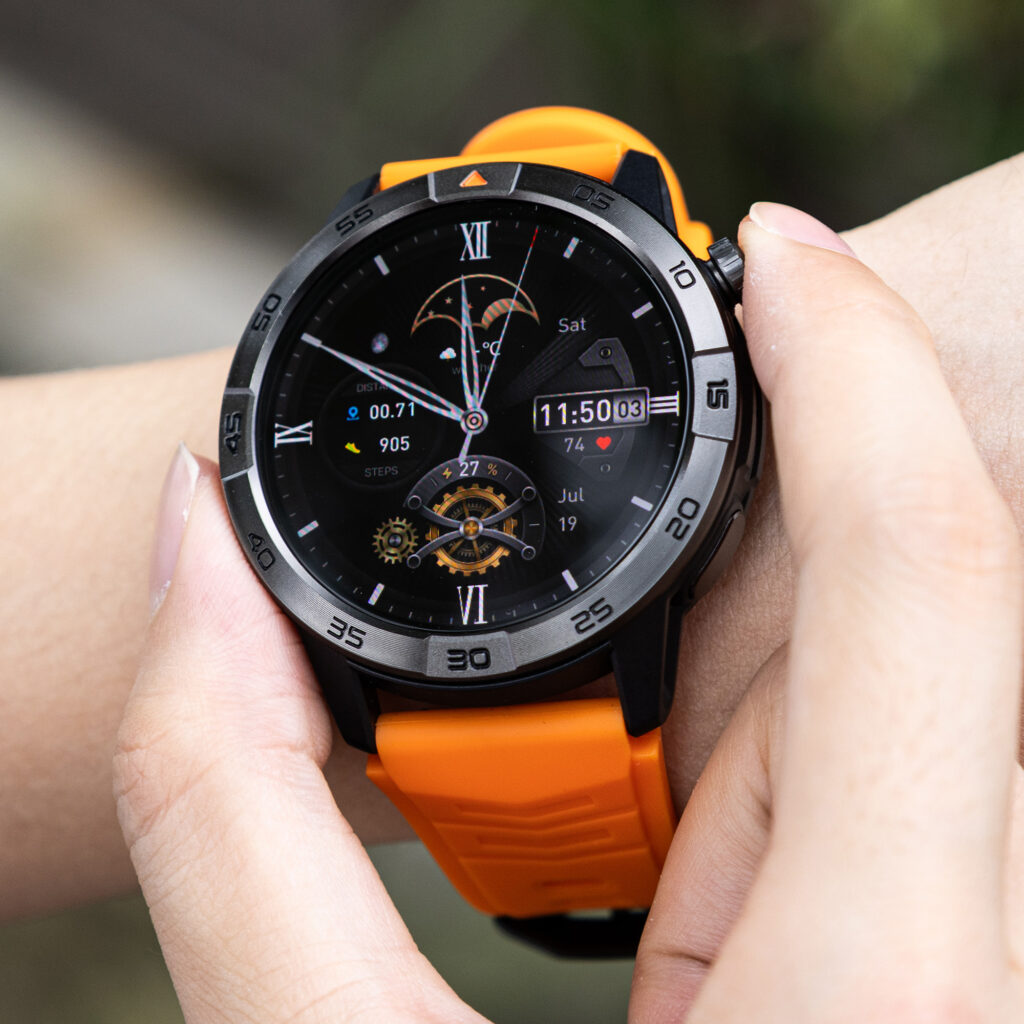
Put the Phoenix Badges on the Discount Counter
The Phoenix manager coordinates room-booking changes, front-desk questions, non-sensitive schedule reminders, brief private calls, and transitions between shared work areas. That routine creates a practical value filter. A feature matters only when it is complete enough to work and useful enough to improve one of those moments.
Every claim records eight items: the badge, the complete function implied, what is actually available, phone or app dependence, mode limits, evidence quality, ownership value in the Phoenix routine, and the premium value that remains.
This prevents Premium Badge Inflation. A word such as “premium” or “advanced” cannot carry several unverified promises at once. Before the manager counts a feature toward affordable value, it should survive claim-level inspection. That creates a more accurate way to measure affordable value only after each premium claim survives inspection.
Split AMOLED From the Complete Display Experience
An AMOLED label may identify the display technology, but buyers often read far more into it. They may assume strong outdoor readability, smooth touch response, dependable always-on behavior, durable screen protection, premium brightness, and refined visual performance. Those are separate claims.
The manager performs a label split. Verify the display technology, then inspect real use: can a room-change reminder be read quickly at the stationary front desk? Is the interface responsive without repeated taps? During a safe courtyard stop, does the screen remain usable?
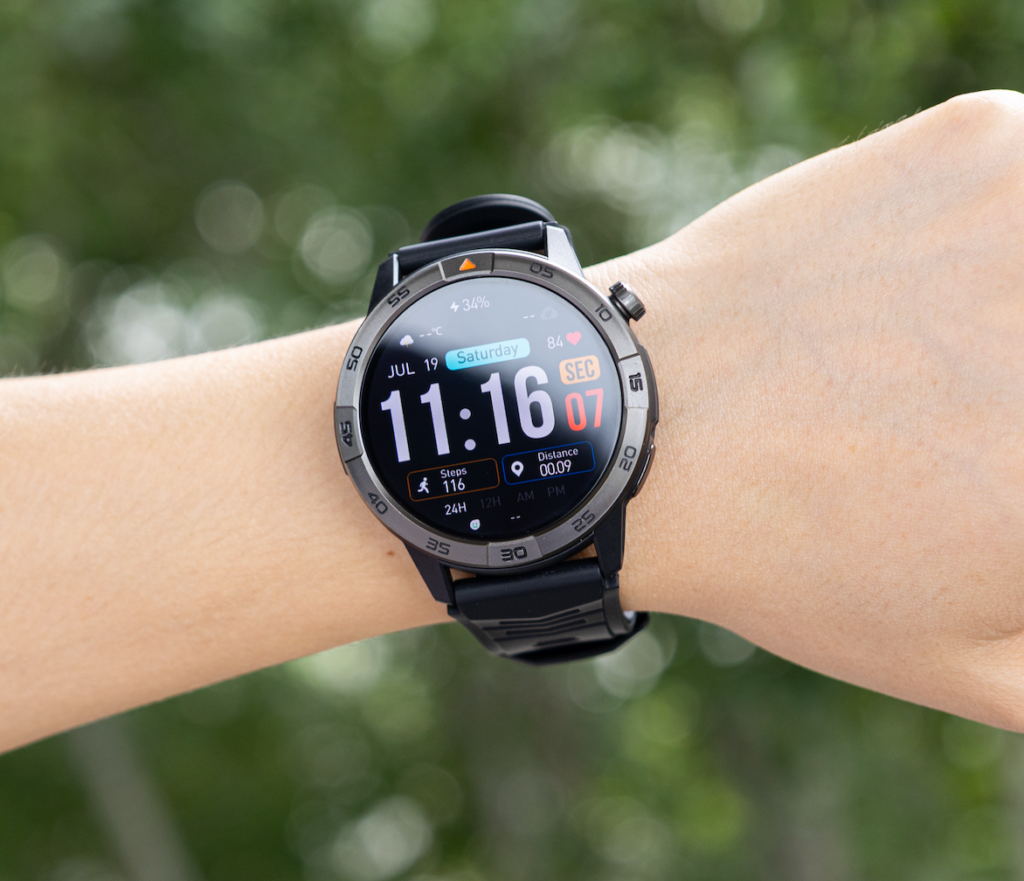
No result should be invented from the badge. A promotional image can suggest a vivid display, but it cannot prove brightness, readability, durability, refresh behavior, or touch accuracy.
When the technology claim is supported but the broader experience remains unproven, the display receives Conditional Premium Value. The feature has not disappeared. Its premium meaning has simply been narrowed to what the evidence can carry. A cheap smartwatch with premium features may therefore offer a genuine premium display component without proving a complete premium display experience.
Make GPS Declare Which Rung It Reaches
GPS creates one of the largest gaps between a badge and the function a buyer imagines. The manager places the claim on a seven-rung ladder: phone-supplied location, watch-obtained location, route recording, route history, route display, direction guidance, and stored maps or useful navigation without a live phone connection.
A watch may reach one rung and stop. Connected location is not onboard GPS. Route recording is not navigation. A line on a screen is not automatically an offline map. Even stored maps do not prove rerouting, guidance quality, or independent operation.
This is where Partial Feature often appears. The function exists, but it delivers only part of the premium experience implied by the badge.
Routine relevance also changes retained value. The Phoenix manager coordinates rooms and members rather than navigating unfamiliar routes. Even complete GPS may add little ownership value. The audit does not call it bad; it discounts value the owner is unlikely to use.
Follow a Front-Desk Call Back to the Phone
A call icon looks self-contained. In practice, the function may depend on a phone, Bluetooth connection, permissions, microphone, speaker, companion app, and a usable calling interface.
The manager traces one harmless front-desk call backward. Can the watch show who is calling without exposing private information? Can it answer, or only mute and reject? Must the phone remain nearby? Can the speaker and microphone support a short conversation while the manager is stationary, private, and permitted to take it?
The complete path matters more than the green answer symbol. Readers can trace every calling feature through the intended phone partnership, then separately verify whether the wrist-call path remains stable in real use.
A cheap smartwatch with premium features may retain meaningful calling value when the path works reliably for short, appropriate calls. If it provides only notifications or control functions, the premium calling claim must be reduced to the narrower capability actually delivered.
Separate Premium-Looking From Premium-Built
A polished bezel, coordinated interface, slim profile, or refined finish can create real appearance value. None of those details proves the case material, screen covering, coating, fastening quality, impact resistance, or long-term durability.
The audit divides the badge into two columns.
Appearance evidence
Shape, proportions, finish, interface presentation, strap appearance, and how the watch fits the manager’s member-facing environment.
Construction evidence
Exact materials, screen protection, coating, joining methods, fastening, verified durability, and available service or replacement paths.
Proofless Claim appears when premium appearance is presented as construction proof. The honest result may be Appearance Value Only. That remains legitimate in a member-facing workspace, but it cannot become premium-built without evidence.
This distinction also protects the article from confusing style with capability. Buyers evaluating appearance can separate premium appearance from the claims that need construction evidence.
Keep Advanced Tracking Inside an Evidence Boundary
“Advanced tracking” can refer to many different things: activity counts, workout modes, heart-rate trends, sleep estimates, recovery-style summaries, or other wellness information. A large menu does not prove that every metric is useful, complete, or accurate.

The manager draws an evidence boundary around each tracking claim. What is measured, what is estimated, which mode is required, whether the app must remain involved, what history is available, and what evidence supports practical accuracy all stay separate.
Wellness information remains consumer information, not medical evidence. The article should never turn a sensor name or dashboard into a health guarantee.
Performance Shortfall applies only when reliable testing shows that a function performs below the practical expectation attached to its claim. When evidence is simply missing, the correct deduction is incomplete or unproven—not an invented failure.
For this Phoenix routine, advanced tracking may carry low ownership value even when the feature works. A cheap smartwatch with premium features should not receive extra premium credit for functions the buyer does not need.
Press the Button Claim Through Every Action
A highlighted side control may look customizable, but the visible button proves only that a physical control exists. The manager follows the complete press path: one press, long press, fixed or customizable shortcut, assignable functions, app requirements, retained settings, and consistent response.
A fixed shortcut can still support a timer or non-sensitive room-transition reminder. The audit retains that exact value even when broad customization is not proven.
Let the App Collect the Hidden Discount
Premium-looking hardware can lose practical value through the software required to operate it. A feature may depend on account creation, repeated sign-in, phone proximity, permissions, app availability, paid access, difficult menus, or frequent reconnection.
The Phoenix manager performs an ownership-drag test. How many steps activate the feature? Can the setting be found again? Does the app preserve the chosen control or notification path? Can an ordinary interruption be recovered without rebuilding the relationship?
The existence of a function on the watch is not the same as easy access to it. Easy first-day access is not the same as sustainable ownership.
When a supposedly premium capability creates recurring intervention, readers should count the software interventions hidden behind premium hardware.
A cheap smartwatch with premium features can still deliver strong value through a companion app, but the dependency must remain visible. If the app limits key settings, data access, or recovery, that burden reduces the retained premium value of the connected feature.
Total Only the Premium Value That Survived
After the individual audits, the manager records a teaching ledger. It does not make claims about an unnamed product; it shows how the retained-value decision should work.
| Premium claim | Main deduction | Possible retained value |
|---|---|---|
| Display | The technology label does not prove every display quality | Conditional Premium Value |
| GPS | The function level and routine relevance may be limited | Partial Premium Value |
| Calling | The full phone, permission, speaker, and microphone path must hold | Conditional Premium Value |
| Materials | Appearance may be supported while construction remains unproven | Appearance Value Only |
| Tracking | Measurement, estimation, evidence, and relevance must stay separate | Partial Premium Value |
| Controls | The exact shortcut path must work | Conditional Premium Value |
| Software | App burden can reduce otherwise useful hardware | Conditional or Partial Premium Value |
The strongest cheap smartwatch with premium features is not the one with the most badges. It is the one with the greatest concentration of supported, relevant premium value after every deduction.
What Survives After the Asterisk Opens?
Does AMOLED automatically prove a premium display?
No. It may support the display-technology claim, but brightness, readability, responsiveness, always-on behavior, and durability need separate evidence.
Is connected GPS still valuable?
Yes, when phone dependence is acceptable and the available location function serves the buyer’s routine. Its value should not be inflated into independent navigation.
Does a call icon prove wrist calling?
No. The phone connection, permissions, microphone, speaker, call controls, and real-use stability must all be checked.
Can premium-looking construction retain value?
Yes. Appearance value is genuine when it is not mislabeled as material or durability proof.
Do many sports modes prove advanced tracking?
No. Mode quantity does not establish measurement quality, useful history, accuracy, or relevance.
Does a physical button prove customization?
No. The available press actions, assignable shortcuts, app requirements, and consistent operation must be verified.
Can limited software reduce hardware value?
Yes. Difficult setup, missing controls, recurring reconnection, or restricted data access can create a meaningful deduction.
Does a cheap price make premium claims false?
No. Price does not determine completeness. It simply makes claim verification more important because buyers may otherwise assume that similar wording guarantees an equivalent experience.
Must every premium feature matter to the owner?
No. A complete but irrelevant function can receive low ownership value for the declared routine.
Assign the Package Verdict
Discounted Premium Proven
Several claims remain complete, supported, and useful after all verified deductions. The verdict does not claim equivalence with every higher-priced device; it confirms retained practical value.
Select Premium Value
A smaller group of premium functions survives strongly, while other badges become conditional, partial, appearance-only, or irrelevant.
Premium-Looking Only
Visual presentation remains appealing, but functional premium claims lack sufficient proof.
Cheap Claim Fails
Most of the package depends on inflated badges, missing subfunctions, serious restrictions, or unsupported claims.
The Phoenix example points toward Select Premium Value. The manager may retain useful display, calling, reminder-control, or software value while discounting GPS, construction, tracking, or other claims that remain partial or unrelated to the work routine.
That verdict gives a cheap smartwatch with premium features credit for what it truly delivers without allowing one attractive badge to overstate the entire package.
A Premium Claim Must Survive Before It Can Support Quality
Even a premium feature that survives this audit cannot prove that the entire cheap smartwatch with premium features is good. Whole-device quality also depends on required utility, repeated reliability, compatibility, comfort, battery suitability, software usability, and ownership protection.
After the individual claims are discounted, buyers should apply the complete quality-evidence standard after the premium claims are discounted. Article 321 identifies what remains inside each premium badge; Article 320 decides whether the complete watch deserves a broader quality verdict.
Premium Value Is What Remains After the Conditions
PREMIUM GPS* was not a reason to reject the watch. The asterisk was an instruction to define the function accurately. The same rule applies to displays, calls, materials, tracking, controls, and software.
Some claims may hold up fully. Others remain useful only with a phone, app, permission, or specific mode. A polished case may keep appearance value, while a complete advanced feature may still add little to the Phoenix routine.
The right answer is not the largest premium-badge count. It is the smallest defensible set of functions that remain complete, supported, and useful after the hidden conditions are visible. That is how a cheap smartwatch with premium features earns Select Premium Value without pretending that every badge survived unchanged.
Choose the functions that matter in your routine, expose every dependency, and check which premium claims this watch can support before assigning value to the badge.