
Four calls arrive during the same Raleigh wedding-delivery window.
The flower shop wants to confirm that a centerpiece left on time. A recipient needs to correct the building entrance. Venue staff want to explain a loading-access problem. One of the drivers has a question about a completed handoff.
All four calls matter, but they do not belong in the same channel.
For a floral coordinator comparing a smartwatch for delivery work and calls, the useful question is not simply whether the watch can answer a call. The better question is what each caller needs, how much information must change hands, and where the conversation should continue.
Only one of those four calls may need a brief wrist response. Another should become a text request. A third belongs on the phone. The remaining issue may need to return to the flower shop.
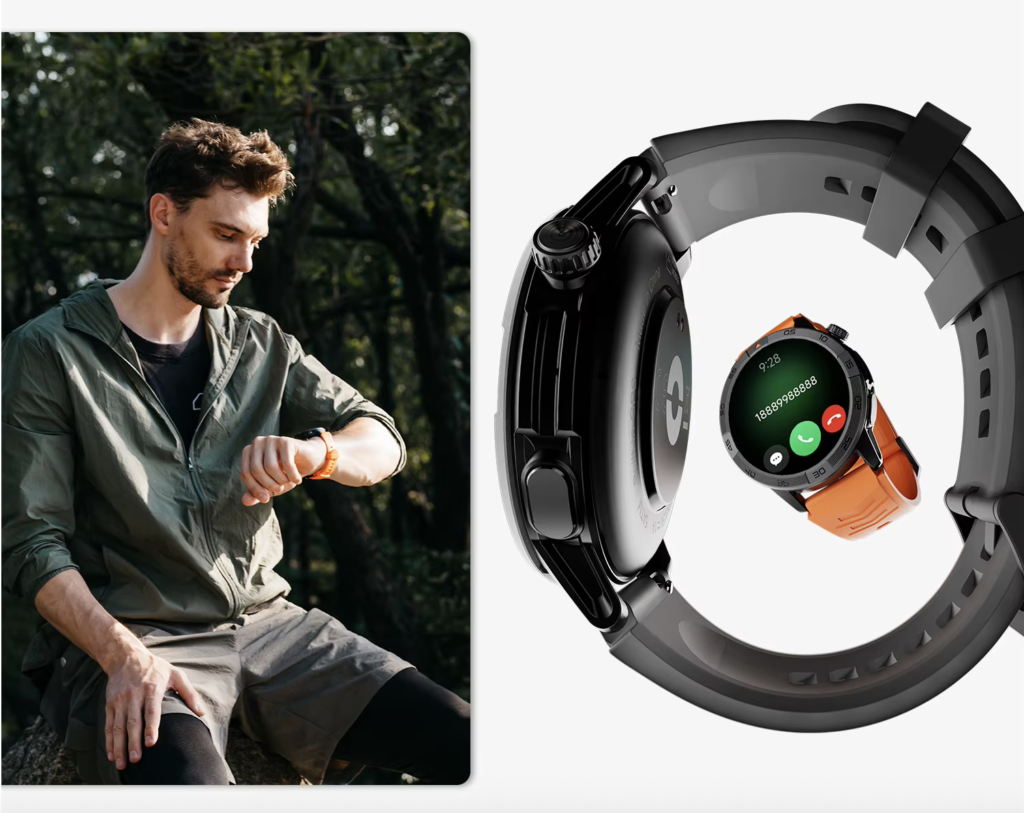
A call-purpose routing map makes those choices before the next delivery window becomes crowded.
Put the Four Raleigh Callers on the Route Board
Caller identification tells the coordinator who is reaching the route. It does not explain what the person needs.
A store employee might call for a two-second confirmation or a detailed order correction. The same recipient could ask for a simple arrival estimate one day and raise a private complaint the next. Venue staff may provide one entrance name or describe a complicated access problem.
The call’s purpose determines the next step.
The flower shop
Calls from the store may involve:
- Confirmation that an arrangement left on schedule
- A note added to an existing order
- A request to redirect a driver
- A customer concern
- A change that requires the complete order record
A simple departure confirmation may end quickly. A payment issue or arrangement change belongs with someone who can access the store system.
The recipient
A recipient may need to:
- Ask for an arrival estimate
- Correct part of the address
- Identify who can accept the flowers
- Request a different drop-off point
- Explain a building-access problem
Some of these requests require exact written details. Others may contain private information that should not be discussed through a watch speaker in a public setting.
Venue staff
Wedding venues create their own communication needs:
- Loading-door changes
- Parking directions
- Elevator restrictions
- Room-readiness updates
- Contact information for an on-site coordinator
A single entrance name may fit in a short exchange. A closed loading area with several alternative routes needs a longer phone conversation.
The delivery driver
Driver calls may include:
- Arrival confirmation
- Delay notification
- A quick handoff question
- Recipient availability
- A customer request that changes the order
The coordinator should not assume that every driver call deserves an immediate answer. Driving, carrying arrangements, entering venues, and active handoffs may all require a delayed response.
Sort the Call by the Information It Must Carry
Once the caller’s purpose is clear, the next question is how much information must move between both people.
A short confirmation
Some calls can end with one sentence:
- “Confirmed.”
- “Use the west entrance.”
- “The handoff is complete.”
- “Call the store.”
- “I’ll return your call when parked.”
These are the strongest candidates for a wrist response, provided the coordinator is safely stationary and the conversation is appropriate for the surroundings.
A brief call should remain brief. The watch is not helping when a ten-second confirmation expands into several minutes of route planning.
Exact details that should be written
Spoken instructions are easy to mishear, especially around traffic, venue activity, loading areas, or floral carts.
Written information is better for:
- Street numbers
- Entrance names
- Loading-door numbers
- Parking locations
- Recipient names
- Access instructions
The coordinator can end the call with:
“Please text me the exact entrance details.”
The smartwatch may provide a message alert, but detailed reading or replying may still need to move to the phone. Full message composition should not be assumed unless the exact watch-and-phone setup supports it.
Information that requires several questions
Some problems cannot be resolved with one short answer.
Examples include:
- Why the planned entrance is unavailable
- Whether the delivery time can change
- What happened during an unsuccessful handoff
- Which alternative location is acceptable
- How to coordinate several drivers
These calls should move to a phone callback from a safe stopping point.
A useful closing phrase is:
“I’ll call you back from the phone when I’m safely stopped.”
Information that belongs at the store
The delivery route is not the correct place to settle every customer request.
Send the issue to the store when it involves:
- Payment
- Product substitution
- Price changes
- Arrangement specifications
- Customer history
- Order authorization
- Detailed complaints
The coordinator can say:
“The store needs to handle that request. I’ll ask them to contact you.”
This protects the route from a conversation that requires information or authority the coordinator does not have.
Add a Privacy Gate Before the Call Leaves the Wrist
Response length is only one part of the decision. Privacy can change the destination even when the call would be short.
A watch speaker may allow nearby people to hear both sides of the conversation. That matters in hotel lobbies, wedding venues, loading areas, shared elevators, and public parking spaces.
Information that may require greater privacy includes:
- Recipient phone numbers
- Entry codes
- Payment details
- Customer complaints
- Private event information
- Staff names
- Disputes about an order
- Details about an unsuccessful delivery
A short question about an access code does not become suitable for the wrist merely because it takes ten seconds.
Low-risk information may include:
- Arrival confirmation
- A simple entrance direction
- A request to send a text
- Confirmation that a callback is coming
When privacy is uncertain, move the conversation to a phone callback, the store phone, or a delayed response from a more appropriate location.
Give Every Delivery Call One of Five Destinations
The completed routing plan uses five response channels.
1. Wrist response
A wrist response is suitable when the call is:
- Brief
- Low privacy
- Easy to understand
- Appropriate for the surroundings
- Handled while safely stationary
A good example is a driver calling only to confirm that venue staff accepted the flowers.
The coordinator might answer:
“Confirmed. Continue the route.”
The watch should shorten the interruption rather than extend it.
Bluetooth calling generally depends on the nearby paired phone. Buyers should see what phone-assisted wrist calling actually requires before assuming the watch works as an independent cellular device.
2. Text request
Use a text request when accuracy matters more than immediate conversation.
This channel works well for:
- Entrance details
- Address corrections
- Parking instructions
- Loading-door numbers
- Recipient spelling
- Drop-off notes
The closure phrase might be:
“Please text the location so I can check it at the next safe stop.”
A written message gives the coordinator something that can be reviewed later without asking the caller to repeat several details.
3. Phone callback
Move the conversation to a phone callback when it needs:
- Privacy
- Several questions
- Better audio
- Route replanning
- Careful explanation
- Note-taking
Suppose venue staff report that the planned loading entrance is closed. They begin describing two alternatives, a service elevator, and a different parking area. That is not a useful wrist conversation.
The coordinator can close the initial call with:
“I’ll call you back from the phone when I’m safely stopped.”
4. Store phone
The store phone is the correct destination when shop staff need the complete order record or authority to approve a change.
Typical examples include:
- Product substitutions
- Payment concerns
- Customer complaints
- Arrangement changes
- Price questions
- Authorization requests
A recipient may ask the driver to add something to an arrangement after it has already left the store. That request should not remain on the route.
The coordinator can say:
“The store will need to handle that change.”
5. Delayed response
A delayed response is the correct channel when the coordinator is:
- Driving
- Carrying arrangements
- Entering a venue
- Near traffic
- Completing a handoff
- Unable to speak privately
- Performing any task that requires full attention
The watch may help identify the caller or record the missed call. It should not pressure the coordinator to answer immediately.
After reaching a safe point, the return phrase can be:
“I saw your call and can respond now.”
Delaying the response is not poor communication. It is responsible routing.
Build the Call-Purpose Routing Map
The route board should be prepared before the delivery window begins.
| Call purpose | Information needed | Privacy level | Preferred destination | Closure phrase |
|---|---|---|---|---|
| Driver confirms handoff | One brief confirmation | Low | Wrist response | “Confirmed. Continue the route.” |
| Recipient corrects entrance | Exact written details | Moderate | Text request | “Please text the entrance name.” |
| Venue reports access problem | Several instructions | Moderate | Phone callback | “I’ll call when safely stopped.” |
| Customer requests order change | Full order information | High | Store phone | “The store will contact you.” |
| Any caller during driving or carrying | Varies | Varies | Delayed response | “I can respond from a safe stop.” |
One contact may appear in several rows.
A store employee asking whether the centerpiece left on time may receive a wrist confirmation. The same employee calling about a customer complaint may require a private phone conversation.
Purpose, not contact name, controls the route.
Use the Watch to Shorten the Interruption
The smartwatch has a limited but useful role in this system.
Helpful functions may include:
- Caller identification
- Incoming-call vibration
- Answer and decline controls
- Notification previews
- Callback reminders
- Battery visibility
- Connection status
- Access to recent calls
These functions help the coordinator classify an interruption quickly.
The watch becomes less useful when it encourages:
- Long conversations in public
- Detailed venue troubleshooting on the wrist
- Reading complex messages while walking
- Handling calls while driving
- Discussing private customer information aloud
- Responding to every alert immediately
Workers with broader route-communication needs can compare the wider communication demands of delivery routes. This Raleigh plan stays focused on selecting the correct channel for each call purpose.
Close the Call Before It Expands
A prepared closure phrase keeps the original interruption from growing.
Without a clear ending, a simple confirmation can turn into:
- A second problem
- A route-planning discussion
- A complaint
- A private conversation
- A request that belongs with the store
Each destination needs its own closing sentence.
Wrist response
“Confirmed. Continue the route.”
Text request
“Please text me the exact details.”
Phone callback
“I’ll call when I’m safely stopped.”
Store phone
“The store will handle that request.”
Delayed response
“I can respond when I reach a safe point.”
The phrase tells the caller what will happen next. It also prevents the coordinator from trying to solve an unsuitable problem through the wrong channel.
Replay the Four Calls Through the Completed Map
Return to the four calls from the beginning.
The flower shop
The store wants to confirm that the centerpiece left on schedule.
This requires one short answer.
Destination: Wrist response
Closure: “Confirmed. It is on the route.”
The recipient
The recipient needs to correct the building entrance.
Exact written information is more useful than spoken directions.
Destination: Text request
Closure: “Please text the entrance name.”
Venue staff
The loading entrance is closed, and staff need to explain several alternatives.
This requires a longer, more private discussion.
Destination: Phone callback
Closure: “I’ll call from the phone at the next safe stop.”
The driver
A customer asks for a change that affects the floral order.
The request requires store records and authorization.
Destination: Store phone
Closure: “Send that request back to the store.”
Four calls entered the same delivery window. Four different purposes created four different responses.
Only one needed to remain on the wrist.
Check Whether the Watch Supports the Raleigh Routing Plan
After the call map is complete, the buyer can evaluate the watch.
Relevant requirements include:
- Clear caller identification
- Reliable pairing with the phone
- Simple answer and decline controls
- Readable notification previews
- Understandable audio for brief calls
- Visible battery status
- Reliable reminders
- Compatibility with the user’s iPhone or Android phone
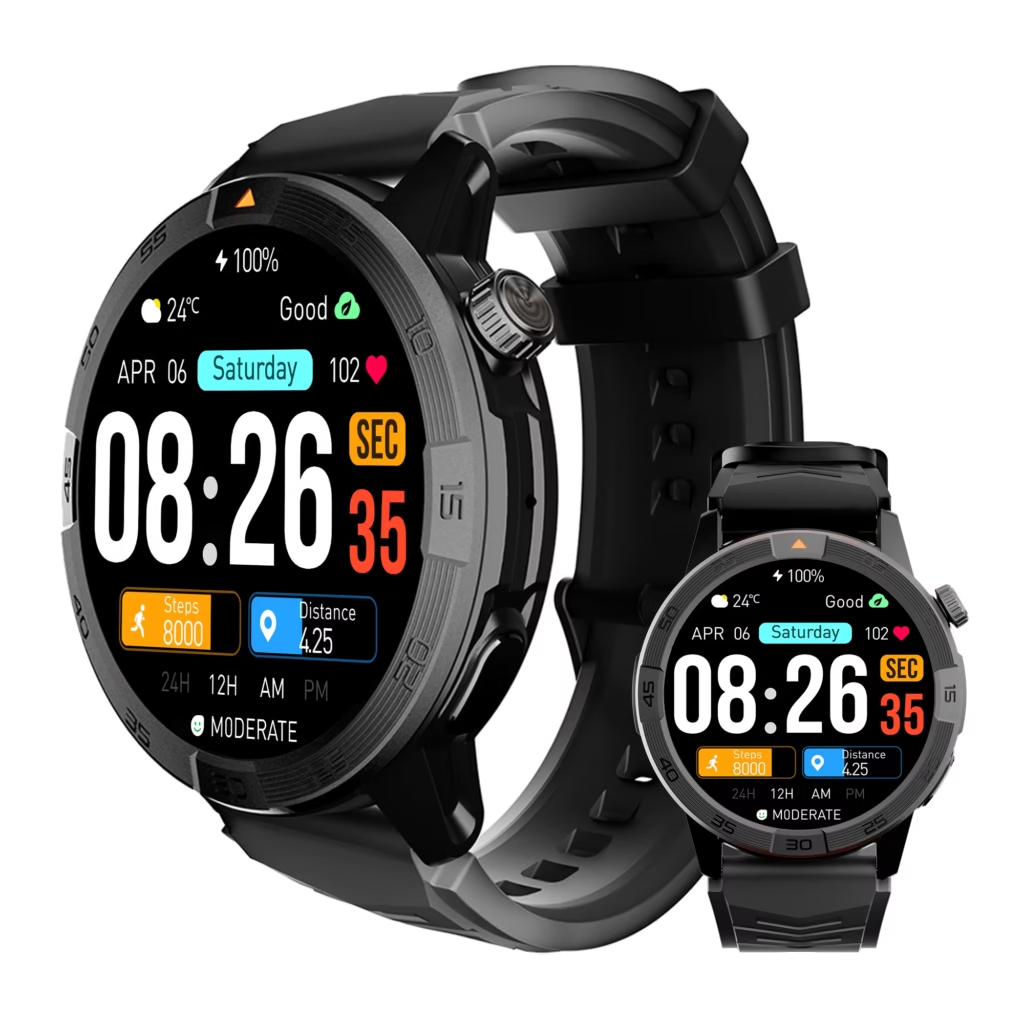
Comfort also matters because the coordinator may wear the watch while driving, carrying arrangements, entering venues, and completing handoffs.
Bluetooth range should not be assumed across a large venue or building. Walls, distance, phone placement, and local interference may affect the connection.
Avoid relying on unverified claims such as:
- Independent LTE calling
- Automatic call-purpose detection
- Automatic routing by caller type
- Guaranteed venue-wide Bluetooth coverage
- Automatic privacy protection
- Full message composition
- Contact-specific automation
The routing system can be manual. Its value comes from making the decision before the call arrives.
A coordinator trying to reduce routine interruptions can also reduce unnecessary call interruptions without ignoring important contacts.
Questions to Settle Before the Next Wedding Delivery
Which delivery calls are suitable for a wrist response?
Brief, low-risk calls that can be completed in one short exchange while the coordinator is safely stationary.
When should the coordinator ask for a text?
When exact details such as an entrance, address, parking location, or recipient name are more useful in written form.
Which calls should return to the flower shop?
Order changes, payment issues, substitutions, customer complaints, and matters requiring the complete order record.
When is a phone callback better?
Use a phone callback when the discussion is private, detailed, uncertain, or likely to require several questions.
Can the coordinator answer while driving?
No. Calls and watch interactions should wait until the vehicle is safely parked or the coordinator reaches another approved stationary location.
Does the smartwatch route calls automatically?
Not necessarily. The call-purpose map is a manual decision system unless the exact watch and phone setup offers verified automation.
Give Every Caller a Destination
The purpose of a delivery smartwatch is not to move every conversation onto the wrist.
The driver may need a five-second confirmation. The recipient may need to send written directions. Venue staff may require a phone callback. A detailed order request may belong with the store. Any call arriving during driving or carrying can wait.
A smartwatch for delivery work and calls is most useful when it helps the Raleigh coordinator identify why someone is calling, choose the right destination, and close the interruption without slowing the wedding-delivery window.
Before the next route, assign every frequent call purpose to one response channel:
- Wrist response
- Text request
- Phone callback
- Store phone
- Delayed response
Then review the caller display, wrist-call, alert, and phone requirements to decide whether the watch can support the Raleigh routing plan without turning every ring into a wrist conversation.