
The buyer paid for a long-battery watch, placed the charger beside the bed, and connected it every night anyway. The product changed, but the routine did not. A smartwatch for people who hate charging every day cannot prove its value while bedtime automatically sends it back to the charger.
For a school nutrition procurement specialist in Des Moines, Iowa, the useful question is not, “How many days does the box promise?” A better question is, “Which evening first makes charging necessary for tomorrow’s work?”
Place seven cards on the nightstand. Mark each one Skip, Check Tomorrow, or Charge Required. The charger returns only when a real next-day function needs protection.
Put Seven Bedtimes on the Nightstand
Start with the entire week visible. Do not turn the test into a repetitive diary in which every evening receives the same explanation.
Each night card needs four pieces of information:
- The watch functions required tomorrow
- The next realistic charging opportunity
- The bedtime decision
- Whether the following day finished normally
| Night | Tomorrow must still support | Decision | Next day completed? |
|---|---|---|---|
| Sunday | Morning alarm, vendor deadline, shipment alert | Skip / Check / Charge | Yes / No |
| Monday | Supplier caller ID and inventory timer | Skip / Check / Charge | Yes / No |
| Tuesday | Calendar reminders and delivery update | Skip / Check / Charge | Yes / No |
| Wednesday | Early supplier call and district meeting | Skip / Check / Charge | Yes / No |
| Thursday | Routine office alerts | Skip / Check / Charge | Yes / No |
| Friday | Evening event and early Saturday delivery | Skip / Check / Charge | Yes / No |
| Saturday | Weekend schedule reminder | Skip / Check / Charge | Yes / No |
The full board makes the pattern easier to see. Several nights may need no charge at all. One evening may deserve a planned session. Another could remain uncertain until the buyer checks the following day’s workload.
Write Tomorrow on the Back of Every Card
A bedtime charging decision should begin with the next day, not the current battery percentage.
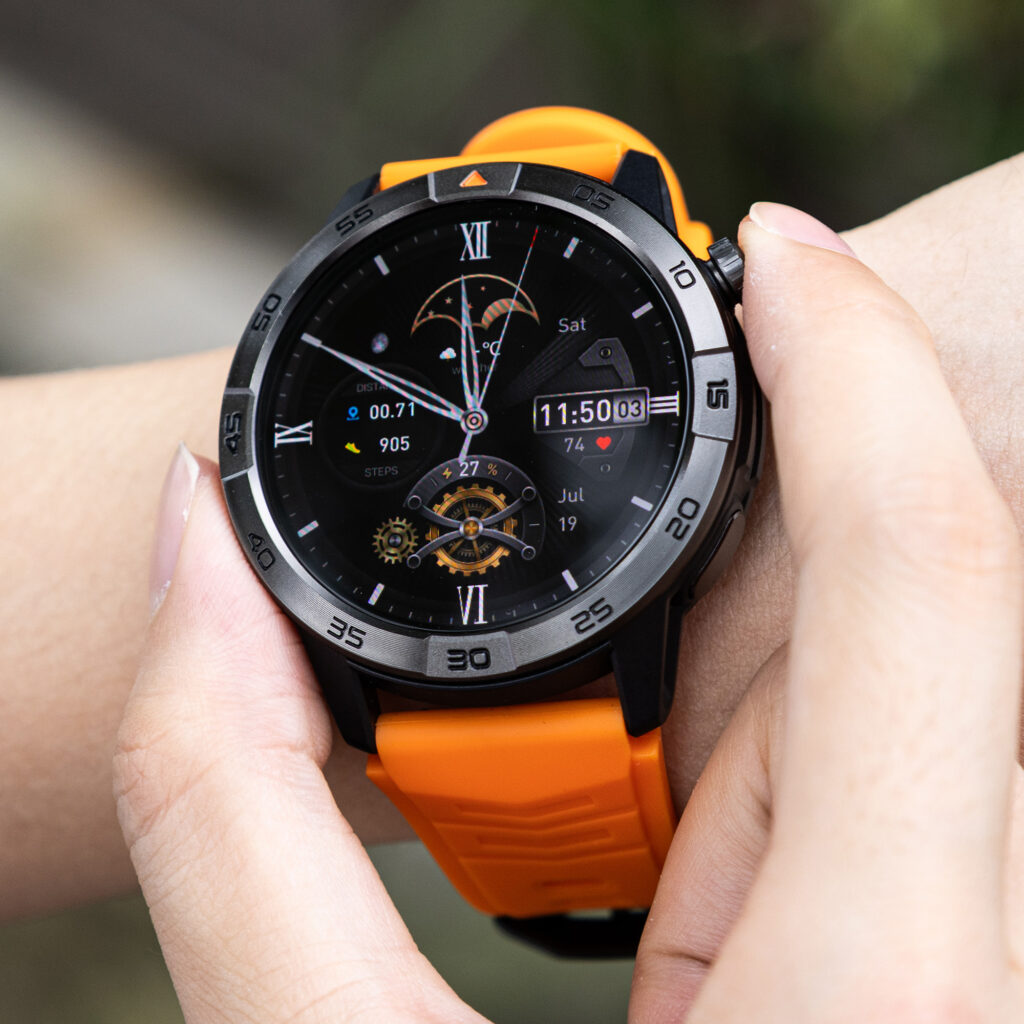
The Des Moines procurement specialist may rely on the watch for:
- A morning alarm before supplier calls begin
- A calendar reminder for a purchasing deadline
- Caller identification when a food distributor calls
- A short preview of a delayed-delivery message
- An inventory or meeting timer
- An end-of-day task reminder
Only functions that would create a real disruption belong on the card. Optional tracking, decorative watch faces, or constant screen use should not force a charge unless they are part of the buyer’s normal requirement.
Complete this sentence for each night:
Tomorrow, the watch must still __________ before I can charge it again at __________.
That sentence connects battery life to an actual routine. Without it, “charge to be safe” can become an automatic answer every evening.
Move the Charger Out of the Decision
A charger beside the lamp, phone, or toothbrush acts as a physical cue. Bedtime begins, the charger becomes visible, and the watch is connected without a deliberate decision.
Move the charger to a drawer or another accessible location. Do not hide it so well that a necessary charge becomes difficult. The purpose is to remove the visual trigger, not the ability to charge.
The behavior loop often looks like this:
Bedtime begins → charger appears → watch comes off → charging happens without a next-day reason.
People who dislike cables, charging stands, or repeated device maintenance may have a broader issue than bedtime habit alone. It helps to separate charger frustration from a nightly charging habit before deciding what kind of battery improvement would matter.
Fill the Green Tray First
Green cards represent evenings when charging can be skipped without changing the following day.
A night belongs in the green tray when:
- Required functions remain available
- Normal settings stay active
- No emergency charge interrupts the day
- The user does not reduce ordinary use to preserve battery
- The next day reaches its natural charging opportunity
Sunday: the first automatic charge disappears
Monday requires an alarm, a vendor deadline reminder, and one shipment alert. The charger stays in the drawer. All three functions remain available, and the day finishes without an emergency charge.
Sunday’s card turns green. That result does not prove a full week of battery life, but it shows that the usual Sunday-night charge had no operational purpose.
Monday: normal use must remain normal
Tuesday includes caller identification and an inventory timer. The buyer keeps ordinary notification settings active rather than disabling useful functions to create a longer result.
When Tuesday finishes normally, a second green card joins the first.
Thursday: a light day still counts
Friday involves a routine office schedule with no unusual travel, long calls, or evening program. Charging may be unnecessary simply because the next day places fewer demands on the watch.
A green card is valid even when the day is easy. The test measures routine fit, not maximum stress every night.
Use the Amber Tray When Tomorrow Is Uncertain
Some evenings do not provide enough evidence for an immediate Skip or Charge decision. These cards belong in the amber tray.
Common reasons include:
- An earlier-than-normal start
- A higher number of supplier calls
- An evening school-district event
- A long period away from the usual charger
- No convenient outlet until late the next day
Amber does not mean “charge just in case.” It means the buyer needs to compare the remaining reserve with tomorrow’s actual length and workload.
Ask:
- Which required function would fail first?
- How long until the next natural charging opportunity?
- Would normal use need to be reduced?
- Can the day tolerate uncertainty?
- Is the concern based on evidence or unfamiliarity with a lower percentage?
When the remaining runtime is difficult to interpret, readers can compare the remaining runtime with the length of the next routine rather than relying on a comfortable-looking battery number.
Reveal the First Red Card
The red card is the most important piece of evidence on the board. It identifies the first evening when charging has a genuine job.
Imagine Friday in the Des Moines schedule. A district nutrition event extends into the evening. Saturday begins early with a supplier delivery, and the next realistic charging opportunity will not arrive until afternoon.
The watch must still provide:
- The morning alarm
- The supplier’s incoming-call alert
- A delivery-window reminder
- A short schedule update
If the remaining reserve cannot reasonably protect those functions, charging is justified. The charger returns because tomorrow requires it, not because Friday night has arrived.
Record the first red card clearly:
First necessary charging night: __________
Function being protected: __________
Next realistic charging opportunity: __________
What would fail without charging: __________
One planned red card can be a successful result. Replacing seven automatic sessions with one deliberate charge still removes daily charging from the routine.
Reject the False Red Cards
Several familiar reasons can look important without proving that charging is necessary.
“It is bedtime”
Bedtime starts the decision. It does not settle it.
“The charger is already beside me”
Convenient access explains why charging is easy, not why the watch needs power.
“The percentage looks lower than usual”
A displayed percentage matters only when it is connected to the time and functions required before the next charge.
“I charged on this night last week”
A repeated calendar habit is not evidence that the same evening requires charging now.
“A full battery feels safer”
Emotional comfort is understandable. It should be distinguished from an operational need for nightly charging.
Some watches genuinely return to the charger each day because of display use, sensors, connectivity, calls, or other energy demands. Readers who need the technical context can see which technical demands genuinely bring a watch back each night.
Read the Shape of the Week
The individual cards matter, but the final pattern gives the buying insight.
Six green cards and one red card
Nightly charging has been replaced by one planned session. The charger remains useful without controlling bedtime.
Four green cards, two amber cards, and one red card
Charging can often be skipped, but demanding days require a quick look at the next schedule.
Two green cards and five red cards
The current watch does not provide enough operating margin to remove nightly charging reliably.
Seven green cards
The watch completed this particular week without charging. A longer observation period is still needed to identify the eventual return point.
Do not convert these cards into a calculation of money saved per charge. The purpose is behavioral: discover which bedtime sessions were unnecessary and which protected a real function.
Overlay Two Candidates on the Same Week
A useful comparison does not begin with advertised battery days. Place each candidate over the same seven-night board.
| Night | Candidate A | Candidate B |
|---|---|---|
| Sunday | Skip | Skip |
| Monday | Skip | Skip |
| Tuesday | Charge Required | Skip |
| Wednesday | Skip | Skip |
| Thursday | Charge Required | Check Tomorrow |
| Friday | Skip | Skip |
| Saturday | Charge Required | Charge Required |
Candidate B removes more automatic bedtime charges while preserving the same required functions. That is stronger evidence than a larger standby figure printed on a product page.

Keep these conditions equal during comparison:
- Normal notification settings
- Similar screen behavior
- Usual call activity
- The same required work functions
- The same next-day schedule
After the week reveals a practical charging pattern, buyers can compare the charging interval that fits the routine rather than choosing solely from the largest advertised number.
Price should enter only after the board shows a meaningful change. A buyer considering an affordable long-battery model can also test whether fewer charging nights justify the purchase.
Stamp the Final Nightstand State
Nightly Habit Removed
Most cards turn green, normal functions remain active, and no emergency charge occurs.
The charger belonged to the bedtime routine more often than the watch required it.
One Planned Charge
Several evenings can be skipped, while one predictable session protects the rest of the week.
Daily charging disappeared; one deliberate charge remained useful.
Workload-Dependent Charging
Routine days support skipping, but events, early starts, or longer work blocks move some nights into amber or red.
The charger can stay away after light days, but tomorrow’s workload must decide demanding nights.
Nightly Charging Still Necessary
Repeated refusal threatens required functions, causes emergency charging, or forces the wearer to disable normal features.
The current watch does not provide enough margin to remove the nightly action.
Questions Written on the Card Backs
Should I skip charging when the battery is clearly too low?
No. The test does not require ignoring evidence that tomorrow’s functions are at risk. A red card is appropriate when charging protects a required action.
Does one skipped night prove daily charging is unnecessary?
One green card identifies a possibly unnecessary charge. The seven-card board shows whether the result continues through different workdays.
Can I use extreme power-saving mode to keep more cards green?
Not when the mode disables functions the watch was purchased to provide. The result should reflect normal use.
Is one planned midweek charge a successful outcome?
Yes. Replacing nightly charging with one predictable session may substantially improve the routine.
Does this test verify a manufacturer’s battery claim?
No. It measures how one watch fits one person’s real week. It does not establish a universal runtime result.
What if I forget to charge instead of deliberately skipping?
An accidental missed charge creates a different question: whether the watch can reach the next realistic outlet. The Seven-Night Refusal Test focuses on deliberate bedtime decisions.
Should the watch be charged to 100% before the test?
Begin from a normal full charge so the week has a clear starting point. Avoid adding short top-ups between cards unless a red-card decision requires one.
Remove the Cards That Never Needed the Charger
At the start of the week, the buyer’s hand moved toward the charger because bedtime had arrived. No next-day function had been checked.
By the end, the board told a different story. Green cards marked charges that could leave the routine. Amber cards required a look at tomorrow. Red cards showed the few evenings when charging protected something specific.
Move the charger away from its automatic nightstand position, place seven bedtime cards beside it, and see how many nightly charges this watch can remove from your board while tomorrow’s required functions remain available.
Let tomorrow earn the charge; do not give it to bedtime automatically.