
The common mistake is shopping for the longest smartwatch battery before deciding how long the watch actually needs to stay away from a charger.
A ski-lodge reservations manager in Burlington, Vermont, does not necessarily need the largest advertised battery number. The watch only needs to cover one complete no-charge block: Thursday-night departure, Friday work, Saturday outdoor walking, two nights of wear, and Sunday return travel.
Finding the best smartwatch for not charging every day starts with defining the shortest charging interval that can cover that routine without removing the features the traveler expects to use.
Forty-eight hours may fail. Weekly charging may fit perfectly. Multiweek endurance could add useful flexibility—or simply create an impressive number that solves no additional problem.
The right answer is the shortest interval that passes the full routine with a realistic buffer.
Mark the Longest Charger-Free Period in the Vermont Routine
Before comparing watches, mark the period when dependable charging will not be available.
The Burlington reservations manager charges the watch on Thursday night before leaving. The next reliable charging opportunity arrives Sunday evening after returning home.
That interval includes more than two calendar days.
The complete block covers:
- Thursday-night wear
- Friday work alerts and calls
- Friday-night sleep
- Saturday outdoor walking
- Saturday-night sleep
- Sunday travel notifications
- A possible return delay
- The final trip back to Burlington
A buyer who counts only Friday and Saturday may incorrectly assume that a 48-hour watch is enough. Starting the clock when the watch leaves the charger reveals a longer requirement.
Begin when dependable charging ends
The interval starts Thursday night, not Friday morning.
Overnight wear matters because the watch is already using battery before the first work alert arrives. Time checks, sleep tracking, screen activity, and connected notifications may all contribute to the real load.
Ignoring Thursday night makes the candidate interval look stronger than it is.
End at the next realistic charging opportunity
The calculation should not stop at hotel checkout, the end of the outdoor walk, or the scheduled departure time.
The protected block ends only when the reservations manager can reach the correct cable, connect the watch, and leave it charging long enough to recover.
A power outlet seen during the trip does not automatically count as dependable access. The traveler may not have the cable available, may be moving between locations, or may not want to remove the watch during an important alert period.
Add one practical return-delay buffer
Sunday travel rarely deserves a zero-margin plan.
A delayed departure, added reservation call, slower trip home, or unexpected stop can extend the interval. The buffer does not need to cover every imaginable emergency. It should protect one realistic delay connected to the reserved trip.
That extra margin separates an interval that merely reaches Sunday from one that supports the full journey confidently.
Load the No-Charge Block With the Features the Traveler Will Use
Battery claims mean little until the routine is loaded with real functions.
For this Burlington traveler, the watch is expected to support:
- Reservation alerts
- Calendar checks
- Short phone-assisted Bluetooth calls
- Regular time checks
- Overnight wear
- Saturday walking records
- Sunday travel notifications
- Moderate display use
Each candidate interval must carry the same basic load.
A 48-hour watch should not be tested with all features active while a multiweek watch is judged only by standby time. That would compare different experiences rather than different battery intervals.
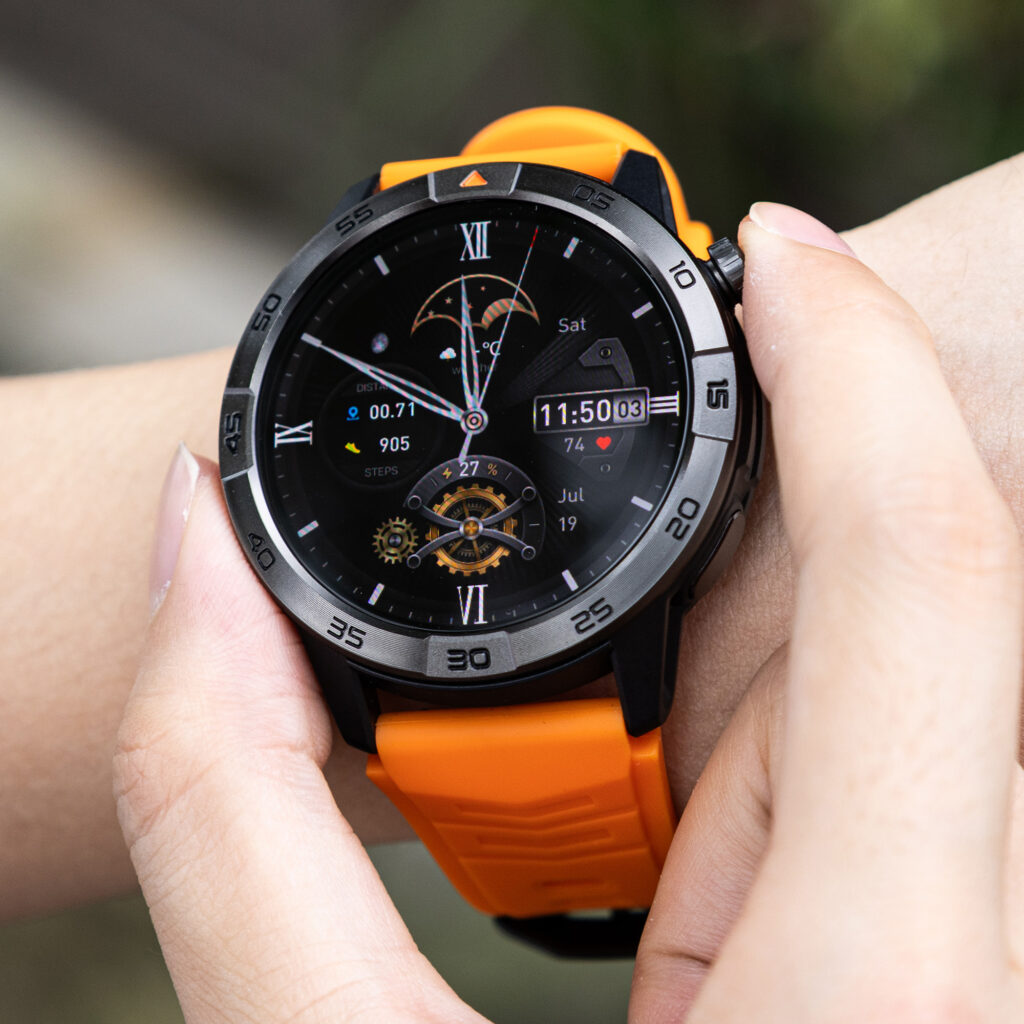
Keep required functions consistent
The required functions belong to the trip:
- Work notifications
- Short connected calls
- Time and calendar access
- Overnight wear
- Outdoor walking records
- Return-travel alerts
Removing one of these functions changes the problem.
A watch does not pass the interval test if it survives only after sleep coverage, walking records, calling, or important notifications are disabled.
Separate optional activity without turning this into a battery-saving guide
Some behavior can remain optional during the protected block:
- Decorative animations
- Excessive screen wake-ups
- Unnecessary app notifications
- Repeated manual battery checks
- Features unrelated to the trip
This distinction creates a fair test. It is not an instruction to strip the watch down until the largest battery number becomes possible.
The target should reflect how the traveler genuinely intends to use the watch.
Frame Bluetooth calling accurately
The smartwatch supports phone-assisted Bluetooth calling. The paired phone must remain nearby and connected for ordinary wrist calls.
The interval test should therefore include the actual number of short calls expected during the work and travel period. It should not assume independent LTE calling or phone-free cellular use.
Test Whether 48 Hours Covers the U.S. Travel Block
A two-day battery claim sounds appropriate for a weekend.
The problem is that this charger-free block begins Thursday night and ends Sunday evening. Once overnight use and return travel are included, the routine can extend well beyond 48 hours.
Find where the interval stops
A 48-hour candidate may reach:
- Saturday evening
- Saturday-night sleep
- Early Sunday morning
It may fail before:
- Sunday travel alerts
- A delayed return
- The final trip into Burlington
- The next dependable charging opportunity
The exact failure point depends on display activity, calls, notifications, walking records, overnight wear, and the watch’s observed performance.
The article should not assume that every two-day watch dies at the same time. The test asks whether the interval can cover this entire routine under realistic use.
Label 48 hours as Fail only after testing the complete block
Use the verdict:
Fail — the interval cannot cover the protected Thursday-to-Sunday period with required functions active.
The label applies to this reserved routine, not to every traveler.
A two-day watch may work well for someone who charges on Saturday night. It fails here because dependable charging does not return until Sunday evening.
Do not rescue the interval by removing the routine
A failed interval should not be forced into a pass by turning off the features that motivated the purchase.
Examples of unrealistic rescue attempts include:
- Removing the watch overnight
- Disabling walking records
- Turning off work notifications
- Avoiding all Bluetooth calls
- Reducing display access below practical use
- Ignoring Sunday travel alerts
If 48 hours works only after the protected routine disappears, it remains a failed interval.
Test Weekly Charging for the Burlington Traveler
The weekly candidate provides more room than the Thursday-to-Sunday block requires.
That does not automatically make it the winner. It still needs to preserve the required functions and include enough reserve for the Sunday delay.
Check every stage of the routine
A weekly interval should support:
- Friday work
- Two nights of wear
- Saturday outdoor walking
- Sunday travel
- The delay buffer
- Arrival at dependable charging
The watch should not enter Sunday in a state that forces the traveler to choose between notifications, activity records, and screen access.
Look for a natural fixed charging day
Thursday evening creates a logical charging point.
The reservations manager can charge before departure, begin the trip with a known battery level, and return to the same routine after reaching Burlington.
A fixed charging day may reduce uncertainty because the user does not need to inspect the battery every evening. Still, weekly charging should be selected because it fits the protected interval—not because “once a week” sounds convenient.
Require reserve before assigning Pass
Use the verdict:
Pass — the interval covers the full routine, preserves the required functions, and includes a realistic delay buffer.
Barely reaching Sunday evening should be treated cautiously. A stronger pass leaves enough margin for active calls, extra screen checks, changing travel conditions, or a later arrival.
Readers can see how week-long battery claims change under calling and alerts before treating a weekly claim as guaranteed active-use coverage.
Challenge Multiweek Endurance Before Calling It Better
The multiweek candidate clearly exceeds the protected Thursday-to-Sunday block.
The remaining question is whether the extra duration solves another real problem.
Longer endurance can be useful. It can also become overkill when the buyer pays attention only to the largest advertised number.
Ask what the additional weeks accomplish
Multiweek endurance may provide value when it:
- Covers several consecutive trips
- Reduces dependence on carrying a cable
- Supports longer periods away from reliable charging
- Adds flexibility when plans repeatedly change
- Removes a recurring charging conflict
For the Burlington reservations manager, those benefits should count only when they relate to the actual travel routine.
One weekend block does not automatically require several weeks of battery life.

Verify the conditions behind the claim
A multiweek claim may reflect lighter conditions than the buyer expects to use.
Runtime can change with:
- Bluetooth calling
- GPS or activity tracking
- Display brightness
- Screen wake frequency
- Notifications
- Sensors
- Power-saving modes
Different watches define battery claims differently. A standby figure should not be treated as proof that calls, walking records, alerts, and overnight wear will continue for the same duration.
The buyer must compare active-use conditions, not headline numbers alone.
Use Overkill when added endurance solves nothing else
Apply the verdict:
Overkill — the interval exceeds the protected routine but does not solve another verified problem.
Overkill does not mean the watch is poor value for everyone. It means the extra endurance is unnecessary for this buyer’s specific no-charge block.
A multiweek model may still be selected when its other features, price, comfort, display, or navigation tools are the better fit. The battery duration alone, however, should not win by default.
Compare Charging Recovery During American Travel
Runtime is only one part of the decision.
Charging recovery matters because a shorter interval may remain practical when the watch can regain useful power during a natural pause.
The Burlington traveler should compare:
- Charging speed
- Cable portability
- Charger availability
- Time needed for useful recovery
- Whether charging interrupts sleep
- Whether the cable must be unpacked during travel
Identify the natural recovery window
For this routine, the clearest charging windows are:
- Thursday evening before departure
- Sunday night after returning home
Charging in the middle of the protected block should not be assumed. The purpose of the test is to identify a watch that can cover the period without depending on an uncertain outlet.
Distinguish full charging from useful recovery
A watch may not need to reach 100% at every session.
The relevant question is whether the available charging window provides enough power for the next complete protected block.
Any claim about partial charging speed should be verified for the exact model, charger, adapter, and conditions before publication or purchase.
Do not let fast charging disguise a failed interval
Fast charging helps only when the traveler can access the charger.
A watch that recovers quickly still fails the no-charge test when the battery cannot last until Sunday and no dependable charging opportunity exists beforehand.
Charging speed can strengthen a passing interval. It cannot repair an interval that ends too early.
Build the No-Charge Interval Board
Place the three candidates beside the same routine.
| Candidate interval | Covers Thursday through Sunday | Required functions remain active | Delay buffer included | Verdict |
|---|---|---|---|---|
| 48 hours | No or uncertain | Only with restrictions | No | Fail |
| One week | Yes | Yes | Yes | Pass |
| Multiweek | Yes | Verify active-use conditions | Far beyond the block | Overkill |
The board is not a universal ranking.
It is a decision tool for one traveler, one interval, and one feature load.
Use evidence rather than labels
Each row should reflect:
- Manufacturer claim type
- Observed active use
- Calling frequency
- Display behavior
- Walking-record duration
- Overnight wear
- Notification load
- Charging access
A category name such as “seven-day battery” or “30-day battery” should never replace a matched routine test.
Reject unlike comparisons
Do not compare:
- Multiweek standby with 48-hour active use
- Saver mode with normal mode
- Notification-only use with frequent calling
- No GPS activity with a tracked outdoor walk
- Occasional screen checks with an always-on display
The three candidates must face the same protected block.
Keep the board tied to the Burlington traveler
Do not add separate rows for office workers, parents, seniors, students, fitness users, or delivery drivers.
The article answers one question for one user: which interval covers the Thursday-night-to-Sunday-evening travel routine?
Choose the Shortest Interval That Passes
The longest battery does not automatically become the best choice.
Remove every interval marked Fail. Then question every interval marked Overkill unless the extra duration solves another recurring need.
The shortest remaining Pass becomes the target.
Why the shortest passing interval is useful
This approach helps the buyer avoid:
- Paying only for an oversized battery claim
- Accepting unnecessary feature compromises
- Comparing standby with active use
- Choosing by marketing language rather than routine
- Carrying endurance that solves no additional problem
The goal is not to minimize battery life. It is to match battery life to the complete use case.
Know when moving up one category is justified
A longer interval may make sense when the same traveler regularly encounters:
- Longer charger-free periods
- Several trips in succession
- Less reliable charging access
- More calling than the current test includes
- Longer tracked walks
- Frequent travel delays
Those factors do not create new article scenarios. They indicate that the protected block may need to be recalculated.
Write one final verdict
For the Burlington routine, the result may read:
Forty-eight hours fails Sunday travel, one week passes with reserve, and multiweek endurance adds no verified benefit.
That sentence is more useful than “buy the watch with the longest battery.”
Questions U.S. Travelers Ask About Charging Intervals
How do I calculate the minimum charging interval I need?
Measure from the last dependable charging opportunity to the next one. Include overnight wear, work alerts, calls, activity tracking, travel notifications, and one realistic delay buffer.
Is a two-day battery enough for weekend travel?
Sometimes. A trip beginning Thursday night and ending Sunday evening can exceed 48 hours, so calculate the complete charger-free block rather than counting only Friday and Saturday.
When does weekly charging provide a meaningful advantage?
Weekly charging becomes useful when it covers the full routine with essential features active and leaves enough reserve for delays or heavier-than-usual use.
Can multiweek endurance involve feature compromises?
It can. Verify the conditions behind the claim, including calling, GPS, display activity, notifications, sensors, and any power-saving mode.
How do Bluetooth calls and walking records affect the interval?
Both can increase active battery demand. Evaluate the interval using the expected number of calls and the actual duration of activity tracking.
Should charging speed influence the decision?
Yes, when a dependable charging opportunity exists. Fast recovery cannot solve a charger-free period that is longer than the watch’s active endurance.
Circle One Row and Cross Out the Other Two
Cross out 48 hours because it does not reliably protect Sunday return travel.
Circle one week because it covers the full Burlington routine with the required functions and a realistic buffer.
Cross out multiweek when the extra duration adds no verified benefit beyond the passing weekly interval.
The best smartwatch for not charging every day is not automatically the one with the largest advertised number. It is the one whose shortest realistic interval passes the complete routine without removing the features the traveler needs.
Map your longest charger-free block, compare the 48-hour, weekly, and multiweek rows, and eliminate every option marked Fail or Overkill. After identifying the shortest passing interval, review the smartwatch’s charging-interval and active-use features to judge whether its display, calling, tracking, and navigation demands fit that target.