
The call comes in while you are between aisles, wearing gloves, with the floor noise covering every sound from your phone. You are not sitting at a desk, and you may not even be allowed to pull your phone out during active work. That is why a smartwatch for warehouse workers phone calls has to be judged differently from a regular calling smartwatch. In a warehouse, the real value is not long wrist conversations. It is whether the watch can help you notice an important call, check who is calling, and respond only when it is safe and allowed.
In a warehouse, the buying decision should start with the work environment: noise, gloves, phone storage, long shifts, privacy, and safety rules. A calling smartwatch only makes sense if it helps with call awareness without creating distraction or breaking workplace policy.

Warehouse Phone Calls Are Different From Office Calls
Warehouse communication is not like sitting at a desk with a phone beside a keyboard. A warehouse worker may be walking aisles, scanning items, packing boxes, loading pallets, checking inventory, or moving between stations. The phone may be nearby, but not always easy or allowed to pull out.
That is why the value of a calling smartwatch in this setting is mostly about awareness. It can show who is calling, vibrate on the wrist, and help the worker decide whether the call can wait until break time.
It should not be treated as permission to answer calls anywhere on the floor. In the United States, warehouse rules can vary by employer, job role, equipment use, and safety policy. Always follow workplace rules first.
Loud Machinery and Call Awareness
Noise is one of the biggest problems in warehouse call handling. Conveyors, forklifts, pallet jacks, fans, loading docks, and general floor activity can make a phone ringtone easy to miss.
A smartwatch may help because vibration happens directly on the wrist. Even if the worker cannot hear the phone clearly, a wrist alert may still get attention.
However, loud environments also limit call quality. A smartwatch speaker is not ideal for long conversations in a noisy warehouse. The better use is usually quick caller ID, rejecting the call, or answering briefly only when safe and appropriate.
Best Use in Noisy Areas
A smartwatch can be useful for:
- Seeing who is calling without pulling out the phone
- Noticing urgent family or supervisor calls
- Rejecting spam calls quickly
- Waiting until break time to return non-urgent calls
- Avoiding missed calls when the phone is on silent
It is less useful for long conversations beside loud equipment.
Phone-Storage Policies in U.S. Warehouses
Some warehouse workplaces allow phones on the floor. Others require phones to stay in lockers, bags, office areas, or designated storage zones. Some allow phones only during breaks.
This matters because Bluetooth calling usually depends on the paired phone staying nearby. If the phone is locked far away in a break room or locker area, call features may not work reliably from the warehouse floor.
A smartwatch is most useful when the phone is nearby but inconvenient to retrieve. For example, the phone may be in a zippered pocket, approved pouch, nearby cart, or work bag close enough to stay connected.
Policy Check Before Buying
Before relying on a smartwatch for calls, warehouse workers should ask:
- Are smartwatches allowed during shifts?
- Are call alerts allowed on the floor?
- Can phones stay nearby?
- Are watches allowed near equipment?
- Are there rules for personal calls?
- Are there safety zones where device use is restricted?
A smartwatch should fit the workplace policy, not work around it.
For a broader work-use article, see Bluetooth calling smartwatch for work.
Gloves and Touch Controls
Gloves can make smartwatch calling harder. A worker may wear nitrile gloves, work gloves, cut-resistant gloves, or cold-storage gloves depending on the job.
If the screen does not respond well through gloves, answering quickly may not be realistic. In that case, the watch is still useful for call alerts, but less useful for tapping answer or reject during active work.
What to Look For
For warehouse use, call controls should be:
- Easy to see
- Easy to tap
- Not too close together
- Responsive enough for quick use
- Simple enough to use during breaks or safe pauses
A smartwatch that requires small swipes or multiple taps may feel frustrating in a warehouse setting. For this audience, simple caller ID may matter more than advanced menus.
Dust, Sweat, and Daily Floor Conditions
Warehouses can be dusty, warm, cold, humid, or physically demanding. Workers may sweat during long shifts, move boxes, handle packaging, or work around particles and debris.
A smartwatch used in this setting should feel comfortable and easy to clean. Dust and sweat do not automatically mean a watch will fail, but they affect daily comfort and maintenance.
Do not assume a smartwatch has industrial protection unless the product clearly states it. Basic water and dust resistance can be useful, but that is not the same as industrial certification.
Practical Considerations
Warehouse workers should think about:
- Strap comfort during long shifts
- Sweat buildup under the band
- Screen visibility after dust exposure
- Easy cleaning after work
- Whether the watch feels bulky around gloves or sleeves
A watch that is uncomfortable after four hours will feel worse during a ten-hour shift.
Long Shifts and Call Reliability
Warehouse shifts in the United States can be long, especially in fulfillment, retail distribution, food storage, shipping, and seasonal operations. Workers may have eight-hour shifts, ten-hour shifts, overnight schedules, or overtime.
For phone calls, long-shift value comes from consistency. The watch should stay connected, keep alerts noticeable, and avoid becoming another device that dies halfway through the day.
Battery matters here, but not as a generic spec. It matters because warehouse workers may not have convenient charging access during a shift. A watch that needs constant charging is less useful for call awareness during overtime.
For more on shift-focused battery needs, see smartwatch battery lasts through long shifts.
Overtime and End-of-Shift Calls
Overtime creates a different communication problem. A worker may need to know if family is calling, a ride is waiting, a manager is reaching out, or a schedule change has happened.
A smartwatch can help by making calls visible without repeatedly checking the phone. That can be useful near the end of a long day when the phone is buried in a pocket or stored nearby.
Still, calls should be handled at safe times. A smartwatch is best for awareness first, response second.
Display Visibility Under Warehouse Lighting
Warehouse lighting can vary. Some areas have bright overhead lights. Others may have shadows near shelves, loading zones, storage racks, or outdoor dock doors.
A clear display helps workers recognize a call quickly. If caller ID is hard to read, the watch loses much of its value for phone calls.
What Makes a Display Useful for Calls?
A good warehouse call display should show:
- Caller name or number clearly
- Large answer and reject buttons
- Strong contrast
- Fast wake response
- Readable text at a glance
The worker should not need to stop and stare at the screen for several seconds just to know who is calling.
Call Privacy on the Warehouse Floor
Privacy is limited in a warehouse. Even if the watch can answer calls, the speaker may be heard by nearby coworkers. That makes smartwatch calling less ideal for personal, medical, financial, or confidential conversations.
In many cases, the best use is call screening. The worker can see who is calling and decide whether to return the call during a break.
Better Uses Than Long Calls
A smartwatch works better for:
- “I’ll call you back”
- Rejecting spam
- Checking urgent caller ID
- Seeing family calls
- Noticing schedule-related calls
- Knowing whether to step away later
For private calls, earbuds or the phone may be better, but only if workplace rules allow them.
Break-Time Communication
Break time is where smartwatch calling may become more practical. A worker can check missed calls, return urgent calls, or use the watch to decide whether the phone needs to come out.
This is especially useful when the phone is in a bag, locker, or break area. The watch can act as a reminder that someone called, even if the worker could not respond during active work.
A smartwatch can also help separate urgent calls from calls that can wait. That is valuable during short breaks when time is limited.
Workplace Restrictions and Safety Limits
This is the most important section for warehouse workers.
A smartwatch should not be used while operating machinery, driving forklifts, handling heavy loads, using cutting tools, climbing ladders, working around conveyors, or doing any task where distraction could create risk.
A smartwatch also does not override employer policy. If a workplace restricts smartwatches, phones, earbuds, or personal calls, those rules come first.
Do Not Use the Watch When
Do not interact with a smartwatch during:
- Forklift operation
- Pallet movement
- Loading dock work
- Equipment operation
- Heavy lifting
- Ladder use
- Conveyor handling
- Safety-sensitive tasks
- Any restricted work zone
The safest use is checking calls during breaks, safe pauses, or approved areas.
When a Smartwatch Helps Most in a Warehouse
A smartwatch can be helpful when the phone is nearby but difficult to retrieve. This is the core use case.
It may help if:
- The phone is in a pocket under workwear
- The phone is in an approved pouch
- The phone is stored nearby
- The worker cannot hear the ringtone
- The worker needs caller ID quickly
- The worker wants to reduce missed calls
- The worker can check the watch safely
- The employer allows wearable devices
The strongest value is not long wrist calls. It is call awareness in a busy physical environment.
When a Smartwatch May Not Be Worth It
A smartwatch may not be worth buying for warehouse calls if:
- Your workplace bans smartwatches
- Your phone must stay too far away
- You work around safety-sensitive equipment all day
- You need private calls
- You wear thick gloves that make tapping difficult
- The floor is too loud for watch audio
- You only receive calls during breaks
- You already use an approved communication device at work
In these situations, a smartwatch may still be useful outside work, but not specifically for warehouse phone calls.
Where This Smartwatch Fits for Warehouse Calls
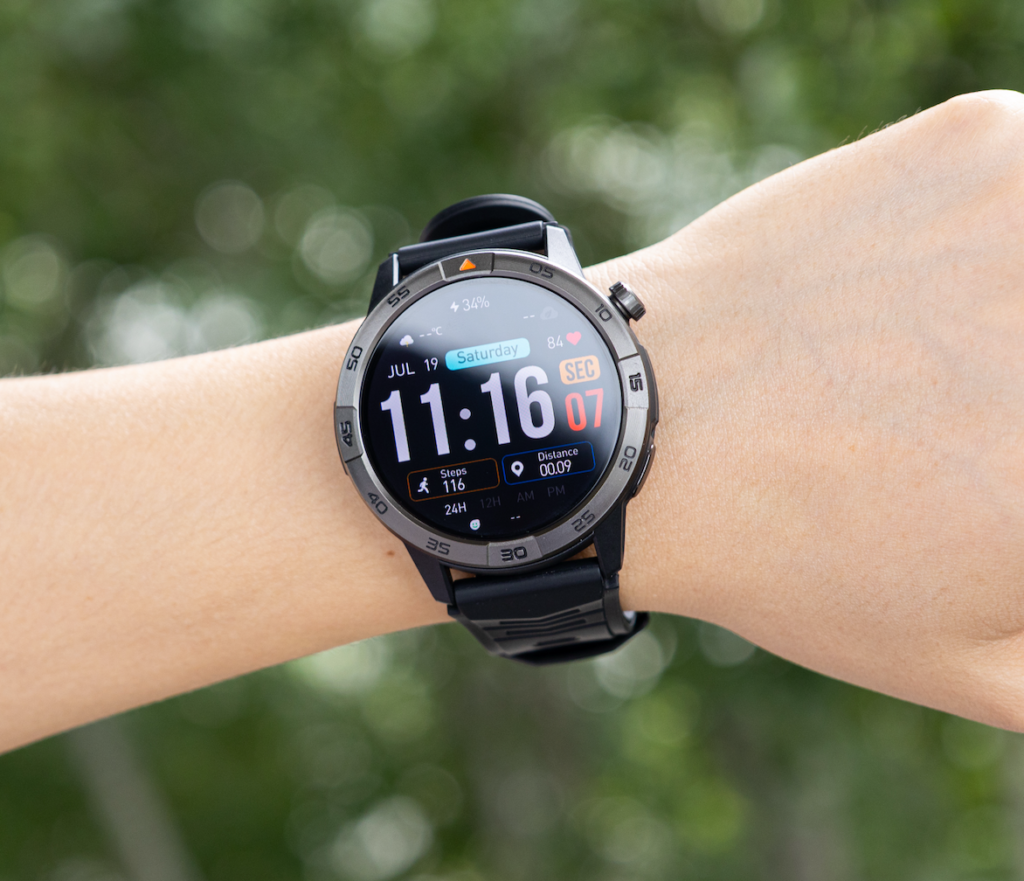
For warehouse workers, this smartwatch is most relevant as a wrist-alert and short-call tool when the paired phone stays nearby. Its value is in helping workers notice calls, check caller ID, and manage quick responses during safe moments.
It is not positioned as industrial equipment, employer-approved communication gear, or a replacement for workplace radios. It is better understood as a personal call-awareness device for allowed situations.
If your workplace allows smartwatches and your phone can stay close enough for Bluetooth calling, the watch may help reduce missed calls during long, active shifts.
Final Workplace-Fit Advice
Start with your warehouse rules, not the feature list. If your employer restricts wearable devices or your phone must stay far away, Bluetooth calling may not help during work. If your phone is usually nearby but hard to reach, wrist alerts and quick call controls may be useful.
Before buying, compare the watch against your actual shift conditions: noise, gloves, phone storage, privacy, and safety limits. You can check the smartwatch call features to see whether its Bluetooth calling setup fits your warehouse routine.
Frequently Asked Questions
Are smartwatches allowed in warehouses?
It depends on the employer. Some U.S. warehouses allow smartwatches, while others restrict personal devices on the floor. Always follow workplace rules before using a smartwatch for calls or notifications during a shift.
Can a smartwatch help if I cannot hear my phone in a noisy warehouse?
Yes, it may help through wrist vibration and caller ID alerts. In loud areas, a smartwatch is usually better for noticing calls than for having full conversations through the speaker.
Will Bluetooth calling work if my phone is stored in a locker?
Usually not reliably. Bluetooth calling normally needs the paired phone nearby. If your phone is far away in a locker, break room, or office area, call alerts and wrist calling may not work well.
Can I answer smartwatch calls while wearing warehouse gloves?
It depends on the glove type and screen responsiveness. Thick work gloves may make tapping answer or reject buttons difficult, so the watch may be more useful for call alerts than active call handling.
Is it safe to answer calls on a smartwatch while operating warehouse equipment?
No. Do not use a smartwatch while operating forklifts, pallet jacks, conveyors, ladders, cutting tools, or any safety-sensitive equipment. Handle calls only during breaks, safe pauses, or approved areas.
Is a smartwatch worth it for warehouse workers on long shifts?
It can be worth it if your phone stays nearby, your workplace allows wearables, and you mainly need call alerts, caller ID, and quick call awareness during long shifts. It is less useful if your phone must stay far away or your job does not allow device use.