
Can the task finish before the package leaves your hands?
A Raleigh meal-delivery route captain is standing still inside an apartment-building lobby with a sealed insulated carrier balanced across both palms. The order needs to stay level. A watch alert appears: “Handoff moved to the lobby desk. Reply ‘Received.’”
Empty-hand demonstrations say little about choosing a smartwatch for delivery workers who need hands-free access. The claim matters only when the real delivery already occupies both hands and the worker cannot invent a spare one for tapping, swiping, or reaching for a phone.
The Package-in-Hand Completion Test keeps the carrier secure from alert arrival through response confirmation. One short task either closes without weakening the grip, changing the carrying angle, or shifting attention for too long—or it does not. The package stays in place while the watch proves what “hands-free” actually means.
Lock the Raleigh Delivery Into Its Real Carrying Position
Start with the delivery item, not the watch. The central load is a sealed, two-hand insulated meal carrier holding several upright orders. It should resemble the size, balance, handle position, and weight the route captain actually manages.
An empty box creates false freedom. A light prop may allow the wearer to rotate the wrist, support the load with one hand, or press a button without disturbing anything. Those movements can disappear when the carrier is full.
Record the grip before the alert arrives
Note which palm supports more weight, how level the carrier must remain, where the handles contact the fingers, and whether a sleeve or cuff partly covers the watch. The grip becomes the fixed condition for the rest of the article.
The worker should not change that condition merely to make the watch easier to use.
Ban artificial support
The test does not allow the carrier to rest on a counter, railing, floor, vehicle, knee, wall, or door ledge. It also does not allow the order to be pinned against the body or transferred to another person.
Those workarounds answer a different question: can the watch be used after the delivery has been supported somewhere else? Article 217 asks if one wrist action can close while the item remains securely held.
Readers comparing the full category can place this grip test beside broader delivery-job needs. The present decision remains limited to one hands-occupied moment.
Place One Alert Above the Two-Hand Occupancy Map
The reserved task is deliberately small:
Handoff moved to the lobby desk. Reply “Received.”
The route captain needs to identify the source, understand the changed handoff point, send the short acknowledgment, and confirm that the action ended. The message is non-urgent and suitable for handling only while stationary.
Define completion before testing the watch
The action closes only when all five conditions are met:
- The sender is recognizable.
- The lobby-desk instruction is fully readable.
- “Received” is sent through a supported response path.
- No phone touch or second device is required.
- The carrier remains level and securely held throughout.
A vibration does not count. A truncated preview does not count. A recorded reply that never sends does not count.
Keep the task narrow
Do not expand this alert into a customer conversation, refund request, route change, substitution discussion, complaint, or multi-sentence reply. Those tasks demand more context and should wait until the order can be placed securely.
The watch is not being tested as a replacement for the delivery application or phone. It is being tested for one short, supported communication action.
Verify the technology path
Response support may depend on the paired phone, Bluetooth or another connection, notification permissions, microphone access, the delivery application, preset replies, voice input, and the watch operating system.
No universal capability should be assumed. If the exact watch can display the alert but cannot send the acknowledgment, record awareness rather than completion.
Expose the Hidden Hand-Release Intrusion
The first pressure on the grip is physical input. Many “hands-free” demonstrations still begin with a tap, button press, crown turn, or swipe. That input may be trivial when the other hand is empty and impossible when both hands support a delivery.
Trace every required control
List the actions between alert arrival and sent confirmation. A hidden hand-release intrusion appears when the worker must:
- Tap the notification
- Press a side button
- Turn a crown
- Swipe to a reply screen
- Select a small preset response
- Correct an accidental input
- Touch the phone to finish
One required tap is enough to change the result when the carrier genuinely needs both hands.
Do not disguise the failure with a load transfer
Shifting the entire carrier into one hand may seem acceptable for a second, yet it changes the test. Watch for tilted containers, handle strain, pressure against the wrist, reduced control, or the need to brace the load against the body.
If the watch becomes usable only after the carrier is moved into an unrealistic position, the action contains a free-hand dependency.
Voice input must start and finish without another hand
A watch does not pass merely because voice reply exists somewhere in its software. The worker must be able to initiate the response, speak the acknowledgment, verify that it was understood, and confirm that it was sent without tapping through extra screens.
When that path is unavailable, state the finding narrowly:
The message was readable, but acknowledgment required a second hand.
That evidence is more useful than a broad claim that the watch is unsuitable for all delivery work.
Measure Wrist-Angle Debt Without Loosening the Carrier
The next intrusion can appear before any control is touched. A message may be fully available on the screen yet difficult to view from the wrist position created by the carrier.
Wrist-angle debt is the extra tilt, roll, lift, or grip change required only to expose the display.
Keep the carrier level
Observe whether the wearer must roll the wrist inward, lift one side of the load, bend the elbow sharply, pull the wrist from under a handle, or raise the package toward eye level.
Each adjustment may make the display easier to see while making the delivery harder to hold.
Separate a natural glance from a grip distortion
A natural glance leaves both hands in their original positions, keeps the carrier stable, and does not force the wearer to look around a handle or cuff. A grip distortion changes one of those conditions merely to reveal the watch.
Screen size, brightness claims, resolution, and display shape matter only through this real viewing path. Product photography cannot show whether the lobby-desk instruction remains readable from the carrying angle.

Warehouse environment testing asks how one action survives gloves, noise, lighting, and policy across several zones. Readers can compare environmental wearability with hands-occupied usability. Here, one grip is the fixed constraint.
Set an Attention Ceiling for the Package-in-Hand Moment
Both hands can remain steady while the watch still demands too much attention. The worker is stationary, but the lobby may contain doors, residents, other couriers, pets, carts, or staff directing deliveries.
The alert should resolve in one brief reading. Long visual inspection creates an attention problem even when the package never moves.
Reject messages that need interpretation on the wrist
The action exceeds the attention ceiling when the worker must scroll, reopen a truncated preview, compare several order numbers, search for a customer name, or decode an ambiguous instruction.
The reserved update is intentionally simple: the handoff moved to the lobby desk, and the expected response is “Received.”
Keep every interaction stationary
The test does not occur while driving, cycling, crossing a parking lot, climbing stairs, opening a door, moving through a crowded entrance, or handling exposed hot food.
If the route captain must resume movement, the watch task waits. The delivery and surrounding environment take priority.
For situations where a worker is still moving, use the separate framework to defer the wrist task until movement has ended. The Package-in-Hand Completion Test begins only after the worker has stopped in an appropriate place.
Notice the difference between secure grip and available attention
A worker may hold the carrier perfectly while staring at the screen for too long. That does not qualify as a clean pass. Hands-occupied access must preserve both the load and enough awareness to manage the immediate delivery setting.
Find the Closure Trap Behind a Useful Preview
The watch may pass the glance and still fail the task. This is the closure trap: the alert provides enough information to look useful, but completion moves elsewhere.
Awareness is not the same as closure
The following results remain incomplete:
- The watch shows “New customer message” without the text.
- The full instruction appears, but no reply method is available.
- A voice response is recorded but not sent.
- A preset reply requires several manual inputs.
- The connection drops before confirmation.
- The phone is needed to verify the current order.
Each outcome may still help the worker understand that something changed. None completes the reserved action.
Count the first device handoff
The action fails the completion test when it moves to the phone, a vehicle-mounted screen, another application, or a manual note that requires later correction.
The watch may provide awareness, but the comparison unit requires the full communication action to close while the delivery remains held.
Do not use a call as a shortcut
Starting a call introduces conversation length, audio conditions, customer questions, and the risk that the exchange continues after the worker begins moving again.
Delivery calling belongs to a different intent. Readers evaluating that function can keep delivery calling outside the package-in-hand decision.
Allow intentional deferral
When the message requires more than one short acknowledgment, the right result may be to read it later or preserve awareness until the carrier can be placed securely.
Deferral is not a failed hands-free feature when the original task was too complex for the moment. It is a package-first decision.
Label the Action Without Averaging the Intrusions
Do not turn the test into a feature score. The first condition that prevents complete, grip-preserved use determines the label.
Grip-Preserved Completion
The alert is understood and acknowledged while both hands remain in position, the carrier stays level, the phone remains untouched, the worker stays stationary, and the response is visibly sent.
Verdict: The selected action works during the package-in-hand moment.
Grip-Preserved Awareness
The handoff change can be read without disturbing the carrier, but the acknowledgment must wait or move to another device.
Verdict: The watch supports awareness, not complete hands-free access.
Hidden Free-Hand Dependency
The worker must tap, press, rotate a control, transfer the load, or create another hand to finish.
Verdict: The hands-free claim does not apply to this action.
Package-First Rejection
Reading or responding would weaken the grip, tilt the carrier, demand excessive attention, or occur during movement.
Verdict: Protect the delivery and defer the watch task.
Do not average a successful glance with a failed response
The comparison unit is the complete action. A clear notification cannot cancel a required second hand, and a successful reply cannot cancel an unstable carrying position.
Approve the Grip Before Comparing Watch Features
Convert the test into one purchase condition:
The watch must let the Raleigh route captain understand and close one short handoff update while the sealed carrier remains securely held with both hands.
Keep every candidate under the same conditions
Use the same carrier, load, grip, alert, phone, application, stationary lobby position, and completion requirement. Changing the package or response method between watches weakens the comparison.
Inspect exact-model dependencies
Verify notification detail, truncation, voice-reply availability, preset-response support, microphone access, application compatibility, phone connection requirements, and visible sent confirmation.
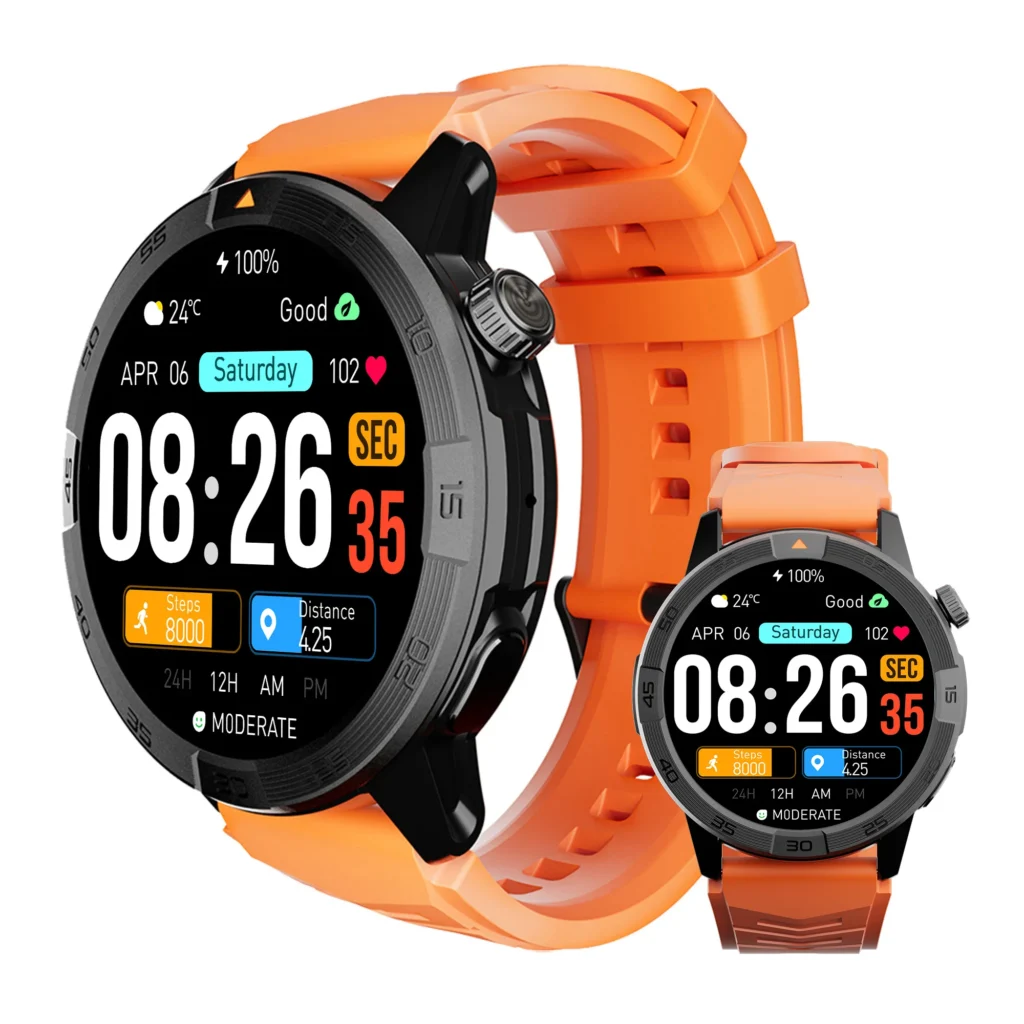
A promotional video showing a freely operated screen does not answer the article’s primary question. The buyer needs evidence from the real carrying position.
Reject a feature that depends on a hand the job does not provide
The watch does not need to perform every delivery task. It needs to complete this one narrow action without changing the grip. A feature that works only after the order is set down may still be useful later, but it is not hands-free during the package-in-hand moment.
Questions About Hands-Occupied Smartwatch Use for Deliveries
Does reading an alert count as hands-free completion?
No. Reading counts as awareness. The reserved action also requires the short acknowledgment to be sent without releasing or repositioning the carrier.
Can the worker hold the package with one hand and use the watch with the other?
Not in this test. The representative insulated carrier requires both hands. Moving it to one side would hide the free-hand dependency.
Does voice reply guarantee a pass?
No. Voice support may depend on the exact watch, phone, application, permissions, connection, and message type. The response must start and send without an extra tap.
What if one tap is required before speaking?
That creates a hand-release intrusion when both hands must remain on the delivery.
Should the worker test while walking toward the customer?
No. The test takes place only at an appropriate stationary point. Grip, path awareness, and safe movement take priority.
What if the message is too complex for a short reply?
Defer the full task until the carrier can be placed securely. Complex communication does not belong inside this hands-occupied test.
How is this different from a delivery-calling article?
Calling content evaluates spoken communication and audio conditions. The Package-in-Hand Completion Test evaluates one short written update while both hands remain occupied.
The Package Never Left the Raleigh Route Captain’s Hands
The watch did not pass because it displayed a message on an empty wrist. It passed only if the route captain kept the carrier level, understood the lobby-desk change, sent “Received” through a supported path, avoided the phone, stayed stationary, and finished without creating a spare hand.
That is the practical meaning of hands-free access in this article. It is not the absence of a phone in the worker’s hand. It is the absence of any unrealistic hand release during the complete task.
Load the real carrier, hold it in the position the delivery requires, and send one short test alert to the wrist. Before approving a watch, trace the response across your grip-integrity map and reject any path that creates a free hand the real delivery does not provide.