
In one fitting-room mirror, the smartwatch looks balanced beside the Tacoma administrator’s rolled work-shirt sleeve. In the next, the same case pushes against a closed dress cuff and creates a visible ridge beneath the jacket. Nothing about the watch changed; the clothing context changed the verdict. That is why men’s smartwatches should not be selected through large cases, dark colors, or rugged styling alone. The useful question is how far one watch’s fit extends across the buyer’s wrist, workwear, movement, and formal clothing.
Men’s smartwatches should be chosen by fit range, not by masculine styling alone. Measure wrist circumference, compare case width and thickness, confirm band range and control access, then test sleeve clearance, work appearance, exercise stability, and formal-wear fit. The right watch remains comfortable and appropriate across the buyer’s required contexts.
The word “men’s” is a marketing label. It does not measure the buyer’s wrist, close the cuff, position the buckle, or determine whether the controls remain accessible.
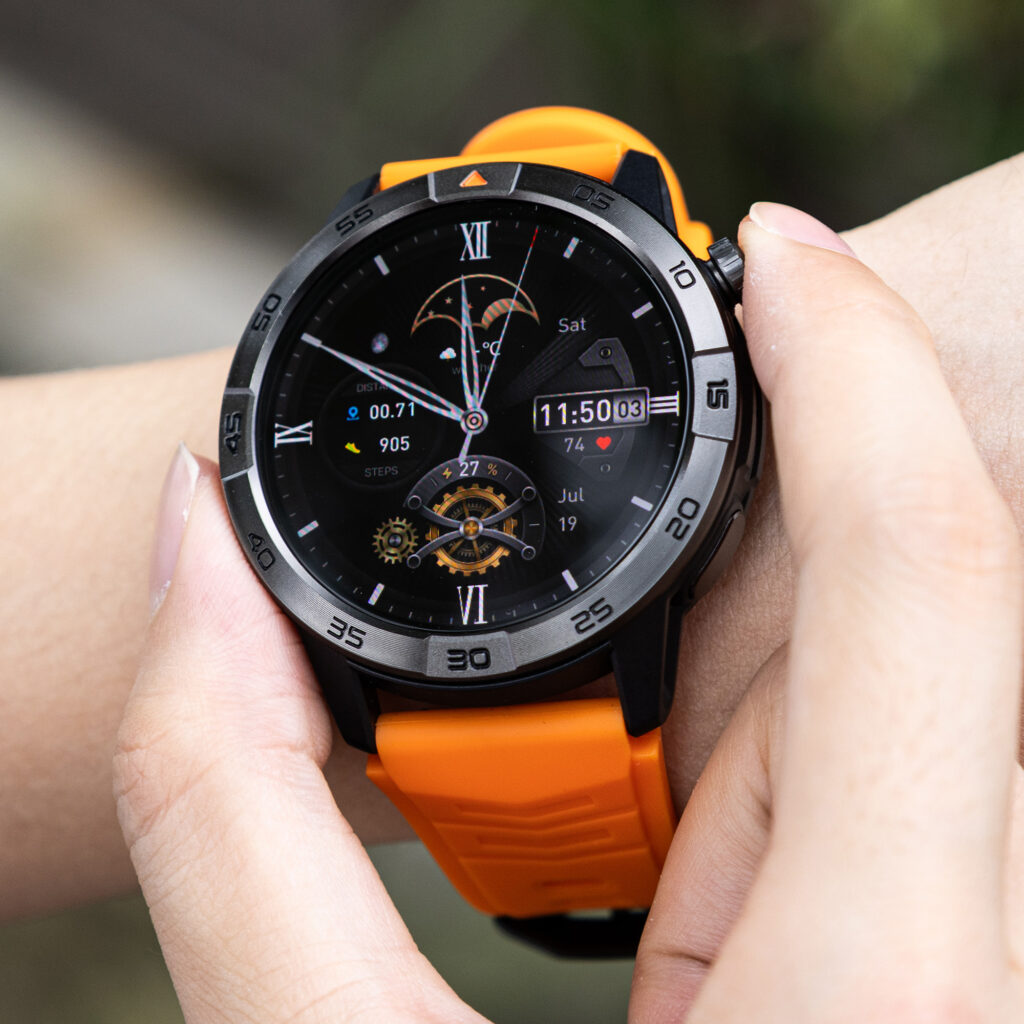
Pin the Required Tacoma Wear Contexts to the Board
The Men’s Wrist Fit Range Board begins with contexts, not dimensions. A watch only needs to pass the situations that matter to its intended owner, so the Tacoma construction-project administrator brings four clothing references into one controlled fitting session:
- a rolled-sleeve project-office shirt;
- an outer work layer;
- an exercise sleeve;
- a dress shirt with a formal jacket.
These garments represent required wear settings rather than four unrelated stories. The administrator coordinates project records, meetings, schedules, and contractor communication, but the fitting takes place away from active equipment and site movement. No controls are tested while walking, carrying plans, using stairs, directing traffic, or standing near machinery.
Physical fit also does not decide what the watch should do. The buyer should define the wrist device’s required role separately from its physical fit. Article 329 answers whether the form belongs across the required contexts, not whether calls, reminders, fitness tools, or another function should control the purchase.
Reject the One-Size Men’s Default Before Measuring
A common shortcut assumes that men’s smartwatches should have the largest available case, the widest strap, a dark finish, and a visibly rugged profile. Those choices may suit some buyers, but none of them proves proportion, comfort, sleeve clearance, or workplace appropriateness.
One-Size Men’s Default appears when gendered styling replaces measurement. The correction is straightforward: use the buyer’s actual wrist and the exact candidate’s documented dimensions.
The fitting file should identify:
- the wearer’s measured wrist circumference;
- the usable surface across the top of the wrist;
- the complete case footprint rather than screen size alone;
- case thickness viewed from the side;
- the included band’s stated adjustment range;
- the clasp, buckle, or closure position;
- the exact control layout.
Product images cannot establish those facts reliably. Perspective, enlarged renders, hidden lugs, and shortened straps can distort apparent size. Before measuring fit, the buyer should verify that the exact case and band evidence belongs to this model and seller.
A men’s category should widen the available choices. It should not impose one case size, color, or visual identity on every man.
Trace the Case Shadow Across the Wrist
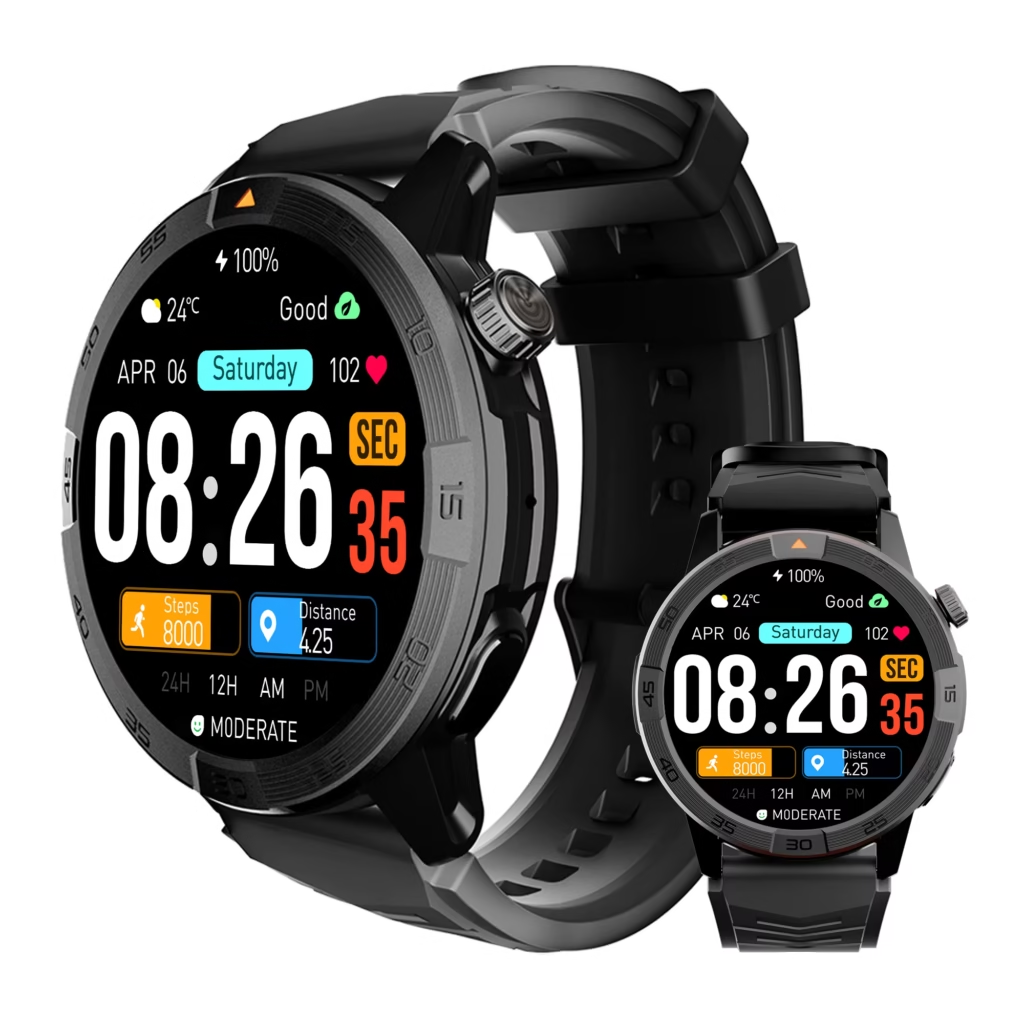
The first rail on the Fit Range Board covers the physical envelope: wrist circumference, case width, case shape, and visible proportion.
The administrator places the candidate in its natural wearing position rather than pushing it toward the hand or tightening it to force stability. From above, the case should remain supported by the wrist surface without obvious overhang. The wrist should bend naturally, and the display should be readable without repeated repositioning.
A Clear Fit mark means the watch stays centered, the case remains inside the usable wrist area, and ordinary wrist movement does not cause pinching.
A Friction mark appears when the case approaches the wrist edges, shifts during simple movement, or presses through one part of the bend.
A Hard Stop applies when persistent overhang, pinching, instability, or blocked movement makes the candidate unsuitable.
Wrist Proportion Mismatch does not mean the watch is universally too large or too small. It means the case footprint does not work on this buyer’s wrist. Round and rectangular men’s smartwatches must be judged by their complete footprint because two products with similar display measurements can occupy the wrist differently.
The unnamed Tacoma candidate remains inside the visible wrist boundaries and stays centered. It earns a Clear Fit mark on the width row.
Separate Case Thickness From Case Width
The first mirror shows the front profile. The second reveals the side profile.
A watch can look proportionate from above and still create clothing problems because case thickness controls how far it rises from the wrist. That vertical obstruction deserves a separate row on the board.
The administrator moves the actual shirt sleeve over the stationary wrist. The fitting does not force fabric around the case or loosen a cuff simply to create a pass.
Clear Fit means the sleeve travels across the watch without catching, bunching, or pressing the controls. Friction appears when fabric hesitates, rises, or needs adjustment. A Hard Stop occurs when the cuff cannot close normally or persistent pressure makes the garment and watch incompatible.
This distinction prevents a case-width pass from hiding a thickness failure. Many men’s smartwatches may appear balanced in a product image while occupying very different vertical space under a sleeve.
The Tacoma candidate passes the rolled-sleeve context but begins to narrow its range when the work layer and dress cuff are introduced.
Run the Watch Through the Tacoma Sleeve-Clearance Tunnel
The Sleeve-Clearance Tunnel uses the buyer’s real garments to test case height, band hardware, excess strap, and control obstruction together.
With the rolled work shirt, the watch remains exposed and unobstructed. The outer layer creates manageable contact as the sleeve moves across the case. Under the dress cuff, however, the fabric catches near the upper edge and presses the side control when the arm bends.
The board records several observations:
- whether fabric catches the bezel or case edge;
- whether a cuff presses a crown or button;
- whether excess band material catches inside the sleeve;
- whether the display becomes exposed when discretion is preferred;
- whether the garment changes how the watch sits on the wrist.
Workwear Clash occurs when a watch that appears appropriate in isolation interferes with the clothing required for the job. Rugged styling does not prove compatibility with workwear, just as a polished finish does not prove compatibility with formal clothing.
The administrator gives the candidate a Clear Fit with rolled sleeves, Friction beneath the outer work layer, and a possible Hard Stop at the formal cuff. The board does not average those results. Each required context keeps its own mark.
Draw the Control-Reach Arc While Stationary
A smartwatch may sit comfortably while its crown, button, or touchscreen remains awkward to operate. Control access therefore receives a separate test.
The administrator checks the required controls in the fitting room with the wrist stationary. One pass uses a bare hand and exposed watch. Another keeps the normal sleeve in place. The outer layer is moved aside safely before any interaction.
Clear Fit means the necessary controls can be reached without forcing the wrist, twisting the case, or repeatedly loosening the band. Friction appears when fabric blocks one control or the wearer must use an unnatural wrist angle. A Hard Stop applies when a required control cannot be used comfortably and safely.
Large buttons do not automatically solve this issue. Their position may cause accidental presses beneath a cuff, while a prominent crown can contact the back of the hand during wrist flexion. Glove operation must not be inferred from rugged appearance or button size.
The Tacoma candidate passes normal stationary control access. That result says nothing about whether its functions are accurate or useful; it only confirms that the controls remain reachable in the tested position.
Place Work Appearance on Its Own Board Row
Physical clearance and visual suitability are different decisions. A watch can move freely under clothing yet still feel out of place in a required meeting or presentation.
The Work-Appearance Tile compares the candidate with the administrator’s project-office shirt, contractor-meeting clothing, and client-facing jacket. The questions remain practical:
- Does the case dominate the outfit more than intended?
- Does the band conflict with a required presentation?
- Does a bright accent create unwanted attention?
- Would an alternate band expand the fit range?
- Is that alternate band documented as compatible and currently obtainable?
Color does not determine masculinity. Dark, bright, metallic, minimal, round, and rectangular designs can all work for men when they suit the wearer and the context.
The Tacoma candidate looks appropriate with the rolled work shirt and project-office clothing. Its more pronounced profile becomes harder to integrate with the formal jacket. That is a context boundary, not a judgment that the design is insufficiently masculine.
Buyers who specifically need one watch to cross exercise and workplace settings under a limited budget can examine how one watch crosses gym and workplace requirements under a fixed budget.
Mark the Exercise Slip Boundary Without Testing Sensors
Exercise comfort should not be confused with fitness accuracy. This board row examines only physical stability during controlled movement.
The administrator performs simple stationary arm movements appropriate to a fitting. The watch should remain centered without requiring excessive tightness. The buckle should not press into the wrist, the case should not slide repeatedly, and excess strap should remain controlled.
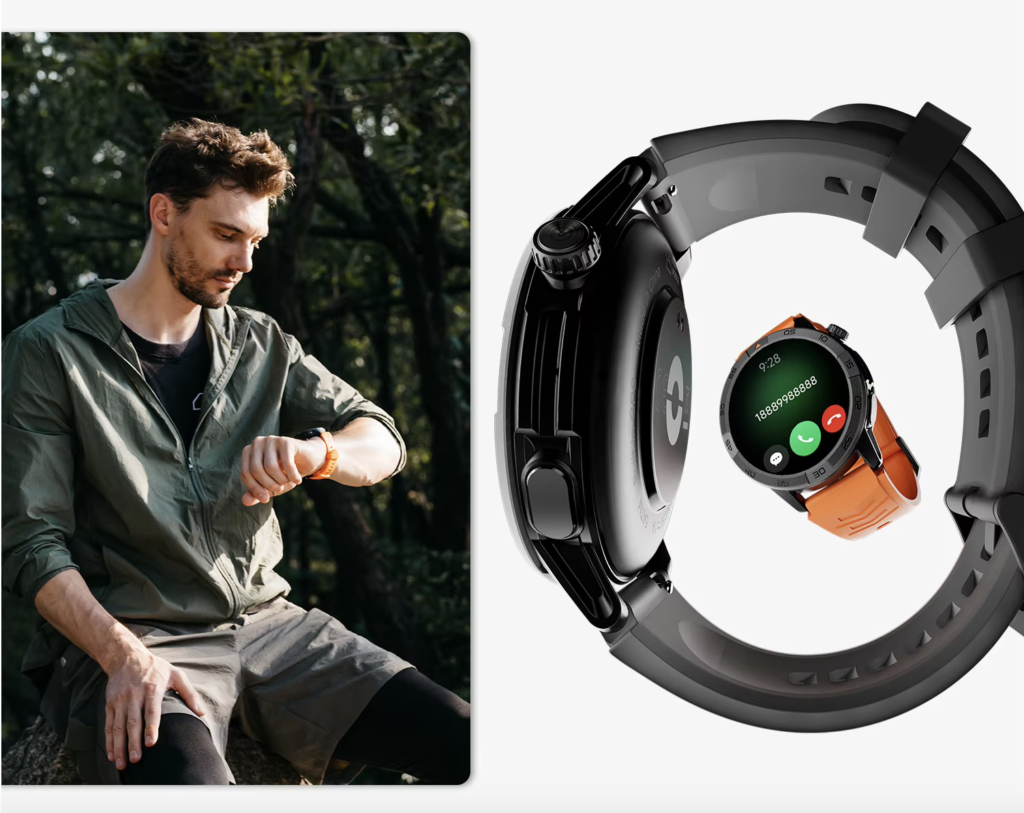
A Clear Fit mark requires secure placement, normal comfort, and no obvious case shift. Friction appears when one adjustment position feels loose while the next feels unnecessarily tight. A Hard Stop occurs when the watch cannot remain stable without pinching or when controls activate unintentionally.
Activity Fit Gap appears when a watch fits while the arm is still but loses stability during movement. This failure can affect large and small men’s smartwatches; case size alone does not predict exercise comfort.
After a normal band adjustment, the Tacoma candidate remains stable during the controlled test. Exercise stays inside its usable range.
This observation does not prove heart-rate accuracy, calorie accuracy, workout recognition, durability, or water suitability. Secure contact is physical evidence only.
Close the Formal-Cuff Gate Without Forcing It
The final fitting station repeats the opening comparison. The administrator closes the actual dress cuff and lets the jacket sleeve fall naturally.
A formal-wear pass requires more than an attractive face. The cuff must close without strain, fabric should move freely, the case should remain discreet when the setting calls for it, and the watch should not create a persistent ridge beneath the sleeve.
The Tacoma candidate does not clear that gate. The cuff closes only with pressure, catches during wrist movement, and makes the case profile conspicuous beneath the jacket.
That Hard Stop does not make the watch a poor product. It means the candidate cannot earn Broad Men’s Fit for this buyer because formal clothing is a required context.
A man who never wears fitted cuffs might place the range stop elsewhere. The verdict belongs to the tested wrist and wardrobe, not to every man.
Read the Fit Range Horizontally, Not Row by Row
The Fit Range Board now places three markers:
- Start Stop: the first context where the candidate fits completely;
- Friction Marker: the point where adjustment or accommodation begins;
- End Stop: the first required context with a hard failure.
For the Tacoma administrator, the range reads:
Clear Fit: exposed work-shirt wear, project-office clothing, stationary control access, and controlled exercise after normal band adjustment.
Friction: the outer work layer and close-fitting long sleeves.
Hard Stop: the formal dress cuff and jacket combination.
This range is more informative than a simple yes-or-no sizing answer. It explains where the same watch works and where it stops working.
A hard stop may be acceptable when the failed context is optional. When it affects an essential setting, the buyer can decide whether the fit failure should eliminate the candidate.
Questions That Move the Range Stops
Do men need a men-specific smartwatch?
No. Buyers need a watch whose case, band, controls, functions, and appearance fit their bodies and required contexts. A men’s label does not guarantee any of those conditions.
What case size is best for a man?
There is no universal size. Compare the exact case footprint, shape, thickness, lug position, and wrist surface rather than choosing by gender alone.
Should a man with a small wrist avoid large smartwatches?
He should avoid a candidate that overhangs, shifts, pinches, restricts movement, or fails required clothing. The observed result matters more than the marketing category.
Can a smaller smartwatch still look appropriate on a man?
Yes. Proportion, design, clothing, and personal preference matter more than meeting an arbitrary minimum diameter.
Is case thickness more important than width?
Neither controls every decision. Width affects proportion across the wrist, while thickness often determines sleeve and cuff clearance.
Which band works best for work and exercise?
The useful band closes securely, remains comfortable, fits the required appearance, and is documented as compatible with the exact watch. No material or closure type works best for every buyer.
Can changing the band expand the fit range?
Potentially. A different band may improve closure, appearance, or movement, but its dimensions, compatibility, availability, and attachment method must be verified.
Should men match smartwatch color to work clothing?
Only when appearance matters in a required setting. Color is a wardrobe choice, not a rule about masculinity.
Can a rugged smartwatch work with formal clothing?
Possibly. The actual case thickness, band, cuff clearance, and visual proportion must pass the buyer’s formal-wear gate.
Does good wrist contact prove accurate health tracking?
No. Comfortable and stable contact does not prove sensor accuracy, medical usefulness, or reliable wellness measurements.
Should the device type be chosen before the fit test?
Usually, yes. Buyers who remain uncertain can separate the smartwatch from other wrist-device types before comparing fit.
Set One of Four Men’s Fit-Range Verdicts
Broad Men’s Fit applies when the tested buyer passes physical proportion, band closure, control access, work appearance, movement comfort, and every required clothing context. It does not mean the watch fits all men.
Context-Specific Fit applies when the candidate works across several required settings but encounters friction or a hard stop elsewhere. The buyer can define exactly when the watch belongs.
Size-Limited Fit applies when the case footprint, thickness, or band range confines the watch to a narrow physical range that clothing changes cannot solve.
Poor Men’s Wear Match applies when proportion, closure, comfort, controls, and required contexts fail broadly despite the men’s marketing label.
The Tacoma construction-project administrator assigns Context-Specific Fit. The watch clears exposed workwear, project-office clothing, controls, and controlled exercise. It encounters outer-layer friction and fails the required formal cuff.
After purchase, actual comfort, band behavior, setup, and delivered configuration still need confirmation. The buyer can later confirm the delivered watch’s real wear readiness during the first week.
The Best Men’s Fit Is a Range, Not a Label
The first fitting-room reflection was accurate, but incomplete. The rolled sleeve showed where the watch worked. The closed dress cuff revealed where its range ended.
The same principle should guide comparisons of men’s smartwatches. Do not begin with the largest case, darkest finish, widest strap, or most rugged design. Start with the buyer’s measured wrist, the candidate’s exact physical evidence, and the clothing and movement contexts that actually matter.
A useful verdict identifies the whole span: where the watch remains proportionate, where friction begins, and where a required setting creates a hard stop. For the Tacoma administrator, the candidate is not a broad men’s fit. It is a clearly defined context-specific option, and that narrower answer is more useful than forcing a universal label.
Place the documented case dimensions, band details, controls, and product images onto your own Fit Range Board, then compare this smartwatch candidate with your wrist and wear contexts before deciding whether its usable range covers the settings you require.