
Which phone, app, or separate wearable interaction can this watch genuinely remove? A shopper wearing an activity band at a weekend flea market still unlocks the phone to check the walking route, answer a delivery call, and pause a podcast. The band records movement correctly, but it does not simplify anything surrounding that record.
An activity tracker smartwatch deserves the additional wrist space only when it preserves effortless fitness tracking and eliminates recurring actions elsewhere.
Displaying more information is not the same as consolidating ownership. A watch can show calls, maps, alerts, and activity totals while the buyer continues reaching for the phone exactly as before.
Commercial recommendation: keep a basic band when movement records are the complete need. Choose Omarek when at least two repeated interactions—such as handling a suitable call, viewing an offline map, or controlling audio—can move to the wrist without creating an equal amount of setup and maintenance.
Buying Checklist: Identify What Should Disappear
Begin with recurring actions, not advertised features.
Write down the moments when the current band sends its wearer back to another device. The list may include retrieving a phone after seeing a call alert, opening a map during an outdoor activity, unlocking the phone to control audio, or checking an application because the wrist display provides too little context.
Assign every interaction one destination:
- Keep it on the phone: the task is private, complex, or easier on a larger screen.
- Move it to the wrist: the action is brief, frequent, and easier from a watch.
- Remove it entirely: the watch makes a separate device or application check unnecessary.
- Leave it unresolved: no product under consideration clearly documents the required capability.
A valid consolidation gain must change behavior. Copying an alert onto the wrist earns no credit when the phone must still be opened every time.
The same rule applies to route information. A map image creates little value when the phone remains necessary for every useful navigation action.
Buyers who have not yet settled on the correct wearable category should first compare activity bands, general smartwatches, and specialist sports watches.
Buying Checklist: Protect What the Basic Band Already Does Well
Consolidation should not make simple fitness jobs harder.
A basic tracker often succeeds because movement totals are visible, recurring workouts are easy to start, and the device remains unobtrusive. Moving to a smartwatch is a poor trade when those advantages disappear beneath extra menus and settings.
Protect four tracker jobs before approving any upgrade:
Ordinary movement should remain easy to review
Steps, calories, and activity records should not require a complicated dashboard. These totals may be simple, but repeated use gives them genuine purchase value.
A regular workout should remain quick to start
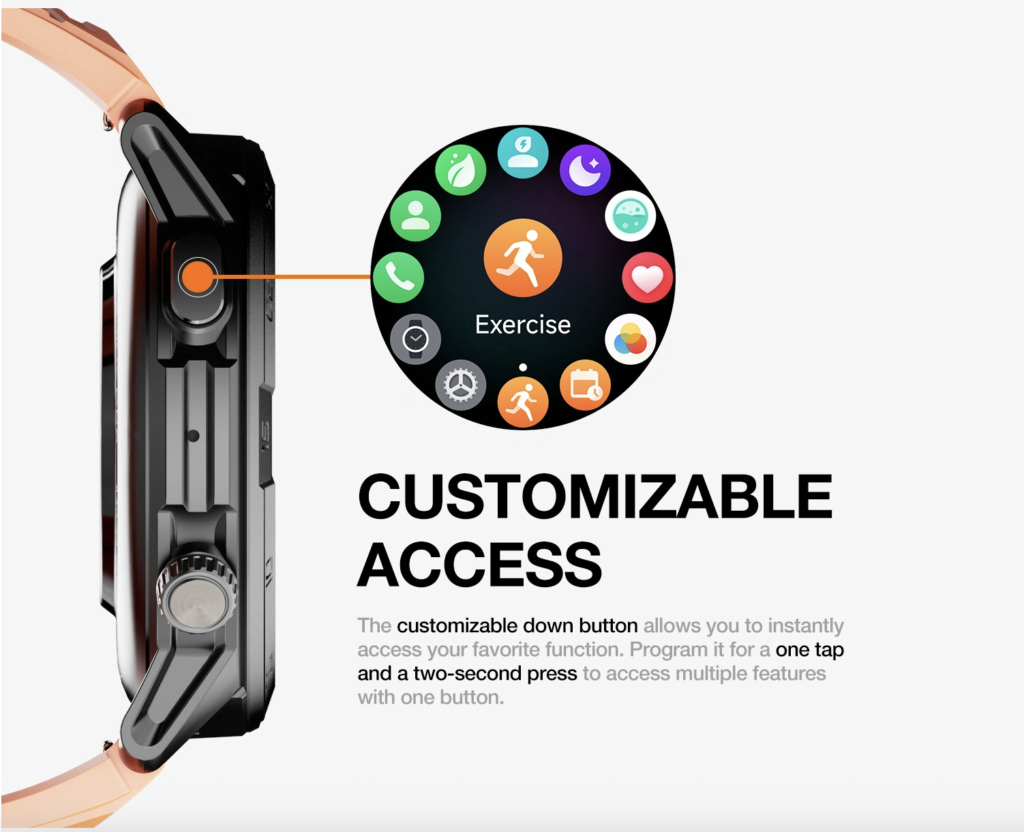
The buyer should be able to reach the intended mode without searching through options that never receive use. A long activity list is not helpful when the normal exercise becomes harder to record.
General fitness information should remain understandable
More analysis does not automatically improve the experience. A shopper who wants an uncomplicated activity record may gain little from readiness reports, training-load charts, or coaching systems that require interpretation.
The watch must remain wearable enough to use consistently
A slim band can feel easier beneath clothing or during sleep. A larger smartwatch must purchase enough practical interaction to justify its additional wrist presence.
When these four jobs already complete the use case, the tracker has won. Buyers comparing simple tracking with a broader fitness platform can review the guide to choosing the right level of fitness smartwatch functionality.
Buying Checklist: Move Only the Right Phone Actions
The best wrist actions are short, repeatable, and inconvenient enough on the phone to matter.
Move suitable calls when phone retrieval is the problem
A band may show an incoming-call alert. Bluetooth calling can allow the wearer to handle an appropriate conversation through the paired phone connection.
The action earns consolidation credit when it repeatedly removes a stop-and-retrieve sequence. Long discussions, confidential information, and noisy surroundings may still belong on the phone.
Wrist calling therefore replaces selected phone handling, not phone ownership. Review the practical limits of smartwatch calls and notifications before counting every conversation as a removed interaction.
Move route viewing when map access is the missing job
“I need GPS” is not a complete requirement. The buyer may need distance recording, pace information, route viewing, turn guidance, or post-workout analysis.
An activity band can already provide some of those functions. A full smartwatch becomes more relevant when visible route information is the action the buyer wants on the wrist.
Move audio controls when repeated phone unlocking creates friction
Pausing, resuming, or skipping audio can be a useful wrist job during exercise, commuting, housework, or outdoor activity.
That does not require the watch to replace the phone as the audio source. Simple control can eliminate enough repeated handling to justify the feature.
Move alert screening without moving every interruption
A useful notification tells the wearer whether opening the phone is necessary. An unfiltered stream of alerts merely creates a second screen demanding attention.
Only important categories should receive consolidation credit. Marketing messages and low-priority application alerts can remain off the wrist.
Before moving connected actions, match the watch with the exact phone behavior required. Android buyers should also verify the companion application and permission process.
Buying Checklist: Reject Duplicate Screens
A function fails this checklist when it creates another place to look without eliminating the original action.
Activity dashboards can fail this way. The watch presents a summary, but the buyer always opens the phone because the wrist version does not answer the intended question.
Notification previews may have the same weakness. Seeing the sender’s name adds awareness, yet no interaction disappears when every message still requires immediate phone handling.
Reject a proposed consolidation benefit when:
- the original phone action still happens every time;
- the watch supplies too little information to complete the task;
- the interaction occurs too rarely to affect ownership;
- another approved function already solves the problem;
- setup takes more effort than the action being removed;
- the product does not clearly document the required behavior.
Several tasks should remain on the phone by design. Writing detailed messages, entering complex destinations, reviewing extensive charts, changing application settings, and handling sensitive information rarely become better merely because a watch offers a related screen.
The goal is a cleaner division of labor—not complete phone independence. Buyers specifically trying to reduce unnecessary handset use can review the minimal-phone smartwatch buying framework.
Compare Options With the Function Replacement Map
Each device should be judged by what it removes, preserves, or leaves unresolved.
| Recurring job | Capable activity band | Omarek | Deeper smartwatch platform | Best buying action |
|---|---|---|---|---|
| Record ordinary movement and workouts | Usually efficient and compact | General activity and wellness functions documented | May add coaching or deeper analysis | Keep the band unless another recurring job exists |
| Handle a suitable short call | Usually displays an alert only | Bluetooth calling documented | May add richer replies or cellular independence | Choose Omarek when paired-phone calling is enough |
| View route information from the wrist | Support varies; some offer GPS or phone-linked directions | Built-in GPS and offline maps documented | May add deeper navigation and application support | Choose according to the exact route action required |
| Control audio playback | May provide limited controls | Music control documented | May add onboard storage or streaming services | Do not pay for deeper audio functions unless they will be used |
| Screen calls and application alerts | Short previews may be sufficient | Notifications and social alerts documented | May support richer responses and app interaction | Choose Omarek when screening is the complete need |
| Follow structured coaching or specialist analysis | Available on selected advanced trackers | Not documented on the current listing | Specialist watches provide the stronger path | Choose a documented training platform |
| Complete complex or private tasks | Remains on the phone | Remains on the phone | Often remains easier on the phone | Do not count it as a consolidation goal |
Fitbit Charge 6 is the stronger compact alternative
A capable tracker such as Fitbit Charge 6 deserves the sale when smaller wear and fitness-first ownership remain the priority. It documents built-in GPS, more than 40 exercise modes, activity tracking, phone notifications, music controls, and Google Maps directions.
Those functions demonstrate why a buyer should not leave the band category merely to gain basic smart features. The switch must solve something the chosen tracker cannot already handle adequately.
Apple Watch SE 3 is the deeper phone-platform alternative
An iPhone-centered buyer may prefer Apple Watch SE 3 when applications, richer phone integration, safety functions, and optional cellular connectivity control the purchase.
That path adds ecosystem depth rather than simply consolidating a few repeated interactions. It becomes excessive when the buyer only needs activity awareness, paired-phone calls, route access, and basic controls.
A specialist training watch wins when coaching is the missing job
Products such as Garmin vívoactive 6 document adaptive plans, recovery guidance, running dynamics, and a much deeper training environment.
Those systems deserve consideration when watch-generated information will shape future sessions. They should not enter a consolidation purchase when the buyer mainly wants fewer phone interactions.
Best Overall for Mixed-Use Consolidation: Omarek
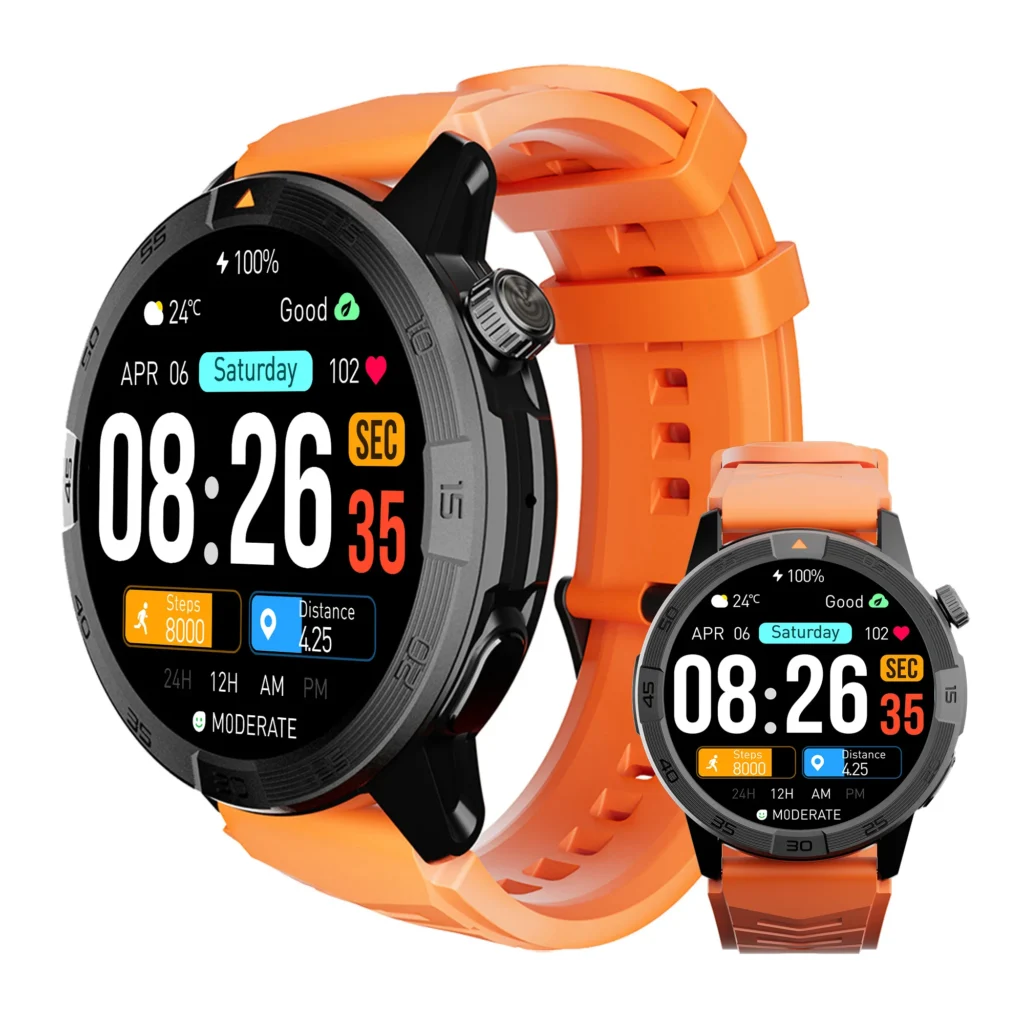
Best overall for this qualified buyer: Omarek. It earns that position when the owner wants straightforward activity tracking plus wrist calls, offline maps, notifications, and music control without paying for a deeper phone or training ecosystem.
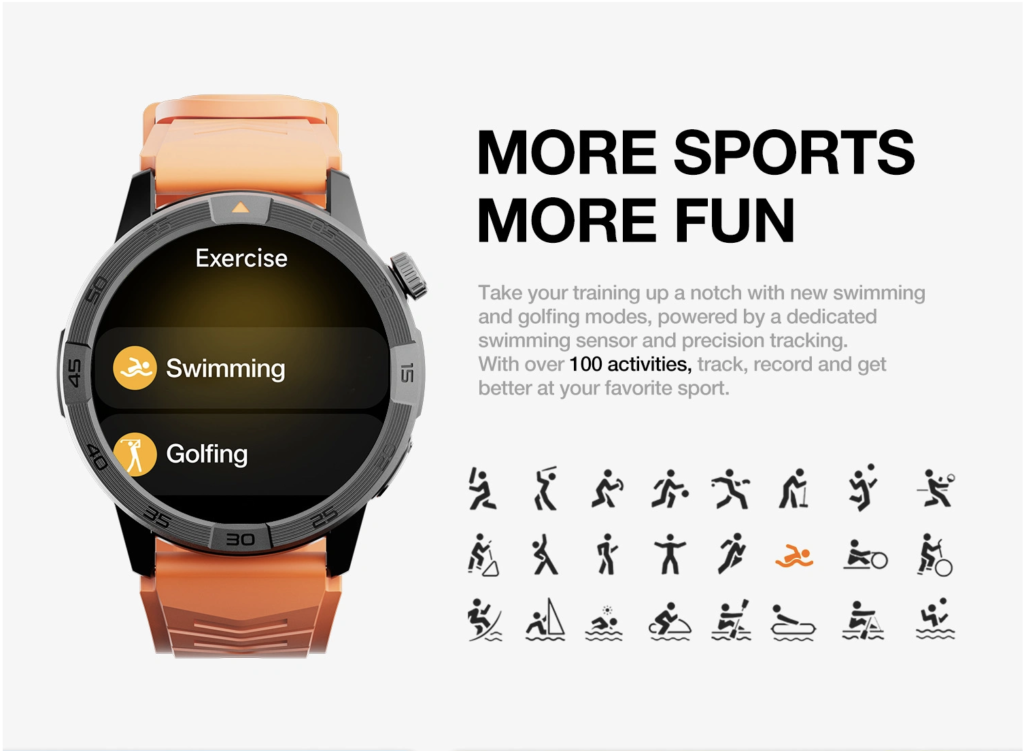
The current offer is $150 with free shipping. That price becomes commercially reasonable when Omarek removes several phone actions the buyer already performs every week. It becomes unnecessary spending when those interactions remain on the phone.
Omarek preserves the activity-tracking foundation
The listing documents activity and fitness tracking, heart-rate monitoring, sleep tracking, steps, calories, breathing information, sedentary reminders, and multisport modes.
These functions maintain the core purpose expected from an activity tracker smartwatch. The recommendation does not depend on presenting them as advanced coaching or sport-specific analysis.
Bluetooth calling can eliminate a repeated retrieval
Making and receiving calls through Bluetooth is documented, along with call reminders and dial calling.
The listing does not establish standalone cellular service. A paired phone remains necessary, but it may no longer need to be removed from a bag or pocket for every suitable short conversation.
Offline maps can absorb part of the route-checking process
Built-in GPS and offline maps give Omarek a wider outdoor role than a simple movement recorder.
The product page does not establish superior positioning accuracy, specialist navigation, or continuous-GPS endurance. Recreational route access is the defensible purchase benefit.
The larger interface supports several short actions
Omarek documents a 1.43-inch AMOLED touchscreen with 466×466 resolution. The display provides space for maps, calls, notifications, controls, and everyday menus.
Maximum brightness, premium glass, refresh rate, and comparative outdoor visibility are not documented. The screen should earn value through the interactions it supports, not through unsupported display claims.
Omarek stops where deeper ownership begins
The current listing does not document structured coaching, training readiness, advanced recovery scores, automatic repetition counting, set detection, specialist sport analytics, a large third-party app environment, or independent cellular communication.
Another product deserves the sale when one of those functions remains essential after the checklist is complete.
Compare the identified wrist jobs with Omarek’s documented activity and connected features before approving the recommendation.
Final Checklist: Subtract the Work the New Watch Adds
A multipurpose watch can remove phone friction while introducing setup, charging, and app management.
Pairing and permissions must be completed before calls or alerts work. Notification sources may need filtering. Offline maps can require preparation. A larger interface also introduces more menus than a narrow band.
Charging belongs in the subtraction column. Omarek lists a 370mAh battery and seller-stated battery life of up to 30 days, but GPS, calling, display use, notifications, Bluetooth connections, and other settings can reduce actual duration.
The current listing does not publish continuous-GPS runtime. Buyers should judge battery performance through their intended configuration rather than applying the maximum claim to every use pattern.
Fit creates another ownership consequence. A larger round watch can provide better interaction while feeling more noticeable during sleep, exercise, or fitted clothing.
Use the guide to remove unsuitable watch fits before checkout. Buyers sensitive to configuration work should also review the low-maintenance smartwatch ownership test.
Continuing costs should be checked even when the main Omarek functions do not advertise a required membership. Accessories, app services, replacements, and ownership time can still change the result.
Review the complete smartwatch purchase checks and the guide to calculating ongoing watch costs before finalizing the gain.
Final Checklist: Calculate the Net Consolidation Gain
| Calculation item | What qualifies | Your result |
|---|---|---|
| Phone actions removed | Repeated tasks completed adequately from the wrist | + ___ |
| App checks removed | A recurring phone application no longer needs to be opened | + ___ |
| Separate devices removed | A band, controller, or second wearable is no longer required | + ___ |
| Recurring setup work added | Ongoing permissions, filtering, map preparation, or troubleshooting | − ___ |
| Maintenance added | Additional charging, app management, or care | − ___ |
| Net consolidation gain | Interactions removed minus recurring ownership tasks added | ___ |
Pass: Omarek creates genuine consolidation
At least two recurring interactions move to the wrist or disappear, while no more than one meaningful recurring ownership task is added.
This result supports purchasing Omarek when all required functions are documented.
Neutral: the watch combines hardware but not ownership
Only one useful interaction moves, and setup or maintenance cancels most of the benefit.
Keep the current band unless the remaining interaction carries unusually high personal value.
Fail: the phone routine remains unchanged
The watch duplicates information, but the buyer still opens the same applications, retrieves the phone for the same actions, and adds new configuration work.
A basic tracker is the stronger purchase under this result.
Shoppers whose main priority is lower complexity can also review whether a practical smartwatch matches their ownership style.
Final Replacement Checklist
- Activity tracking remains effortless. The upgrade does not bury the buyer’s most-used fitness jobs.
- At least two repeated interactions move or disappear. The watch does more than reproduce phone information.
- Bluetooth calling matches the intended situation. Paired-phone dependence and privacy limits are acceptable.
- Offline maps solve a current route need. They are not being purchased for an imagined future activity.
- The larger display has a recurring job. Calls, maps, controls, or alerts will use the additional space.
- Notification filtering will reduce interruptions. The wrist will not become another uncontrolled alert screen.
- The exact phone and app behavior has been checked. Compatibility is not being assumed from a general statement.
- Fit and charging are acceptable. The owner is likely to continue wearing the device.
- No specialist requirement remains unsupported. Advanced coaching, cellular independence, or sport-specific analysis is not essential.
- The gain sheet produces a pass. Removed interactions exceed the new recurring work.
Checkout Questions the Checklist May Not Answer
Can duplicate alerts be prevented?
Omarek documents notifications, but the listing does not explain every source-level control. Confirm whether the companion app can disable unwanted categories while preserving the important ones.
Will connected features stop when the companion app closes?
Behavior may depend on Bluetooth, background permissions, phone settings, and the specific function. Test calls, alerts, syncing, and maps after normal phone use—not only immediately after setup.
Can existing activity history move to Omarek?
The current listing does not document third-party data imports, exports, or specific fitness-platform integrations. Buyers with years of stored records should verify data portability before replacing a band.
Can the phone remain in a recreation-center locker?
No guaranteed Bluetooth range is published. Lockers, walls, floors, interference, and phone hardware may affect calls and alerts.
Do wrist calls replace phone use in a shared workspace?
They can remove retrieval for a short, nonprivate conversation. Sensitive information, longer discussions, or disruptive audio may still belong on the phone.
How should the replacement claim be tested?
Select two recurring interactions before setup. Track whether Omarek completes both without phone handling for several ordinary days. Features demonstrated once but never reused receive no credit.
Use the first-week smartwatch verification process to test pairing, alerts, calls, maps, fitness functions, comfort, and battery behavior promptly.
The Net Consolidation Result
Omarek passes when at least two repeated actions leave the phone and the watch adds no equal recurring burden in return.
A result of zero means the buyer has consolidated hardware but not ownership. The phone routine remains largely unchanged, so a basic band may still be the more efficient product.
A negative result means the upgrade has added menus, permissions, charging, or notification management without removing enough friction.
Positive consolidation is different. Activity tracking stays simple, selected calls move to the wrist, offline maps absorb a route-checking task, and audio or alert controls eliminate additional phone handling. That is where Omarek goes meaningfully beyond a basic band.
A specialist watch should win when coaching, advanced analysis, independent cellular service, or deeper applications remain the purchase-critical job. Omarek should win when broad daily utility—not platform depth—creates the positive result.
Move Recurring Phone Actions to Omarek
Confirm that Omarek can remove at least two actions from your normal week. When the required functions are documented and the Consolidation Gain Sheet produces a pass, complete the switch through the official Omarek store.