
“Recommended by whom—and for what kind of runner?” That question belongs ahead of every list of recommended running watches.
A watch praised by a high-mileage racer may be excessive for someone who runs two relaxed loops around a familiar park each week. Meanwhile, a basic all-purpose smartwatch may be too limited for a buyer whose calendar includes structured intervals, pace targets, progressive long runs, and detailed post-workout review.
The recommendation should follow the runner—not the loudest review, longest specification sheet, or highest price.
Before considering Omarek or any specialist running platform, answer five qualification questions:
- How often do I run?
- Where do I usually run?
- Am I recording completed activity or actively training?
- How much phone independence matters?
- How much analysis will I genuinely use?
Those answers separate a recreational all-purpose runner from a training-focused runner, a phone-dependent recorder, or a specialist user. Defining the watch’s job through a clear smartwatch role contract can prevent an ordinary running purchase from expanding into an expensive ecosystem of unused tools.
Recommendation Qualification Transcript: Omarek-Eligible Answers
Running frequency: A few recreational runs during a typical week.
Usual location: Familiar streets, paved paths, uncomplicated park loops, or similarly straightforward routes.
Primary purpose: Recording activity and maintaining broad awareness rather than following advanced coaching.
Phone independence: Useful wrist functionality matters, but full standalone cellular service is not required.
Analysis: Time, distance, activity information, route context, and general heart-rate awareness are enough.
Omarek becomes eligible only after the answers resemble that profile. A runner who needs race execution, specialist navigation, advanced analysis, or independent cellular communication should continue through the qualification process before ordering.
Recreational runners who recognize their habits in all five answers can review Omarek’s documented all-purpose running and connected features. Keep it under consideration only while the remaining questions confirm that specialist training capabilities would add little practical value.
Top Buyer Questions Before Accepting a Running-Watch Recommendation
Does the Recommender Run Like Me?
A useful recommendation begins with similarity. Compare the recommender’s running frequency, workout structure, preferred terrain, live-data dependence, phone habits, and interest in analysis with your own.
Advice from a runner completing six planned sessions per week may emphasize training load, workout execution, recovery tools, sensor pairing, and performance trends. Those capabilities can earn their price for that schedule. They may create unnecessary cost and setup for someone who mainly wants to record two familiar outings and stay connected during the rest of the day.
Use a smartwatch listing decoder to separate documented capabilities from broad promotional phrases. A recommendation cannot transfer cleanly when the recommender and buyer are solving different problems.
How Often Do I Run?
An occasional runner should be cautious about paying primarily for features that require repeated use. Advanced workout tools offer limited commercial value when the watch records only a handful of casual outings each month.
Two or three routine runs per week can support an all-purpose smartwatch purchase. The watch earns more of its price when it also handles activity visibility, calls, notifications, alarms, or navigation-related tasks outside running.
Frequent structured runners have a different requirement. When each session contributes to a larger training block, detailed workout tools and long-term analysis can influence enough decisions to justify a specialist platform.
Where Do I Usually Run?
Familiar pavement, neighborhood streets, local greenways, treadmills, uncomplicated park paths, and complex trails do not create the same navigation requirement.
A recreational runner repeating known routes may need basic activity recording and general route context. Detailed turn management, verified GPS endurance, specialist map handling, or advanced navigation may remain unused.
Unfamiliar trails and long navigation-dependent routes require a stricter product check. Built-in GPS on a general smartwatch does not automatically establish specialist positioning accuracy, detailed route tools, or sufficient continuous-GPS runtime.
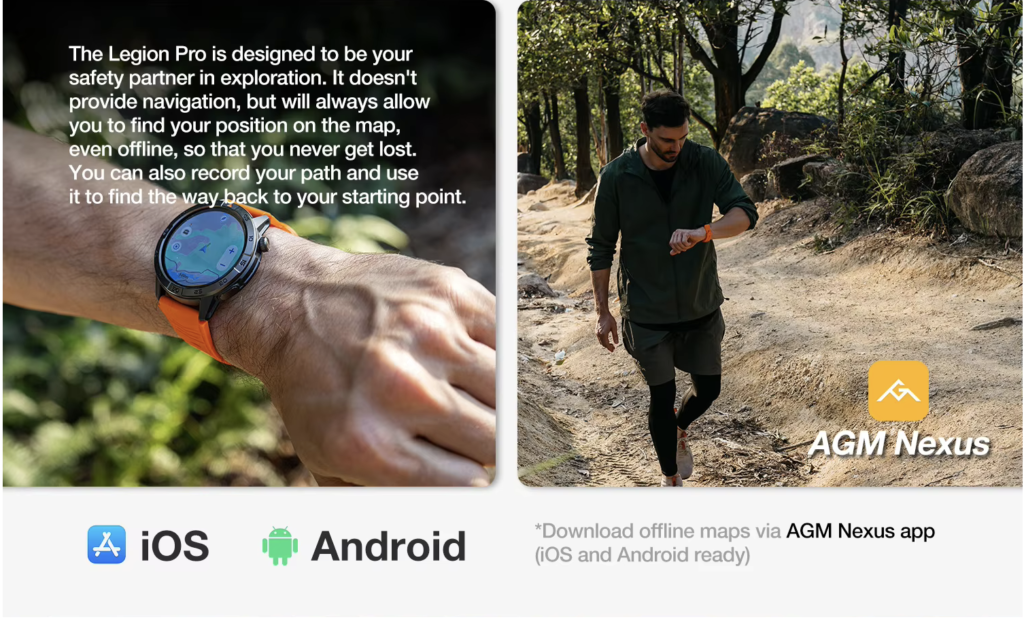
Match navigation spending to the consequences of missing or misreading a turn. The broader smartwatch category guide can help separate general connected watches from purpose-built sports systems.
Am I Recording or Training?
This answer controls more of the purchase than the word “runner.”
Recording means preserving basic information about a completed run: when it happened, approximately where it occurred, how long it lasted, and how it fits into ordinary weekly activity.
Training means the watch actively influences progression. The buyer may need structured sessions, pace targets, interval prompts, recovery guidance, detailed performance history, or coaching tools that shape the next workout.
A recording-focused buyer should not pay primarily for an advanced platform without naming the features that will be used. A training-focused runner should not accept a general multisport label as proof of specialist running support.
How Much Phone Independence Matters?
Phone independence has several meanings. One runner may only want the watch to record an outdoor activity while the phone stays at home. Another expects calls, data service, streaming, live communication, and safety functions without carrying a phone.
Bluetooth calling generally depends on a nearby connected phone. It is not the same as standalone cellular service. Buyers requiring full independence should verify U.S. carrier support, plan eligibility, regional availability, activation costs, and which functions operate without the phone.
Someone comfortable carrying a phone during some runs may place more value on connected notifications and calling than on a separate cellular plan. Review the expected relationship between both devices with this phone-first smartwatch buying check.
How Much Analysis Will I Use?
A simple completed-run summary may be enough for a recreational buyer. Time, general distance context, activity records, and broad heart-rate information can satisfy the actual job.
Training-focused runners may study several live fields, pace trends, workout history, recovery data, running dynamics, load information, or coaching recommendations. Those tools can support a structured routine, but only when the buyer opens and applies them.
Unused analysis creates a double cost. The runner pays for the platform and accepts its setup, syncing, account, notification, and data-management burden without receiving a better running decision.
Expert Answers That Turn Running Habits Into a Product Category
Transcript Question One: How Often Do You Run?
Buyer Answer: “Usually two or three times during a normal week.”
What the answer requires: Reliable access to basic activity recording and a wearable that remains useful between runs.
What it does not justify by itself: Paying mainly for competition planning, advanced coaching, or detailed recovery analysis.
Recommended category: An all-purpose consumer smartwatch may be adequate.
Purchase warning: Frequency alone does not qualify Omarek when the few weekly runs still involve precision-dependent training.
Buyer Answer: “My week includes several planned sessions within a formal progression.”
Expert answer: Consider a specialist running platform because its workout and analysis tools can affect enough repeated decisions to earn the higher ownership burden.
Transcript Question Two: Where Do You Run?
Buyer Answer: “I repeat known streets, paved paths, and straightforward local routes.”
What the answer requires: General activity recording and route-related functionality appropriate to uncomplicated use.
What it does not justify: Assuming that detailed expedition navigation, specialist mapping, or extended GPS endurance is essential.
Recommended category: An all-purpose smartwatch remains eligible.
Buyer Answer: “I depend on the watch during unfamiliar or technically complicated routes.”
Expert answer: Select a navigation-focused sports category only after verifying route handling, map detail, continuous-GPS runtime, and relevant accuracy evidence.
Transcript Question Three: Are You Recording or Training?
Buyer Answer: “I mainly want a record of the run and a broad view of my activity.”
What the answer requires: Basic run records, accessible wrist information, and a manageable companion app.
What it does not justify: Funding advanced training features that will remain unopened.
Recommended category: The recreational all-purpose profile.
Buyer Answer: “I need the watch to guide intervals, progression, or race preparation.”
Expert answer: Choose a running-focused system with documented structured-workout and analysis capabilities. General multisport support is not an equivalent substitute.
Transcript Question Four: How Independent Must the Watch Be?
Buyer Answer: “I accept a connected-phone relationship, but useful functions should remain available on my wrist.”
What the answer requires: Verified phone compatibility, Bluetooth setup, and a clear understanding of which functions depend on proximity to the phone.
What it does not justify: Assuming Bluetooth calling provides independent cellular communication.
Recommended category: A connected multipurpose smartwatch may fit.
Buyer Answer: “I require calls, mobile data, streaming, and communication without my phone.”
Expert answer: Select a cellular-capable watch with verified U.S. carrier eligibility and include the service plan in the ownership cost.
Transcript Question Five: What Will You Review Afterward?
Buyer Answer: “Time, distance, activity, route context, and broad heart-rate information are enough.”
What the answer requires: Accessible basic records rather than a deep performance platform.
What it does not justify: Paying for running dynamics, advanced readiness tools, or coaching that will not influence future sessions.
Recommended category: Omarek becomes eligible when the other four answers also match.
Buyer Answer: “I will study advanced workout trends and use them to change my plan.”
Expert answer: A specialist running watch is the better category because analysis is part of the intended purchase rather than an unused extra.
Recommendation Qualification Transcript Result
Qualified profile: A recreational runner completing a few familiar runs each week, primarily recording instead of following advanced training, accepting moderate phone dependence, and using basic analysis.
Omarek enters the recommendation only after all five answers match. One conflicting answer may change the product category.
Product Recommendation for the Recreational All-Purpose Runner
Where Omarek Fits
Omarek fits the recreational runner who wants one watch for ordinary running, general activity awareness, and connected daily tasks.
The suitable buyer follows familiar or uncomplicated routes, records more often than actively trains, accepts a phone-connected smartwatch relationship, and does not expect advanced coaching or specialist running analysis.
This is a qualified recommendation—not a declaration that Omarek is the best running watch for every buyer.
Which Documented Features Answer the Buyer’s Questions?
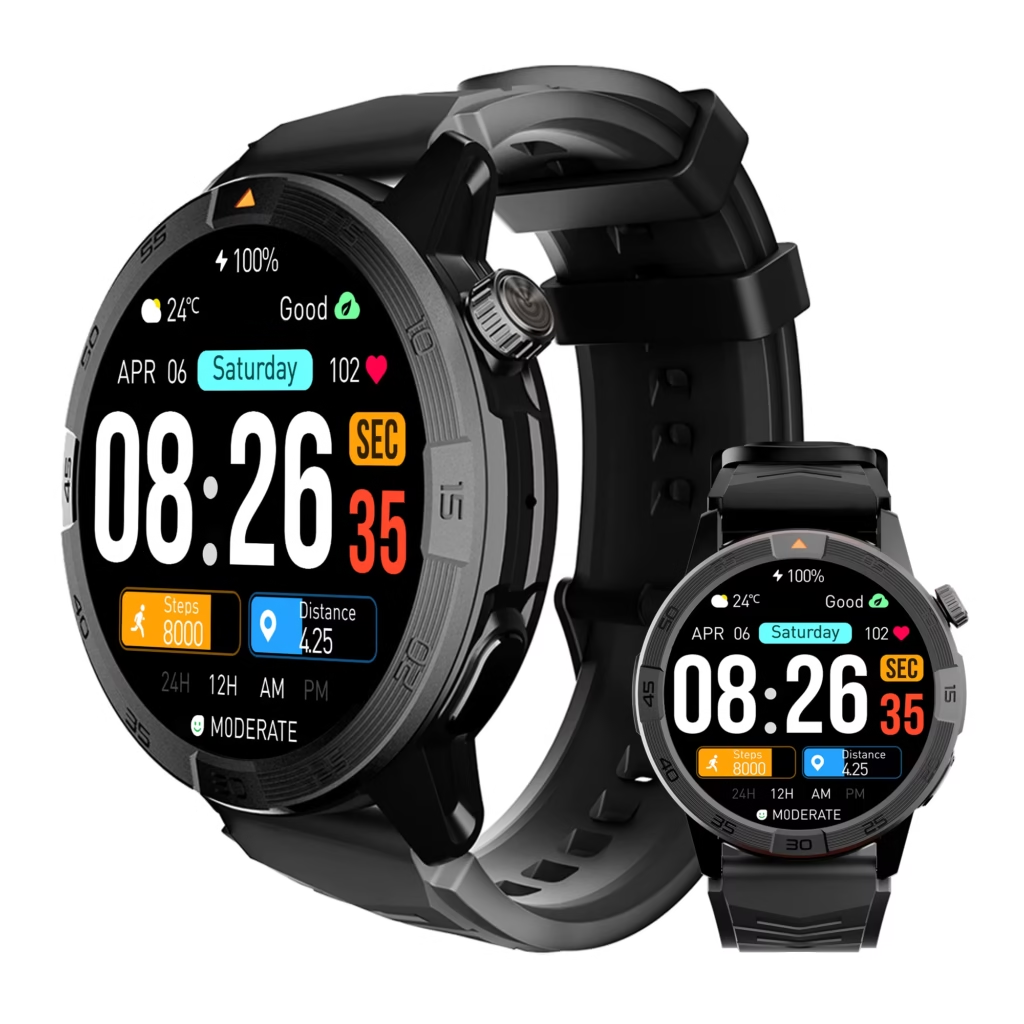
“Can it record ordinary outdoor activity?” Omarek’s listing documents activity and fitness tracking, multisport modes, built-in GPS, and offline maps. These features support general recreational use without establishing specialist route accuracy or a guaranteed continuous-GPS runtime.

“Can I see general effort context?” Heart-rate monitoring, steps, and calories are documented. Treat them as consumer wellness and activity information rather than medical or precision-training data.
“Will it remain useful after the run?” Bluetooth calling, notifications, social alerts, music control, alarms, calendar access, compass information, and altitude information broaden the ownership case.
“Does it work with my phone?” The seller lists iOS and Android compatibility. Buyers should still verify the exact phone, required app, operating-system support, permissions, and expected functions before ordering. Android users can follow this companion-app verification process.
“Can it replace my phone?” No standalone cellular capability is documented. Bluetooth calling should not be treated as independent carrier service. The calling and notification requirement check can help buyers confirm the expected setup.
“Will it coach my running?” Advanced running workouts, recovery tools, readiness scoring, running dynamics, power support, cadence accessories, and structured coaching are not documented on the current listing.
Why Omarek Can Earn the Recreational Budget
Omarek is currently listed at $150. That price makes more commercial sense when running is one of several recurring uses.
A buyer may record a park run, review general activity information, receive a notification later, manage a brief Bluetooth call, control music, and use an alarm or calendar function on another day. The device then earns value across the week rather than depending entirely on one running metric.
A narrow tracker may cost less but provide fewer connected functions. A specialist running watch may offer deeper tools but ask the buyer to pay for an ecosystem that does not match the transcript answers. The better choice is the category whose useful functions survive ordinary ownership.
Runners moving from a smaller activity device can use the tracker-to-smartwatch consolidation review to decide whether the added wrist functions justify the budget.
Which Answers Disqualify Omarek?
Do not select Omarek when structured workouts, detailed pace guidance, advanced recovery information, running dynamics, verified external-sensor compatibility, documented cadence or power support, specialist navigation, independent cellular service, or precision-dependent race execution controls the purchase.
Medical interpretation also sits outside the recommendation. Symptoms, diagnosis, treatment, medication decisions, exercise clearance, or medical reassurance should not be assigned to a general running smartwatch. The consumer, sports, and medical device distinction provides the relevant boundary.
What Must a U.S. Buyer Confirm Before Ordering?
The product page currently shows a $150 price and free shipping. Omarek’s general shipping policy separately says that shipping charges are calculated at checkout, so review the final order total before payment. State and local sales tax may increase the amount charged.
Orders are stated to require 1–3 business days for processing, with estimated U.S. delivery in 3–7 business days. Carrier delays and destination can affect arrival.
The return window lasts 30 days from delivery, but eligibility requires the watch to be unused, in the same condition, and returned with original packaging, accessories, charging cable, manuals, included items, and proof of purchase. Customers generally pay return shipping unless the item is defective or incorrect.
Sale or discounted products are listed as nonrefundable unless damaged or defective. A recreational runner should therefore confirm fit, phone compatibility, app behavior, included components, and visible condition promptly while preserving return eligibility.
The seller states that the 370mAh battery can last up to 30 days. Treat that statement as a maximum, not a promised running schedule. GPS, offline maps, Bluetooth calls, notifications, display activity, and other settings can reduce practical runtime.
No customer reviews currently appear on the product page. Place greater weight on documented specifications, seller policies, app checks, and a careful first-week product inspection. Warranty coverage, support response, and any app or subscription expense should also be confirmed.
Complete the transaction with these U.S. smartwatch checkout safeguards.
The Omarek recommendation becomes commercially sound when every transcript answer remains recreational and all-purpose. check Omarek’s current $150 offer against your five qualification answers, then proceed only when basic run records and everyday connected functions cover the actual job.
Answer-Based Recommendation Files
Recommendation File A: Recreational All-Purpose Runner
Answer pattern: A few runs per week, familiar routes, recording rather than advanced training, moderate phone dependence, and basic analysis.
Recommended category: Omarek or another responsibly positioned all-purpose smartwatch.
Why the recommendation survives: The buyer receives general running records and useful daily functions without paying primarily for specialist tools that the transcript says will remain unused.
Purchase condition: Broad consumer activity information must be sufficient. Specialist precision, coaching, and independent cellular service cannot be hidden requirements.
Recommendation File B: Structured Training Runner
Answer pattern: Frequent planned sessions, pace targets, intervals, progressive workouts, configurable live screens, and deeper post-run analysis.
Recommended category: Specialist running watch.
Why the recommendation survives: Training features repeatedly influence the runner’s decisions and can earn the greater price, setup, app, and account burden.
Purchase condition: Verify that the exact model supports the workouts, fields, analysis, and accessories the runner intends to use.
Recommendation File C: High-Independence Runner
Answer pattern: The phone stays home, while independent calls, mobile data, communication, or streaming remain essential.
Recommended category: A cellular-capable watch with verified U.S. carrier support.
Why the recommendation survives: Phone independence controls the purchase rather than serving as a minor convenience.
Purchase condition: Confirm carrier eligibility, coverage, activation, monthly plan cost, emergency-function limits, and region-specific support.
Recommendation File D: Navigation-Dependent Runner
Answer pattern: Frequent unfamiliar routes, detailed guidance needs, demanding route management, and reliance on the watch to complete the course.
Recommended category: Navigation-focused sports watch.
Why the recommendation survives: Route handling is essential to the activity rather than an occasional convenience.
Purchase condition: Require evidence for mapping depth, route tools, GPS runtime, and positioning performance instead of relying on the phrase “built-in GPS.”
Recommendation Exceptions
The Treadmill-Only Runner
A GPS-centered purchase may provide limited return when almost every run happens indoors. Prioritize the data screen, activity record, comfort, and app experience actually used.
The Occasional Event Runner
Entering one local event does not automatically convert a recreational runner into a specialist-platform buyer. Deeper tools earn their price when preparation becomes structured and repeated.
The Runner Who Never Reviews Data
A large analytics platform is poor value when summaries remain unopened. Choose the watch that supports activity without requiring an unused review routine.
The Runner Who Refuses to Carry a Phone
Bluetooth calling is not standalone cellular service. A full-independence requirement moves the recommendation away from Omarek unless future documentation adds that capability.
The Runner Who Needs Detailed Interval Execution
General multisport tracking does not establish configurable running workouts. A specialist platform is the better category when live structure controls the session.
The Runner Concerned About an Unusual Reading
Product comparison ends when symptoms, medication, treatment, diagnosis, medical clearance, or reassurance becomes the central issue. Consumer wellness information should not be used to resolve a medically significant concern.
Qualified verdict: Omarek survives all five answers for the recreational runner who records familiar runs, uses basic analysis, accepts moderate phone dependence, and values everyday smartwatch functions. A specialist category becomes the better recommendation when structured training, demanding navigation, full independence, or medically significant needs replace that profile.
Complete the five qualification answers and follow the recommendation attached to that exact profile.
Omarek is the purchase only when your normal week contains recreational runs, familiar or uncomplicated routes, recording instead of advanced coaching, moderate phone independence, and basic analysis needs.
Before checkout, verify the current price, final shipping charge, applicable sales tax, phone and app compatibility, documented features, battery wording, processing estimate, return eligibility, warranty information, support process, and any ongoing app cost. Follow Your Five Answers and Choose Omarek for Recreational Running