
Two first-time runners buy different watches before completing their first session.
One pays for the next 30 runs: general activity records, broad route context, basic progress comparisons, and useful smartwatch functions between sessions. The other pays for an imagined racing career filled with structured workouts, advanced pacing, external sensors, recovery analysis, and navigation tools that may never become necessary.
Both watches may be capable. Only one purchase is grounded in evidence the buyer already has.
This running watch buying guide uses a Stage-by-Stage Ownership Comparison.
The proof object is the 30-Run Progress Strip. It does not predict improvement or impose a training calendar. Each segment simply records the ownership question that has become real, the capability required to answer it, and whether the current watch still covers the job.
Before comparing products, write a narrow first-running-watch role contract. Purchase for the sessions already planned rather than a future identity that has not yet created a product requirement.
Buyers seeking general activity tracking, built-in GPS, offline-map context, connected calls or alerts, music control, and ordinary smartwatch usefulness, built-in GPS, offline-map context, connected calls or can inspect Omarek as a watch for the next 30 recreational sessions. A known need for structured training, advanced navigation, precision-dependent pacing, or documented endurance GPS should remain in the comparison.
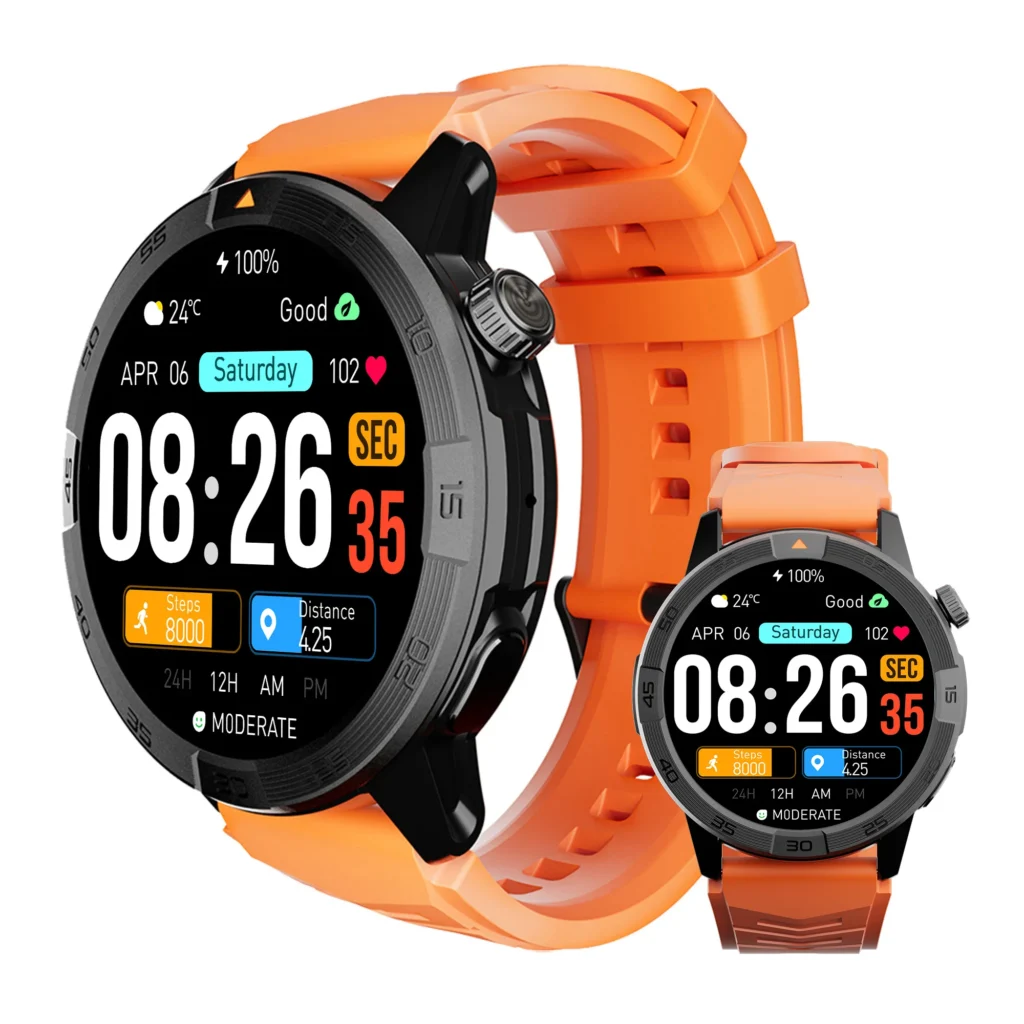
Quick Comparison: What Matters During the First 30 Runs
The first 30 sessions do not require every running technology at once. Each stage creates a different ownership question, and a capability deserves payment only after that question becomes material.
Runs 1–5: Start and Ownership
New ownership question: Does the watch make beginning, recording, and repeating a basic session practical?
Relevant capabilities: General activity access, comfortable everyday ownership, understandable charging, phone compatibility, and basic activity information.
Evidence gathered: Whether the watch is available, connected, and usable when the buyer is ready to move.
Runs 6–12: Route and Duration
New ownership question: Do outdoor location, broad distance, session length, maps, or connected controls now affect the run?
Relevant capabilities: GPS, offline-map context, battery suitability, music control, notifications, and Bluetooth calling.
Evidence gathered: Whether route and duration information changes a real decision rather than merely adding more numbers.
Runs 13–20: Repeatability
New ownership question: Are similar sessions occurring often enough to make comparison useful?
Relevant capabilities: Saved activity records, broad distance, duration, average pace, route history, and dependable everyday wear.
Evidence gathered: Whether a repeated missing feature affects several sessions.
Runs 21–30: Analytical Need
New ownership question: Does deeper analysis now change the next scheduled session?
Relevant capabilities: General history may remain sufficient, or structured workouts, advanced pace tools, sensors, navigation, and training analysis may become material.
Evidence gathered: Whether a specialist upgrade solves a repeated decision problem.
Session 30 Decision
Confirm Omarek: Recreational needs remain covered.
Postpone the upgrade: Advanced tools look interesting but have not changed a real session.
Upgrade: A specific missing capability now affects training, navigation, endurance, sensors, or analysis.
This comparison is narrower than a general category ranking. Buyers still defining their basic watch assignment can use the recreational running-watch qualification guide before entering the 30-session progression.
Winner for the First 30 Recreational Sessions
Omarek is the stronger first-watch choice when the buyer needs general running records, broad GPS or map context, normal connected smartwatch functions, and enough information to learn what the first 30 sessions actually require.
This is not a universal Best Overall verdict. It is a bounded first-purchase recommendation for recreational training.
Why Omarek Can Win the First-Watch Purchase
The current listing documents activity and fitness tracking, steps, calories, built-in GPS, offline maps, general heart-rate monitoring, Bluetooth calling, notifications, music control, alarms, calendar functions, and compatibility with iOS and Android devices.
Those functions can cover the practical questions that commonly appear throughout the four stages. The watch can also retain value outside running, which matters when the buyer is paying $150 for a device worn throughout the week rather than only during workouts.
A first watch does not need to predict an entire running future. It needs to support the next evidence-producing block of sessions without missing a current material requirement.
When Omarek Does Not Win
Do not choose Omarek merely because the buyer is new when the present plan already requires structured workouts, repeated lap or interval controls, precision-dependent pacing, advanced training analysis, imported courses, turn guidance, return-to-start, external sensors, documented long-session GPS runtime, or standalone cellular service.
A known specialist need should be purchased now. Newness does not make an existing requirement disappear.
Buyers with a fixed training objective can compare the product category through the running-watch guide organized by training goal.
Omarek earns the first-watch recommendation only when all four 30-run stages remain recreational. compare Omarek’s documented functions with your 30-Run Progress Strip and continue shopping when a specialist capability is already required.
Detailed Breakdown of the 30-Run Ownership Progression
Runs 1–5: Learn Whether the Watch Supports Starting
The opening segment evaluates ownership friction, not athletic performance. A watch can have impressive analytical tools and still be a poor first purchase when setup, charging, pairing, or ordinary operation makes it unavailable when the buyer plans to run.
Confirm Basic Activity Access
The buyer should verify that a general activity can be started, saved, and located afterward. Product listings rarely establish every screen path, so no exact Omarek button sequence or gesture count should be assumed.
The first sessions need a usable record, not a complex training dashboard. A buyer who only needs broad duration and activity history may discover that specialist controls do not yet change the experience.
Establish the Wearing and Charging Routine
The watch must fit into ordinary ownership well enough to remain available for the next session. That includes deciding when it will be worn, when it will be charged, and how connected features affect daily use.

Omarek’s seller states battery life of up to 30 days, but that ceiling is not a promise covering 30 runs. GPS, offline maps, calls, notifications, Bluetooth, display use, and settings can shorten actual runtime.
Battery-conscious buyers can review practical ways to reduce avoidable smartwatch battery use without treating efficiency settings as proof of GPS endurance.
Verify the Phone and App
Compatibility requires more than seeing “iOS and Android” in a listing. Confirm the exact phone, operating-system version, required companion app, account requirements, Bluetooth behavior, notification permissions, and background access.
Android buyers should complete the companion-app and permissions check before placing connected functions at the center of the purchase.
Alternating Walking and Running
A walk/run session remains a valid recreational ownership test. The buyer does not need advanced workout programming merely because movement alternates.
The commercial question is whether a general activity record covers the intended review. A specialist watch becomes relevant when timed intervals, repeated commands, or structured targets begin controlling the session.
Runs 6–12: Learn the Real Route and Duration Requirement
GPS, maps, distance, and battery enter the comparison only after actual sessions reveal whether they matter.
Outdoor Route Context
Built-in GPS and offline maps may provide broad recreational route value. Those listing terms do not establish superior accuracy, exact distance, specialist route stability, course import, turn-by-turn directions, or return-to-start.
When GPS becomes purchase-controlling, use the GPS route-reliability buying analysis rather than assuming that a convincing map proves the underlying data.
Indoor Tracks
An indoor track can reduce the importance of live GPS while increasing the value of a consistent recording method. Duration, general activity history, manual lap needs, or another distance source may matter more.
The current Omarek listing does not document indoor-track calibration, automatic lap counting, or a specialist track mode. Buyers requiring those functions should not infer them from general multisport wording.
Running With a Partner
A partner may influence the route, pace, duration, and stopping points. The purchase should still be based on what the buyer personally needs from the watch.
Another person’s device cannot validate Omarek’s accuracy. Differences between two recorded values may reflect hardware, software, settings, pauses, route handling, or other conditions.
Changing Shoes or Routes
A changed route or pair of shoes changes the context surrounding the record. It does not prove that the watch caused an improved or worse result.
Record the change before judging the product. Comparing unrelated sessions can manufacture a need for advanced analysis that the evidence does not support.
Runs 13–20: Learn Whether Repeatability Creates a New Need
Repeatability becomes commercially useful when similar sessions occur often enough to expose a recurring ownership problem.
Compare Only What Changes a Decision
The buyer may compare broad distance, duration, route, average pace, frequency, or general activity consistency. These remain recreational uses while they provide context rather than command a workout.
A repeated missing feature matters more than a single moment of curiosity. Use a product-evidence check before attributing every unusual result to the watch.
Handle Soreness and Other Interruptions Correctly
Soreness, illness, schedule changes, travel, or other interruptions can pause the 30-Run Progress Strip. The strip is an ownership comparison, not a deadline or training prescription.
Pain, injury concerns, medical symptoms, or return-to-exercise decisions should not be resolved through consumer-watch data. General wearable information belongs in a wellness context rather than diagnosis, treatment, reassurance, or exercise clearance.
Restart After a Break Without Resetting the Purchase
A returning buyer should resume at the stage matching the current ownership question. There is no automatic need to return to the first segment or assume that previous capacity remains unchanged.
Recheck pairing, charging, comfort, and activity access when the watch has been unused. Then continue gathering evidence from the current routine.
Require Repeated Missing-Feature Evidence
A missing tool becomes an upgrade signal when its absence repeatedly changes sessions. One unexpected turn, one unusual pace display, or one difficult setup moment does not establish a specialist requirement.
This protects the buyer from purchasing an expensive solution to a problem that may not recur.
Runs 21–30: Learn Whether Analysis Changes Training
Analytical tools earn their place only when the buyer has developed a question that affects the next planned session.
When Broad Recreational Analysis Remains Enough
Omarek may remain suitable when the buyer reviews general history, broad route and distance context, average pace as a reference, activity frequency, and general heart-rate information.
Connected functions may still deliver more daily value than deeper sports analysis. The low-maintenance smartwatch ownership guide can help determine whether simplicity remains part of the product value.
When Specialist Analysis Becomes Material
A specialist option becomes more relevant when the buyer repeatedly needs structured intervals, lap controls, pace targets, detailed running dynamics, training load, recovery analysis, external sensors, imported courses, or documented endurance GPS.
Each requirement must be attached to a planned session or decision. Interest in seeing more numbers is not the same as needing them.
Do Not Purchase Future App Promises
Undocumented future software remains outside the buying decision. Evaluate current compatibility, present app functions, available permissions, and published support.
A hoped-for update cannot repair a capability gap that already affects the next 30 sessions.
Evaluate Omarek Across All Four Segments
Runs 1–5: Omarek may cover general activity use, basic ownership, and phone-connected functions.
Runs 6–12: Built-in GPS, offline maps, music control, calls, and alerts may become useful when routes and session duration begin to matter.
Runs 13–20: Saved general records can support broad comparisons while everyday-wear value helps maintain ownership continuity.
Runs 21–30: Omarek remains suitable when recreational information still answers the buyer’s questions. Specialist demand becomes visible when deeper tools begin changing scheduled sessions.
Pros and Cons of Buying Omarek for the First 30 Runs
Omarek Pros
- The current $150 purchase may cover both recreational running and daily connected ownership.
- Built-in GPS and offline maps may provide broad outdoor route context.
- Bluetooth calling, notifications, and music control can add value between and during sessions.
- General activity functions help reveal which information the buyer actually reviews.
- Specialist spending can be postponed until a repeated need becomes visible.
- iOS and Android compatibility broadens phone eligibility, subject to app and device verification.
Omarek Cons
- No independent comparative evidence establishes superior GPS accuracy.
- No continuous-GPS runtime is documented on the current product page.
- Advanced pace tools and structured workouts are not documented.
- Running dynamics, recovery analysis, and external-sensor support are not documented.
- Imported courses, turn guidance, and return-to-start are not documented.
- The product page currently shows no customer reviews.
- The reviewed official pages do not state a clear product-specific warranty duration.
- The unused-condition return requirement may limit meaningful hands-on evaluation.
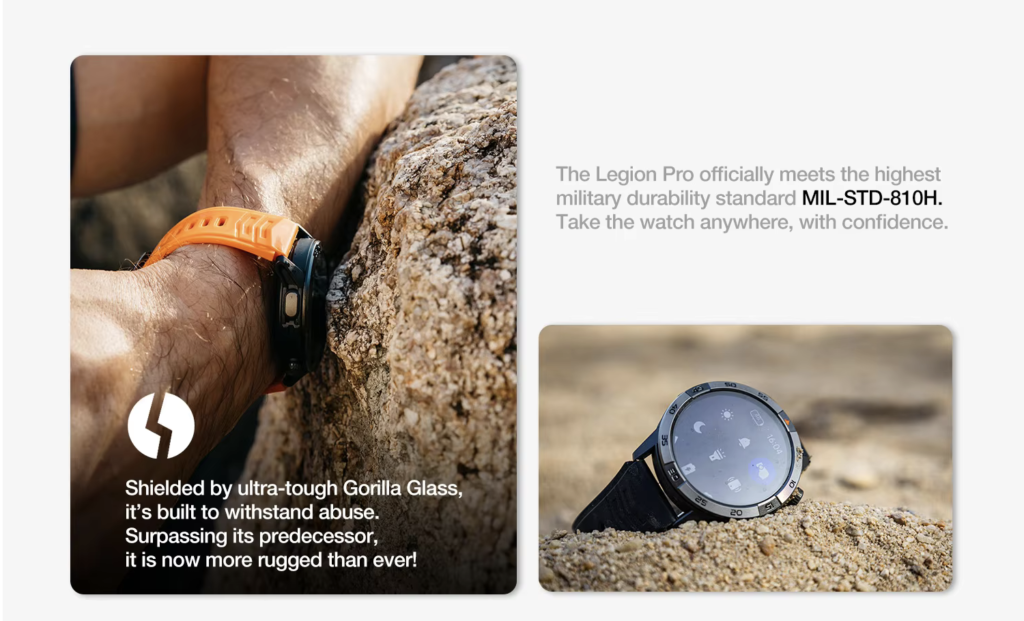
Specialist Options That Become Relevant Later
Structured-training category: Appropriate when intervals, laps, pace targets, and planned workouts become recurring requirements.
Analysis-focused category: Appropriate when training load, recovery, running dynamics, or platform history changes decisions.
Navigation-focused category: Appropriate when unfamiliar routes, imported courses, directions, or backtracking become material.
Endurance-GPS category: Appropriate when documented continuous-GPS runtime controls whether the planned session can be completed.
These categories are not automatically better purchases. Their additional cost earns value only when the corresponding capability becomes a legitimate upgrade signal.
Legitimate Upgrade Signals
- The same missing control affects several scheduled workouts.
- Broad pace no longer supports the intended session.
- Navigation limitations repeatedly change route selection.
- Session duration exceeds available GPS battery evidence.
- An external sensor becomes a defined requirement.
- Post-run analysis now changes the next session.
- A training plan requires tools Omarek does not document.
False Upgrade Signals
- Another runner owns a more expensive watch.
- One session produces an unusual number.
- A feature is popular in reviews but has no current use.
- A future event has not been selected.
- The buyer has not used the data already available.
- A short interruption creates anxiety about progress.
- Changing shoes or routes changes the recorded context.
Buyers tempted to expand the purchase beyond current needs can apply the running-watch full-need stopping rule without replacing the stage-by-stage comparison used here.
Buying Recommendation: Purchase for the Next 30 Sessions
Buy Omarek when the next 30 sessions require recreational activity records, broad GPS or map context, connected daily utility, and enough information to discover whether specialist needs actually emerge.
Confirm Omarek When
- This is the buyer’s first running watch.
- Sessions remain recreational.
- Route and pace information provide broad context.
- Structured workouts are not required.
- Advanced navigation is unnecessary.
- Continuous-GPS endurance is not purchase-controlling.
- Calls, notifications, music, alarms, and calendar functions add daily value.
- No repeated missing feature has created an upgrade signal.
Choose a Specialist Watch Now When
- A current training plan requires structured controls.
- Pace precision controls workout execution.
- Navigation is essential to the planned route.
- Long GPS sessions require documented endurance.
- External sensors are already part of the setup.
- Advanced analysis changes scheduled sessions.
Complete the 30-Run Progress Strip
Runs 1–5 ownership result: Did the watch support starting, recording, pairing, and ordinary use?
Runs 6–12 route and duration result: Did GPS, maps, distance, session length, or connected controls become material?
Runs 13–20 repeatability result: Did similar sessions expose a recurring limitation?
Runs 21–30 analytical result: Did deeper information begin changing the next session?
Repeated missing feature: Name the exact absent capability.
Decision affected: State what the buyer could not do or decide.
Specialist capability required: Identify the category that resolves the gap.
Outcome: Confirm Omarek, postpone the upgrade, or upgrade now.
A known disqualifier does not require waiting until Run 30. The progression helps reveal uncertain needs; it should not delay a requirement the buyer can already define.
Final 30-Run Decision
Confirm Omarek: The first 30 sessions remain recreational, and its documented capabilities cover every material need.
Postpone the upgrade: A specialist function appears attractive, but its absence has not repeatedly changed a real session.
Upgrade: A specific capability gap now affects training, navigation, endurance, sensors, or analysis often enough to justify specialist entry.
Buy the watch that supports the next 30 sessions, not the entire imagined running future.
Choose Omarek only when current recreational needs are documented, connected daily functions add value, and no established specialist requirement has been postponed.
Before checkout, confirm the final price, shipping, applicable sales tax, phone and app compatibility, return restrictions, warranty and support, and seller-stated battery conditions. Choose Omarek for Your Next 30 Recreational Sessions