
The buyer is shown the price of shopping one training level above the routine currently being performed.
The higher shelf looks impressive. It may add structured workouts, deeper pace controls, external sensors, advanced analysis, detailed navigation, cellular service, or endurance battery modes. The financial question is not whether those capabilities have value. It is whether they change a current, scheduled running decision.
Buying above the present training level creates more than a larger checkout total. It can add replacement accessories, subscriptions, cellular fees, platform commitments, and features that remain unused while the buyer continues the same recreational routine.
The commercial rule is:
A higher training shelf earns its premium only when one of its exclusive capabilities changes current training.
The proof object is the Shelf-Jump Cost Calculator. It identifies how much additional ownership cost is attached to tools that do not yet improve the buyer’s running.
Start with a clear running-watch role contract. Describe the routine being completed now, the decisions the watch must support, and the expenses the household is prepared to accept.
Recreational buyers can inspect Omarek before paying a first-race or advanced-training premium. Keep comparing when a higher-shelf capability already changes pacing, workout structure, navigation, sensor use, communication, or GPS duration.
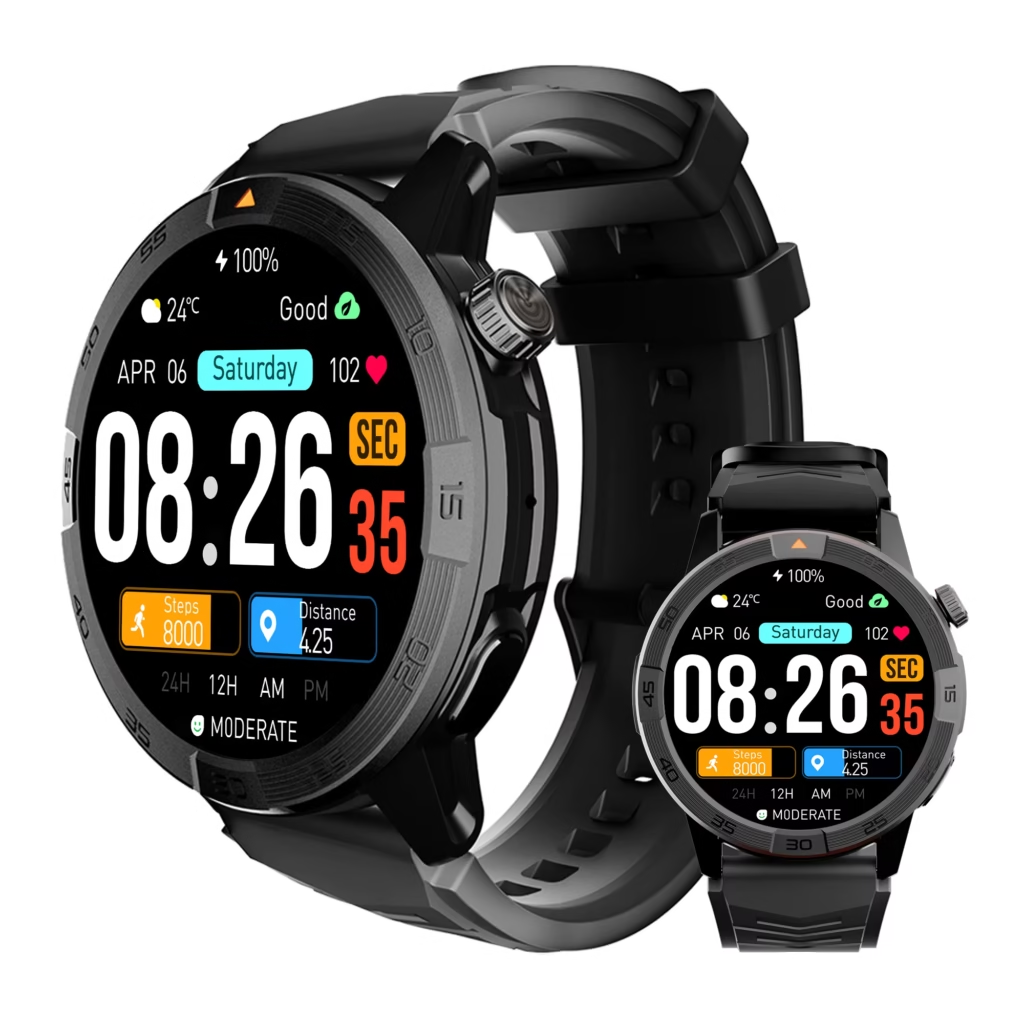
Budget Analysis: Find the Training Shelf Your Current Routine Can Justify
The Starter Spending Ceiling
The starter shelf serves a buyer who has not yet established which running-watch functions will receive repeated use. Spending should cover the current job without assuming that every first purchase must support a future competitive identity.
A starter requirement may include basic activity recording, time, duration, phone compatibility, and uncomplicated ownership. A low price is not automatically good value: the device still has to perform the minimum assignment reliably enough for the buyer to use it.
Advanced pace systems, detailed analysis, external sensors, course tools, cellular connectivity, and endurance GPS modes remain financially unproven at this level unless the buyer already has a specific use for them.
The starter buyer should compare setup burden as carefully as purchase price. A confusing app, incompatible phone, missing charger, or difficult return process can erase an apparent bargain.
The Recreational-Level Value Shelf
The recreational shelf begins when running has become a genuine routine, but specialist control does not determine each session.
Value can come from combining general activity records, GPS, broad route or distance context, offline maps, general heart-rate information, notifications, calling, music control, and everyday smartwatch functions.
This shelf often rewards breadth over sports depth. The buyer may use GPS during selected sessions, music control during another, and calls or alerts throughout the rest of the week. A single purchase can therefore earn value both inside and outside running.
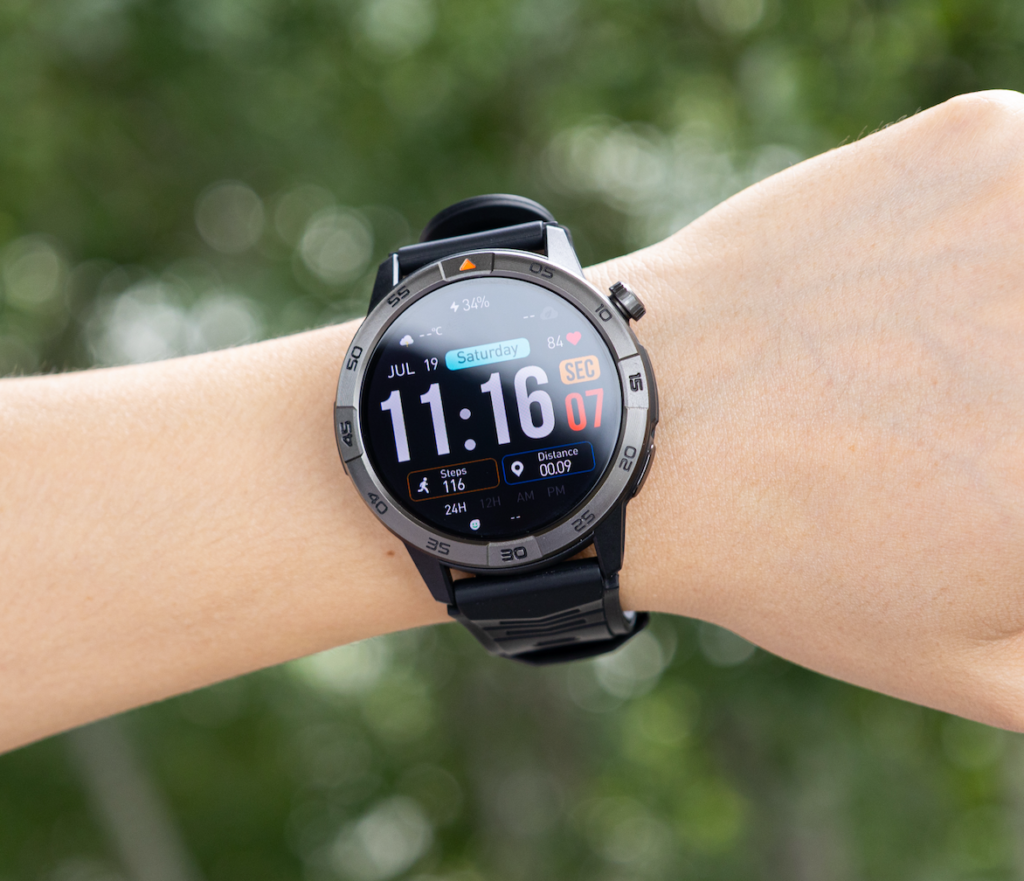
Omarek belongs primarily on this shelf. Its commercial case is strongest when a buyer needs a route-capable general smartwatch rather than a specialist platform. The everyday-runner Omarek review provides a separate product-level assessment without changing this cost-shelf analysis.
The First-Race Spending Shelf
A planned race does not automatically require a higher-priced watch. The shelf becomes justified when preparation creates a new capability requirement.
Structured workouts, repeatable lap controls, pace targets, clearer session comparisons, or a training platform may earn the premium when they influence scheduled preparation.
The event itself competes for the same household budget. A buyer may also need to account for registration, transportation, lodging, shoes, clothing, or other participation expenses. The correct allocation depends on which purchase removes a real obstacle.
Before moving upward, identify the exact preparation decision that a recreational watch cannot support. Buyers with a defined outcome can compare the watch category required by the training goal.
The Advanced-Training Premium Shelf
The advanced shelf is justified when deeper sports tools repeatedly influence training rather than merely producing interesting reports.
Potential premium-earning capabilities include workout construction, advanced running dynamics, training load, recovery analysis, external sensor support, detailed pace control, and long-term sports-platform continuity.
These functions can be worth substantial money to the correct buyer. They become shelf-jump waste when the owner continues to review only duration, broad distance, and ordinary activity history.
The platform also deserves attention. A higher-shelf watch may create more settings, screens, accounts, accessories, and data than the buyer wishes to manage. Complexity is not automatically a defect, but it must purchase a result.
The Endurance and Navigation Cost Shelf
The highest shelf becomes appropriate when route dependence or session length controls the product choice.
Imported courses, detailed maps, directional guidance, backtracking, return-to-start, published GPS-mode runtime, battery-saving modes, and charging strategies may justify the premium.
General offline maps do not establish those capabilities. Buyers whose purchase turns on route confidence should use the GPS route-utility comparison rather than paying more simply because a watch displays a map.
Likewise, a long general battery claim is not proof of endurance-level GPS operation. The buyer needs evidence for the actual positioning, map, display, and connectivity settings planned for the session.
Buying Used: Calculate the Restored Cost
A used specialist watch may appear to create an inexpensive shelf jump. The advertised amount is only the first line of the calculation.
Add the cost or risk associated with:
- battery condition and reduced capacity;
- a missing or damaged charging cable;
- band wear or replacement;
- account or activation locks;
- phone and app compatibility;
- nontransferable warranty coverage;
- limited return rights;
- discontinued software support.
A used price becomes genuine savings only after the watch is restored to the ownership condition the buyer needs.
Race-Entry and Family-Gift Budgets
A watch premium must compete with the rest of a race budget. Moving to a higher shelf may be reasonable when it solves a documented training problem; otherwise, the same money may have greater value elsewhere in the buyer’s participation plan.
Gift purchasers face a similar discipline. Buy for the recipient’s current training shelf, phone, app tolerance, and charging expectations—not the giver’s idea of what a serious runner should own.
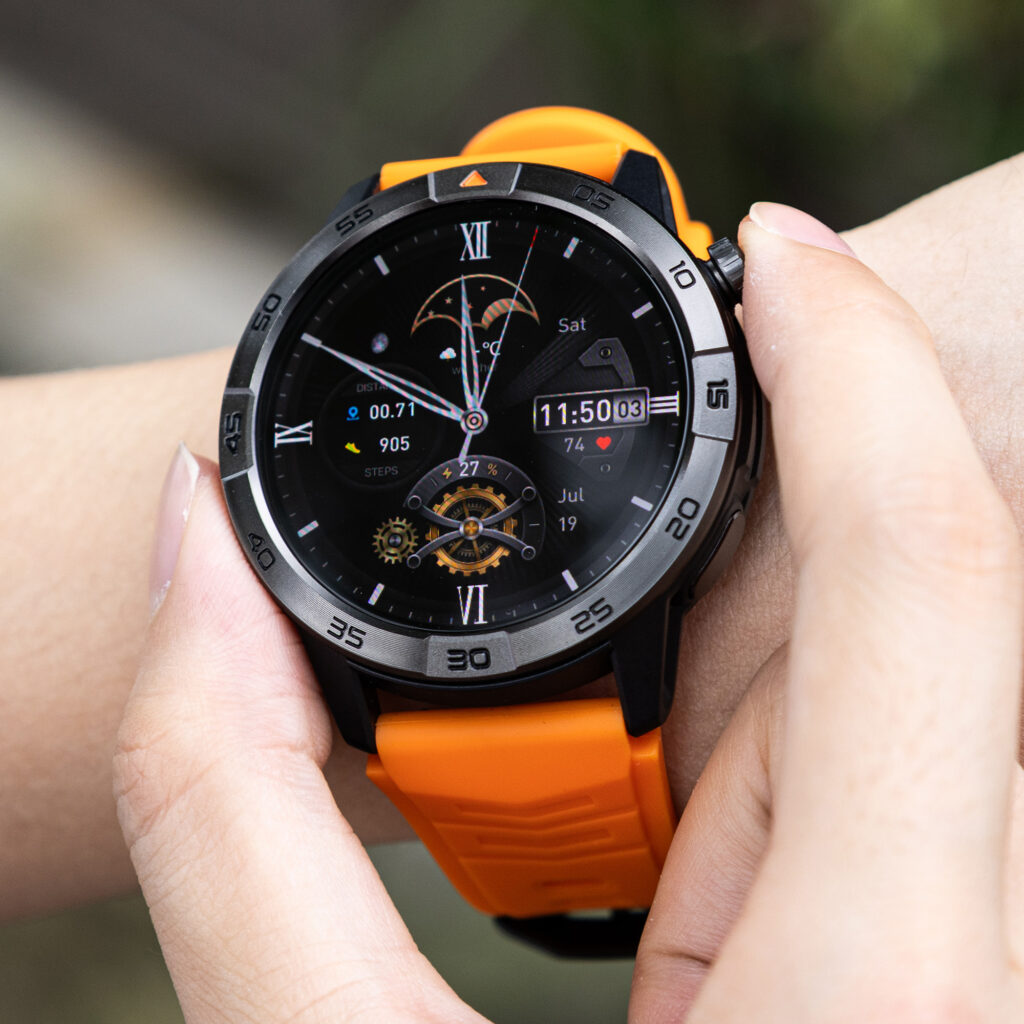
A costly gift can still be a poor fit when its major benefits require subscriptions, sensors, cellular service, or training habits the recipient does not have. The phone compatibility buying check is especially important when the recipient cannot participate in checkout research.
Feature Comparison: Which Training Level Makes Each Premium Worth Paying?
| Training shelf | Current running decision | Features that can earn the price | Costs beyond the watch | What makes the shelf wasteful | Omarek fit |
|---|---|---|---|---|---|
| Starter | Can a basic session be recorded and repeated? | General activity access, duration, phone compatibility | App setup, charger replacement, return risk | Paying for specialist tools before a use appears | Possible, but may exceed a very basic budget |
| Recreational | Can one watch support regular running and daily ownership? | GPS, offline maps, broad records, calls, alerts, music control | Replacement bands and optional app costs | Moving upward without a specialist requirement | Primary shelf |
| First race | Does event preparation require structured execution? | Workouts, lap controls, pace targets, training continuity | Possible subscriptions and accessories | Buying race tools that never affect preparation | Limited when specialist controls are required |
| Advanced training | Does deeper data alter upcoming sessions? | Load, recovery, dynamics, sensors, detailed planning | Sensors, subscriptions, platform commitment | Collecting advanced data without using it | Not the documented strength |
| Endurance and navigation | Do route dependence or GPS duration control completion? | Courses, guidance, backtracking, published GPS runtime | Maps, accessories, charging equipment, cellular service | Paying for expedition-level tools on ordinary routes | Not suitable when specialist evidence is required |
General Activity Recording
On the starter shelf, general recording earns its price by preserving a basic activity history without demanding a complex sports platform.
At the recreational level, the same function gains value when it combines with route context, daily tracking, phone-connected tools, and repeated ordinary use.
A higher-shelf premium must purchase more than another saved activity. It should introduce structured execution or analysis that changes training.
GPS and Broad Distance Context
GPS earns recreational value when outdoor route and distance information support regular sessions. Omarek documents built-in GPS and offline maps, but the listing alone does not establish superior positioning accuracy or specialist pace behavior.
The first-race shelf may become appropriate when distance and pace begin controlling event preparation. Endurance spending requires stronger evidence still, particularly when continuous-GPS runtime is essential.
Buyers who need only broad context should not fund an advanced positioning system without identifying the decision it improves.
Maps and Navigation
General offline-map access may strengthen the recreational shelf by adding route context. That does not prove imported courses, turn prompts, backtracking, return-to-start, or specialist map coverage.
A navigation premium becomes justified when the watch must actively support an unfamiliar planned route. The higher price should purchase documented route behavior rather than a more detailed promotional image.
Pace and Training Controls
Broad pace context can remain appropriate on the recreational shelf when the number is reviewed rather than used to control every segment.
The first-race shelf begins earning its premium when pace targets, laps, and structured workouts alter preparation. Advanced controls become worthwhile when they repeatedly determine how sessions are executed.
Omarek should not receive credit for undocumented interval programming, advanced pace smoothing, running dynamics, or training load.
Calls, Notifications, and Music Control
Connected functions can carry substantial value on the recreational shelf because the watch remains useful beyond running.
Bluetooth calling, alerts, and music control may reduce the need to handle a phone for selected tasks. Buyers should still verify the required app, permissions, supported actions, and connected-phone expectations through the calling and notification requirement guide.
These daily tools may become secondary when advanced training, navigation, or endurance evidence controls the purchase. Bluetooth calling must not be confused with independent cellular service.
External Sensors and Advanced Analysis
Sensor and analytical costs generally belong above the recreational shelf. They earn their premium when the buyer already has a compatible sensor plan or when the resulting information changes scheduled training.
Potential future interest is not current value. A buyer who does not use general history is unlikely to recover a larger investment merely by collecting deeper data.
Replacement-Band Expense
Band replacement belongs in the ownership total rather than being treated as an afterthought.
Verify size, attachment method, availability, current price, shipping, and whether the watch requires a brand-specific part. Do not assume that a second band is included unless the seller documents it.
Frequent band replacement can narrow the difference between an inexpensive and a higher-quality purchase. Conversely, a widely available replacement may extend useful ownership without forcing a full watch upgrade.
Subscription Expenses
A higher shelf may expose the buyer to premium analysis, coaching, training plans, advanced reports, cloud-history limits, or map services.
Separate required subscriptions from optional upgrades. Confirm which core functions remain usable without payment and whether prices can change after an introductory period.
No subscription should enter the calculator as zero merely because the first month is free. Use the ownership-period amount the buyer expects to pay.
Cellular Plans
Cellular capability creates a separate cost shelf. Confirm that the exact watch contains compatible cellular hardware, works with an eligible U.S. carrier, supports the buyer’s phone plan, and can be activated in the intended region.
Add activation charges and monthly line fees to the ownership total. Omarek’s documented Bluetooth calling does not establish standalone cellular hardware or carrier eligibility.
The Shelf-Jump Cost Calculator
Current training shelf: ____________________
Matching-shelf watch cost: $____________________
Higher-shelf watch cost: $____________________
Immediate shelf-jump premium: Higher-shelf price minus matching-shelf price
Accessories and sensors: $____________________
Replacement-band expense: $____________________
Subscription expense during ownership period: $____________________
Cellular-plan expense during ownership period: $____________________
Higher-shelf ownership total: Watch + accessories + bands + subscriptions + cellular
Higher-shelf features actually used: ____________________
Higher-shelf features left unused: ____________________
Cost attached to the actual training change: $____________________
Shelf-jump waste: Higher-shelf ownership total minus matching-shelf total minus justified training-change cost
Illustrative U.S. Calculation
Assume the matching recreational watch costs $150. A hypothetical higher-shelf watch costs $400, requires a $50 accessory, and exposes the buyer to $80 in optional services during the planned ownership period.
The higher-shelf total is $530 before tax. The immediate difference from the $150 recreational purchase is $380.
Suppose the buyer uses one specialist function and reasonably values that training change at $100. The remaining $280 is potential shelf-jump waste until the other premium capabilities begin changing the routine.
This is an illustrative calculation, not a market quote. Enter current U.S. prices, taxes, plans, accessories, and subscription terms from the exact products under consideration.
Buyers who need help ending feature expansion can pair the calculator with the running-watch shopping-closure guide while keeping this article’s cost-shelf method intact.
Verdict: Omarek Leads the Recreational Value Shelf When Specialist Premiums Remain Unearned
Place Omarek on the Recreational Shelf
Omarek is the conditional value leader for a recreational buyer who needs general activity tracking, built-in GPS, offline-map context, broad running records, general heart-rate information, calling, notifications, music control, and everyday smartwatch tools.
The value-leader label applies only to these recreational-shelf criteria and the current $150 listing. It does not claim superior GPS accuracy, advanced training analysis, specialist navigation, durability, or endurance battery performance.
Why Omarek Can Lead This Shelf
Omarek combines recreational running functions with connected daily ownership without requiring the buyer to begin on a deeper sports platform.
The seller documents GPS, offline maps, Bluetooth calling, alerts, music control, activity tracking, alarms, calendar functions, and compatibility with iOS and Android. These capabilities can give the purchase more opportunities to earn value than a watch used exclusively for occasional running.
Its 370mAh battery has seller-stated life of up to 30 days. Treat that figure as a ceiling rather than a guarantee; GPS, maps, calls, alerts, Bluetooth, display use, and settings can reduce actual runtime.
Buyers prioritizing straightforward ownership can also review the low-maintenance smartwatch value case.
When the First-Race Shelf Becomes Correct
Move upward when confirmed preparation creates a repeated requirement for structured workouts, pace targets, lap controls, or sports-platform continuity.
The premium is earned by the preparation decision—not by the race label alone. A recreational watch can remain sufficient when the event plan does not require specialist control.
When Advanced or Endurance Shelves Become Correct
A higher category becomes better value when advanced analysis, external sensors, course guidance, imported routes, documented GPS runtime, endurance battery modes, or independent communication controls the training plan.
The buyer should not remain on the recreational shelf when one of those functions is already material. Underbuying a required capability can waste the full purchase price.
Calculate Shelf-Jump Waste Before Checkout
Shelf-jump waste is the portion of the higher-shelf ownership total attached to capabilities that do not improve the current routine.
Calculate the price difference, then add accessories, replacement bands, subscriptions, and cellular service. Subtract only the amount attached to a feature that genuinely changes training.
Not every dollar of a higher-priced watch is waste. The unearned portion is the problem.
Complete the U.S. Checkout and Ownership Review
Omarek’s product page currently lists the watch at $150 and says free shipping. Its general shipping policy separately states that shipping charges are calculated and displayed at checkout, so review the final total before payment. Applicable state and local sales tax may increase the charge.
Orders are stated to require 1–3 business days for processing. Estimated U.S. delivery is 3–7 business days, subject to location, order volume, weekends, holidays, and carrier delays.
The return period is 30 days from delivery, but eligibility requires unused condition, the same condition received, original packaging, accessories, charging cable, manuals, included items, and proof of purchase.
Meaningful testing may conflict with the unused-condition rule. Request written clarification before pairing, wearing, or testing the product in a way that could affect eligibility.
Customers generally pay return shipping unless the product is defective or incorrect. Sale and discounted items are stated to be nonrefundable unless damaged or defective.
The product page currently displays no customer reviews. The reviewed official pages do not state a clear product-specific warranty duration, replacement-band price, required subscription, or cellular-plan support. Request written details before adding zero-cost assumptions to the calculator.
Complete the transaction review with the U.S. smartwatch checkout safeguards, then verify app requirements through the Android companion-app check when applicable.
Omarek remains the value leader only when the recreational shelf covers the current routine. compare Omarek’s current offer with your completed Shelf-Jump Cost Calculator and require every higher-shelf dollar to purchase a training change.
Choose the Correct Spending Level
Choose the recreational shelf: Omarek makes sense when broad running records and connected smartwatch functions cover the routine, while first-race, advanced, navigation, sensor, cellular, and endurance capabilities remain unearned premiums.
Move to the first-race shelf: Pay more when event preparation creates a real requirement for structured workouts, pace targets, lap controls, or training continuity.
Move to the advanced or endurance shelf: Choose the higher category when analysis, sensors, route guidance, GPS duration, or communication already controls the plan.
Name the correct shelf, calculate the ownership premium required to move higher, and isolate the portion that would currently be unused. That unused amount is the shelf-jump cost the buyer can avoid.
Choose Omarek when the recreational shelf matches current training and no higher-shelf feature earns its premium.
Confirm the running decisions that matter now, Omarek’s documented coverage, first-race requirements, analytical needs, route and endurance demands, accessory costs, subscriptions, cellular exposure, and full U.S. checkout total. Stay on the Recreational Shelf and Choose Omarek