
Choose a smart-first watch when: phone-independent calling, downloadable apps, stored music, and deep phone-platform integration matter more than advanced run analysis.
Choose a run-first watch when: structured workouts, imported routes, race controls, training analysis, external sensors, or documented GPS endurance determine whether the watch succeeds.
Choose the balanced path when: recreational GPS running, connected communication, music control, outdoor context, and normal daily functions deserve similar weight.
Initial balanced recommendation: Omarek belongs in the third path. It combines documented running-relevant functions with connected daily tools, without claiming the deepest smartwatch ecosystem or the most specialized training platform.
The best smartwatch for running is not automatically the product with the largest app catalog or the longest list of training metrics. The correct category depends on which missing capability would make the purchase feel incomplete.
A runner who expects to leave a phone behind but still place carrier-supported calls needs a different device from someone who only wants GPS activity recording. A buyer following scheduled intervals needs more running depth than a person recording relaxed neighborhood miles. Another runner may care equally about activity tracking, incoming calls, music control, reminders, and everyday wrist use.
The Three-Path Trade-Off Selector resolves that conflict quickly. It sends the purchase toward smart-side depth, running-side depth, or the shared-value center. Buyers still uncertain about the difference can first separate smartwatch utility from fitness utility.
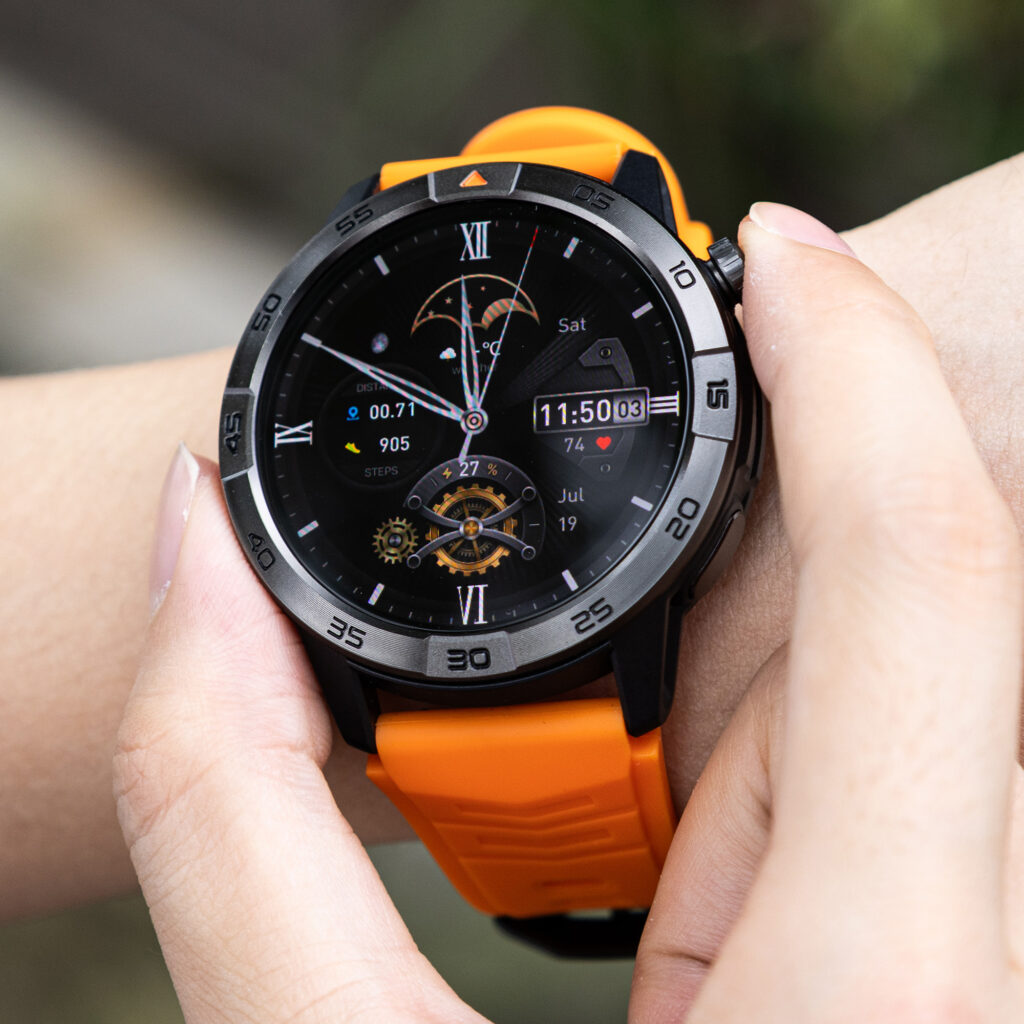
Balanced-path buyers can inspect Omarek as the middle-ground running smartwatch. Its documented Bluetooth calling requires connected-phone context; the product should not replace a cellular watch, route-import platform, stored-music device, or specialist training system.
Start Here: Pick the Result You Need From the Watch
Use the Capability That Would Ruin the Purchase
Do not begin with brand loyalty, mileage, screen shape, or a familiar watch category. Start with the capability whose absence would make the purchase unsuccessful.
For a smart-first buyer, the critical absence may be phone-independent communication. For a training-first runner, it may be structured workout execution. For the balanced buyer, the failure may be purchasing an expensive specialist device that provides little practical benefit outside a few recreational runs.
This approach differs from creating a long wish list. A wish list gives equal visual importance to every attractive feature. The Three-Path Trade-Off Selector gives authority to the requirement that actually controls the purchase.
The Smart-First Result
The smart-first result is a wearable platform that functions as a substantial extension of the buyer’s phone.
That category becomes commercially justified when the watch must support several of the following:
- carrier-approved cellular calling without a nearby phone;
- phone-independent messaging or data access;
- a broad third-party app catalog;
- music stored or streamed directly from the watch;
- deeper integration with contacts, payments, navigation, and other platform services.
These capabilities may require a compatible smartphone, eligible U.S. carrier, supported region, additional plan, account, or recurring service charge. A buyer pursuing this path should compare the complete ecosystem cost rather than only the watch price.
Someone primarily trying to reduce phone handling can review the distinction between a connected wearable and a watch designed around lower phone dependence.
The Run-First Result
The run-first result is a training instrument. Its daily conveniences are secondary to what happens before, during, and after a planned session.
This path becomes necessary when the runner relies on:
- workouts transferred to the wrist;
- repeated intervals, laps, or pace targets;
- course importing and route execution;
- race-distance tools;
- external sensors;
- training-load or recovery interpretation;
- published endurance for extended GPS use.
A recreational label does not automatically remove these requirements. A person can run modest mileage while still following a precise plan. Likewise, a frequent runner may need only a simple GPS record.
The recreational training purchase guide can clarify when casual running has developed into a structured system.
The Balanced Result
The balanced result accepts that the watch will not dominate either extreme.
It gives up premium app-platform depth and specialist coaching depth in exchange for one product that can cover recreational activity, connected calls and alerts, music control, scheduling, outdoor context, and ordinary daily use.
This is not a compromise caused by indecision. It is a deliberate purchase when neither extreme contains a capability important enough to justify the additional cost, complexity, or narrower ownership role.
Buyers trying to combine several wrist functions into one device can examine the logic behind consolidating activity tracking and smartwatch duties.
Choose Your Priority: Smart Platform, Running System, or Balanced Middle
Choose Smart-First When the Watch Must Operate Beyond Bluetooth
Omarek documents Bluetooth calling, call reminders, dial calling, notifications, social alerts, and app control. Those functions strengthen connected convenience, but they do not establish independent cellular service.
A smart-first buyer should leave the Omarek path when the purchase requires calls during a phone-free outing, independent messages, a carrier number on the wrist, or apps that operate without the connected phone.
The buyer should also verify whether the desired carrier supports the selected watch, whether a companion phone remains required, and whether an added monthly line affects the total cost. Cellular availability can vary by model, carrier, region, and account eligibility.
Choose Run-First When the Watch Must Direct the Session
General running information answers, “What happened?” A dedicated running system may also answer, “What should happen next?”
Choose this path when the watch must deliver workout steps, enforce pace ranges, mark repeated laps, retain detailed training history, interpret accumulated load, or coordinate with external equipment.
Omarek’s listing establishes general activity and fitness tracking, multisport modes, built-in GPS, heart-rate monitoring, steps, and calorie tracking. It does not document structured running plans, advanced pacing, race prediction, training readiness, running dynamics, or sensor pairing.
Runners whose goal dictates the equipment should compare the running tools required by the training goal rather than purchasing broader smartwatch functions first.
Choose the Balanced Middle When Both Sides Remain Moderate
The balanced buyer wants the run recorded but does not need the watch to act as a coach. The same buyer values connected calls, visible alerts, music control, alarms, calendar functions, and a display suitable for normal daily interaction.
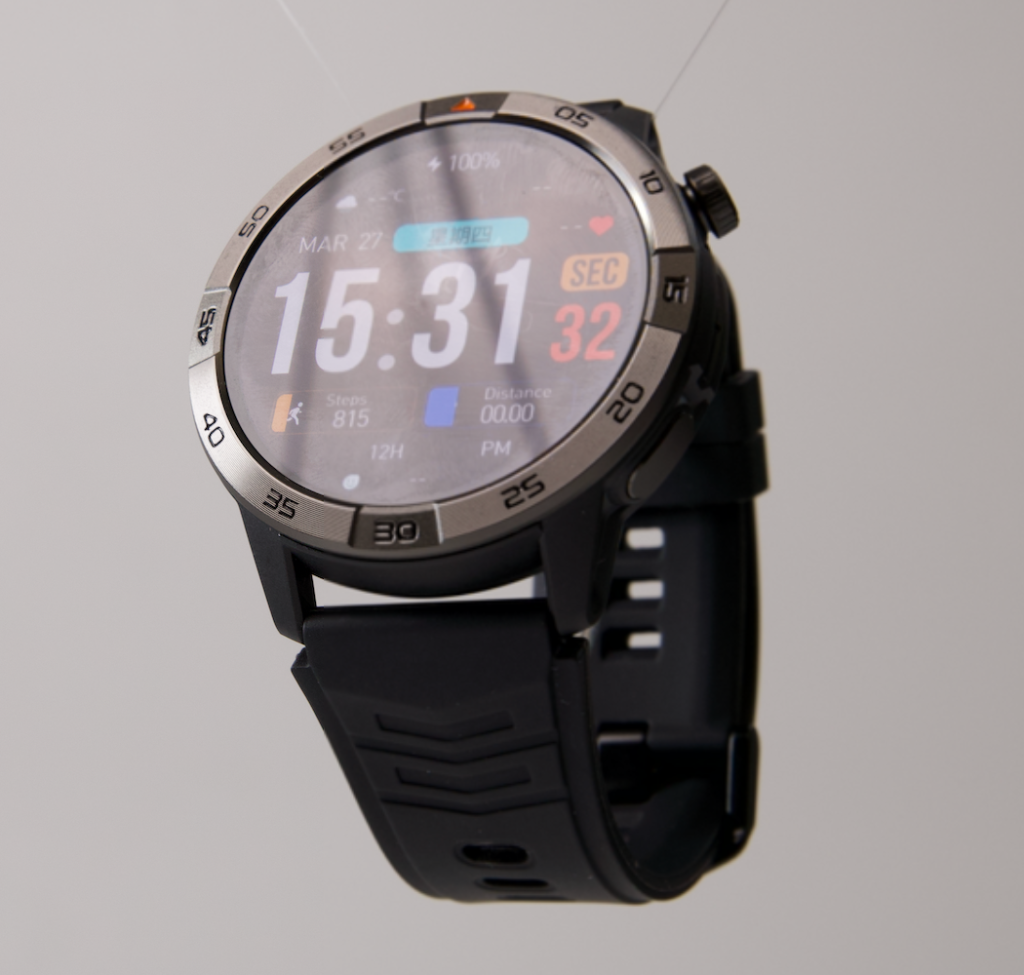
Omarek enters the decision at this point. Its $150 listing combines built-in GPS, offline maps, general activity tracking, Bluetooth calling, notifications, music control, calendar and alarm functions, compass and altitude information, and iOS and Android compatibility.
The product is commercially strongest when these functions share responsibility. It becomes less attractive when one missing premium capability controls the entire purchase.
Quick Exception: “Phone-Free Run” Has Several Meanings
A phone-free run may mean only that the runner does not carry the phone while recording time, distance, or a GPS route. It may instead mean listening to locally stored music, receiving messages, placing calls, accessing live services, or following an imported course.
Those are separate technical requirements.
Omarek’s built-in GPS and offline-map wording may support activity and map use without continuous phone handling, but Bluetooth calling does not become independent calling merely because the phone is left behind. Stored music, direct earbud pairing, independent messaging, and live data service are not established by the listing.
Buyers should separate Bluetooth communication from standalone wrist calling before choosing the balanced path.
Quick Exception: Compatibility Is More Than “iOS and Android”
Omarek lists compatibility with both major phone platforms. That broad statement does not prove identical behavior on every phone, operating-system version, region, or permission setup.
Before purchase, confirm the companion app, required account, Bluetooth permissions, notification access, background operation, call routing, and the actions available from the watch.
A phone-specific decision can be checked through the smartwatch compatibility selection process.
Feature Path: See Which Side Each Capability Serves
Smart-Side Pull: Standalone Calling
True standalone calling requires more than a microphone and speaker. It depends on cellular hardware, carrier activation, an eligible plan, regional support, and phone-independent operation.
Omarek’s Bluetooth calling remains useful when the connected phone is within a practical operating context. It belongs in the shared center, not at the smart-platform extreme.
Move to the smart-first path when phone-independent calling is mandatory.
Smart-Side Pull: Third-Party Apps
A premium smartwatch platform can extend through downloadable productivity, navigation, communication, media, and lifestyle apps.
Omarek lists app control and Bluetooth connectivity, but the listing does not document an open app store or broad third-party software ecosystem.
Move to the smart-first path when the buyer can name specific wrist apps that must be installed. Remain in the balanced center when notifications and documented built-in tools cover the actual need.
Smart-Side Pull: Stored Music
Music control changes playback on a compatible connected source. Stored music places audio files on the watch. Standalone streaming accesses a service through independent connectivity.
Omarek documents music control only. It should not receive credit for internal music storage, direct headphone pairing, or phone-free streaming.
A runner who refuses to carry a phone but requires audio should verify the full phone-free music chain before purchase.
Run-Side Pull: Structured Training
A structured running function organizes the session rather than simply recording it. It may present a warmup, repeated work periods, recoveries, pace targets, and a cooldown.
Omarek does not document this workflow. Its running role should remain recreational unless stronger evidence becomes available.
The training-level running-watch comparison can show when a general recorder should be replaced by a session-control tool.
Run-Side Pull: Route Imports
Built-in GPS, offline maps, and an imported route are not interchangeable.
A map can provide geographic context. An imported route may require course transfer, line following, deviation handling, turn prompts, and a supported file or app workflow.
Omarek’s listing does not establish imported courses, return-to-start, backtracking, or turn-by-turn directions. Move to the run-first or outdoor-navigation path when the route itself must be executed from the wrist.
Route-dependent buyers should use the GPS and route-workflow distinction before interpreting “offline maps” as a complete navigation system.
Run-Side Pull: Training Interpretation
General activity records may show broad session information. Training interpretation converts accumulated data into workload, recovery, readiness, predicted performance, or recommended activity.
Omarek does not document those advanced interpretations. A buyer who changes training based on such outputs should select a platform that clearly supports and explains them.
Run-Side Pull: GPS Endurance
The seller states that Omarek’s 370mAh battery can last up to 30 days. That general ceiling does not establish runtime with continuous GPS, maps, frequent display use, Bluetooth, calls, or heavy notifications active.
Short recreational runs may not require a published all-day GPS figure. Long outings, repeated navigation, and endurance events often do.
Move away from the balanced path when the purchase depends on a documented GPS-mode duration that the listing does not provide.
Shared-Value Center: GPS and Offline Maps
Built-in GPS supports broad route and distance context during recreational running. Offline maps may add location awareness during other outdoor use.
These functions serve both the running and daily-adventure sides of the purchase. They should not be expanded into claims of superior accuracy, imported-course navigation, or emergency guidance.
Shared-Value Center: Activity and Heart-Rate Information
General activity tracking, steps, calories, sleep tracking, heart-rate monitoring, and breath monitoring can support healthy-lifestyle awareness across running and non-running days.
They are not a substitute for medical evaluation, diagnosis, treatment, medication decisions, or exercise clearance. Medical concerns should leave the consumer-watch decision and move to an appropriate healthcare discussion.
Buyers deciding how much wellness data they genuinely need can review the match between watch data and a defined wellness goal.
Shared-Value Center: Calls, Alerts, Music, and Scheduling
Bluetooth calling and notifications add smart-side convenience. Music control can reduce phone handling during a run and remain useful elsewhere. Alarms and calendar functions can support departure timing, appointments, and ordinary reminders.
These are the functions that make the balanced path commercially distinct. They extend the watch beyond exercise without requiring a premium app platform.
Shared-Value Center: Compass and Altitude Information
Compass and altitude functions can add broad outdoor context to a running smartwatch. They do not establish specialist navigation, rescue support, detailed elevation analysis, or route-recovery features.
The balanced buyer values them as additional context. A route-critical buyer requires stronger documentation and should follow the run-first or outdoor-specialist path.
Review the Three Winners
Smart-first winner: A premium smartwatch ecosystem wins when the wrist must operate as a deeper phone extension through independent communication, downloadable apps, stored media, and platform services.
Run-first winner: A dedicated running system wins when workout execution, imported routes, specialist metrics, external sensors, race functions, or GPS endurance controls the purchase.
Balanced winner: Omarek becomes the leading candidate when recreational running and connected daily functions share the assignment.
That balanced result can be compared with the broader fitness-smartwatch category decision without treating every connected watch as a training platform.
Rejecting both extremes is a valid purchase decision. When the essential features are recreational GPS activity, map context, Bluetooth calls, notifications, music control, and daily scheduling, compare Omarek inside the shared-value center. Leave this path when a premium ecosystem or specialist running exception remains unresolved.
Omarek Recommendation: The Balanced Choice Between Two Expensive Extremes
Why Omarek Occupies the Middle
Omarek’s case does not depend on defeating a premium smartwatch at software depth or a dedicated running watch at training depth.
Omarek earns its place in the middle because no single feature carries the purchase. GPS supports the run, Bluetooth-connected calls and alerts support the hours around it, while music control, alarms, calendar access, compass, and altitude tools keep the watch relevant when training is not the main event.
That overlap is the product’s commercial case. Buyers who need standalone cellular service, downloadable apps, stored music, imported routes, structured workouts, or advanced training analysis should leave the balanced path. Buyers who need recreational running and ordinary smartwatch utility in the same device can keep Omarek in the final comparison.
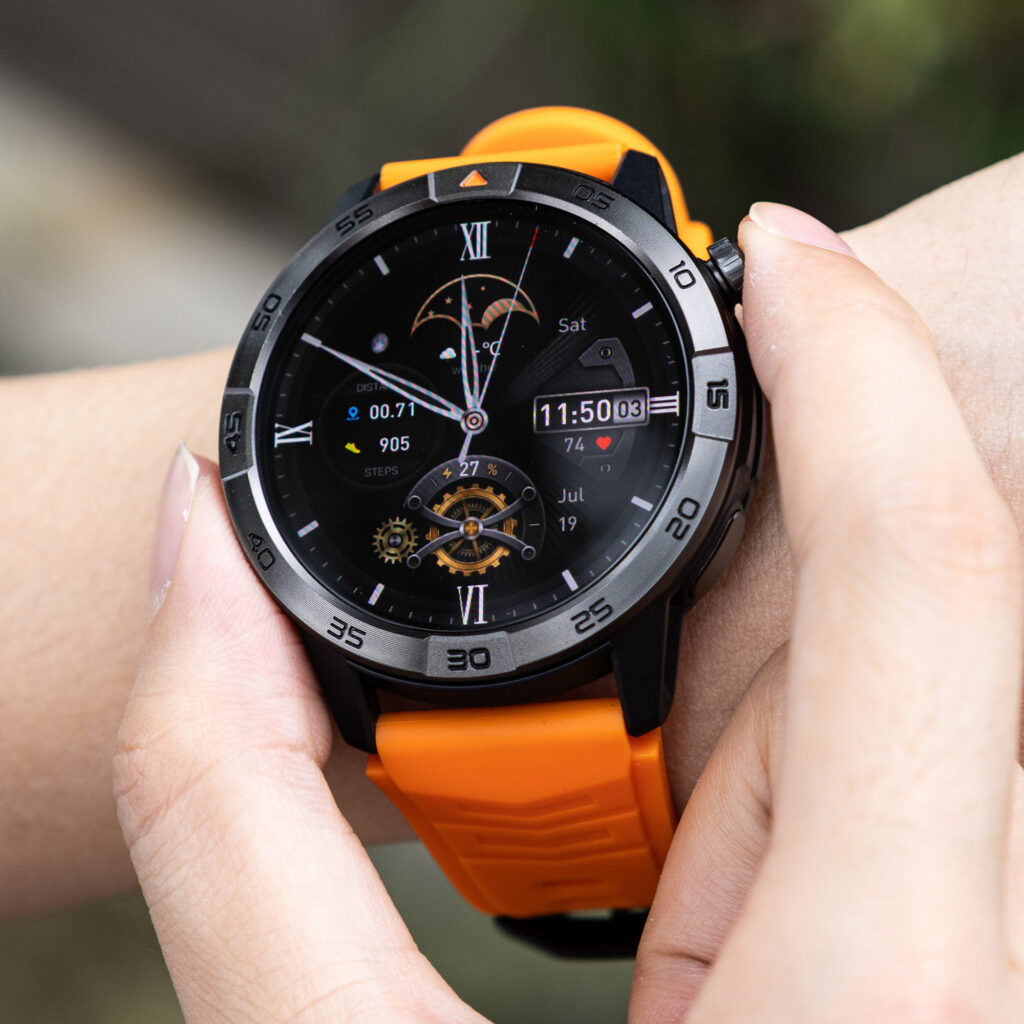
At the listed $150 price, that mixture can make sense for a runner who would otherwise buy advanced capabilities that remain unused. The price alone does not prove value; the shared functions must match real behavior.
Recreational buyers can compare this role with the watch requirements of a non-specialist runner.
The Smart-to-Run Split Card
Smart-Side Pull
Move away from Omarek when any of these are essential:
- carrier-supported standalone calling;
- phone-independent messaging;
- a broad third-party app store;
- stored music or standalone streaming;
- premium phone-platform services.
Shared-Value Center
Keep Omarek in the decision when the required set is:
- recreational GPS activity recording;
- offline-map context;
- general activity information;
- Bluetooth calls and notifications;
- connected music control;
- alarms, calendar, compass, and altitude tools.
Run-Side Pull
Move away from Omarek when any of these are essential:
- structured running workouts;
- imported routes or turn guidance;
- advanced pace and race tools;
- training-load or recovery analysis;
- external running sensors;
- documented continuous-GPS endurance.
Decision rule: Omarek remains the recommendation only while every essential requirement stays inside the shared-value center.
Premium Ecosystem Exceptions
Choose the premium smart path when the watch must handle meaningful responsibilities without the phone nearby.
This includes independent calling, app-based services, stored media, or deep integration that affects everyday communication and productivity. Bluetooth convenience should never be purchased as though it were cellular independence.
A simpler connected watch may still be preferable when the buyer deliberately wants fewer apps and less wrist administration. The simple-smartwatch ownership approach can confirm whether ecosystem depth is solving a real problem.
Dedicated Running Exceptions
Choose the dedicated running path when the wrist must control or interpret training.
A structured session, imported course, external sensor, race function, advanced pace tool, or documented GPS duration can outweigh every daily convenience in the center. In that case, Omarek’s broader feature mix does not repair the missing specialist capability.
Buyers comparing specialist levels can use the running-watch shortlist based on required evidence.
Confirm the Fast Decision
Choose smart-first when phone-independent communication, downloadable software, stored media, or premium ecosystem services dominate.
Choose run-first when structured workouts, route imports, specialist analysis, sensor support, race tools, or verified GPS endurance dominate.
Choose Omarek when recreational running, connected communication, music control, outdoor context, and daily organization remain the complete essential set.
The trade-off has one controlling side. Deep smart-platform requirements send the purchase toward a premium ecosystem. Specialist training requirements send it toward a dedicated running system. When neither side dominates, Omarek occupies the commercially sensible middle.
Choose Omarek when neither deep smart-platform functions nor specialist training functions dominate. Choose Omarek From the Shared-Value Center