
“Good” means something different to a runner circling a public park, a treadmill user training indoors for part of the year, a neighborhood walker-runner, and a weekend route explorer.
The park runner may only need a clean activity record and broad distance context. The treadmill user may place almost no value on outdoor maps. A walker-runner could care more about connected calls and flexible session recording than exact pace control. The route explorer may remove every watch that lacks the navigation evidence required for an unfamiliar outing.
Those buyers should not receive one universal ranking.
The commercial question is:
Which watch clears every requirement of the buyer’s exact use case without charging for perfection that the use case cannot benefit from?
This guide uses Use-Case Qualification Panels. Each panel begins with the activity outcome, identifies the nonnegotiable requirement, removes products with an immediate disqualifier, accepts only tolerable compromises, checks replacement exposure, and assigns a shortlist position.
The proof object is the Good-Enough Qualification Stamp. A watch receives it only when every essential requirement is documented and no missing capability causes the selected activity to fail.
Start by writing a narrow running-watch use contract. Name the activity performed most often, the result the watch must deliver, and the limitation that would make the purchase unacceptable.
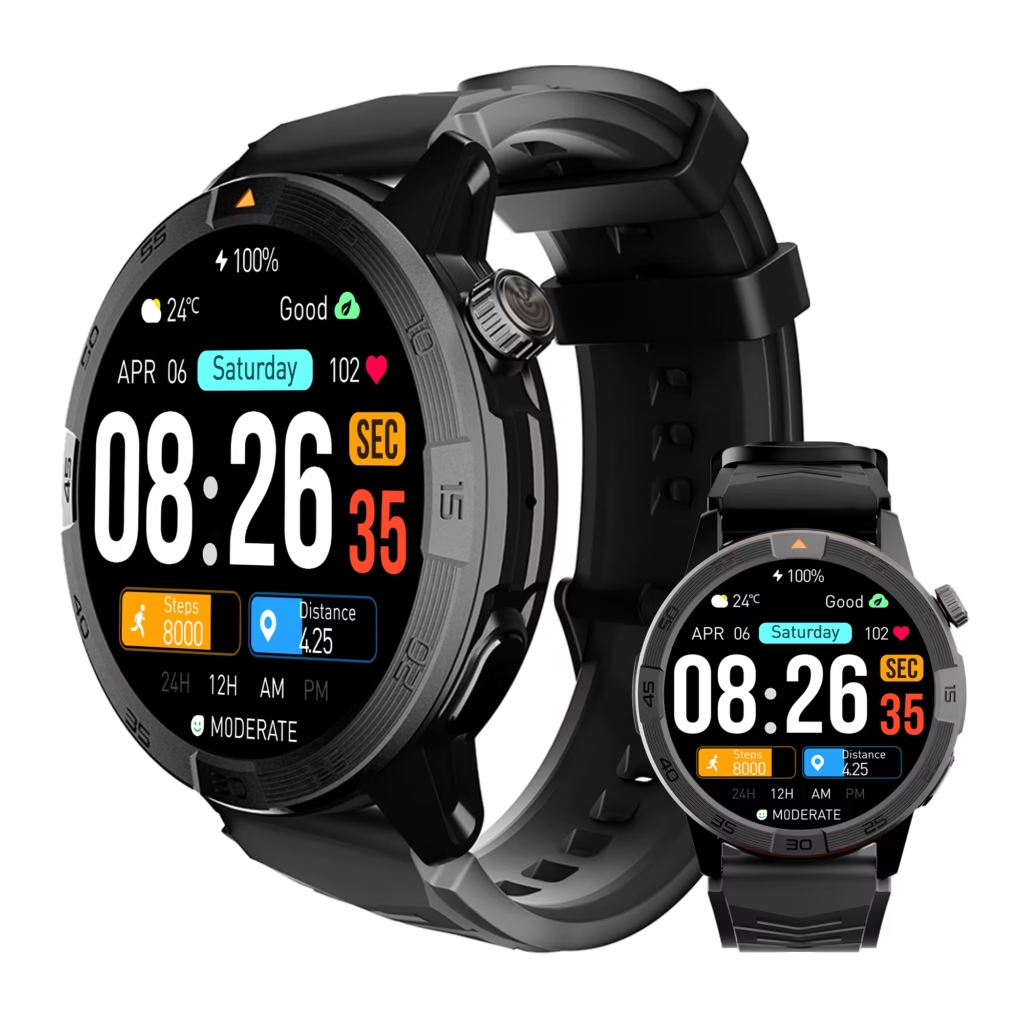
Recreational buyers can inspect Omarek after selecting one exact running use case. Do not treat GPS, maps, calling, or a long general battery claim as proof that the complete use case is covered.
Best Running-Watch Type for Each Recreational Use Case
Use-Case Qualification Panel: Casual Park Running
Consider a buyer who uses a paved loop around a municipal garden. The route is familiar, the outing is recreational, and the buyer mainly wants a record that is easy to save and review.
Exact activity outcome: Preserve a general record of the session with useful duration and broad distance or route context.
Nonnegotiable requirement: The watch must support general activity recording and work with the buyer’s phone without creating an unacceptable setup burden.
Instant disqualifier: Remove a watch when the required activity cannot be recorded, the companion app is incompatible, or the purchase depends on an undocumented running function.
Acceptable compromise: Specialist running dynamics, race prediction, structured workouts, and external sensors may remain absent when none changes the park session.
Replacement exposure: Confirm that the charging cable, replacement band, app, and support channel remain practical before treating a low price as good value.
Shortlist position: Omarek can remain on the recreational shortlist because its listing documents activity and fitness tracking, built-in GPS, general heart-rate monitoring, steps, calories, and everyday connected functions.[1]
A specialist watch becomes relevant only when the park session develops a real requirement for structured execution, repeated laps, advanced pacing, or deeper analysis.
Use-Case Qualification Panel: Treadmill-Only Running
Now consider a buyer using an apartment fitness-room treadmill through a period of extreme heat or poor outdoor conditions. Route maps and outdoor positioning may add little to the activity being performed.
Exact activity outcome: Create a usable indoor session record while retaining a watch that serves ordinary life outside the fitness room.
Nonnegotiable requirement: General activity access, duration, comfortable wear, phone compatibility, and manageable charging must be acceptable.
Instant disqualifier: Remove Omarek when the buyer requires documented treadmill calibration, equipment pairing, exact indoor distance, running-power data, or automated lap behavior. Those capabilities are not established by the current listing.
Acceptable compromise: GPS and offline maps may remain unused during treadmill-only months without making the purchase fail. Their value can return when outdoor activity resumes.
Replacement exposure: Indoor use still creates band, charging, app, and return-policy concerns. Sweat in a product photograph does not prove material durability or long-term band performance.
Shortlist position: Omarek can qualify when broad activity history and daily connected functions matter more than specialist treadmill metrics.
Buyers should not pay for an advanced indoor platform merely because outdoor GPS is temporarily unnecessary. The higher-priced watch must solve a defined indoor limitation.
Use-Case Qualification Panel: Neighborhood Walk-Run Sessions
This use case includes flexible movement around familiar residential blocks: several minutes of running, a walking section, a pause at a crossing, then another running section.
Exact activity outcome: Retain one useful recreational record while accommodating changes in pace and interruptions.
Nonnegotiable requirement: The watch must support general activity recording, broad time or distance context, and the connected functions the buyer genuinely uses.
Instant disqualifier: Remove Omarek when programmed walk-run intervals, repeated prompts, precise pace enforcement, independent cellular communication, or a specialist safety function is mandatory.
Acceptable compromise: Mixed walking and running can remain one general activity when the buyer does not need the watch to direct each segment.
Replacement exposure: A lost proprietary charger, unavailable band, unsupported app update, or incompatible replacement phone may matter more than an unused advanced training metric.
Shortlist position: Omarek may qualify through general activity tracking, GPS, Bluetooth calling, notifications, music control, and ordinary daily-watch utility.[1]
Running with children or another family member does not automatically create a coaching requirement. Variable pace, extra stops, and shortened distance may simply be part of the intended use case.
Connected calling and alerts may add convenience, but Bluetooth calling should not be treated as standalone U.S. cellular service. Review the calling and notification operating limits before assigning communication to the nonnegotiable requirement.
Use-Case Qualification Panel: Weekend Route Exploring
The final buyer occasionally chooses a new waterfront path, state recreation area, or unfamiliar vacation loop. That use can remain recreational, but the consequence of weak route support is higher.
Exact activity outcome: Record the outing and obtain enough route context for the planned environment.
Nonnegotiable requirement: Built-in GPS, appropriate map access, sufficient power, and a realistic communication plan must match the outing.
Instant disqualifier: Remove Omarek when the route depends on imported courses, turn-by-turn directions, breadcrumb navigation, return-to-start, independently verified positioning accuracy, or documented extended GPS runtime.
Acceptable compromise: General offline-map context may be enough when the buyer carries other navigation resources, remains on a bounded recreational route, and does not depend on the watch for completion or safety.
Replacement exposure: The watch should not become the single point of failure for navigation, communication, or access to the return route.
Shortlist position: Omarek may remain on the list for broad recreational GPS and offline-map context, but a navigation- or endurance-focused watch becomes the correct category when guidance or GPS duration controls the outing.
Readers placing route confidence at the center of the purchase should complete the GPS and route-utility evaluation rather than expanding a general map claim into specialist navigation.
Do Casual Charity Events Change the Use Case?
An occasional charity event does not automatically require a specialist watch.
The requirement changes only when the event introduces strict pace execution, structured preparation, unfamiliar-course dependence, timing goals that affect the run, or a materially longer GPS session.
A buyer attending a community fundraiser for a social experience may remain within the park-running or walk-run threshold. Someone following a structured event plan may belong on a specialist shortlist before the event begins.
Feature Analysis: A Capability Matters Only When Its Absence Breaks the Use Case
General Activity Recording
General recording matters when the buyer wants a saved account of what happened. It may be sufficient for a park session, treadmill period, flexible neighborhood outing, or uncomplicated charity event.
The feature stops being sufficient when the use case requires programmed workout steps, detailed lap control, equipment data, or analysis that determines the next session.
Omarek receives credit for its documented activity and fitness tracking role—not for an undocumented training system.[1]
GPS and Distance
GPS has different commercial weight across the four panels.
It may be nonessential during treadmill-only months, useful during neighborhood sessions, helpful for park records, and purchase-controlling during route exploration.
A buyer should not assume that built-in GPS proves a particular acquisition speed, distance accuracy, route stability, or continuous-use duration. Use the exact environment and consequence to decide how much evidence is required.
The smartwatch evidence-quality guide can help separate a documented feature from an unverified performance conclusion.
Pace
Pace matters only when its absence makes the selected activity fail.
Broad average pace can be adequate for recreational review. A specialist platform becomes more appropriate when live pace, lap pace, interval pace, smoothing behavior, or race execution controls the session.
The current Omarek page does not document advanced pace tools. Do not move those capabilities into the qualified column because they are common on unrelated running watches.
Maps and Navigation
Offline maps may provide general context, but map presence and navigation capability are different purchase facts.
Course import, directions, backtracking, return-to-start, coverage, and live positioning behavior require separate documentation. The smartwatch listing decoder can prevent a promotional map image from becoming an unsupported navigation promise.
A vacation route that remains optional may tolerate general context. An outing that depends on the watch for correct turns requires a specialist product and an appropriate backup plan.
Calling and Notifications
Connected calls and alerts may matter during a flexible neighborhood session, while waiting for a household update, or when work communication cannot be ignored completely.
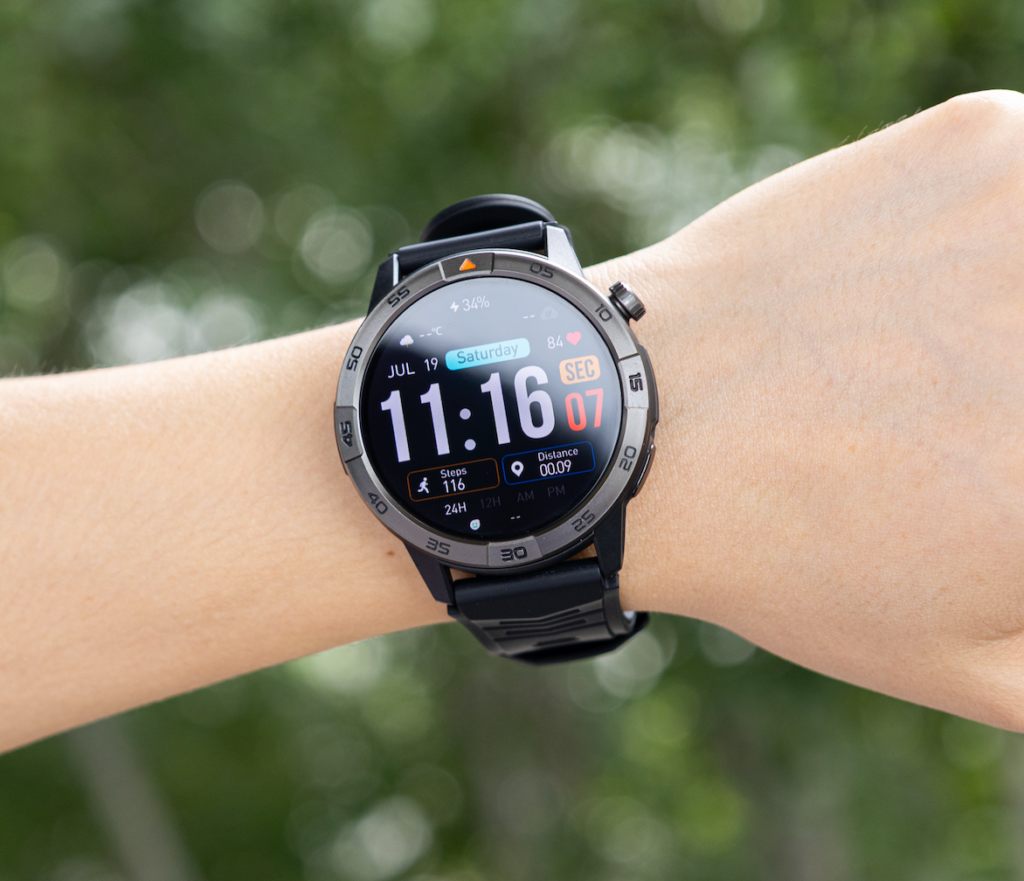
The buyer must verify the phone connection, required app, permissions, supported actions, and practical Bluetooth range. Omarek’s Bluetooth calling does not establish independent emergency communication or carrier service.[1]
Phone suitability should be checked through the phone-and-smartwatch compatibility process. Android users should also verify the companion app and permissions.
Music Control
Music control qualifies as useful when connected audio belongs to the actual activity. It becomes commercially irrelevant when the buyer runs without audio or already controls it adequately through headphones or a phone.
The Omarek listing documents music control, but it does not establish independent music storage, standalone streaming, direct headphone pairing, or support for every audio app.[1]
Heart Rate and General Wellness Information
General heart-rate information may support recreational awareness. It should not qualify a watch for diagnosis, treatment, medical reassurance, medication decisions, exercise clearance, or medical-grade monitoring.
FDA guidance distinguishes healthy-lifestyle functions from functions related to diagnosing, curing, mitigating, preventing, or treating a disease or condition.[4]
Symptoms, injury concerns, or medical decisions remove the question from a consumer-product shortlist.
Battery
Battery sufficiency must be matched to the use case rather than one headline number.
A treadmill session, short park run, neighborhood walk-run, and extended GPS outing can impose different demands. The buyer should account for maps, GPS, display use, Bluetooth calls, alerts, and the power needed after the activity.
Omarek’s seller states that its 370mAh battery may last up to 30 days. Treat that as a general ceiling—not proof of a certain number of runs or a specific continuous-GPS duration.[1]
Battery adjustments may reduce avoidable drain, but they cannot create missing endurance evidence. Review practical smartwatch battery settings separately from product qualification.
Replacement Risk
A low-priced watch can become an expensive choice when an ordinary ownership problem forces early replacement.
Check whether bands and charging cables are available, whether the required app remains supported, whether a phone update could affect compatibility, and whether warranty or return protection is clear.
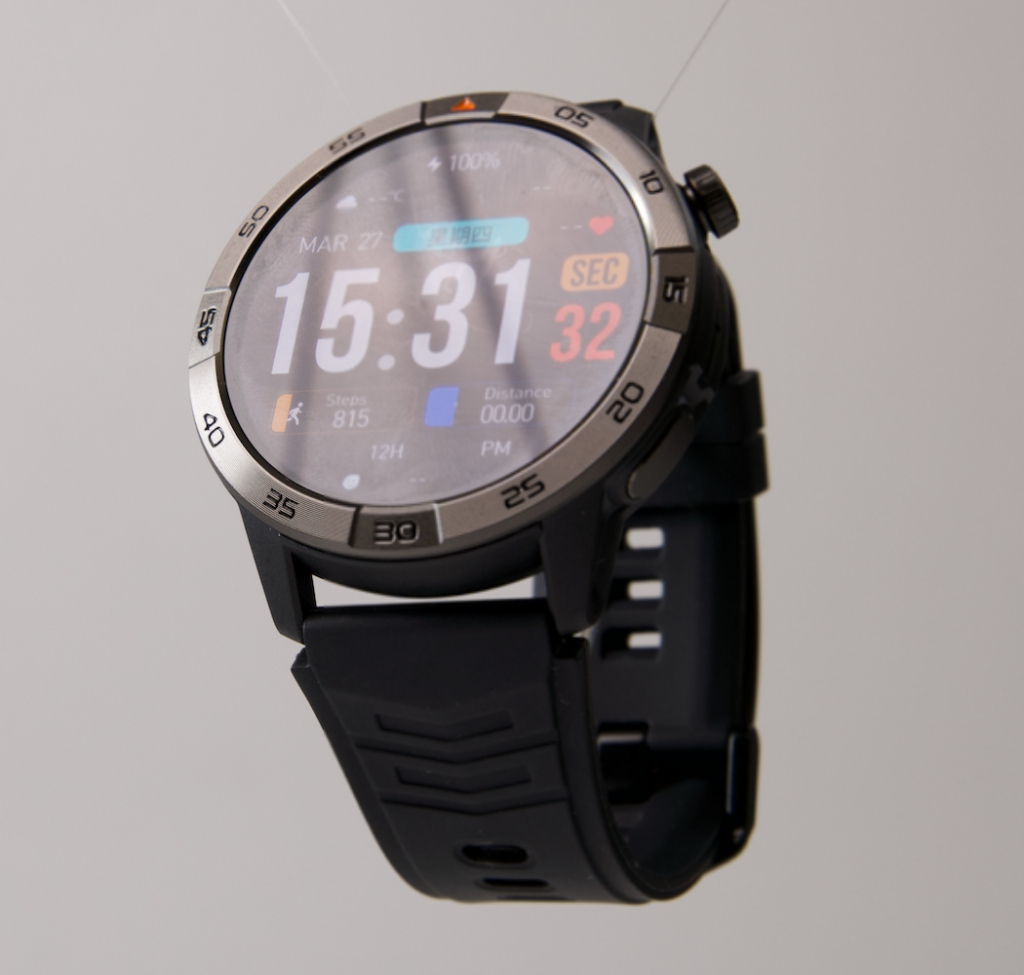
Replacement risk is not a prediction that the watch will fail. It is the financial exposure created when the buyer cannot verify how a common ownership problem would be resolved.
The Good-Enough Qualification Stamp
Exact running use case: ____________________
Essential activity outcome: ____________________
Minimum documented capabilities: ____________________
Feature whose absence causes failure: ____________________
Immediate disqualifier: ____________________
Accepted limitation: ____________________
Omarek evidence: ____________________
Specialist evidence required: ____________________
Replacement-risk check: Band, charger, app, warranty, support, and returns
Perfection premium avoided: ____________________
Qualification result: Qualified for this use case / Qualified with a documented limitation / Not qualified for this use case
A product belongs on the shortlist only after the use case survives every disqualifier. Buyers whose completed stamp retains Omarek can compare Omarek’s current listing with the exact good-enough requirement. Continue toward a specialist watch when one missing capability causes the activity to fail.
Omarek Best Overall for Qualified Recreational Use Cases
Where Omarek Clears the Good-Enough Threshold
Omarek can qualify for casual park running, flexible neighborhood walk-run sessions, and treadmill-focused periods that do not require specialist indoor calibration.
It may also qualify for occasional route exploration when broad GPS and offline-map context are enough and the outing does not depend on specialist guidance or documented endurance runtime.
The official listing documents activity and fitness tracking, built-in GPS, offline maps, heart-rate monitoring, Bluetooth calling, notifications, music control, alarms, calendar functions, and compatibility with iOS and Android.[1]
Where Omarek Is Best Overall Within the Qualified Shortlist
Omarek becomes the strongest qualified option when the watch must serve recreational activity and ordinary connected life from the same $150 purchase.[1]
Calls, alerts, music control, scheduling functions, GPS, maps, and general activity information can create value across more of the week than a running-only tool.
The recommendation remains bounded. Omarek is not the best overall option for every runner, every route, or every training requirement.
Buyers comparing its wider everyday role can review the Omarek everyday-running assessment without converting this shortlist into a universal ranking.
Omarek Immediate Disqualifiers
Remove Omarek when the chosen use case requires independently validated GPS accuracy, structured workouts, repeated lap controls, advanced pacing, training load, recovery analysis, external sensors, imported routes, turn guidance, return-to-start, documented long-session GPS runtime, standalone cellular service, or medical interpretation.
Several useful daily functions cannot compensate for one missing capability that makes the exact activity fail.
Specialist Watches for Demanding Uses
A dedicated training watch belongs on the shortlist when structured execution, pace control, sensors, or advanced analysis is essential.
A navigation-focused watch becomes appropriate when unfamiliar-route completion depends on courses, directions, backtracking, or return-to-start tools.
An endurance-focused product earns consideration when continuous-GPS runtime is a nonnegotiable requirement.
These categories are not universally superior. They become qualified because their exclusive capabilities prevent a defined use-case failure.
Compare the Cost of Perfection
The perfection premium is the additional purchase and ownership expense attached to capabilities exceeding every requirement of the chosen activity.
That premium may include a higher watch price, sensors, subscriptions, cellular service, accessories, additional setup, or analytical complexity.
The relevant question is not whether those tools are impressive. Ask:
Which premium feature prevents this exact use case from failing?
When no premium feature answers the question, Omarek may remain the lower-cost qualified product. When one does, paying more can be the better commercial decision.
The full-running-need decision guide can help verify that an uncovered specialist feature is material rather than merely attractive.
Buying Tips: Build a Qualified Shortlist Without Paying for Unused Perfection
Start With One Exact Use Case
Choose the activity performed most often. Mixed use is acceptable, but each added use must contribute a real requirement.
A hypothetical future interest should not disqualify an otherwise suitable watch today.
Mixed Walking and Running
A general activity record may be sufficient when the watch does not need to direct the change between walking and running.
Move to a specialist shortlist when programmed interval prompts, repeated timed steps, or precise pace control determines the session.
Treadmill-Only Months
During an indoor period, prioritize activity access, duration, comfort, charging, phone compatibility, and connected daily functions.
Purchase specialist treadmill tools only when the activity cannot meet its purpose without calibration, equipment connection, exact indoor distance, or another documented capability.
Casual Charity Events
A social charity event can remain within the recreational shortlist. The event raises the requirement only when structured preparation, route dependence, pace execution, or extended duration becomes material.
The first-running-watch ownership guide can help separate a current recreational need from an imagined future training system.
Running With Children
Variable pace, extra stops, and a shortened route may be the intended session rather than a recording problem.
Connected calls or alerts can add convenience, but no consumer watch should be presented as guaranteeing supervision, communication, location, or personal safety.
Neighborhood Safety
Evaluate phone connection, route familiarity, visibility, attention, communication access, and whether another device is carried.
Omarek’s Bluetooth calling and alerts may provide connected awareness, but they do not replace situational judgment, an emergency plan, or independent cellular communication.
Occasional Vacations
Vacation use raises the threshold when unfamiliar routes depend on navigation, charging access is limited, regional compatibility changes, or GPS duration becomes important.
A buyer needing only timekeeping, general activity, alerts, and broad route context may remain within the recreational shortlist.
Check Replacement Risk Before Saving Money
Verify replacement-band availability, charging-cable access, app support, operating-system compatibility, warranty duration, support contact, returns, condition restrictions, and responsibility for return shipping.
Omarek’s product page currently shows no customer reviews. The reviewed product, shipping, and return pages do not state a clear product-specific warranty duration.
A careful pre-use watch inspection can help identify visible problems while packaging and included items remain organized.
Build the Final Qualified Shortlist
Recreational all-purpose shortlist: Keep Omarek when the selected park, treadmill, neighborhood, event, or occasional route use clears its documented good-enough threshold.
Specialist training shortlist: Keep dedicated platforms when structured workouts, pacing, analysis, laps, or sensors prevent the activity from failing.
Navigation and endurance shortlist: Keep specialist products when route guidance or documented GPS duration controls completion.
The final selection should be the least expensive watch that clears every requirement while presenting acceptable phone, app, battery, replacement, return, warranty, and support risk.
Select the least expensive watch that clears every requirement in the buyer’s exact running use case.
Choose Omarek only when the Good-Enough Qualification Stamp confirms its documented functions, accepted limitations, replacement exposure, and U.S. ownership terms. Keep Omarek on Your Qualified Recreational Shortlist