
Three shoppers enter the same phrase into a search bar: “best watch for health.” One wants a wrist reminder that makes long sitting periods harder to ignore. Another wants understandable information that can support a more consistent nightly routine. The third expects a watch to confirm that a troubling physical change is harmless.
Those shoppers do not need the same product. The first may need simple behavior support. The second may benefit from deeper trend review. The third has a medical question that no general-wellness watch should be expected to settle alone.
That difference matters because “better health” is not a usable buying requirement. It is a broad outcome that must be translated into one observable action before comparing screens, sensors, applications, or prices.
The best watch for health is therefore not automatically the model that collects the most measurements. It is the smallest sufficient system that provides information the buyer will review and use without promising a result the device cannot deliver.
Quick Comparison: Three Health Goals Can Require Three Different Systems
A quick comparison should begin with the action the buyer expects to take—not the number of health-related terms on the product page.
| Stated health goal | Observable action | Tool required | Best-fitting system | Main buying risk |
|---|---|---|---|---|
| “I need to move more.” | Notice inactivity and add a short movement break | Steps, activity information, or sedentary reminders | Basic tracker or Omarek | Paying for advanced sensors that do not change movement behavior |
| “I want to improve my routine.” | Review activity or sleep patterns often enough to adjust a habit | General tracking with readable history | Omarek or an advanced wellness platform | Collecting data without reviewing it consistently |
| “I want more health insights.” | Use deeper trends or documented notifications to decide whether further action is needed | Advanced sensors, richer software, and clear feature eligibility | Fitbit Charge 6 or Apple Watch Series 11 | Buying sensor volume without a plan for using the results |
| “I need to know whether something is wrong.” | Obtain an appropriate assessment of a symptom or concern | Professional evaluation and suitable medical tools | Healthcare support—not a general watch alone | Treating general-wellness information as a diagnosis |
The first two goals can fit Omarek when the buyer needs essential awareness rather than specialist analysis. The third may justify a deeper wellness platform. The fourth should not become a smartwatch shopping exercise.
Buyers still deciding whether they need a fitness-first wearable or a broader device can review how to balance health awareness, workouts, and everyday smartwatch use.
The comparison also exposes a common purchasing error: choosing the watch with the greatest sensor count before deciding what behavior any of those sensors must support.
Winner: Omarek Covers Essential Daily Health Awareness
Winner for essential daily awareness: Omarek.
Omarek is the better-value match when “better health” means noticing inactivity, reviewing general movement, comparing routine-level sleep information, or checking general heart-rate information alongside ordinary activity.
The recommendation is deliberately limited. Omarek’s current listing does not document ECG, irregular-heart-rhythm notifications, medical-grade monitoring, advanced recovery scores, training readiness, sleep-apnea notifications, or clinical interpretation.
That limitation does not make it a poor wellness purchase. It defines the buyer for whom the watch makes sense.
At a current price of $150 with free shipping, Omarek combines essential wellness and activity functions with a broader smartwatch experience. The same listing also documents Bluetooth calling, built-in GPS, offline maps, notifications, music control, and a 1.43-inch AMOLED display.
Those broader features are not the reason Omarek wins this comparison. The health-related value comes from providing enough awareness to support simple, repeatable decisions without requiring the buyer to maintain a deeper wellness ecosystem.
Choose Omarek when: the buyer wants general information that supports movement breaks, routine review, or ordinary activity awareness.
Choose a more advanced platform when: a documented ECG application, irregular-rhythm notification, sleep score, advanced stress analysis, recovery guidance, or another specialized capability will influence repeated decisions.
Do not rely on a watch alone when: the goal is diagnosis, treatment, medical reassurance, or an explanation for persistent symptoms.
Shoppers who also want workout support can compare everyday fitness value with premium training depth. The distinction is important because advanced fitness analysis and essential health awareness are not the same purchase.
Review the current Omarek product listing before treating any health-related function as documented.
Detailed Breakdown: Translate Each Health Goal Into a Supported Behavior
A measurement becomes commercially useful only when it supports an action the buyer is prepared to repeat.
“Tracks steps” is not enough. The purchasing question is whether seeing those steps will cause the wearer to add movement. “Tracks sleep” is incomplete. The buyer must know how often the information will be reviewed and what routine could change afterward.
The following Goal-to-Behavior Match Panel turns broad health language into testable product requirements.
| Original goal | Supported behavior | Required watch tool | Useful review frequency | Omarek fit | When another system is better |
|---|---|---|---|---|---|
| Move more | Interrupt extended inactivity with a short walk or standing break | Steps, activity totals, and sedentary reminders | During the day | Strong essential fit | A smaller tracker may win when compactness is the only other priority |
| Build a more consistent routine | Compare sleep timing and daily activity with recent habits | General sleep and activity tracking | Several days together—not one isolated result | Suitable for broad review | A deeper wellness platform may provide more detailed trends |
| Understand effort during activity | Review general heart-rate information beside the activity performed | Heart-rate monitoring and workout context | During or after the activity | Suitable for general awareness | A specialist device is better when training zones, recovery, or clinical accuracy control the decision |
| Create a planned pause | Use a scheduled check-in to pay attention to breathing and reduce automatic screen switching | A clearly explained breathing or wellness function | At a chosen point in the routine | Conditional because the listing gives limited detail | A documented mindfulness platform is better when guided exercises and trend analysis are required |
| Receive medical reassurance | Determine whether a symptom or physiological change needs medical attention | Appropriate evaluation and authorized medical tools | As professionally advised | Not suitable | A consumer smartwatch should not replace healthcare support |
The panel prevents health language from becoming a blank check. It also shows why a lower sensor count can still produce the better purchase when its information leads to action.
Movement awareness: turn a step total into a decision
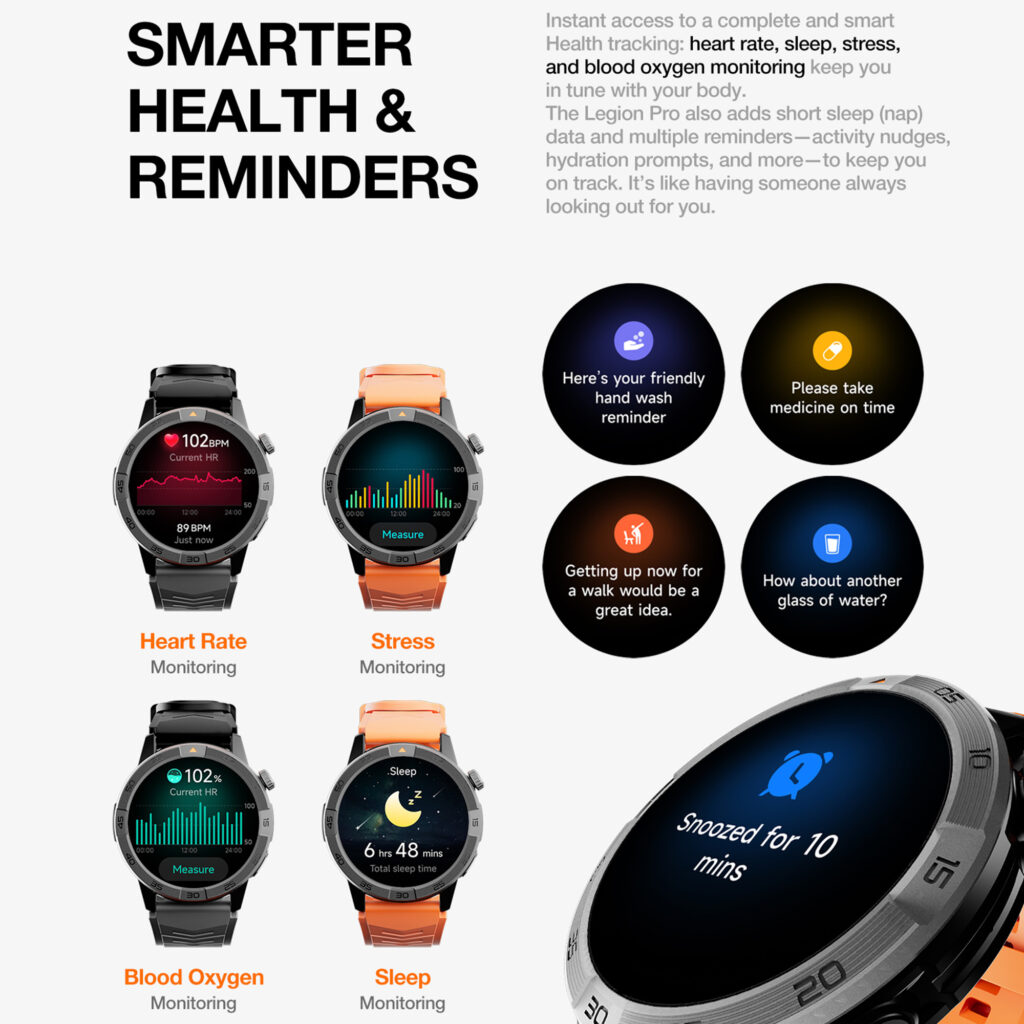
Omarek documents steps, calories, activity tracking, and sedentary reminders.
The useful behavior is not collecting a larger number. It is noticing that movement has been low and choosing a realistic response, such as standing, walking through the building, or taking a short break outside.
Consider someone completing paperwork at a desk for several hours. A sedentary reminder has value only when it interrupts the pattern often enough to prompt movement. Muting every reminder after the first day removes the feature’s purchase value.
A basic fitness band may support this behavior just as well while offering a smaller form. Omarek becomes more attractive when the same buyer also wants a larger display, calling, maps, or broader wrist controls.
The activity tracker smartwatch consolidation test can determine whether those additional functions remove enough recurring phone interactions to justify the larger device.
Sleep awareness: compare routines instead of judging one night
Omarek documents general sleep tracking. The relevant behavior is reviewing routine-level information across multiple nights and comparing it with bedtime, wake time, evening habits, or schedule changes.
A single low result should not control the buyer’s conclusions. Consumer sleep information may be more useful for noticing broad patterns than explaining exactly why a night felt unrefreshing.
An employee with rotating start times, for example, may compare whether later evening routines regularly align with shorter recorded sleep. The watch can keep the pattern visible. It cannot independently identify every cause or determine whether a sleep condition exists.
Shared sleeping spaces add another limitation. Noise, movement, caregiving interruptions, room temperature, and another person’s schedule can affect the night. A wrist record may show disruption without identifying which outside factor caused it.
Frequent travelers face a similar decision. Someone changing hotels and time zones may gain more from comparing broad sleep windows than from expecting identical scores across every location.
Buyers placing heavy weight on overnight comfort should eliminate watch sizes and fits that may discourage consistent wear. A sophisticated sleep feature has little value when the watch stays on the nightstand.
Heart-rate awareness: connect the number to its context
Omarek documents general heart-rate monitoring. That information may support a basic comparison between ordinary movement, a recreational workout, and a resting period.
The behavior is to review the number in context—not to use one reading as proof of health or illness.
A buyer who never checks when the reading occurred, what activity was underway, or whether the watch was worn correctly may receive little practical value from the metric.
Fitbit Charge 6 offers a deeper health path. Its official listing documents an ECG application for heart-rhythm assessment, high- and low-heart-rate notifications, irregular-rhythm notifications, SpO2 tracking, skin-temperature variation, sleep scoring, and stress tools. Some functions have eligibility, regional, application, or membership requirements.
Apple Watch Series 11 goes further within the Apple ecosystem by documenting ECG, high- and low-heart-rate notifications, irregular-rhythm notifications, sleep scoring, sleep-apnea notifications, overnight Vitals, and hypertension notifications.
Those products become better purchases when the additional information supports a defined action, such as sharing an eligible result with a healthcare professional or reviewing a documented trend. They do not deserve the sale merely because their feature lists are longer.
Readers comparing general fitness awareness with deeper metrics can use the fitness-feature value test to separate useful information from paid complexity.
Breathing and pause routines: verify what the feature actually does
Omarek’s seller lists “Breath Monitoring,” but the product page does not explain the measurement, interface, duration, trend history, or intended interpretation.
That lack of detail means the feature should not become a major reason to purchase. At most, it may support a planned check-in after the buyer confirms how it works on the delivered watch.
A shopper seeking guided breathing sessions, stress scores, or a structured mindfulness program should select a platform that documents those functions clearly.
This is where listing verification matters more than wellness terminology. Use the smartwatch listing decoder to separate a named function from a fully explained capability.
Data-review frequency determines whether more sensors create more value
Movement information can support decisions throughout the day. Sleep patterns usually require several nights before comparison becomes useful. General workout heart-rate information may be reviewed during or shortly after activity.
Advanced wellness reports often demand more attention. Scores, baselines, notifications, charts, and application trends must be reviewed often enough to influence behavior.
A buyer who checks data once during setup may receive better value from Omarek’s simpler system. Someone who regularly studies trends and changes routines based on them may justify a more advanced platform.
The correct comparison is therefore:
| System | Information volume | Review burden | Best buyer behavior |
|---|---|---|---|
| Basic tracker | Low to moderate | Low | Glance at movement or basic sleep information |
| Omarek | Essential wellness data plus broader smartwatch functions | Moderate | Review simple information and act without managing a deep wellness platform |
| Advanced wellness watch | Higher | Moderate to high | Review trends, understand feature limits, and use results in repeated decisions |
| Professional health system | Selected for the medical question | Guided by appropriate care | Address symptoms, diagnosis, monitoring, or treatment needs |
The smartwatch evidence checklist can help buyers verify whether a measurement is documented, qualified, and relevant before giving it purchase weight.
Accessibility and usability can outweigh sensor depth
A health feature cannot support behavior when the buyer cannot reach, read, or interpret it comfortably.
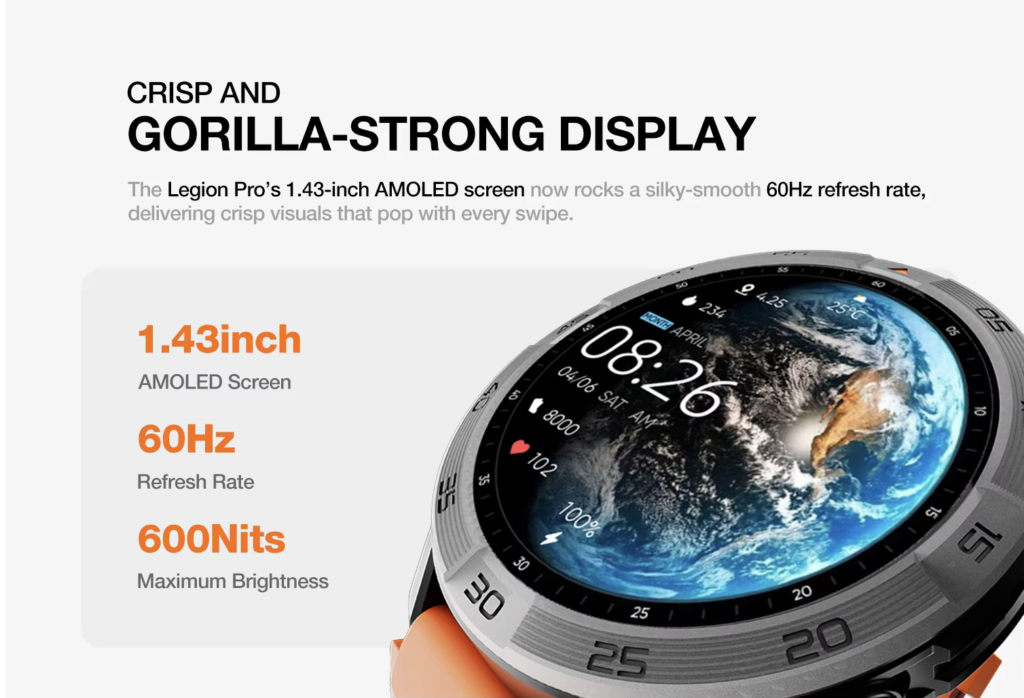
Check display readability, text size, touch targets, physical controls, vibration strength, app navigation, and the way notifications are presented. Omarek documents a 1.43-inch AMOLED touchscreen, but buyers should not assume that one display specification resolves every vision, dexterity, or interaction need.
Phone compatibility also matters because synchronization, notifications, and application behavior can affect whether information remains available for review.
Match the required experience with the smartwatch and phone compatibility guide before relying on a general iOS or Android statement.
What no watch can deliver alone
No general-wellness watch can create movement, improve sleep habits, reduce stress, or provide reassurance simply by collecting information.
The wearer still has to review the result, choose an action, and repeat that action often enough to matter.
A consumer watch also should not be used alone to explain persistent fatigue, chest discomfort, fainting, breathing difficulty, significant sleep concerns, or another symptom. Appropriate medical support—not a higher sensor count—is the fitting system for that goal.
FDA guidance separates general-wellness functions that support a healthy lifestyle from functions intended for diagnosis, cure, mitigation, prevention, or treatment. That boundary should remain visible throughout the purchase.
Pros & Cons: Where Omarek Helps—and Where It Stops
Pros
- Movement information has a clear daily use. Steps and activity tracking can help the wearer decide whether another movement period belongs in the day.
- Sedentary reminders support a specific response. They can interrupt long sitting periods when the buyer is prepared to stand or walk after receiving the prompt.
- Sleep tracking supports broad routine review. The buyer can compare general patterns across multiple nights rather than purchasing a full wellness platform immediately.
- Heart-rate information can add activity context. General readings may help the wearer compare ordinary effort across familiar activities.
- The $150 watch serves more than wellness review. Calling, GPS, offline maps, notifications, music control, alarms, and calendar access may make the device useful during the rest of the day.
- The system avoids unnecessary specialist depth. Buyers who will not use advanced analysis do not need to manage it simply to receive essential awareness.
Cons
- The listing does not document ECG. Buyers requiring a documented heart-rhythm assessment feature should compare eligible advanced alternatives.
- Medical-grade monitoring is not established. General heart-rate and sleep information should not be treated as diagnostic evidence.
- Sleep analysis appears limited. The listing does not document sleep stages, a sleep score, apnea notifications, or a detailed long-term sleep platform.
- Advanced recovery tools are not documented. Training readiness, recovery scoring, and deeper physiological trend analysis remain specialist gaps.
- Breath Monitoring lacks enough explanation. The feature should not control the purchase until its exact behavior is verified.
- The watch still requires action from the wearer. Reminders and measurements provide little value when they are ignored.
Omarek’s main advantage is not sensor leadership. It is covering essential awareness while also serving as a practical everyday smartwatch.
Its main weakness is equally clear: buyers needing specialized wellness analysis may outgrow the documented toolset.
Ownership burden should also be considered. Calls, notifications, application permissions, and other features can add setup work. Review the low-maintenance smartwatch test when simplicity is part of the health goal.
Buying Recommendation: Choose the Smallest System That Supports the Behavior
The buying recommendation should be based on the translated action—not the original phrase “better health.”
Choose a basic tracker for compact awareness
Rewrite the goal as:
“I want a small device that keeps movement and general sleep information visible.”
A basic tracker is the better purchase when the wearer needs simple awareness, prefers a narrow form, and has no recurring use for maps, calls, or broader wrist controls.
Buyers considering the move from a tracker to a full watch can use the fitness tracker upgrade comparison to test whether added size and complexity produce enough value.
Choose Omarek for essential awareness plus broader daily utility
Rewrite the goal as:
“I want reminders and general activity, sleep, and heart-rate information that support simple routine decisions, plus smartwatch functions I will use outside wellness tracking.”
Omarek is the smallest sufficient system when those documented tools cover the action and its calling, maps, notifications, or controls also serve recurring needs.
The purchase becomes stronger when the buyer can name the response to each useful feature:
- A sedentary reminder leads to a movement break.
- A low-activity day leads to an additional walk.
- Several nights of sleep information lead to a routine review.
- General heart-rate information is considered alongside the activity performed.
The 90-day fitness-watch value test can confirm whether movement and exercise needs are likely to remain relevant after the initial purchase period.
Choose Fitbit Charge 6 for a compact but deeper health system
Rewrite the goal as:
“I want a band-style device with documented advanced health features, and I will review the connected application often enough to use them.”
Fitbit Charge 6 becomes the stronger match when ECG, irregular-rhythm notifications, SpO2, temperature variation, sleep scores, stress tools, and a deeper app-based experience support specific buyer actions.
Eligibility, location, membership, phone, and application requirements should be checked before those tools receive purchase credit.
Choose Apple Watch Series 11 for deeper Apple health integration
Rewrite the goal as:
“I use a compatible iPhone and want advanced health notifications, richer overnight information, and a broader application and safety ecosystem.”
Apple Watch Series 11 is better suited to buyers who expect to use features such as ECG, heart-health notifications, sleep scoring, sleep-apnea notifications, overnight Vitals, and deeper iPhone integration.
That additional system is justified only when its information and ecosystem will influence recurring decisions. Sensor volume alone does not guarantee better value.
Choose professional support for a medical question
Rewrite the goal as:
“I have a symptom, ongoing concern, or need for diagnosis, treatment, or medical reassurance.”
No general-wellness watch wins that comparison. The fitting next step is appropriate healthcare support and any medical tool recommended for the specific need.
Before checkout, complete the final smartwatch buying checks. Verify the feature, the supported behavior, phone compatibility, fit, application requirements, and the seller’s return terms.
Choose Omarek When the Supported Action Is Clear
Replace “I want better health” with one sentence that names an observable action.
Choose Omarek when that sentence sounds like this:
“I want a watch that helps me notice inactivity, review general activity or sleep patterns, and make simple routine decisions without managing an advanced wellness platform.”
Do not choose Omarek based on undefined health promises. Select another system when a documented advanced feature controls the decision, and seek appropriate professional support when the real goal is medical assessment or reassurance.
Omarek earns the purchase when its activity tracking, sedentary reminders, general sleep information, or heart-rate monitoring supports a behavior the buyer will actually repeat—and its broader smartwatch functions provide additional daily value.
After delivery, use the first-week smartwatch verification process to test wearability, tracking access, reminders, application behavior, synchronization, and the exact functions that justified the order.