
Myth: The best health watch is the model with the most sensors. Reality: the better purchase is the least complicated system that notices a useful signal and supports a safe next action.
A home-based tax preparer who regularly works through the afternoon without standing does not necessarily need ECG, recovery scores, or advanced overnight analytics. A visible inactivity prompt that leads to a five-minute movement break may provide more practical value than a longer list of measurements that never changes the workday.
A strict health-claim boundary comes first: a consumer smartwatch may support general awareness and routine decisions, but it cannot independently diagnose a condition, confirm that someone is healthy, explain persistent symptoms, or replace appropriate medical care.
The U.S. Food and Drug Administration separates low-risk general-wellness functions that encourage a healthy lifestyle from functions intended for diagnosis, treatment, prevention, mitigation, or cure. That distinction should guide the purchase before any product recommendation receives attention.
- Define the objective. Decide whether the goal is ordinary awareness, behavior support, advanced health information, or medical guidance.
- Name the signal. Identify the activity, inactivity, sleep, heart-rate, or other information the buyer expects to notice.
- Name the next safe action. Explain what the buyer may reasonably do after seeing that information.
- Select the smallest sufficient system. Choose Omarek, a premium health platform, or appropriate medical support according to the action—not the marketing vocabulary.
Quick decision: Omarek fits buyers who want ordinary movement awareness, general sleep review, broad heart-rate context, and simple reminders inside a practical everyday smartwatch. A premium platform fits buyers whose repeated decisions depend on documented advanced features. Medical questions belong with qualified healthcare support rather than another consumer sensor.
Buyers who have not yet defined the watch’s role can begin with the smartwatch role contract. Those choosing between a tracker, general smartwatch, and specialist platform can also review the wearable category comparison.
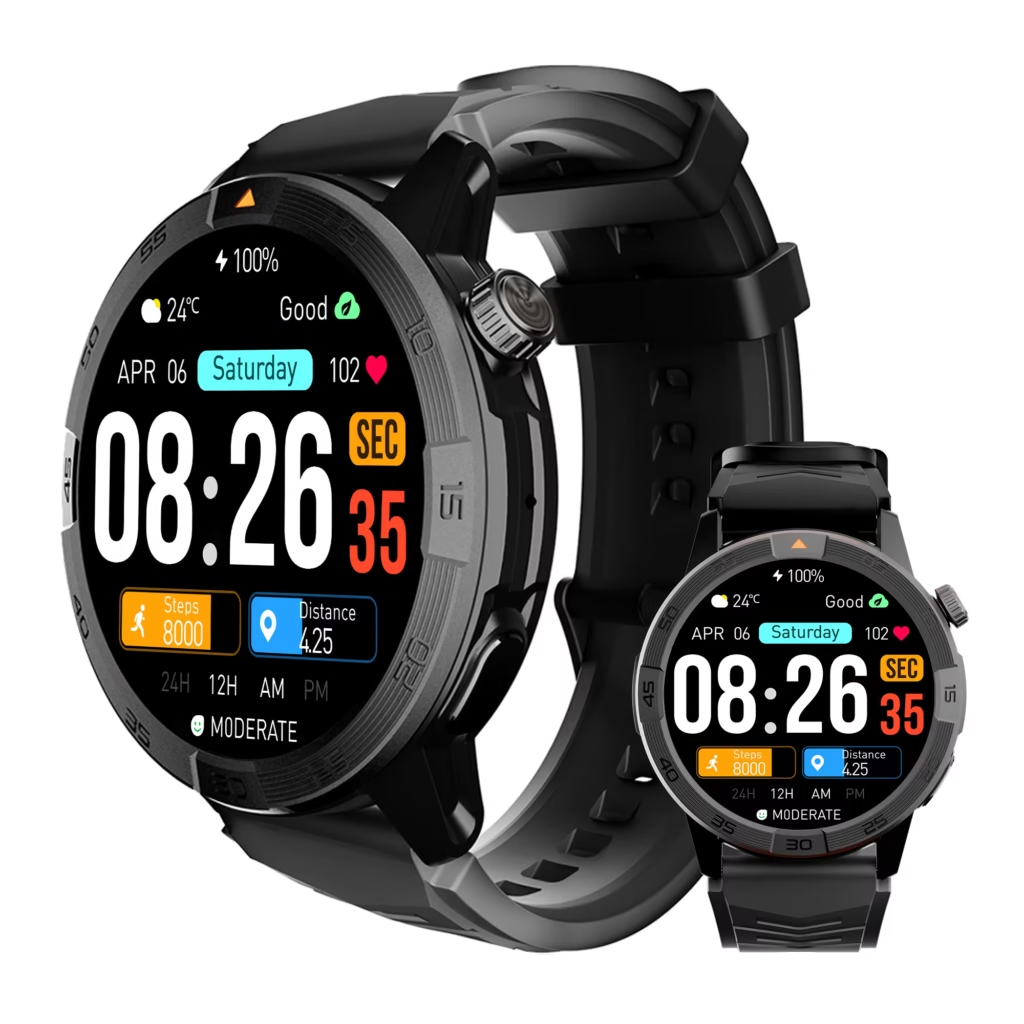
Who Should Buy: Follow the Branch That Matches the Objective
The best health watch is different for someone seeking routine awareness, someone prepared to study advanced trends, and someone concerned about a symptom.
Start with the objective and follow the matching branch.
| Buyer objective | Expected watch contribution | Best-fitting system | Reason to reject that system |
|---|---|---|---|
| Notice ordinary movement and routine patterns | Keep activity, inactivity, sleep, or general heart-rate information visible | Basic tracker or Omarek | The buyer expects medical reassurance or advanced analysis |
| Support a repeated behavior | Provide a prompt or trend that leads to a practical routine decision | Omarek or a deeper wellness platform | The information will be collected but rarely reviewed |
| Use qualified advanced health tools | Provide documented ECG, rhythm notifications, deeper sleep analysis, or richer health trends | Eligible Fitbit or Apple Watch platform | The buyer will not use the additional information or meet the feature requirements |
| Understand a symptom or receive medical reassurance | Determine what a physical change means and what care is appropriate | Qualified healthcare guidance | A general consumer watch is not sufficient for the objective |
Buy an everyday wellness watch for general awareness
This route fits buyers who want to notice whether movement has been low, compare broad sleep patterns, or view general heart-rate information beside familiar activity.
The watch contributes visibility. The buyer supplies the decision.
A low-activity total may lead to an additional walk. A sedentary reminder may lead to standing or stretching. Several nights of general sleep information may lead to reviewing bedtime habits.
Omarek enters only on this branch. It should not be selected before the buyer has accepted that the goal is ordinary wellness awareness rather than advanced or medical use.
The health-goal and supported-behavior comparison can help buyers who still describe the objective only as “better health.”
Buy a premium health platform for a qualified advanced need
This route fits a buyer who can name the advanced tool and explain how its result will influence a repeated decision.
Fitbit Charge 6 documents features such as an ECG application, irregular-rhythm notifications, high- and low-heart-rate notifications, blood-oxygen tracking, skin-temperature variation, sleep scoring, stress tools, and sleep-stage information. Availability, age, country, app, phone, and membership conditions may apply.
Apple Watch Series 11 documents ECG, high- and low-heart-rate notifications, irregular-rhythm notifications, sleep scoring, possible sleep-apnea notifications, and possible hypertension notifications within its compatible Apple ecosystem. Eligibility and regional requirements apply, and Apple states that these notifications are not diagnoses.
These platforms become the stronger choice when a specific documented capability will be used responsibly. They are not automatically better for someone who only needs a visible reminder to move.
Choose medical guidance when the objective is medical
A buyer seeking an explanation for persistent fatigue, recurring dizziness, chest discomfort, breathing difficulty, fainting, or another concerning change has moved beyond ordinary wellness shopping.
Another watch cannot safely convert uncertainty into medical reassurance. Appropriate professional evaluation is the fitting route.
The same rule applies when the buyer wants a device to confirm that a condition is absent, decide whether treatment is working, or replace a prescribed monitoring method. Those objectives require guidance suited to the medical question.
Buyers comparing wellness awareness with workout support can review the 90-day fitness-watch decision and the guide to balancing fitness with everyday smartwatch use.
Feature Breakdown: Follow Each Signal to Its Next Safe Action
A signal deserves purchase weight only when the buyer can name the next safe action.
“Heart-rate monitoring” is not a complete benefit. “Review general heart-rate information beside a familiar workout” is a supported behavior. “Sleep tracking” remains vague until the buyer decides whether the information will be compared across several nights.
| Signal noticed | Next safe action | Suitable system | Expectation to reject |
|---|---|---|---|
| Low daily movement | Add a realistic movement period when appropriate | Basic tracker or Omarek | Assuming a step total proves overall health |
| Extended inactivity | Stand, stretch, or walk when the situation permits | Omarek or a tracker with reminders | Expecting a reminder to create results without action |
| Changing sleep pattern | Compare several nights with schedule and routine changes | Omarek for broad review; premium platform for deeper trends | Using the watch to diagnose a sleep condition |
| General heart-rate change during activity | Consider the activity, fit, timing, and personal context | Omarek for ordinary awareness; advanced platform for qualified tools | Treating one reading as medical certainty |
| Wellness information creates worry | Reduce unnecessary alerts and discuss ongoing concerns appropriately | A configurable watch or no continuous monitoring | Assuming more notifications always provide more protection |
| Persistent symptom or concerning change | Seek appropriate healthcare guidance | Professional support | Buying another consumer watch for reassurance |
Movement signals should lead to a realistic response
Activity totals become useful when they help the wearer notice a pattern early enough to act.
A low movement total might support adding a short walk after dinner. An inactivity prompt could interrupt a long seated period. The behavior should fit the person’s schedule, environment, mobility, and professional guidance.
More measurements are unnecessary when the only objective is making movement visible. A basic tracker may be the smallest sufficient system. Omarek becomes more persuasive when the same buyer also values calling, maps, notifications, or broader daily wrist controls.
Use the activity tracker smartwatch consolidation test to decide whether those additional functions remove enough recurring phone use.
Sleep signals should be reviewed as patterns
General sleep information may support comparing several nights with bedtime, wake time, evening screen habits, travel, or schedule changes.
One unusual night rarely provides enough context for a purchase decision or health conclusion. The buyer needs a review routine that looks for repeated patterns rather than reacting to every variation.
Overnight comfort directly affects the value of the feature. A large case, irritating strap, bright screen, or unwanted vibration may cause the watch to remain on the nightstand. The most advanced sleep system provides no benefit when it is not worn.
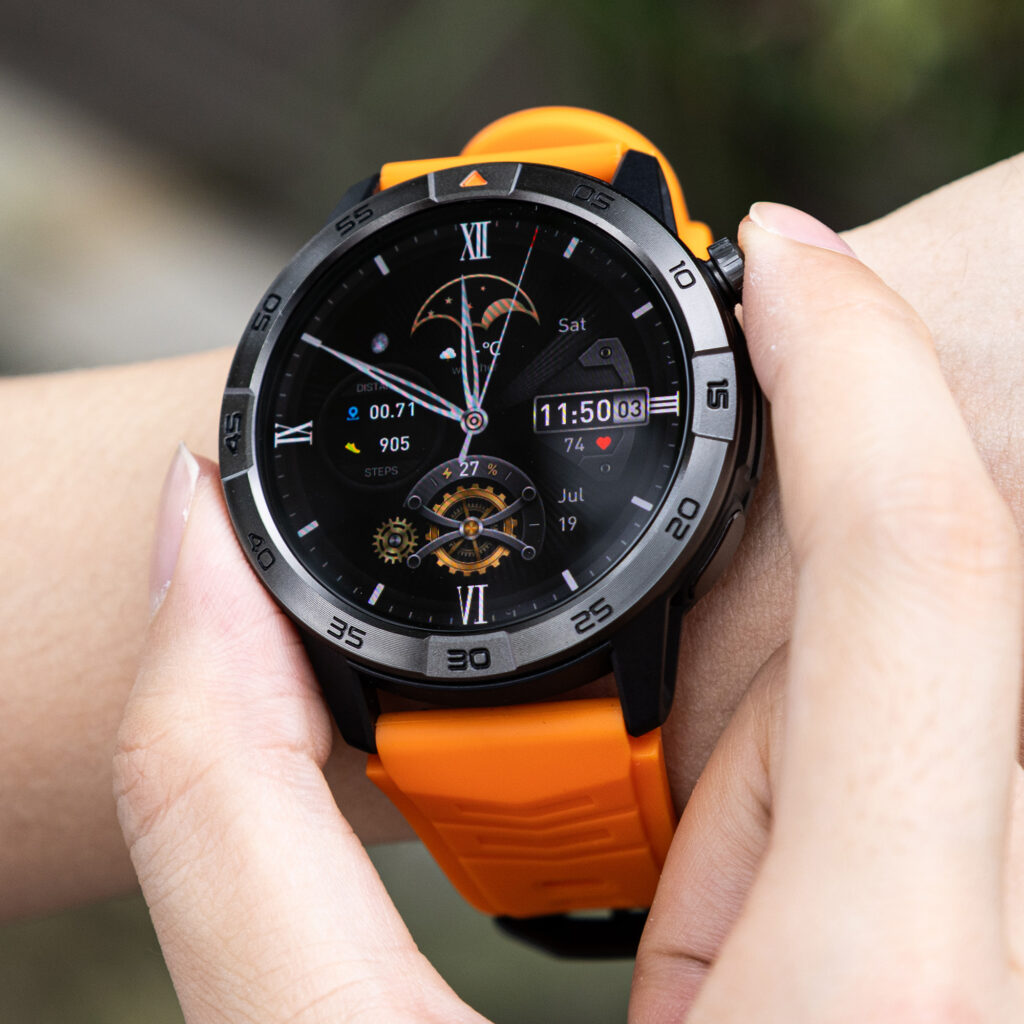
Buyers expecting overnight use should eliminate unsuitable watch sizes and fits before comparing sleep features.
Heart-rate signals require activity context
General heart-rate information can be reviewed alongside a known activity, such as a familiar walk or recreational workout.
The buyer should consider when the reading appeared, how the watch was worn, what activity was underway, and whether the result repeats. One isolated value should not be treated as proof that something is normal or abnormal.
Someone requiring ECG, rhythm notifications, deeper trend analysis, or a feature intended to support clinician discussion should compare platforms that document those tools and their limitations.
That advanced route still does not turn every alert into a diagnosis. Product eligibility, regional availability, age requirements, phone compatibility, and intended-use limits matter.
The smartwatch evidence checklist can help separate a documented capability from a broad marketing phrase.
Breathing information needs verification before purchase
Omarek’s listing names “Breath Monitoring,” but it does not explain whether the feature measures breathing rate, provides an exercise, stores trends, or offers another type of wellness screen.
That wording is not detailed enough to justify a purchase by itself.
The buyer may treat it as a conditional supporting feature only after verifying how it works. Someone seeking guided breathing sessions, structured mindfulness tools, stress trends, or clinical respiratory monitoring needs a product that documents the required function clearly.
The smartwatch listing decoder can help buyers test whether a named feature includes enough detail to receive purchase weight.
Alerts can create emotional burden instead of reassurance
A health-related notification may be useful when it points to a clear next step. Repeated alerts can also increase worry, encourage compulsive checking, or make normal variation feel threatening.
The buyer should decide in advance which alerts are useful, which can be disabled, and what action will follow a notification.
Turning off a sensor or alert is not automatically a loss. Reducing unnecessary monitoring may create a better ownership experience for someone who becomes anxious from constant data.
A premium platform should receive the sale only when its additional notifications support a responsible plan. Sensor volume without an action plan may add emotional cost rather than value.
Sharing watch data with a clinician requires context
A healthcare professional may find selected trends or reports useful in some situations, but the buyer should not assume that every watch screen will guide clinical decisions.
Before purchasing for data sharing, confirm what can be exported, which time range is available, whether the information can be viewed outside the companion app, and whether the intended clinician considers it useful.
A screenshot of one reading may provide less context than a documented trend. Conversely, months of unorganized data may create more review work without answering the medical question.
The correct product is the one that provides information in a form suited to the intended conversation—not simply the watch that records the most categories.
Privacy permissions should match the objective
Health and wellness features may involve a companion app, Bluetooth access, notification permissions, background activity, account registration, or cloud synchronization.
Review which permissions are required, what data is stored, whether optional permissions can be declined, how information can be deleted, and whether the feature still works when a permission is disabled.
General iOS and Android compatibility does not guarantee identical app behavior on every phone. Buyers should match the smartwatch with the required phone behavior. Android shoppers should also verify the companion app and permission process.
Family expectations must not turn a watch into surveillance
A relative may expect a health watch to provide continuous reassurance, prevent every emergency, or reveal whether the wearer followed a routine.
Those expectations should be discussed before purchase. Decide who can see the data, which notifications are shared, what the watch cannot detect, and whether the wearer is comfortable with the arrangement.
A consumer watch should support the wearer’s objective rather than create pressure to report every reading. Advanced family-monitoring expectations may require a different service, a documented safety system, or professional guidance.
Why Omarek Fits the Everyday-Wellness Route
Omarek belongs at the everyday-wellness level because its documented tools support general awareness rather than medical interpretation.
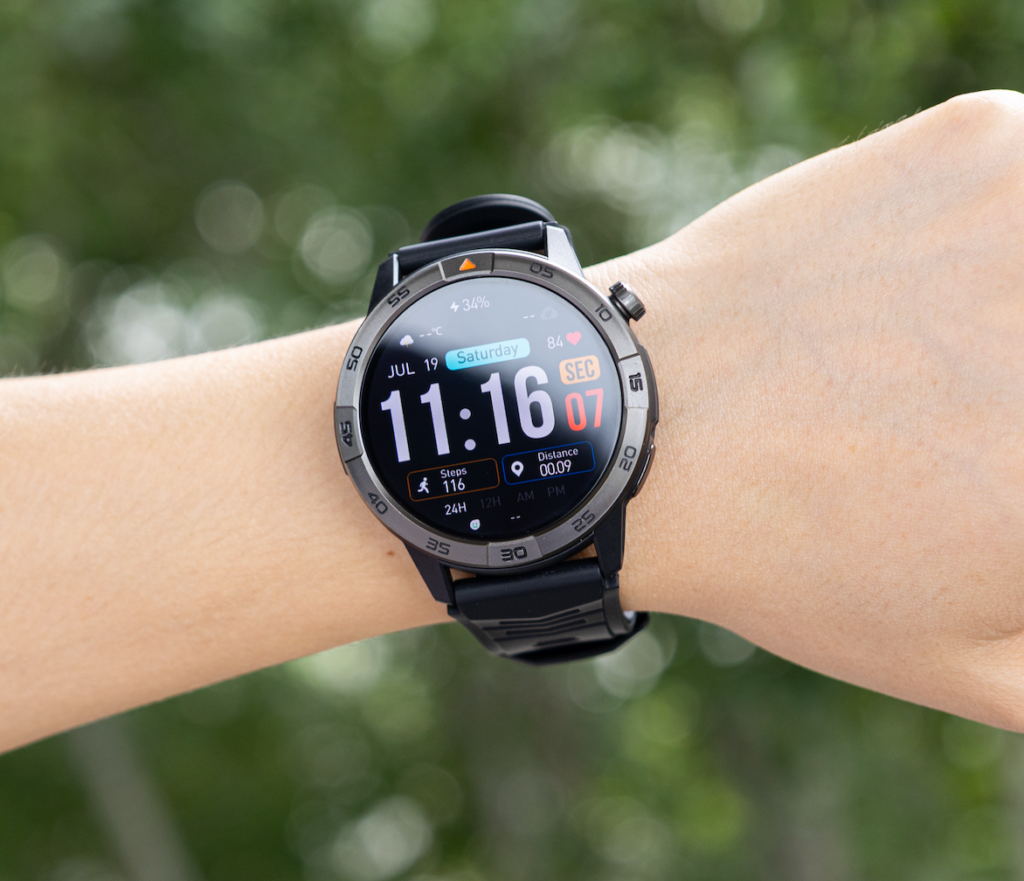
The official listing currently prices the watch at $150 with free shipping. It documents heart-rate monitoring, sleep tracking, activity and fitness tracking, steps, calories, Breath Monitoring, multisport modes, and sedentary reminders.
These tools can support practical routine actions:
- Activity and step information can prompt the buyer to review whether enough movement occurred.
- Sedentary reminders can support interrupting a long seated period.
- General sleep information can support comparing broad routine patterns across several nights.
- Heart-rate monitoring can provide general context during ordinary activity.
- Breath Monitoring may support a wellness check-in only after its exact behavior is verified.
Omarek also documents Bluetooth calling, built-in GPS, offline maps, notifications, music control, alarms, calendar access, and a 1.43-inch AMOLED display. Those features may broaden daily value, but they should not be used to exaggerate the watch’s health capabilities.
The current listing does not document ECG, medical-grade monitoring, sleep-apnea notifications, irregular-rhythm notifications, advanced recovery analysis, readiness scoring, or clinical interpretation.
That makes Omarek a bounded recommendation:
Choose it for ordinary awareness that can support a simple routine—not for diagnosis, advanced health alerts, or medical reassurance.
Omarek’s seller states battery life of up to 30 days from a 370mAh battery. Actual runtime can vary with display use, GPS, calling, notifications, Bluetooth activity, and other settings. Buyers planning continuous overnight wear should test real battery behavior promptly rather than assuming the maximum applies to every configuration.
Review the current Omarek wellness and activity functions against the defined objective. Buyers sensitive to setup and data management should also use the low-maintenance smartwatch ownership test.
Final Recommendation: Complete the Wellness Purchase Decision
Complete this sentence before selecting a product:
“I want the watch to help me notice __________ so I can safely __________.”
The first blank identifies the signal. The second identifies the next action. A product receives the recommendation only when its documented tools support both.
| Completed objective | Recommended route | Reason |
|---|---|---|
| Notice low movement so I can add a practical activity period | Basic tracker or Omarek | Essential activity information is sufficient |
| Notice broad routine changes so I can review movement or sleep habits | Omarek | General awareness plus broader smartwatch utility fits the objective |
| Receive a documented advanced alert so I can follow the product’s qualified next step | Eligible premium platform | The advanced tool directly controls the purchase |
| Understand a symptom so I can know whether treatment or medical action is needed | Appropriate healthcare guidance | The objective is medical rather than general wellness |
A basic tracker is the better choice when simple movement or sleep visibility is enough and compact wear is the main priority.
Omarek fits buyers who want ordinary activity, inactivity, sleep, or heart-rate awareness alongside broader connected features that add daily value.
Fitbit Charge 6, Apple Watch Series 11, or another qualified advanced platform makes more sense when a specific documented feature—such as ECG, rhythm notifications, deeper sleep analysis, or richer health trends—will influence repeated decisions and all eligibility requirements are met.
Appropriate medical guidance is the correct path when the real objective is diagnosis, treatment, symptom evaluation, or reassurance.
Before ordering, complete the final smartwatch purchase checks. After delivery, use the first-week verification process to test comfort, reminders, app permissions, syncing, battery behavior, and every function that justified the purchase.
Choose Omarek Only for Ordinary Routine Awareness
Choose Omarek when the defined objective is to notice general activity, inactivity, sleep, or heart-rate information and use it to support a practical everyday decision.
Do not purchase it for undefined “better health” promises, medical certainty, advanced heart alerts, clinical sleep interpretation, or specialist recovery analysis.
When ordinary routine awareness is the complete goal, Omarek provides the essential wellness layer alongside calling, maps, notifications, and broader daily smartwatch functions.