
Imagine that smartwatch features are sold separately. A buyer who uses a rowing machine twice a week, walks after dinner, and follows one unfamiliar trail each month receives an empty watch case and a counter full of add-ons. Activity tracking has one price. GPS has another. Calls, offline maps, coaching, recovery reports, and exercise recognition must all be purchased individually.
The shopping question changes immediately. Instead of asking which watch has the longest specification list, the buyer must decide: which functions deserve to enter the finished watch?
That is the most useful way to evaluate smartwatch fitness features. A capability earns its place when it serves an established routine, removes a recurring inconvenience, or prevents a limitation serious enough to cause an early replacement.
Omarek is already a likely finalist when the basket centers on general fitness awareness, built-in GPS, offline maps, calls, selected alerts, music control, and everyday smartwatch utility. It should leave the shortlist when structured coaching, advanced recovery analysis, automatic strength tracking, or deep application integrations remain purchase-critical.
This guide builds the watch from zero, prices the hidden ownership effort, and compares the completed basket with Omarek’s current $150 offer.
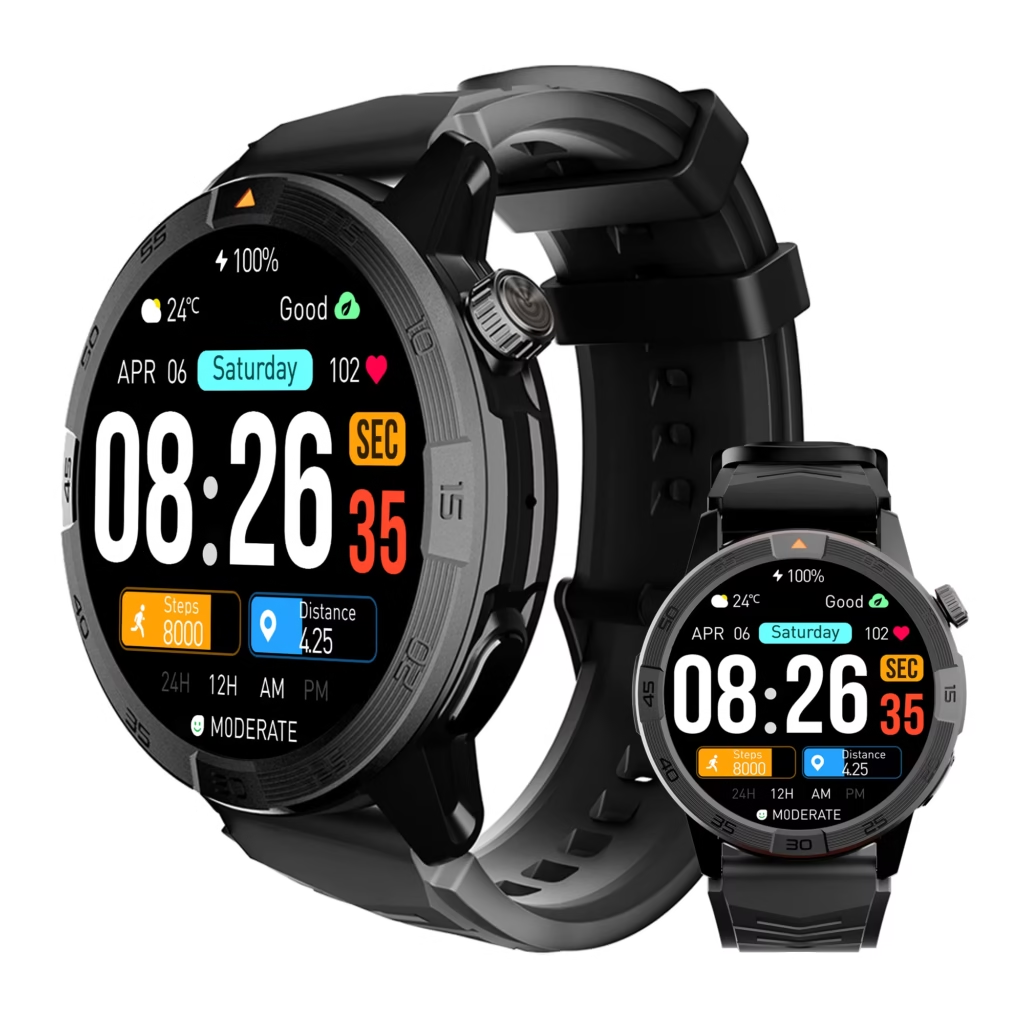
Start With an Empty Smartwatch
Remove every product from consideration for a moment. The empty watch shows the time, but it does not record activity, display workout information, provide directions, or receive a call.
Your job is to add the smallest complete set of functions that would make the watch worth wearing during a normal week.
Begin by rewriting every desired feature as a task. A phrase such as “advanced fitness tracking” is too vague to guide a purchase. Clear tasks sound different:
- record recurring workouts without building a manual log;
- make ordinary movement easier to review;
- show general effort during recreational exercise;
- provide route-related information during outdoor activity;
- surface an important call while the phone remains in a bag;
- tell the buyer how to adjust the next training session.
Each task creates a different buying requirement. General activity visibility does not automatically require adaptive coaching. Built-in GPS does not prove advanced navigation or superior route accuracy. A multisport label does not establish detailed analysis for every listed activity.
Place broad or unclear claims to one side until the exact function is documented. The smartwatch feature-listing decoder can help separate a supported capability from promotional wording that leaves important questions unanswered.
Then attach a cost to every feature. Some costs appear in the checkout price. Others arrive through setup, charging, app management, subscriptions, accessories, or extra attention.
The counter is now ready. Nothing enters the watch simply because it sounds advanced.
Purchase the First Feature That Serves Every Week
The first addition should handle the most repeated job in the buyer’s present routine.
For many recreational fitness shoppers, general activity awareness earns that position. Steps, calories, workout records, heart-rate information, and activity modes can make movement easier to notice without demanding a specialist training platform.
Frequency gives these functions commercial strength. A simple tool used during four ordinary workouts may deserve more of the purchase price than a sophisticated report opened twice after setup.
Remove general activity tracking from the imaginary watch. Does the buyer lose a convenient record of recurring exercise? Would checking progress require more phone use or manual logging? Does the fitness purpose of the purchase become noticeably weaker?
When the answer is yes, the feature belongs in the basket.
Heart-rate information can join this first group when the intended purpose is general consumer awareness during activity. It should not be treated as a diagnosis, medical result, or promise of precision beyond the product’s documentation.
Exercise modes deserve similar scrutiny. A buyer does not need the largest possible mode count. The watch needs suitable support for the activities that actually occur.
The strongest first purchase is therefore not “all fitness features.” It is a practical fitness core the buyer expects to use repeatedly.
Shoppers uncertain about the value of deeper training systems can compare practical fitness smartwatch features with premium platforms before adding advanced tools to the basket.
Add Another Tool Only When It Solves a New Problem
A second function should not be another version of the first.
Built-in GPS can qualify because it solves a route-related problem rather than merely recording general activity. Calls and notifications can qualify because they address communication. Music control may reduce a separate phone interaction during exercise.
Before adding anything, ask three questions:
- What new problem does this feature solve?
- How often will that problem occur?
- Is wrist access materially better than the current alternative?
Consider Bluetooth calling. The feature does not earn money merely by placing a phone icon on the display. It creates value when the buyer can handle a suitable conversation without interrupting the current activity to retrieve a paired phone.
Selected notifications follow the same rule. A calendar alert or an important message may reduce phone checking. Constant promotional and social alerts may increase distraction instead.
Buy connected functions for the interactions they remove, not the number of applications capable of producing a vibration.
The guide to evaluating calls and notifications on a smartwatch explains the practical limits of phone-connected wrist communication. Buyers should also match the watch with the phone it must support before giving those functions part of the budget.
This is where a smartwatch can begin to outperform a narrow fitness device for the right owner. Activity awareness handles the workout record. GPS supports outdoor use. Calls, alerts, and music controls extend value into the rest of the day.
Those functions deserve to coexist only when each performs a separate recurring job. The article on balancing fitness functions with daily smartwatch use provides a deeper comparison of that mixed ownership need.
Give Occasional Features a Fair Price
Daily use is not the only path to value. Some tools work less often but solve a meaningful problem when needed.
Offline maps are one example. A buyer may not need them during an indoor session, a familiar neighborhood walk, or an ordinary workday. Their value increases during an unfamiliar outdoor route where wrist-level map access reduces repeated phone handling.
A compass or altitude display may follow the same pattern. Neither needs full-time attendance to justify a limited share of the price.
An occasional feature belongs in the basket when:
- the use case is planned or recurring rather than imaginary;
- its absence would create noticeable inconvenience;
- the current workaround is weaker or less practical;
- keeping the function available adds limited ongoing burden.
Use consequence as well as frequency. Music control used three times each week may earn value through repetition. An outdoor tool used monthly may earn value because the buyer would strongly miss it during that outing.
Specialist features face a stricter test. Casual participation in an activity does not automatically justify running dynamics, cycling power-meter support, automatic strength analysis, or dedicated swimming metrics.
The exact capability must be documented, and the buyer must have a credible reason to use its output.
Promotional screens and mode names are not enough evidence. Review the evidence that should support a smartwatch feature claim before paying for a specialized function.
Add the Costs That Do Not Appear on the Feature Card
The visible product price is only one part of the basket.
A connected feature may require phone permissions and notification setup. A deeper fitness platform can involve account management, regular dashboard review, or a membership. GPS, frequent calls, and display use can increase charging demands.
These costs do not make an advanced watch a bad purchase. They increase the amount of value its features must return.
| Hidden cost | Question before purchase | Reason it matters |
|---|---|---|
| Setup | How many accounts, permissions, and apps are required? | A valuable feature may remain unused when activation feels burdensome. |
| Attention | Will the information simplify a decision or create another dashboard to manage? | More data can increase ownership work without improving training. |
| Charging | When will the watch leave the wrist? | Charging during workouts or sleep can weaken the purpose of the purchase. |
| Continuing expense | Does the preferred experience require a membership, plan, or accessory? | The real ownership price may exceed the advertised hardware cost. |
| Compatibility | Will the feature work with the buyer’s current phone and services? | An incompatible capability has no practical value. |
Use the smartwatch budget checks that go beyond the sticker price to identify these obligations before checkout. The guide to calculating continuing smartwatch ownership costs can uncover subscriptions, replacement items, and service expenses.
Ownership style matters too. Someone who enjoys detailed dashboards may willingly maintain a deeper platform. Another buyer may use the watch more consistently when the system remains simple.
The low-maintenance smartwatch ownership guide can help determine how much setup and analysis the buyer will realistically tolerate.
Physical fit belongs on the receipt as well. A watch that moves excessively or feels uncomfortable during exercise can leave every purchased feature unused. Before approving the basket, remove unsuitable smartwatch fits from consideration.

Place the Completed Basket Beside Omarek
Now introduce the product.
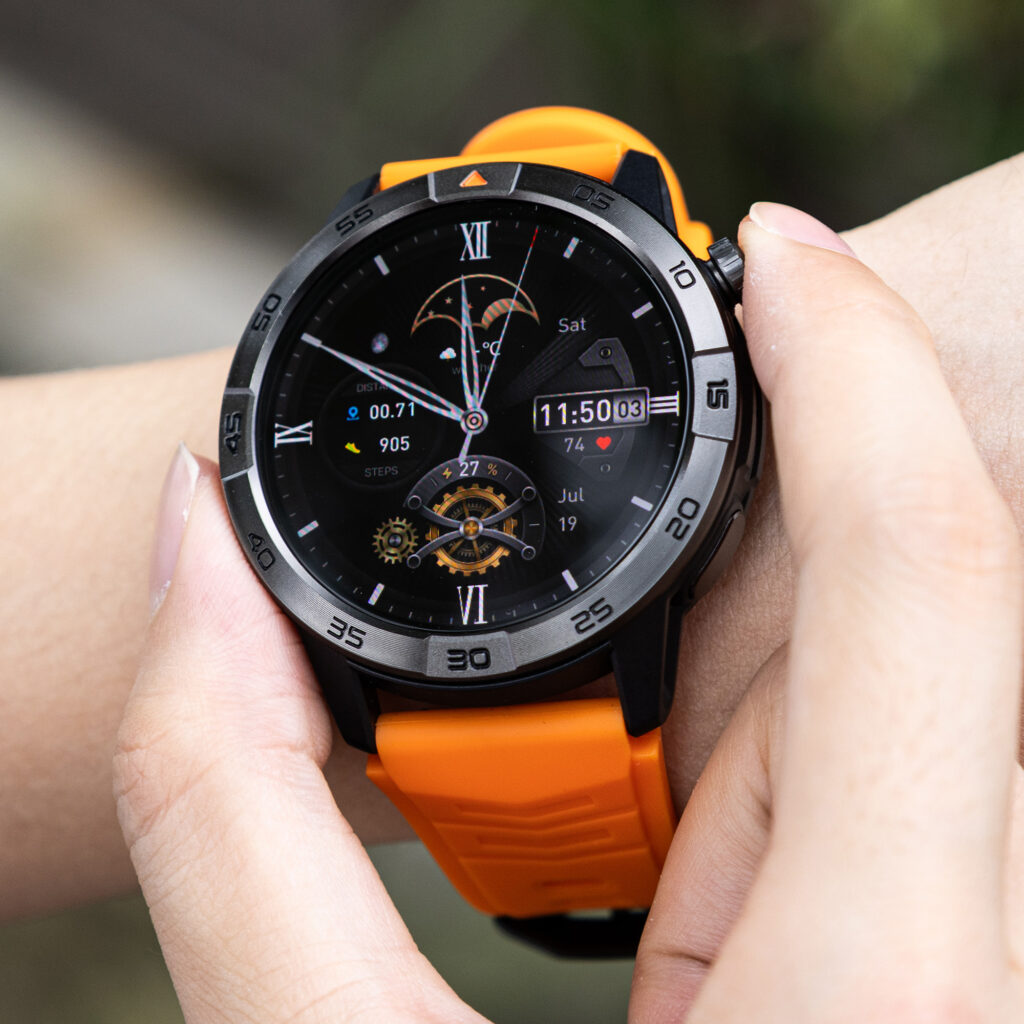
A practical completed basket may contain general activity awareness, heart-rate information for consumer fitness use, several exercise modes, built-in GPS, offline maps, selected calls and alerts, music control, and a display suitable for ordinary smartwatch interaction.
Omarek’s current listing covers that combination at $150 with free shipping.
The documented fitness functions include activity and fitness tracking, heart-rate monitoring, sleep tracking, steps, calorie tracking, breathing information, sedentary reminders, and multisport modes.
Built-in GPS and offline maps add the route-related portion of the basket. Bluetooth calling, notifications, social alerts, music control, alarms, calendar access, a compass, and an altitude meter extend its usefulness beyond exercise.
The watch uses a 1.43-inch AMOLED touchscreen with a listed 466×466 resolution. Omarek also states a 370mAh battery and battery life of up to 30 days. Treat that duration as a seller-stated maximum; GPS, calling, display settings, connectivity, notifications, and other use can reduce actual runtime.
This is Omarek’s clearest commercial advantage for the buyer in this article:
The $150 price funds several practical weekly jobs instead of depending on one advanced analytics platform to create value.
That makes Omarek a stronger fit when the finished basket combines recreational fitness, outdoor utility, and everyday communication.
| Feature entering the basket | Evidence of buyer value | Omarek status | Buyer’s next move |
|---|---|---|---|
| General fitness awareness | Recurring movement or workouts need convenient records. | Documented | Keep Omarek on the shortlist. |
| General heart-rate awareness | The buyer wants consumer fitness context during ordinary activity. | Documented | Keep it within a nonmedical role. |
| Outdoor route utility | Planned walks, runs, hikes, or travel make route access useful. | Built-in GPS and offline maps documented | Verify the intended route workflow during early use. |
| Calls and selected alerts | Wrist access can reduce repeated phone handling. | Bluetooth calling and notifications documented | Confirm phone, app, and permission compatibility. |
| Advanced training guidance | Coaching or recovery information will change upcoming sessions. | Not documented | Move to a specialist platform. |
| Sport-specific analysis | A primary activity requires detailed, documented metrics. | Not established by the current listing | Compare a product designed for that sport. |
Inspect Omarek’s current $150 product listing beside your completed basket. Check the live price, package details, shipping terms, policies, and documented functions before ordering.
The official page currently shows no customer reviews. That does not prove poor performance, but it removes one source of social proof. Listing evidence, return terms, compatibility, fit, and direct first-week testing therefore deserve more weight.
Omarek states compatibility with iOS and Android, but that broad statement cannot confirm every phone model, permission, or companion-app behavior. Android shoppers should verify the required Android app and setup conditions.
Buyers who prefer a smaller practical feature set may also benefit from the guide to choosing a smartwatch without unnecessary platform complexity.
Move to Another Shelf When One Specialist Feature Survives
Omarek should not remain in the basket when a required function sits outside its documented package.
The current listing does not document adaptive coaching, advanced recovery scores, training readiness, running dynamics, automatic repetition counting, set detection, exercise recognition, cycling-sensor support, detailed swimming analytics, medical-grade monitoring, or a large third-party app ecosystem.
Do not purchase Omarek on the assumption that a broad multisport description includes those capabilities.
Instead, follow the feature that survived your à la carte review.
Choose a coaching-centered watch when guidance is the purchased feature
Garmin’s vívoactive 6 is an example of a higher-priced fitness smartwatch built around deeper training and wellness tools. Garmin documents adaptive Coach plans, workout benefit, recovery time, running dynamics, PacePro guidance, and more than 80 sports applications at a suggested retail price of $299.99.
That product deserves consideration when those functions will influence established workouts. It should not enter the basket merely because the buyer may explore them later.
Choose a compact fitness platform when the tracker experience is enough
Google’s Fitbit Charge 6 has a regular listed price of $159.95 and emphasizes a smaller tracker format. Google documents built-in GPS, more than 40 exercise modes, Active Zone Minutes, cardio load, Daily Readiness, automatic exercise recognition in the app, and heart-rate connectivity with compatible exercise machines. Some deeper coaching and readiness functions connect to Google Health Premium.
It may be the stronger purchase when compact wear and Fitbit’s fitness environment matter more than Omarek’s Bluetooth calling and offline-map package.
Choose an ecosystem watch when phone integration is the purchased feature
Apple Watch SE 3 starts at $249 and requires a compatible iPhone. Its broader app selection and tighter iPhone integration can add value for buyers already invested in Apple’s ecosystem. GPS + Cellular versions may also support communication away from the paired phone when an eligible cellular plan is active.
That premium is justified only when those ecosystem and connectivity functions will be used repeatedly.Owning an iPhone alone is not enough reason to fund them.
These alternatives do not defeat Omarek in every category. Each wins only after a particular specialist or ecosystem feature survives the buyer’s review.
Return the Extras Before They Reach Checkout
The completed basket may still contain attractive functions that have not earned their cost.
Return a feature when another selected tool already solves the same problem. Several dashboards do not necessarily create several benefits.
Remove a metric when the buyer cannot name the action that follows it. Information without a decision is display content, not purchase value.
Leave structured coaching behind when the owner does not intend to follow assigned sessions. Decline advanced sport analysis when the activity remains recreational and general recording is sufficient.
A feature should also leave the basket when:
- its justification depends on an unstarted future routine;
- the exact product does not document the required behavior;
- it demands an unwanted subscription or ecosystem;
- its maintenance exceeds its likely use;
- its absence would not materially change the buyer’s week.
This does not make the rejected feature useless. It means the function belongs to another buyer.
Feature overhead becomes expensive when a shopper moves from an adequate $150 package to a more demanding platform without gaining a recurring benefit. The more expensive product may be technically stronger while still producing weaker personal value.
Keep the feature when removing it creates a clear gap. Return it when the only consequence is owning a shorter specification list.
Send the Right Basket to Checkout
The buyer from the opening does not need a watch designed for every possible athlete.
The rowing sessions and evening walks give general activity awareness a recurring job. A monthly unfamiliar trail can justify route-related tools. Selected calls, alerts, or music controls may extend the device’s usefulness through the rest of the week.
That completed basket aligns well with Omarek’s documented package.
Omarek clears checkout
Choose Omarek when the basket contains practical fitness awareness, built-in GPS, offline maps, calls, notifications, music control, and everyday smartwatch utility—and no advanced training requirement remains.
The basket belongs on another shelf
Select a specialist product when coaching, recovery analysis, detailed sport metrics, external-sensor support, automatic strength records, or deeper ecosystem functions control the purchase.
Keep the cart open
Do not order yet when compatibility, app behavior, exact activity support, data export, fit, or another purchase-critical detail remains undocumented.
After delivery, use the first-week smartwatch purchase checks to test the functions that earned their places. Verify pairing, comfort, notification selection, Bluetooth calling, intended activity modes, route behavior on a familiar safe outing, and battery performance under normal settings.
The final result is not the smartwatch with the most impressive counter display. It is the watch containing the smallest complete set of features the buyer will continue using.
Buy the Basket You Actually Built
Omarek is the stronger commercial choice when its documented functions cover every fitness, outdoor, and connected task in your finished basket. Review the live $150 offer, confirm the package and policies, and order directly from Omarek when no essential specialist feature is missing.