
“Gate code,” says the caller’s name on the wrist—although the groomer has not answered yet.
The mobile grooming van is still moving toward a San Diego appointment. The client may be calling about the side entrance, a parking restriction, or a nervous dog waiting inside. The information could matter within minutes, but that does not make the current moment suitable for a conversation.
A smartwatch for driving and answering calls becomes useful when it helps classify the call before anyone tries to handle it. Moving, waiting at a traffic light, legally parked, riding with an authorized passenger, and finishing the route are not interchangeable situations.
The call does not belong to the driver merely because it reached the wrist.
It needs a temporary owner, a deferral rule, and a precise moment when responsibility transfers back.
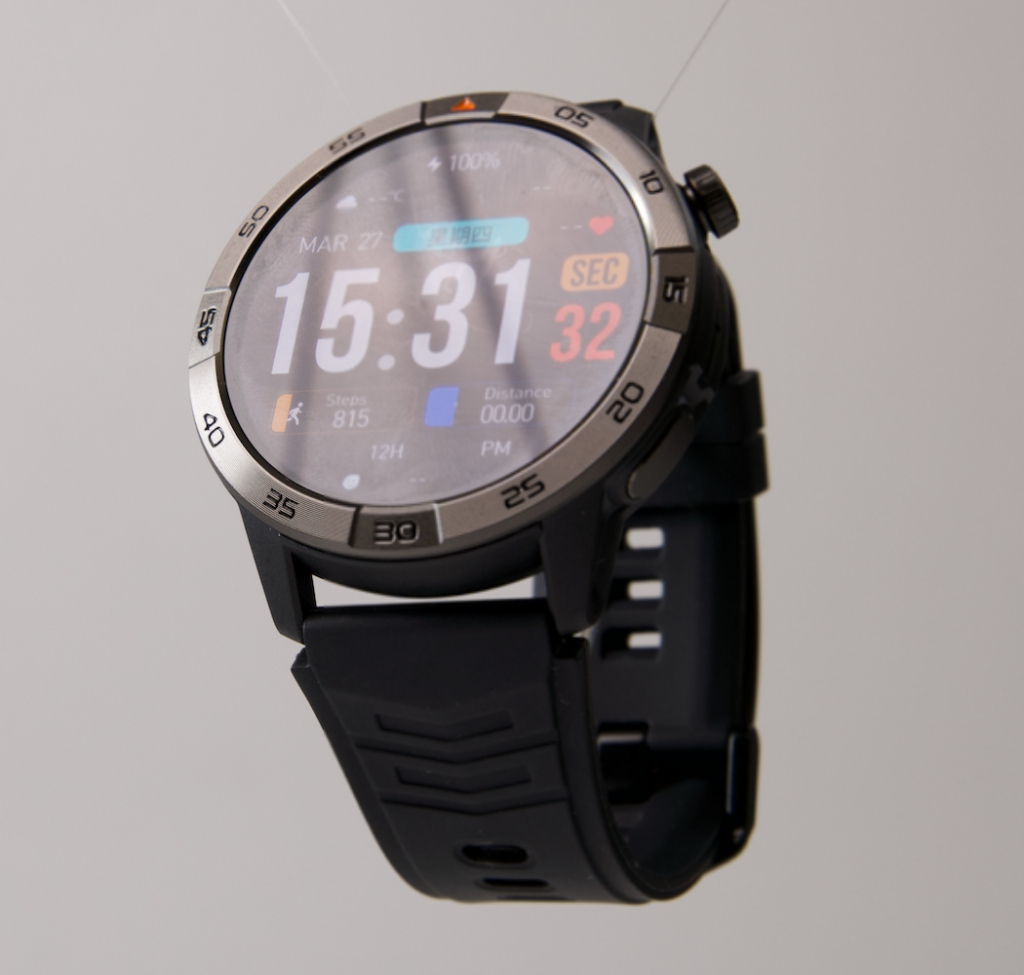
Stamp the San Diego Vehicle State Before Judging the Call
Caller identity is not the first decision.
The vehicle state comes first.
| Vehicle state | Call custody | Immediate rule |
|---|---|---|
| Moving | Deferred queue | No watch or phone interaction |
| Stopped in traffic | Deferred queue | Continue treating the trip as active |
| Legally parked | Driver | Review, return, or transfer the call |
| Passenger-managed | Authorized passenger | Handle only an agreed communication task |
| Trip complete | Driver or office workflow | Complete longer business communication |
These labels form a call-custody workflow. They are not automatic watch modes unless verified on the exact device and paired phone.
A useful client call does not change the motion state
Gate codes, arrival updates, parking instructions, and pet-handling details may all matter.
Their importance does not turn a moving vehicle into a parked one.
The groomer should decide:
- Is the van moving?
- Is it temporarily stopped as part of traffic?
- Is it lawfully parked with the driving task finished?
- Is an authorized passenger managing the message?
- Has the route or trip ended?
Only after that classification should the call receive an action.
Drivers comparing this method with a broader calling setup can separate motion-state deferral from general driving-call preparation.
Call Ticket One — Gate Code While the Grooming Van Is Moving
The first client call arrives several minutes before the appointment.
The van is moving.
That single fact determines the initial custody ruling.
Call purpose: Property access
Vehicle state: Moving
Temporary owner: Deferred queue
Driver action: None while moving
Callback point: After lawful parking
Let the caller name wait on the wrist
Caller identification may help the groomer prioritize the callback later. It should not become a reason to tap the screen, answer, dismiss, or read more information while driving.
The driver may discover after parking that:
- The caller is the next client
- Several calls came from the same number
- A voicemail was left
- The access issue affects the current stop
- Another client can wait until later
That information remains available after the driving task ends.
Prepare the deferral before starting the route
A short response can remove uncertainty without requiring the driver to invent wording during a call.
A practical version is:
I’m driving between appointments and will return your call after I’m safely parked.
Another variation may say:
I’m currently on the road. I’ll call after I reach a safe parked stop.
Use wording that fits the business and does not promise an unrealistically fast response.
Automatic replies, voicemail behavior, or driving modes depend on the paired phone and software. Do not claim that the watch sends the response automatically unless the full setup has been verified.
Give the call an exact transfer point
“Later” is not a useful custody rule.
The gate-code call transfers back to the groomer when:
- The van reaches the appointment area
- The vehicle is lawfully parked
- The driving task has ended
- The groomer can review the caller and property details
- The paired phone is available
Until then, the deferred queue owns the call.
A San Diego Traffic Light Does Not Open the Callback Window
The van stops at a red light.
Its wheels are still, but the trip remains active. Pedestrians may enter the crossing, cyclists may approach, the signal may change, and surrounding vehicles may begin moving.
The call stays deferred.
Temporary stillness is not lawful parking
A callback window should not open during:
- Red lights
- Stop-and-go congestion
- A line at an intersection
- A toll or controlled traffic point
- A brief curb pause that does not end the driving task
The vehicle is still participating in traffic.
Avoid the “quick answer” exception
A driver cannot know in advance that a call will remain short.
“What is the gate code?” can become:
- “Which entrance are you using?”
- “Can you arrive ten minutes later?”
- “My dog is nervous today.”
- “Can I add another service?”
- “Where should I park the van?”
A call expected to last ten seconds can expand into a business decision.
Keep the custody stamp unchanged
Vehicle state: Stopped in traffic
Temporary owner: Deferred queue
Driver action: None
Callback trigger: Lawful parking
Drivers with many non-call alerts can assign other wrist tasks to moments outside active driving rather than treating every pause in traffic as an interaction window.
Call Ticket Two — An Authorized Passenger Receives a Narrow Task
Some mobile service routes include a coworker or assistant.
When that person is authorized to help with client communication, the passenger may temporarily own a limited task. The driver should remain outside the interaction.
Define the passenger’s job before departure
An agreed passenger task might be:
- Answer the client’s call
- Write down the gate code
- Confirm the service address
- Record a parking instruction
- Tell the client that the groomer will call after parking
- Read a short access detail aloud when appropriate
The passenger needs a boundary as clearly as the driver does.
Information relay is different from business authority
A passenger may relay:
The gate code is 4821.
That does not automatically authorize the passenger to decide:
- Whether the appointment can be shortened
- Whether the route should be reordered
- Whether a late fee applies
- Whether a service can be added
- Whether a pet with new behavior concerns can be accepted
- Whether pricing should change
Those decisions return to the groomer after parking.
Keep the driver outside the conversation
Passenger-managed does not mean shared management.
The driver should not:
- Turn toward the passenger
- Read the watch display
- Join a detailed discussion
- Make an immediate business decision
- Handle the paired phone
The passenger owns the narrow communication task until the next safe handoff.
Mark the return of custody
Responsibility moves back to the groomer when:
- The van is lawfully parked
- The passenger’s note is available
- The access information requires confirmation
- A professional decision is needed
- The client requests a direct conversation
The Call-Custody Chain Prevents Ambiguous Calls
Calls become harder to manage when nobody knows their status.
A missed call may be assumed urgent. A passenger may believe the groomer will return it. The groomer may think the issue was resolved. The client may wait without knowing whether anyone received the message.
A custody record removes that ambiguity.
| State | Current owner | What can happen now | What must wait |
|---|---|---|---|
| Moving | Deferred queue | Call may ring or route to a prepared system | Screening, reading, answering, replying |
| Traffic stop | Deferred queue | No new action | Same tasks remain deferred |
| Passenger-managed | Passenger | Narrow agreed information relay | Driver decisions |
| Legally parked | Driver | Screen, call back, take notes | Tasks requiring another approved system |
| Trip complete | Driver or office process | Full conversation and documentation | Nothing tied to active driving |
Deferral is an assigned response
Deferring a call does not mean ignoring it.
The response already has:
- A reason
- A temporary owner
- A callback trigger
- A final destination
That is more dependable than deciding from scratch every time the wrist vibrates.
Keep phone-assisted calling in context
Most Bluetooth wrist-calling workflows depend on a compatible paired phone remaining nearby and connected. Connection quality may vary with the phone, watch, vehicle environment, settings, and distance.
Before building calls into the route, confirm the nearby-phone conditions behind wrist call handling.
Call Ticket Three — Pet Instructions After Lawful Parking
The groomer reaches the appointment area and parks.
The driving task is finished. Call custody can now transfer to the driver.
Call purpose: Pet-handling instructions
Vehicle state: Legally parked
Current owner: Groomer
Immediate action: Review and return the call
Decide whether the wrist is enough
A short parked exchange might confirm:
- The client is home
- The side gate is unlocked
- The pet is in a specific room
- The groomer should use another entrance
- The appointment remains on schedule
A longer or more sensitive conversation should move to the phone.
Use the full device for detailed client information
The phone is better suited when the call involves:
- Medication instructions
- Behavior warnings
- Health or handling concerns
- Service changes
- Pricing questions
- Several access details
- A written record
- Private client information
- Multiple follow-up questions
A watch can help begin or screen a call without needing to complete the entire exchange.
Readers can distinguish quick caller screening from a complete business conversation when deciding which parked calls belong on the wrist.
Close the callback before moving again
Before the next driving leg:
- End the conversation
- Save the necessary note
- Confirm the next appointment
- Put the phone away
- Stop interacting with the watch
- Reapply the moving-state rule
A legally parked callback should not continue into motion.
Trip Complete Changes the Type of Call
After the final appointment, route pressure ends.
Some calls that did not deserve the next parked window can now enter the full business queue.
Examples include:
- Tomorrow’s booking question
- A general service inquiry
- A nonurgent rescheduling request
- A billing discussion
- A future grooming question
- A client follow-up that requires detailed notes
Separate route calls from business calls
A same-day gate code affects the current route.
A question about next month does not.
This distinction prevents every client call from receiving the urgency of an access problem.
Use the end of the trip for complete closure
After the route, the groomer can:
- Return remaining nonurgent calls
- Review voicemail
- Record client instructions
- Clear resolved callbacks
- Restore normal notification settings
- Turn off a temporary driving response when appropriate
- Confirm the first appointment for the next day
The trip-complete state is not merely another parked stop. It allows longer administrative work without another driving leg waiting behind it.
Write the Deferral Phrase Before the Next California Route
The most important call decision should already exist before the first client rings.
A useful response is:
- Short
- Clear
- Calm
- Specific about the delay
- Free of unsafe promises
- Appropriate for clients
- Easy to reuse
Use language that creates a safe expectation
Recommended:
I’m driving between appointments and will return your call after I’m safely parked.
Another option:
I can’t take the call while traveling to a client. I’ll respond from the next parked stop.
The exact wording should match the business’s response process.
Remove phrases that create immediate pressure
Avoid:
- I’ll call right back
- Give me one minute
- I can talk quickly
- I’m almost there
- Hold on while I check
- I’ll answer at the next light
These statements encourage action before a real callback point exists.
Give urgent situations a separate business route
The mobile grooming business should define its own process for urgent matters.
That may include:
- An office contact
- A separate urgent number
- Clear voicemail instructions
- A client message telling callers what information to leave
- A defined emergency procedure outside routine smartwatch use
The watch should not replace established emergency or business-response systems.
Run the Five-State Call Drill
Before the next route, test five sample calls without driving.
| Sample call | Vehicle state | Correct custody |
|---|---|---|
| Gate code before arrival | Moving | Deferred queue |
| Arrival question at a red light | Stopped in traffic | Deferred queue |
| Parking detail with an authorized coworker | Passenger-managed | Passenger |
| Pet instruction after parking | Legally parked | Driver |
| Future booking after the route | Trip complete | Driver or office workflow |
Find the first wrong transfer
A custody breach occurs when:
- The driver interacts while moving
- A traffic light is treated as parking
- A passenger makes an unauthorized decision
- A parked conversation continues into motion
- A future inquiry interrupts the active route
- The client receives no clear callback expectation
Repair the reusable rule
Do not solve only the sample call.
Fix the state rule:
- Moving calls defer
- Traffic stops remain deferred
- Passengers relay only assigned information
- Parked calls may transfer to the driver
- Longer nonurgent work can wait until trip completion
Test the equipment only while parked
Verify:
- Caller-name visibility
- Missed-call display
- Paired-phone connection
- Microphone behavior
- Speaker behavior
- Callback steps
- Voicemail or prepared-response setup
- Phone proximity

A parked test reveals whether the equipment supports the custody system without experimenting in traffic.
Questions Mobile Service Drivers Ask
Can a smartwatch call be answered at a red light?
A red light should remain part of the active driving state. Keep the call deferred until the vehicle is lawfully parked and the driving task has ended.
What should happen when a client calls while the vehicle is moving?
Allow the call to defer, use a prepared response when supported, and return it from a lawful parked stop.
Can a passenger answer the client?
An authorized passenger can handle a narrow agreed task, such as recording a gate code. Business decisions and sensitive details should remain with the service professional.
Is caller identification useful during a route?
It can help prioritize callbacks after parking. It should not become a reason to interact with the watch while moving.
Does Bluetooth calling work when the phone is not nearby?
Phone-assisted Bluetooth calling generally requires a compatible paired phone nearby and connected unless independent cellular service is confirmed.
What belongs in the next parked callback?
Current-route access details, arrival timing, brief client confirmation, and other information needed for the immediate appointment may fit that window.
Does every missed call need to be returned at the next stop?
No. Separate calls affecting the current route from future bookings and nonurgent business that can wait until the trip ends.
Write the Answer Before the Phone Rings
Do not wait for the ringtone to decide the policy.
Before tomorrow’s San Diego route, write one sentence for every nonemergency caller:
I’m driving between appointments and will return your call after I’m safely parked.
Below it, write five labels:
Moving — Traffic stop — Legally parked — Passenger-managed — Trip complete
Assign one temporary owner and one callback trigger to each state.
A smartwatch for driving and answering calls supports the route when caller information strengthens that ownership rule instead of making every call feel immediately actionable.
Save the response, define the parked transfer point, and check whether the watch can screen callers without weakening the deferral system.
A delayed answer with a clear callback point is still an answer.