
The borrowed watch seems generous until the Madison fundraiser spends more time managing it than using it. A colleague has offered the feature-heavy device for a short campaign-planning trial, but the first useful reminder arrives only after notification cleanup, permission choices, connection checks, unfamiliar data screens, and an unplanned charging task. Many comparisons of women’s smartwatches count visible capabilities without asking whether the future owner accepts the work behind them.
Seated at a regional nonprofit planning desk, the fundraiser needs only a quiet wrist message reading “Campaign review at 2:40.” Donor identities, gift amounts, pledge stages, contact details, and planning notes remain on the phone or work computer. A handwritten Borrowed Watch Responsibility Receipt places the single useful result in one column and every continuing management task in another.
How Should Women’s Smartwatches Be Compared by Ownership?
Compare women’s smartwatches by the responsibility they create, not by feature count. Each ownership profile exchanges a different amount of setup, connection management, data review, charging, and presentation work for a particular kind of wrist value.
- Minimal: basic time and selected reminders with little ongoing management.
- Connected: phone-linked alerts and interactions with deliberate notification and connection maintenance.
- Fitness-First: frequent tracking with sensor, activity, data, privacy, and charging responsibility.
- Formal-Friendly: restrained presentation and clothing compatibility, sometimes with fewer visible interactions or smart functions.
Choose the profile that performs the required wrist role without assigning work the buyer does not accept. None of the four profiles is automatically better for women, and no profile should be inferred from gendered marketing.
Count Watch Responsibilities Before Counting Features
A smartwatch feature rarely ends with the feature name. The future owner may also need to configure it, decide what information it can use, keep the related phone route working, maintain charging, and recover the expected state after something changes.
The Madison fundraiser sorts that continuing work into six responsibility layers:
- Setup and accounts: phone, companion route, account owner, permissions, and recovery access.
- Connection: the required phone relationship, ordinary reconnection, and the functions lost when that relationship breaks.
- Notifications and interaction: permitted sources, visible content, alert behavior, acknowledgment, and cleanup.
- Data: collected records, authoritative device, review expectations, privacy limits, and deletion or sharing choices.
- Charging and updates: charging home, confirmation, readiness point, update path, and failed-charge recovery.
- Presentation: face, case, band, clothing interaction, accessory coexistence, and acceptable visual interruption.
Only duties that support the assigned wrist job deserve a place in the ownership contract. A buyer who has not yet defined that job can first give the smartwatch one controlling role.
Read the Borrowed Watch Responsibility Receipt
| Borrowed-watch item | Useful in Madison? | Continuing work | Decision |
|---|---|---|---|
| Campaign review reminder | Yes | Maintain one calendar source | Retain |
| Broad message previews | No | Privacy review and alert cleanup | Remove |
| Fitness dashboards | No | Wear, permissions, records, and review | Remove |
| Multiple applications | No | Setup, permissions, updates, and recovery | Remove |
| Extra wrist interactions | No | Attention and state management | Remove |
| Charging without a declared home | No | Unplanned readiness work | Redesign |
The receipt does not prove that feature-heavy watches are poor choices. Instead, it exposes a mismatch between this borrowed configuration and the fundraiser’s narrow requirement. Another buyer may actively value the same dashboards, applications, and interactions enough to accept their ownership work.
Profile One: Minimal Ownership
Minimal ownership keeps the responsibility list deliberately narrow. The future owner may accept timekeeping, a basic reminder, one charging routine, limited maintenance, and a small number of deliberate interactions.
Broad application access, constant notification curation, unnecessary dashboards, routine data review, and frequent wrist responses stay outside this territory. Simplicity comes from a controlled boundary rather than from a vague promise that the device will manage itself.
For Madison, this profile provides the correct discipline but not necessarily the complete function. A fully disconnected or onboard-only arrangement may be unable to receive the phone-owned “Campaign review at 2:40” event. The fundraiser therefore keeps Minimal as a boundary instead of selecting it as the entire solution.
Readers drawn to this ownership pattern can explore a smartwatch plan built around intentional simplicity and compare it with a low-maintenance ownership routine.
Profile Two: Connected Ownership
Connected ownership accepts that the watch depends on a defined phone relationship for some of its value. The responsibility contract may include pairing, one companion route, selected permissions, notification-source curation, ordinary reconnection, software maintenance, charging, and a clear authoritative device.
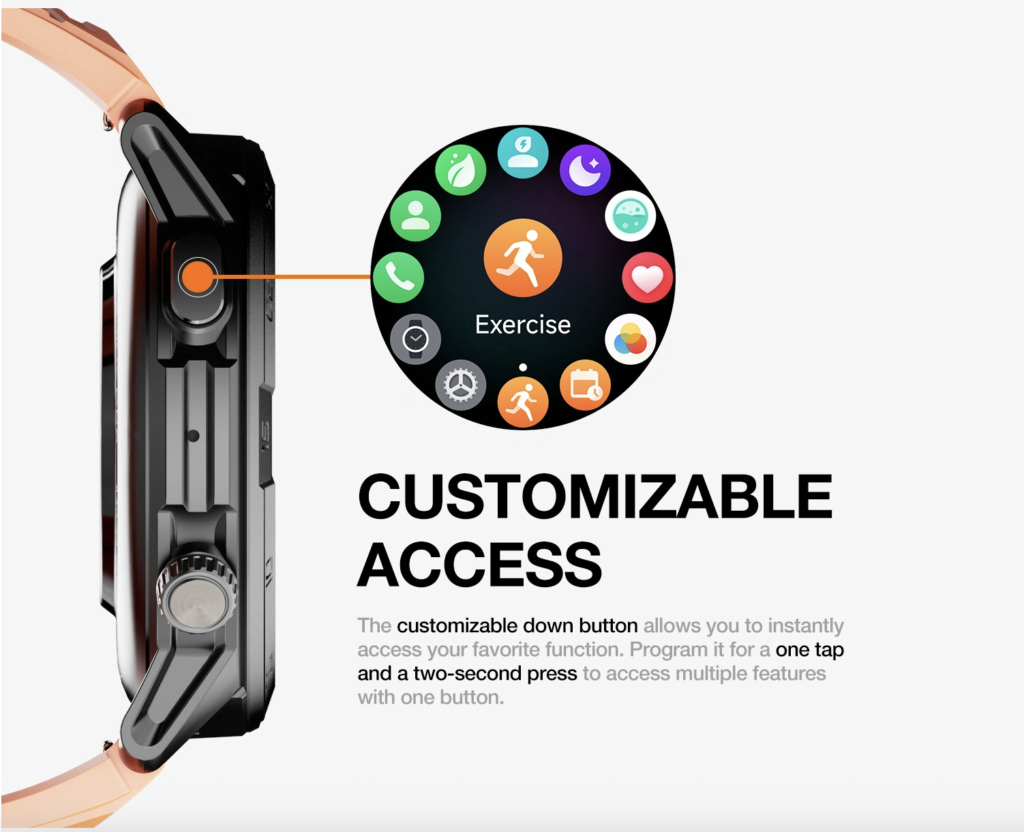
That work becomes justified when it enables a wrist action the buyer genuinely wants. In the Madison example, the phone remains authoritative while the watch presents only the neutral campaign-review reminder.
Unrestricted connected use would recreate the borrowed-watch problem. Full message previews, broad application access, replies, unnecessary status screens, and multiple alert sources would expand ownership far beyond the assigned role.
The fundraiser accepts connected responsibility only under specific limits:
- one recorded phone and companion route;
- one calendar source;
- one neutral wrist message;
- no donor or campaign details;
- no wrist replies;
- one charging home;
- one documented basic recovery path.
Future products must still prove that exact relationship. A phone-first smartwatch comparison can test candidates after the ownership profile is settled.
Profile Three: Fitness-First Ownership
Fitness-First ownership suits buyers who actively want recurring activity or body-related records and accept the duties needed to maintain them. Those duties can include consistent wear, correct positioning, activity initiation or verification, synchronization, data review, privacy choices, and charging around the desired tracking window.

Madison does not reject this territory as excessive in general. The fundraiser simply has not assigned fitness records to the watch’s role, so the associated responsibilities create no value in this article’s routine.
Leaving the profile unselected also protects the decision from an easy category assumption. Women-focused marketing cannot establish that a buyer wants wellness dashboards, workout records, sleep information, or any other data stream.
Profile Four: Formal-Friendly Ownership
Formal-Friendly ownership prioritizes restrained presentation, clothing compatibility, and an acceptable visual presence. Its responsibilities may include selecting a case, band, or face; testing sleeves and adjacent accessories; maintaining the chosen appearance; and accepting any interaction trade-offs that accompany the exact format.
A formal-looking device does not automatically create minimal ownership. The future owner must still treat applications, accounts, notifications, connection behavior, charging, and updates as unresolved until the exact product proves its demands.
The Madison fundraiser values a restrained presentation as a secondary preference, but it does not control the ownership decision. Phone-linked awareness remains the primary need. Buyers whose regular jewelry and sleeves affect physical suitability can use the jewelry-and-cuff interference test before approving a formal-friendly arrangement.
Compare the Four Madison Ownership Receipts
| Responsibility | Minimal | Connected | Fitness-First | Formal-Friendly |
|---|---|---|---|---|
| Exact phone dependence | Low or optional | Central | Often important for records | Varies by product |
| Notification curation | Very limited | Required | Optional to moderate | Limited but unresolved |
| Data review | Minimal | Only selected connected information | Central | Usually secondary |
| Charging planning | Required | Required | Tracking-sensitive | Product-specific |
| Connection recovery | Limited | Required | May be required for synchronization | May still be required |
| Presentation work | Buyer-defined | Buyer-defined | Usually secondary | Central |
| Madison result | Boundary only | Primary function | Not requested | Secondary preference |
Minimal ownership supplies the discipline Madison needs, but Connected ownership supplies the required phone-linked event. Fitness-First adds records the fundraiser did not request, while Formal-Friendly contributes a presentation preference without solving the central task.
The four receipts therefore do not produce a four-way score. They show which duties enter the contract, which ones remain optional, and which responsibilities the buyer declines.
Draw the Connected-Minimal Route
The Madison route takes its required function from Connected territory and its responsibility limits from Minimal territory. That bounded configuration keeps the phone-linked reminder while refusing unrelated applications, information, data, and interaction.
Its ownership contract reads:
- Use the recorded phone and one intended companion route.
- Allow one calendar source to deliver “Campaign review at 2:40.”
- Keep donor identities, gift amounts, pledge status, contact details, and private notes off the wrist.
- Decline full message previews, replies, broad application access, and fitness dashboards.
- Assign one charging location and one next-use readiness point.
- Give ordinary recovery to the buyer without transferring account control.
Connected describes how the required awareness reaches the wrist. Minimal describes the boundary around everything else.
The selected result is:
Connected-Minimal Profile Selected — Required Awareness Without Excess Ownership Work.
Why Connected-Minimal Is Not a Fifth Universal Profile
The atlas contains four primary territories, but buyers may create bounded configurations when one profile provides a necessary function and another supplies a clear responsibility limit. Such combinations remain valid only when every retained duty and rejected duty can be stated directly.
“Connected-Minimal” does not guarantee that every connected smartwatch can operate inside Madison’s boundary. A product may force broader permissions, expose more information, require extra interaction, or create maintenance that conflicts with the contract.
No device has received a pass here. The profile gives future candidates a measurable ownership standard rather than predicting which one will satisfy it.
Carry the Profile Into Product Selection
Ownership should control the next buying stages rather than disappear once products enter view. The fundraiser can use the selected profile to complete a buyer-specific smartwatch search brief, then translate women-focused seller wording into evidence.
Actual candidates should face the Connected-Minimal contract before secondary features receive attention. A strict nonnegotiable filter can remove options that violate the phone route, privacy boundary, physical needs, charging plan, or ownership limit.
Use this decision order:
- Define the wrist role.
- Select the ownership profile.
- Complete the buying brief.
- Translate seller claims.
- Eliminate profile conflicts.
- Compare preferences among survivors.
- Verify the selected profile during a controlled first week.
The final step can use a first-week readiness review, while a buyer-specific quality-evidence check keeps observed ownership behavior separate from marketing language.
Correct Eight Ownership-Profile Mistakes
1. Selecting the Watch Before Defining the Profile
A product can influence the buyer’s expectations before the required ownership boundary exists.
2. Treating More Functions as More Value
Every added capability should justify the setup, permissions, attention, data, charging, and recovery work it creates.
3. Assuming Minimal Ownership Means No Setup
A narrow profile may still require an account, charging, basic configuration, and occasional maintenance.
4. Enabling Every Notification in the Connected Profile
Allow only sources and content that support the assigned wrist task.
5. Selecting Fitness-First Without Wanting the Records
Tracking responsibilities make sense only when the buyer values the resulting information.
6. Treating Formal-Friendly Appearance as Maintenance-Free
Restrained styling does not prove simple applications, accounts, connections, or updates.
7. Ignoring Charging and Recovery Work
A useful feature becomes unreliable ownership when no charging home or recovery owner exists.
8. Declaring One Profile Best for All Women
Each ownership pattern belongs to a particular buyer, role, environment, and responsibility limit.
Questions Buyers Ask About Women’s Smartwatch Profiles
What Is a Smartwatch Ownership Profile?
It is the set of continuing responsibilities a buyer accepts in exchange for required wrist value.
Is a Minimal Profile Always Disconnected?
No. A buyer may permit narrowly selected connected functions while keeping a low-interaction boundary.
What Makes Connected Ownership Demanding?
Pairing, permissions, alert curation, connection recovery, updates, and charging can all become continuing duties.
Who Should Choose Fitness-First?
Choose it when the buyer actively wants the records and accepts their wear, data, privacy, review, and charging responsibilities.
Does Formal-Friendly Mean Hybrid or Luxury?
No. It describes a presentation priority rather than a price tier, status claim, or single technical format.
Can a Buyer Combine Profiles?
Yes, provided the retained functions, accepted duties, privacy boundaries, and recovery ownership remain explicit and testable.
Why Did Madison Select Connected-Minimal?
The fundraiser needs one phone-linked reminder but declines unrelated applications, messages, fitness records, and wrist interaction.
Has This Article Selected a Product?
No. It has produced an ownership contract that future candidates must prove they can satisfy.
Keep the Madison Wrist Value and Return the Excess Work
The borrowed watch returns to its owner after the campaign-planning trial. Its feature list no longer controls the fundraiser’s search because the responsibility receipt has separated one useful result from the work Madison declines.
What remains is a phone-linked “Campaign review at 2:40” reminder, one authoritative calendar, one privacy boundary, one charging home, and one recovery owner. Broad messages, donor details, fitness dashboards, extra applications, and unnecessary wrist interaction stay outside the contract.
The completed atlas supports a bounded conclusion:
Connected-Minimal Profile Selected — Required Awareness Without Excess Ownership Work.
This result applies to one Madison fundraiser, one stationary campaign-planning routine, one phone-linked reminder, and one declared responsibility limit. It does not choose a product, define what all women need, verify fitness or medical functions, test calling, establish long-term reliability, or guarantee that every connected watch can be configured minimally.
Do not ask how many functions a watch can perform until the buyer knows how many responsibilities she is willing to keep.
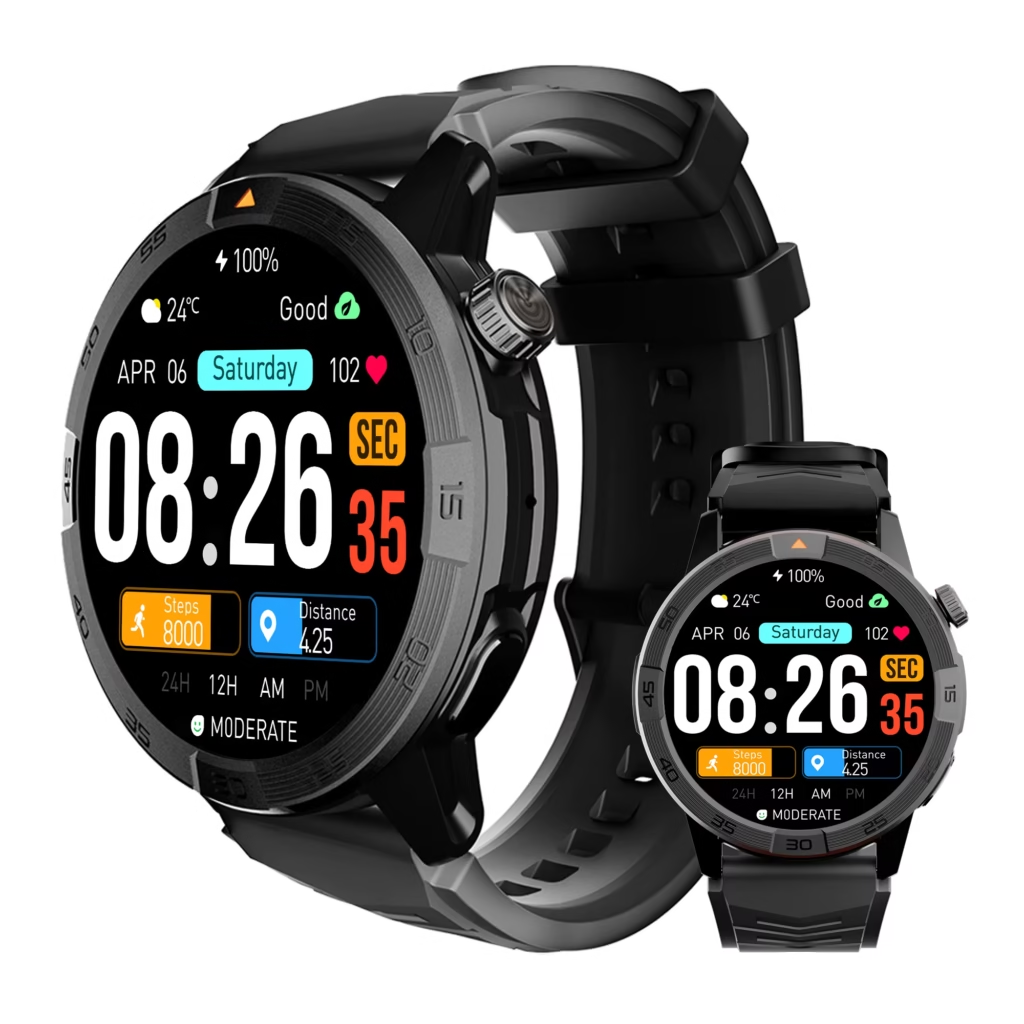
Before considering this smartwatch product candidate, treat its feature list as unverified and require it to demonstrate the Connected-Minimal profile without expanding the Madison ownership contract.