
The Raleigh buyer has already selected three colors when the first candidate fails the only phone action that matters. Seated at a university alumni-planning desk, the manager has arranged eight anonymous watches by personally preferred finishes without first testing whether “Reunion briefing at 1:30” can travel from the recorded calendar to the wrist. A smartwatch for women may look right and still be wrong for the buyer’s phone, wrist, role, privacy boundary, or charging routine.
Color was not the mistake. The manager’s preferences remain valid and will return later. The error was allowing appearance to decide shortlist admission before the candidates had earned any technical or ownership evidence.
A Color-First Shortlist is replaced with five blank certificate boxes: Exact Phone, Physical Fit, Wrist Role, Privacy, and Charging. Eight candidates now face the same pass-or-fail gates, and no strength in one area can compensate for a missing certificate elsewhere.
How Do You Build a Smartwatch for Women Shortlist?
A smartwatch for women shortlist should use five pass-or-fail gates: exact phone fit, physical fit, one defined wrist role, privacy-safe information, and a workable charging routine. A candidate needs all five certificates before colors or extra features are compared.
- Verify the exact phone, software, companion application, and required action.
- Confirm direct wrist, band, case, control, and desk fit.
- Test one assigned wrist job under the buyer’s real conditions.
- Restrict wrist content to the approved privacy boundary.
- Prove that charging fits the declared ownership routine.
A preferred finish, extensive application list, advertised endurance claim, or high feature score cannot replace a missing certificate. Unresolved evidence also blocks admission until the candidate can be tested properly.
Correct the Raleigh Color-First Buying Mistake
Appearance can affect satisfaction, consistent wear, personal style, and whether the buyer enjoys owning the watch. Nothing in the five-gate method requires the Raleigh manager to abandon color, band, case, or watch-face preferences.
Qualification simply comes first. The preferred finish cannot establish phone compatibility, physical comfort, notification privacy, role performance, or charging readiness.
Women-focused marketing also cannot fill those evidence gaps. Buyers who need to separate audience wording from measurable requirements can translate the seller label into real buyer needs before opening the shortlist.
Start With a Complete Buyer Brief
The Raleigh manager’s brief contains five defined requirements rather than a broad request for a stylish or capable watch. Its exact phone environment is recorded, the physical format must fit directly, the wrist receives one neutral reminder, private alumni information stays elsewhere, and charging must work within a declared routine.
Readers starting with an incomplete phrase can first turn a vague women-focused search into a structured buying brief. Article 385 begins after those requirements are clear and converts them into admission certificates.
The selected wrist job is narrow:
During stationary alumni-planning work, provide quiet awareness of “Reunion briefing at 1:30” while keeping detailed alumni and event information on the phone or computer.
A broader smartwatch role contract can help buyers define that controlling purpose before candidates enter comparison.
Gate One: Issue the Exact Phone Certificate
The first gate records the phone model, current software, companion application, account owner, paired-device identity, permissions, calendar source, and connection state. Broad phrases such as phone-compatible, connected, or works with smartphones receive no certificate by themselves.
Each candidate must deliver “Reunion briefing at 1:30” twice through the same recorded route. The buyer also checks acknowledgment behavior and confirms that the authoritative calendar remains in the expected state.
Candidate A pairs and shows a connected symbol, but the neutral calendar event fails during the first controlled attempt. After the documented settings are reviewed, a repeated run produces the same missing result.
Because the required action does not complete, Candidate A loses the Exact Phone Certificate. Its preferred finish and acceptable initial appearance cannot reopen the gate.
A phone-first smartwatch comparison can prevent broad ecosystem language from substituting for the buyer’s exact route.
Gate Two: Issue the Physical Fit Certificate
Phone success allows a candidate to continue, but it says nothing about direct wearability. The Raleigh manager checks the intended wrist position, normal band setting, case span, control access, keyboard clearance, and contact with the desk edge.
Candidate B completes the phone test and delivers the neutral reminder. During direct wear, however, the case settles into an unacceptable position at the buyer’s normal band tension, and deliberate control access requires repeated wrist rotation.
Excessive tightening is not accepted as a solution. Listed dimensions and women-focused photographs also cannot replace the buyer’s observed result.
The Physical Fit Certificate is therefore denied to Candidate B. Broader fit problems can be examined through a direct smartwatch fit-elimination process.
When regular bracelets, sleeves, or desk contact introduce additional variables, the buyer can add the specialized jewelry-and-cuff interference test.
Gate Three: Issue the Wrist Role Certificate
Physical fit does not prove useful wrist behavior. Every surviving option must perform one assigned job without allowing unrelated prompts or interactions to take control.
The required route begins with the phone-owned calendar and ends with one recognizable wrist alert reading “Reunion briefing at 1:30.” A valid result also includes simple acknowledgment when supported and a clean return to the approved watch face.
Candidate D clears the phone and physical gates, yet the assigned event becomes buried beneath unrelated alerts during one test and appears twice during another. That inconsistent behavior fails the reserved role.
Although the watch remains technically connected, Candidate D does not earn the Wrist Role Certificate. Connection alone cannot prove that the buyer’s specific task works correctly.
The detailed method for assigning and protecting one wrist purpose appears in the women’s single-role contract. Candidates that violate a required role can later face a stricter buyer-specific nonnegotiable filter.
Gate Four: Issue the Privacy Certificate
An alert can arrive on time and still expose too much information. The Privacy Certificate examines the actual wrist display rather than relying on a privacy icon, menu label, or general notification claim.
| Information | Allowed on wrist? | Authoritative device |
|---|---|---|
| Reunion briefing at 1:30 | Yes | Phone calendar |
| Alumni identity | No | Phone or computer |
| Class year | No | Alumni system |
| Donor or gift information | No | Secure system |
| RSVP details | No | Computer |
| Contact information | No | Phone or computer |
| Full private message | No | Phone |
Candidate E passes the first three gates and delivers the required event. Under the tested preview state, additional message detail appears beyond the approved neutral wording.
Changing the available settings does not preserve the boundary consistently during the repeated check. Candidate E therefore loses the Privacy Certificate even though alert delivery succeeds.
Observed behavior matters more than listing language. A buyer-specific quality-evidence framework can help separate visible settings from a verified privacy result.
Gate Five: Issue the Charging Certificate
The final gate does not ask which candidate advertises the longest battery duration. Instead, it examines whether the watch can return to readiness through the buyer’s real charging routine.

For each surviving option, the manager records the correct charger, power source, charging home, available window, visible confirmation, interruption recovery, and required next-use point.
Candidate G earns the first four certificates. During the charging test, reliable contact is difficult to confirm, and one interrupted attempt requires repeated repositioning before power resumes.
That ownership burden exceeds the Raleigh routine. Candidate G loses the Charging Certificate without any claim about total battery life, charging speed, or advertised standby time.
A finalist should later repeat this check through a controlled first-week readiness review. Product claims can also be converted into testable conditions with the smartwatch listing decoder.
Compare the Eight Raleigh Certificate Sets
| Candidate | Exact Phone | Physical Fit | Wrist Role | Privacy | Charging | Admission |
|---|---|---|---|---|---|---|
| A | Fail | Not continued | Not continued | Not continued | Not continued | Reject |
| B | Pass | Fail | Not continued | Not continued | Not continued | Reject |
| C | Pass | Pass | Pass | Pass | Pass | Finalist |
| D | Pass | Pass | Fail | Not continued | Not continued | Reject |
| E | Pass | Pass | Pass | Fail | Not continued | Reject |
| F | Pass | Pass | Pass | Pass | Pass | Finalist |
| G | Pass | Pass | Pass | Pass | Fail | Reject |
| H | Pass | Pass | Pass | Pass | Pass | Finalist |
Phone failure removes Candidate A before later gates can add misleading detail. Direct fit stops Candidate B, while Candidate D loses admission at the assigned-role checkpoint. Privacy disqualifies Candidate E, and Candidate G reaches the final gate before its charging routine fails.
Candidates C, F, and H each hold five certificates. Their qualification comes from completing every foundational requirement rather than accumulating enough strengths to outweigh one failure.
Approve Candidates C, F, and H Without Ranking Them
The five-gate process has produced a legitimate field for deeper comparison. Candidate C, Candidate F, and Candidate H all work with the recorded phone, fit the buyer directly, perform the assigned role, preserve the privacy boundary, and return to readiness through the declared charging routine.
No finalist receives first, second, or third place here. Qualification does not prove that the three watches share the same appearance, applications, ownership details, price, or optional functions.
The shortlist verdict is:
Three-Candidate Shortlist Approved — Every Finalist Clears All Five Gates.
This conclusion applies only to the Raleigh manager’s phone, wrist, role, privacy boundary, charging routine, software state, and test date.
Compare Colors and Extras Only Among the Finalists
The original color cards now return to the desk, but only Candidates C, F, and H may be placed beside them. Appearance becomes useful because every option under consideration has already proven foundational suitability.
The manager may compare preferred finishes, band appearance, watch-face style, optional applications, verified price, and additional functions. None of those preferences can restore a candidate that failed one of the five gates.

A rejected watch does not reenter merely because its color is ideal. Likewise, a finalist does not automatically win because it matches the first swatch.
Carry the Ownership Profile Into the Final Comparison
All three finalists must continue respecting the buyer’s accepted responsibility boundary. The Raleigh manager can use the Women’s Ownership Profile Atlas to compare notification management, connection recovery, data responsibilities, charging work, and presentation demands among the qualified options.
The five certificates establish admission, not permanent immunity. A deeper test may still reveal differences in maintenance, optional features, support burden, or preference fit.
Correct Eight Five-Gate Shortlist Mistakes
1. Comparing Colors Before the Phone Route
Keep appearance preferences, but apply them only after technical and ownership qualification.
2. Treating Broad Compatibility as a Certificate
Complete the exact action through the recorded phone, application, permissions, and paired identity.
3. Using Listed Dimensions Instead of Direct Fit
Case measurements help screening, but the complete watch must still pass on the buyer’s wrist.
4. Defining the Wrist Role as “Do Everything”
Assign one observable result with an exact source, setting, and success condition.
5. Testing Arrival Without Inspecting Content
A successful alert can still fail when restricted information appears.
6. Replacing Charging Fit With Advertised Duration
Test the buyer’s actual charger, location, window, confirmation, and readiness point.
7. Averaging a Failed Gate Against Several Strengths
Every certificate is independent and noncompensable.
8. Ranking Before Qualification Is Complete
Compare preferences only after all surviving candidates have cleared the same gates.
Questions Buyers Ask About Women’s Smartwatch Shortlists
Must Every Buyer Use These Exact Five Gates?
No. These gates belong to the Raleigh example, although many buyers may find the categories useful when building their own requirements.
Can Color Become a Required Gate?
Yes. An individual buyer may make appearance nonnegotiable without treating that preference as universal for women.
Why Is Unresolved Evidence Treated Like Failure?
The candidate has not earned admission yet. Reliable new evidence can reopen the affected gate later.
Can Phone Compatibility Pass While the Role Fails?
Yes. A connected watch may still miss, duplicate, bury, or mishandle the required event.
Why Separate the Role and Privacy Gates?
The reminder may arrive correctly while displaying more information than the buyer permits.
Does the Charging Certificate Require a Certain Duration?
No. It verifies that the watch can regain readiness within the buyer’s real ownership routine.
Are Candidates C, F, and H Equally Good?
They are equally qualified at these five gates, but they may differ substantially in optional characteristics.
Has the Best Smartwatch for Women Been Selected?
No. The article has created a qualified shortlist rather than defended one final winner.
Keep the Raleigh Colors Behind the Five Certificates
The three finish swatches from the opening remain on the alumni-planning desk. Their role has changed because they now sit behind complete certificate sets rather than in front of untested products.
Candidate C, Candidate F, and Candidate H have each demonstrated the exact phone route, direct physical fit, one useful wrist role, privacy-safe content, and a workable charging routine. Detailed alumni information continues to remain on the phone or computer.
The completed board supports one bounded decision:
Three-Candidate Shortlist Approved — Every Finalist Clears All Five Gates.
No medical, fitness, calling, luxury, price, long-term reliability, or universal women’s suitability conclusion follows from this shortlist. Retest affected certificates after changing the phone, software, application, permissions, paired identity, wrist role, privacy boundary, or charging setup.
A preferred color can help choose among qualified watches. It should not decide which watches become qualified.
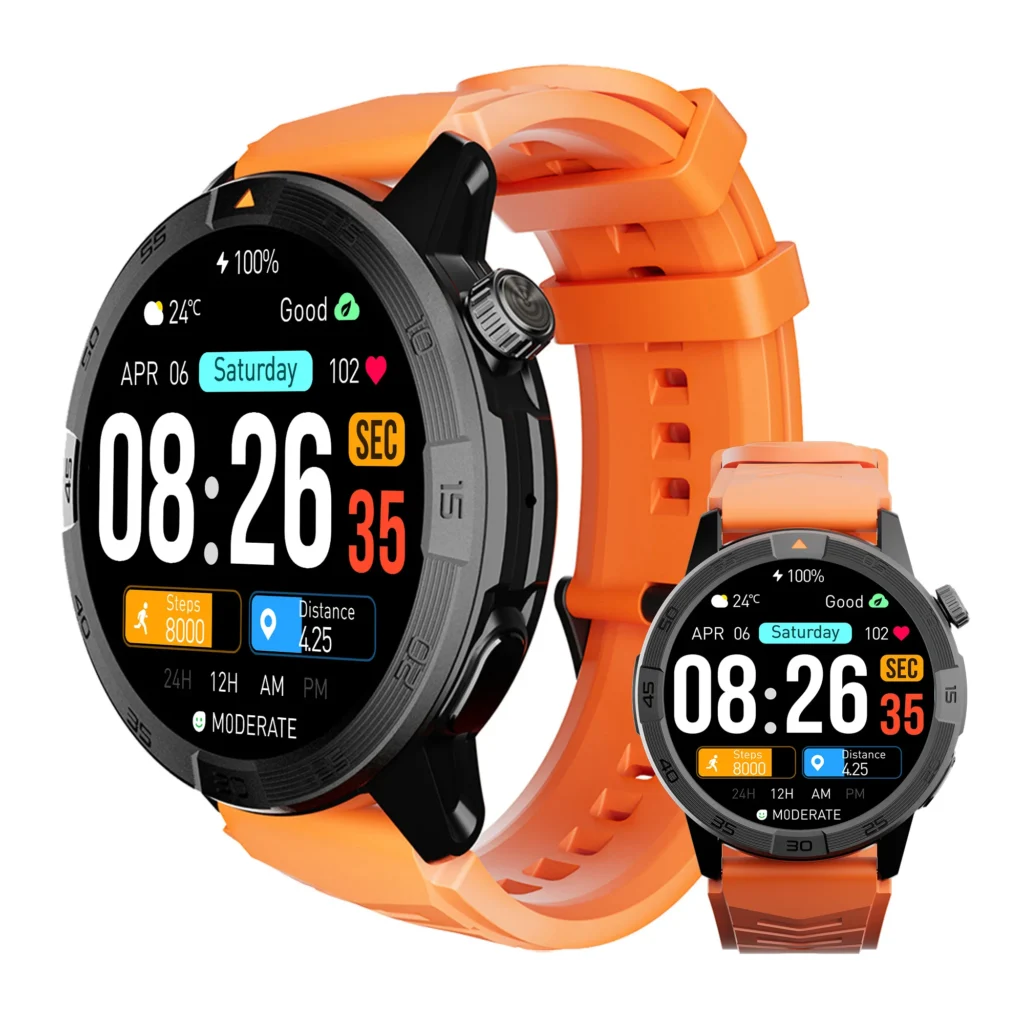
Before adding this smartwatch product candidate to the Raleigh shortlist, treat its colors and displayed features as unverified and require separate Exact Phone, Physical Fit, Wrist Role, Privacy, and Charging certificates.