
GPS is not one feature. It is a chain, and one weak link can reduce the value of the entire run record.
A polished route line may look convincing after the activity ends. That visual alone does not reveal how the watch acquired location, whether the trace remained stable, how measurement variation influenced distance, whether the resulting pace was useful, or how much battery the GPS session consumed.
This creates a buying failure called the Route Data Mirage: a detailed map gives the buyer more confidence than the unverified quality of the underlying route data deserves.
A responsible GPS running watch purchase must follow the complete Route Reliability Chain:
location acquisition → route stability → useful distance → usable pace → navigation support → battery survival
The chain keeps the purchase focused on route utility rather than screen appearance. It also prevents built-in GPS wording from expanding into assumptions about specialist accuracy, advanced navigation, or endurance-level runtime.
Before comparing watches, document the route job through a clear GPS watch role contract. The required evidence changes when the buyer moves from keeping a general outdoor record to controlling pace, following an unfamiliar course, or depending on GPS for several hours.
Recreational buyers who need general route records, offline-map access, and useful daily smartwatch functions can inspect the Omarek GPS and connected features entering the Route Reliability Chain. Buyers requiring proven positioning accuracy, advanced course guidance, or documented long-session GPS endurance should test every chain link before ordering.
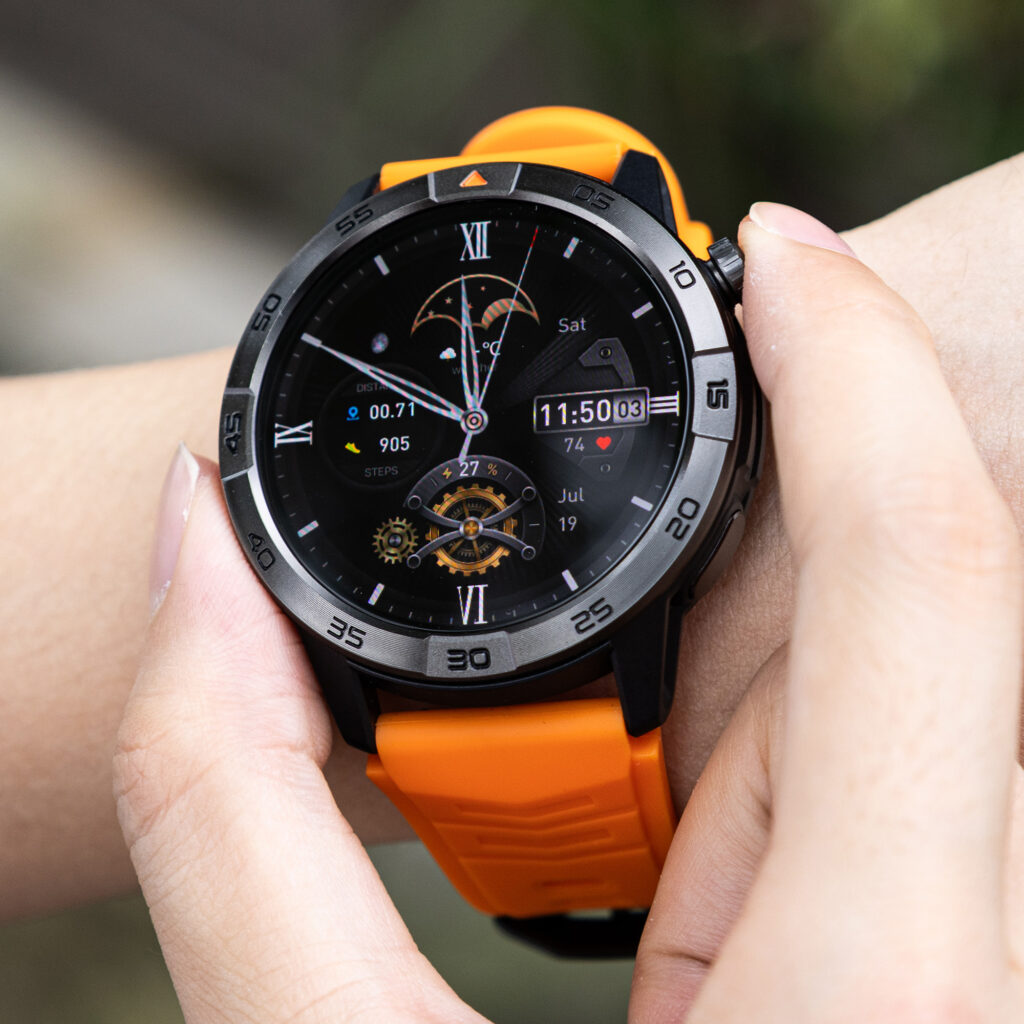
Top Benefits of a Complete Route Reliability Chain
The Route Reliability Chain evaluates benefits in dependency order. A later benefit cannot repair an earlier weakness. Pace, for example, may appear precise on the screen while still depending on the quality of the location and distance data produced before it.
Benefit One: Location Acquisition Creates a Usable Starting Point
Required GPS outcome: The watch establishes a credible location before the buyer treats the activity record as underway.
What the buyer expects: The recorded route begins near the actual start rather than several seconds or blocks later.
What could weaken the result: Starting immediately without understanding the positioning status may create uncertainty at the beginning of the trace.
Evidence required: The buyer needs to observe the actual acquisition process on the exact watch and in the environments normally used.
Effect on the next link: An uncertain starting position can influence the early route line, total distance, and initial pace display.
Purchase implication: Do not assign Omarek or another watch a specific acquisition speed unless that behavior has been tested or officially documented.
Benefit Two: Route Stability Makes the Trace More Credible
Required GPS outcome: The route remains sufficiently consistent for the buyer’s intended use as direction changes and surrounding conditions vary.
What the buyer expects: The trace generally follows the path taken rather than wandering, cutting across large sections, or producing unexplained deviations.
What could weaken the result: Buildings, tree cover, sharp turns, signal conditions, device design, software processing, and starting behavior may affect the record.
Evidence required: A route screenshot is not enough. Compare repeated records and inspect where the traces differ.
Effect on the next link: Route instability can alter calculated distance even when the final map still looks polished.
Purchase implication: Built-in GPS confirms a feature category, not superior route stability. Use a GPS evidence-quality check before converting listing language into a performance claim.
Benefit Three: Useful Distance Supports the Run Record
Required GPS outcome: The reported distance remains useful for the decision the buyer intends to make.
What the buyer expects: A general record may need only broad consistency, while a fixed-distance workout may need tighter confidence.
What could weaken the result: Uncertain acquisition, route drift, corner cutting, pauses, and calculation behavior may affect the total.
Evidence required: Compare repeated attempts and decide whether the variation changes an actual purchase-relevant decision.
Effect on the next link: Pace is calculated from distance and time. An unstable distance record can make pace less useful.
Purchase implication: Do not reject a watch merely because two consumer devices disagree slightly. Reject it when the difference repeatedly prevents the buyer from using the record as intended.
Benefit Four: Usable Pace Depends on Credible Distance Over Time
Required GPS outcome: Pace information is suitable for the buyer’s level of decision-making.
What the buyer expects: A recreational owner may review broad average pace after finishing. Another runner may expect live pace to control structured work.
What could weaken the result: Short-term distance changes, route turns, update behavior, pauses, and display calculations can make live pace move more than the buyer expects.
Evidence required: Determine whether the required pace is broad post-run context or a live training control.
Effect on the next link: A buyer who cannot rely on the intended pace use may need a specialist sports platform even when general route recording remains acceptable.
Purchase implication: Omarek should not receive credit for live-pace smoothing, lap pace, interval pace, race pacing, or structured pace alerts unless those functions are documented.
Benefit Five: Navigation Support Must Match the Route
Required GPS outcome: The watch provides the exact level of route support the buyer intends to use.
What the buyer expects: One person may only want general map context. Another may need imported courses, turn prompts, backtracking, or dependable guidance through unfamiliar terrain.
What could weaken the result: “Offline maps” may describe map availability without establishing course import, return-to-start, turn-by-turn directions, or complete regional coverage.
Evidence required: Name the navigation action before accepting a general map claim.
Effect on the next link: Map viewing and route guidance can increase screen and GPS use, which may affect battery consumption.
Purchase implication: Buyers should use a smartwatch listing decoder rather than treating every map graphic as proof of specialist navigation.
Benefit Six: Battery Survival Keeps the Chain Intact
Required GPS outcome: The watch completes the intended GPS session and retains enough power for the owner’s remaining needs.
What the buyer expects: An ordinary outing may impose a modest GPS burden. Extended navigation or endurance use can make GPS runtime the controlling requirement.
What could weaken the result: GPS, maps, display use, Bluetooth calls, notifications, phone connectivity, and individual settings may all increase power demand.
Evidence required: General battery-life wording does not establish continuous-GPS runtime.
Effect on the purchase: A watch can have an attractive standby or general-use ceiling and still lack enough evidence for the buyer’s specific GPS duration.
Purchase implication: Put the budget toward an endurance-focused option when the session cannot tolerate uncertain GPS runtime.
Why Route Data Changes the Purchase Decision
Location and Route Expectations Are Not Universal
A general route record only needs to support broad activity awareness. The buyer wants to confirm that an outdoor session occurred, see approximately where it went, and retain a usable record.
Repeat-route comparison creates a stricter job. The owner expects several attempts on the same course to remain comparable enough to notice meaningful differences rather than unexplained GPS variation.
Pace-guided running raises the requirement again. Distance and time are no longer passive records; they influence action during the session. A watch selected for that job needs stronger evidence than a recreational route tracker.
Navigation-dependent use is the deepest requirement. The buyer expects the device to help understand or follow an unfamiliar route. That purchase should not be based solely on built-in GPS wording or an attractive map image.
Readers still deciding which broad running-watch category fits can consult the recreational running-watch qualification guide. This page remains focused on GPS confidence and downstream route utility.
Distance Variation Can Be Acceptable or Purchase-Ending
Measurement variation matters when it changes a real decision. A recreational owner may accept modest differences because the route record still confirms the activity and provides broad context.
A buyer trying to stop at an exact distance, compare tightly controlled repetitions, or execute a distance-specific event may reach a different conclusion. The same variation can make the displayed milestone or average pace less useful.
The key question is not whether variation exists. Consumer GPS records should be judged by whether the observed variation remains acceptable for the assigned route job.
Pace Can Look Precise Without Being Useful
A display may show pace to the second, creating an impression of exactness. The number still depends on the route data being processed beneath it.
Location acquisition, route stability, elapsed time, pauses, turns, and distance calculation can all influence the usefulness of the value. More digits do not prove stronger measurement quality.
Broad average pace may remain helpful for recreational review. Live pace used to control intervals or race execution deserves a specialist evidence standard. Buyers can compare that requirement with the running-watch category matched to a training outcome.
Maps Can Increase Confidence Faster Than Evidence
The Route Data Mirage becomes strongest when a detailed map appears after the run. A clean line, recognizable roads, and precise-looking values can make the entire record feel validated.
That screen does not prove that positioning remained stable, the distance is exact, navigation guidance exists, offline maps work without satellite positioning, or the battery can support a longer route.
Map detail and measurement evidence are separate purchase questions. The buyer should inspect the route trace while withholding conclusions that the screen cannot support.
Navigation Requirements Must Be Named Before Checkout
“I need navigation” is too broad for a purchase decision.
The buyer may mean seeing a general map, checking broad position, reviewing a route afterward, following a planned course, receiving turn prompts, retracing a path, finding a starting point, or depending on the device in unfamiliar terrain.
Each job requires different evidence. Omarek’s documented offline maps can enter a general route-context purchase. They should not be expanded into unsupported backtracking, course import, or safety-critical navigation.
GPS Battery Has Two Relevant Endpoints
The first endpoint is whether the watch finishes the GPS activity. The second is whether enough power remains for calls, alerts, timekeeping, or other expected functions afterward.
A watch may technically complete a run yet fail the buyer’s all-day ownership plan when the session leaves too little usable charge. Conversely, a short recreational route may place less pressure on GPS endurance than a buyer initially assumes.
Battery-conscious buyers should compare their settings and usage with practical smartwatch battery adjustments, while remembering that battery-saving changes can also alter the desired experience.
Route-Consequence Table
| Route use | Most important chain link | Acceptable evidence level | What variation could change | Required watch category |
|---|---|---|---|---|
| General recreational route record | Usable route and distance context | Repeated real-route observations may be sufficient | Broad activity history | Route-capable all-purpose smartwatch |
| Repeated local-route comparison | Route stability and distance consistency | Several comparable attempts on the same route | Confidence that one outing differed meaningfully from another | General or specialist watch according to tolerated variation |
| Pace-controlled workout | Usable pace | Model-specific evidence for the required pace behavior | Workout execution and pacing decisions | Specialist running watch |
| Unfamiliar urban route | Navigation support | Verified map, course, and direction functions | Turn decisions and route completion | Navigation-capable sports watch |
| Extended trail or endurance outing | GPS battery survival and navigation | Documented continuous-GPS runtime under relevant settings | Completion, route access, and remaining power | Endurance- or navigation-focused watch |
Omarek’s Route-Capable Advantage for Recreational Use
Where Omarek Fits in the Chain
Omarek fits buyers who need a general outdoor activity record, built-in GPS, offline-map access, broad route and distance context, and one device that remains useful during normal daily ownership.
The recommendation is recreational rather than precision-dependent. Small measurement differences must not materially change the buyer’s running decision.
This route-capable position is narrower than calling Omarek the universal best running watch. The everyday-runner product review covers its broader running and ownership role; this article evaluates whether the GPS chain matches the intended route job.
Omarek’s Location and Route Value
The current product listing documents built-in GPS and offline maps. Those functions establish a credible route-capable feature set for general recreational use.
They do not prove faster acquisition, superior route stability, dual-frequency positioning, multiband support, automatic drift correction, or better performance around trees and buildings.
Omarek should therefore remain on the shortlist when the buyer can conduct real-route observations and accept the resulting level of consistency. A buyer demanding independently verified accuracy should move toward a specialist alternative.
Omarek’s Distance and Pace Value
Distance and pace can add useful recreational context when the buyer mainly reviews the completed activity and does not use every displayed change to control the session.
The listing does not document exact distance accuracy, live-pace smoothing, lap pace, pace alerts, interval targets, or race-specific guidance. Those absent details matter when pace becomes a running command rather than a general record.
Buyers deciding how much measurement variation matters can use the accuracy-needs matching principle while applying it only to the GPS decisions discussed here.
Omarek’s Map and Navigation Value
Offline maps can provide general route context and increase the usefulness of the watch beyond a text-only activity record.
The current documentation does not establish imported courses, turn-by-turn prompts, breadcrumb trails, backtracking, return-to-start, complete regional coverage, or safe navigation without other resources.
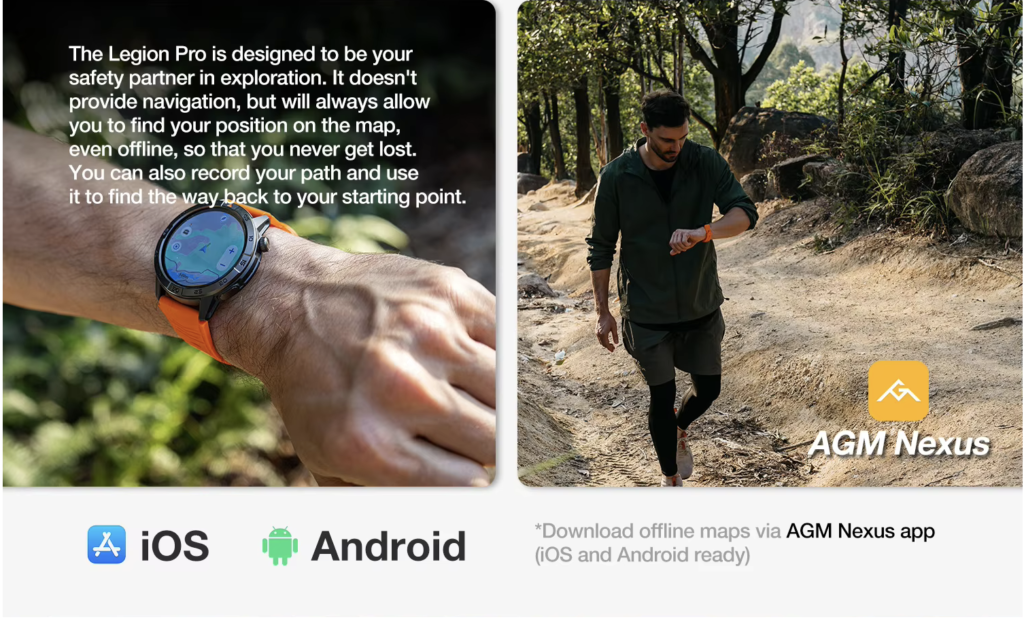
Map inspection may also demand more attention than a quick data glance. Slow down or stop before studying detailed route information, especially near traffic, crossings, uneven surfaces, or other people.
Omarek’s GPS Battery Value
The seller states that Omarek’s 370mAh battery may last up to 30 days. That ceiling describes general battery potential, not continuous-GPS endurance.
GPS, offline maps, display activity, Bluetooth calling, notifications, phone connectivity, and individual settings can reduce practical runtime. No specific GPS-session duration should be promised from the available listing.
Omarek remains commercially reasonable when intended sessions do not require documented endurance-level runtime. A buyer planning extended GPS-dependent use should put the budget toward a model with published runtime for the relevant GPS and navigation settings.
Normal Smartwatch Ownership Strengthens the Route Case
Omarek’s route functions are only one source of ownership value. Bluetooth calling, notifications and social alerts, music control, alarms, calendar access, activity tracking, and phone compatibility broaden the use case.
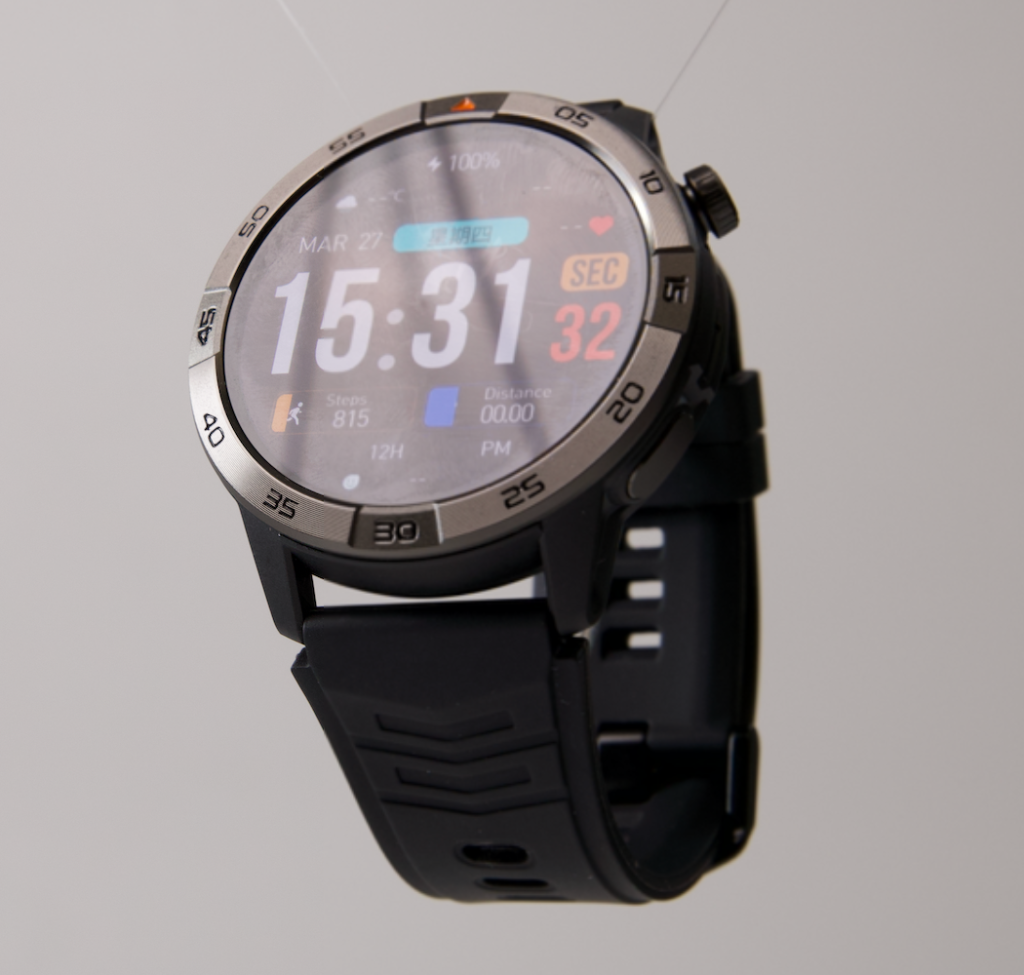
That matters at the current $150 price. A recreational buyer may use GPS on selected outings while using connected functions throughout the rest of the week.
The resulting UVP is clear: Omarek is a practical route-capable option for recreational runners who also value normal smartwatch ownership.
Phone-dependent functions should be verified before purchase through the phone-and-smartwatch compatibility guide. Android buyers should also check the required app and permissions.
Omarek Route-Chain Disqualifiers
Remove Omarek from consideration when the buyer needs independently validated GPS accuracy, precision-dependent live pace, imported courses, detailed turn guidance, return-to-start tools, specialist trail navigation, or documented endurance-event GPS runtime.
Standalone cellular communication and specialist external-sensor support are also undocumented. Bluetooth calling should not be interpreted as independent U.S. carrier service.
Medical interpretation remains outside this route purchase. General activity information should not be used for diagnosis, treatment, medication decisions, reassurance, or exercise clearance.
Omarek remains the practical choice only when all required route links stay recreational. compare Omarek’s current $150 offer with every link in your Route Reliability Chain, then verify the GPS, map, phone, app, and battery behavior that controls your actual route decision.
Specialist Alternatives When a Route Link Requires Stronger Evidence
Specialist Accuracy Alternative
A specialist running watch becomes the better category when positioning consistency and pace behavior repeatedly affect training decisions.
Require evidence relevant to the exact model. A sports label or higher price does not guarantee stronger results in every setting.
The useful evidence may include repeated-route testing, detailed running fields, supported external sensors, documented positioning technology, and a stable sports-platform history. Confirm which functions require a phone, account, accessory, or subscription.
Navigation-Focused Alternative
A navigation-focused sports watch earns the price when imported courses, turn prompts, detailed maps, backtracking, or return-to-start functions are present requirements.
The buyer should verify route creation, transfer, map coverage, on-watch guidance, recalculation behavior, screen usability, and battery demand. An expensive map display can still create a Route Data Mirage when its route-handling capabilities are assumed rather than documented.
Endurance-GPS Alternative
An endurance-focused watch becomes necessary when continuous-GPS runtime controls the purchase.
Compare documented runtime for the actual GPS mode, not only the longest battery figure on the page. Battery-saving modes may trade positioning frequency, display behavior, map access, or other functions for longer operation.
Also account for navigation, connected sensors, phone links, temperature, screen settings, and charging options. The better product is the one with evidence for the complete planned session.
All-Purpose Route-Capable Option
Omarek remains the practical category when routes are recreational, broad distance and pace context are sufficient, advanced navigation is unnecessary, and session length does not require proven endurance runtime.
Connected daily functions strengthen that recommendation. Buyers who prefer a simpler ownership arrangement can compare Omarek with a low-maintenance smartwatch routine.
Real-Route Testing Plan
The following plan does not create laboratory validation. It helps the buyer identify whether observed variation changes a real route decision.
Route A: Open-Sky Reference Route
Select a safe, uncomplicated route with broad sky visibility and an obvious start and finish.
Observe location acquisition, save the reported distance, inspect the route line, and record battery before and after. The purpose is to establish a personal baseline rather than prove absolute accuracy.
Route B: Turn-Dense Reference Route
Select a safe course containing several ordinary direction changes without depending on the watch for navigation.
Inspect whether the line appears to cut across large corners, drift beyond the traveled path, or produce unexplained distance changes. Observe whether pace remains useful during and after the turns.
Route C: Partial-Obstruction Reference Route
Choose a safe route with normal tree cover or nearby buildings while avoiding remote or navigation-dependent terrain.
Compare the trace with the open-sky result. Note inconsistent sections, changes in reported distance, map behavior, and battery use.
Record These Seven Observations
- Location-acquisition behavior
- Route-trace behavior
- Reported distance
- Pace usefulness
- Map usefulness
- Battery before and after
- Whether the variation changed a real decision
Do not manufacture confidence from one attractive trace. Repeat the route that matters most, compare the results, and preserve the product and packaging according to the seller’s return conditions.
Because Omarek’s returns policy requires unused condition, request written clarification before conducting testing that could be considered use. A careful first-week verification plan can help organize compatibility and condition checks without assuming return approval.
Final Verdict on Omarek as a GPS Running Watch
Omarek is a practical GPS running watch for recreational buyers who need general route records, broad distance and pace context, offline-map access, and connected daily functions from one $150 smartwatch.
Omarek Wins the Practical Route-Capable Use Case When
- Location and route data serve general recreational records.
- Observed measurement variation does not change the buyer’s decisions.
- Pace is used as broad context rather than precision control.
- Offline maps provide general route support rather than specialist guidance.
- The intended session does not require documented continuous-GPS endurance.
- Calls, notifications, music control, and daily features add ownership value.
Omarek Does Not Win When
- Exact route or distance confidence controls the purchase.
- Live pace must guide structured or race-specific execution.
- Imported courses, detailed directions, or backtracking are essential.
- Unfamiliar or remote routes depend on the watch.
- Continuous-GPS runtime must be documented before purchase.
- Advanced sports sensors or training tools are required.
Route Reliability Verdict Rule
The recommendation freezes at the weakest required link.
A sharp display cannot compensate for unverified route stability. A detailed map cannot replace missing course guidance. A long general battery ceiling cannot establish endurance-level GPS runtime.
Choose according to route type, session duration, map need, and tolerance for measurement variation—not according to the visual confidence created by one route screen.
Choose Omarek only when every required link in the Route Reliability Chain is covered by its documented functions and your real-route observations.
Confirm the expected route type, location-acquisition behavior, required route stability, tolerance for distance variation, intended pace use, exact map need, expected GPS duration, acceptable battery uncertainty, and phone compatibility.
Before checkout, verify the current price, final shipping charge, applicable sales tax, app requirements, delivery estimate, return conditions, warranty and support, and any ongoing ownership cost. Approve Omarek for Your Recreational Route Reliability Chain