
“Weekly mileage is one of the least useful facts I can receive when recommending a runner’s watch.”
An expert can learn that a buyer covers 15 miles each week and still know almost nothing about the correct product. The number does not reveal whether workouts arrive through a training platform, whether the watch must be worn at work, whether route guidance controls outdoor trips, or whether the owner resents opening another app.
A runner may reject a watch without structured workouts. Another may reject it when calls and notifications are weak. Someone planning outdoor trips could require documented navigation, while a simplicity-first buyer may walk away from the same system because it demands too much setup and analysis.
This runners watch guide uses Ownership Identity Recommendations.
The proof object is the Runner Identity Assessment. It identifies the reason the watch earns wrist time, the missing capability that would cancel the purchase, the relationship the buyer wants with data, and the corresponding watch category.
Begin with a concise smartwatch ownership role contract. The description should cover present responsibilities rather than a future identity created by an appealing product page.
Buyers who already expect exercise, outdoor tools, communication, and ordinary wear to share similar importance can review Omarek as a possible balanced-ownership watch. Continue the assessment when one specialist priority could still reject the purchase.
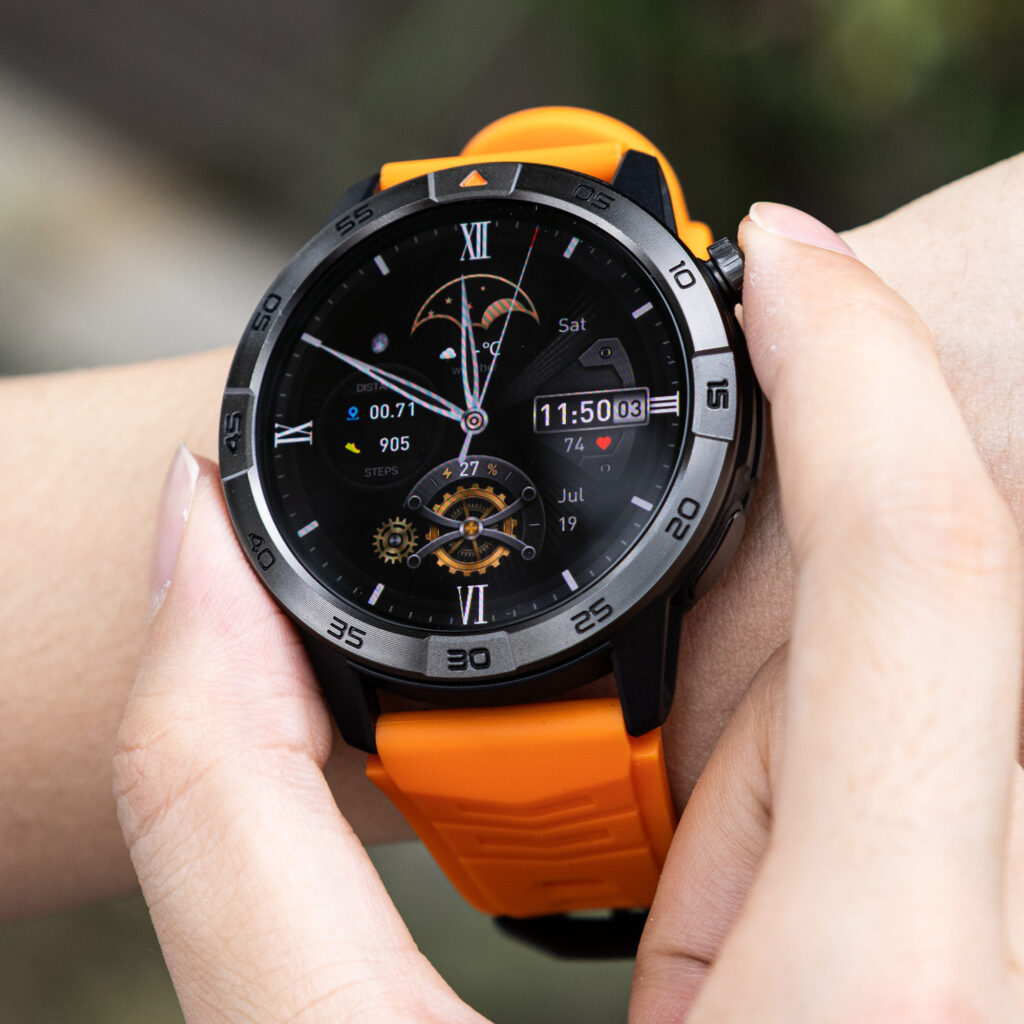
Expert Opinion: Choose a Runner’s Watch by Ownership Identity, Not Mileage
Why Mileage Reveals So Little
Weekly mileage does not show whether the watch must control a workout, preserve a training calendar, support unfamiliar outdoor routes, deliver detailed analysis, or remain useful during a meeting.
A lower-mileage buyer can need specialist tools when every session follows timed intervals. A higher-mileage runner may independently choose every route and review only duration, broad distance, and general activity history.
No mileage threshold should automatically send a buyer into a basic or advanced category. The correct watch follows the ownership responsibility that cannot be compromised.
The Purchase-Veto Principle
The expert begins by naming the capability whose absence would remove an otherwise appealing watch.
For a runner-first buyer, that veto may be missing structured workouts. A smartwatch-first owner may reject weak phone-connected utility. An outdoor-adventure buyer could remove any product without sufficient route evidence, while a data-first runner may reject shallow analysis.
Simplicity-first ownership works in the opposite direction: unnecessary complexity can itself become the veto. The balanced runner rejects a watch when one broad ownership role overwhelms the others.
Runner-First Ownership
The watch’s main job is to support running execution. The identity may prioritize planned workouts, pace targets, laps, intervals, race preparation, sports controls, and continuity within a running platform.
Calls, alerts, scheduling, and everyday convenience remain secondary. A general smartwatch does not qualify merely because it can save an activity.
Buyers whose next objective already controls product selection should compare the running-watch category required by the training goal.
Smartwatch-First Ownership
The device must succeed during ordinary life before its running functions become persuasive.
Calling, notifications, calendar access, alarms, music control, phone compatibility, and all-day wrist use may receive purchase-veto power. Running remains important, but broad recording may be enough.
This buyer should complete a phone-and-smartwatch compatibility assessment before comparing sports depth.
Outdoor-Adventure Ownership
Route, environment, and session duration create the strongest consequences. GPS evidence, map behavior, compass or altitude information, navigation tools, battery documentation, and communication planning may control the purchase.
Offline maps alone do not establish imported courses, directional guidance, backtracking, return-to-start, complete coverage, or dependable navigation.
Buyers whose outing depends on route performance should use the GPS route-utility buying guide before assigning veto power.
Data-First Ownership
This buyer expects information to change future decisions. Training load, recovery analysis, running dynamics, sensor compatibility, detailed trends, and long-term platform history may earn priority.
More data is valuable only when the owner regularly interprets and acts on it. A large dashboard that never changes the next session is not a purchase requirement.
Simplicity-First Ownership
The buyer rejects excessive administration, crowded menus, repeated permissions, unnecessary alerts, and analysis that demands more attention than it returns.
Basic recording, manageable charging, understandable controls, and selective notifications may matter most. Fewer documented features do not automatically prove that a watch is easier to own.
The low-maintenance smartwatch ownership guide can help establish whether reduced administration deserves veto power.
Balanced Runner Ownership
No single specialist role dominates the purchase.
Recreational exercise, outdoor tools, communication, music, scheduling, general activity awareness, and normal workday wear must share ownership importance. The buyer wants one watch to cover several meaningful responsibilities without becoming a dedicated coaching, navigation, or analytical platform.
This is the ownership identity where Omarek receives its strongest recommendation.
Evaluation Criteria: Complete the Runner Identity Assessment
Primary Reason the Watch Earns Wrist Time
Name the responsibility producing recurring value. It may be workout execution, ordinary communication, outdoor use, data review, simple ownership, or a relatively even combination.
Use the reason that applies during a normal month. A possible future interest should not replace the identity controlling the purchase today.
Capability With Purchase-Veto Power
Write the one missing function that would cancel the purchase immediately.
Possible answers include structured workout support, useful phone alerts, required route guidance, specialist analysis, low system complexity, or balanced coverage across running and everyday life.
This prevents several attractive secondary functions from hiding one controlling gap.
Running Decision the Watch Must Support
State what the device must help the buyer accomplish: record a recreational session, execute a planned workout, review broad pace, follow a route, interpret training, or remain useful without directing the run.
A feature that changes no current decision should not receive veto power.
Non-Running Responsibility
Determine whether the same device must support workplace wear, calls, notifications, appointments, errands, music, travel, timekeeping, or general daily activity.
A running-only device and an all-day watch have different commercial assignments even when both record the same session.
Outdoor Consequence
Describe what happens when location or route support is limited.
The consequence might be minor inconvenience on a familiar loop, cancellation of a planned route, or unacceptable dependence on an undocumented navigation function. Greater consequences require stronger product evidence.
Expected Relationship With Data
Choose the role data will perform:
- saved record;
- occasional comparison;
- broad trend awareness;
- workout control;
- next-session planning;
- long-term training management.
The deeper roles generally favor specialist platforms. Broad records and occasional comparisons can remain compatible with balanced ownership.
Preferred Notification Role
Notifications may be essential, selectively useful, acceptable only outside running, distracting, or disabled completely.
Notification overload is not solved by counting supported apps. The buyer must decide which alerts deserve wrist access and whether individual categories can be controlled.
Acceptable System Complexity
Estimate the app, account, synchronization, sensor, subscription, workout-transfer, and review obligations the buyer will realistically maintain.
A system can be powerful and still be the wrong commercial choice when the owner will not sustain its operating routine.
The Runner Identity Assessment
Primary reason the watch earns wrist time: ____________________
Capability with purchase-veto power: ____________________
Running decision the watch must support: ____________________
Non-running responsibility: ____________________
Outdoor consequence of limited route tools: ____________________
Expected relationship with data: ____________________
Preferred notification role: ____________________
Acceptable system complexity: ____________________
Identity controlling the purchase: Runner-first / Smartwatch-first / Outdoor-adventure / Data-first / Simplicity-first / Balanced runner
Corresponding watch type: ____________________
Top Recommendation for Each Ownership Identity
Runner-First Recommendation
Choose a dedicated running watch when structured workouts, precise controls, frequent laps, interval execution, pace targets, race preparation, or sports-platform continuity has veto power.
A general activity record is not enough when the watch must direct scheduled training.
Smartwatch-First Recommendation
Choose a connected everyday smartwatch when calls, notifications, music, scheduling, phone integration, and ordinary wrist wear dominate the purchase.
Running functions can remain broad when the owner needs a useful general record rather than a specialist training system. Omarek may qualify, although it does not receive its strongest recommendation when phone-centered utility clearly outranks exercise.
Outdoor-Adventure Recommendation
Choose an outdoor or navigation-focused watch when route completion, detailed guidance, independently established location performance, or documented GPS endurance carries veto power.
Omarek documents built-in GPS, offline maps, compass, and altitude functions, which may provide broad outdoor context.[1] It should be removed when the outing requires imported courses, turn guidance, backtracking, return-to-start, verified specialist accuracy, or published continuous-GPS runtime.
Data-First Recommendation
Choose a specialist analytical platform when advanced information repeatedly changes training.
Training load, recovery or readiness tools, detailed running dynamics, external sensors, and long-term sports reports are not documented for Omarek. The buyer should not assume them from general fitness wording.
Simplicity-First Recommendation
Choose a low-friction smartwatch or basic running watch when the buyer values understandable ownership more than analytical depth.
Omarek may remain eligible when the owner can limit calls, alerts, music, GPS, and activity information to the functions that are genuinely useful. App behavior, notification controls, pairing, and charging still require verification.
Balanced Runner Recommendation
Omarek receives the strongest recommendation for the balanced runner identity.
The current listing combines general activity tracking, built-in GPS, offline maps, Bluetooth calling, notifications, music control, alarms, calendar functions, general heart-rate information, and compatibility with iOS and Android devices.[1]
That combination can suit a buyer who expects recreational exercise, outdoor context, communication, scheduling, and ordinary wear to share the $150 purchase.
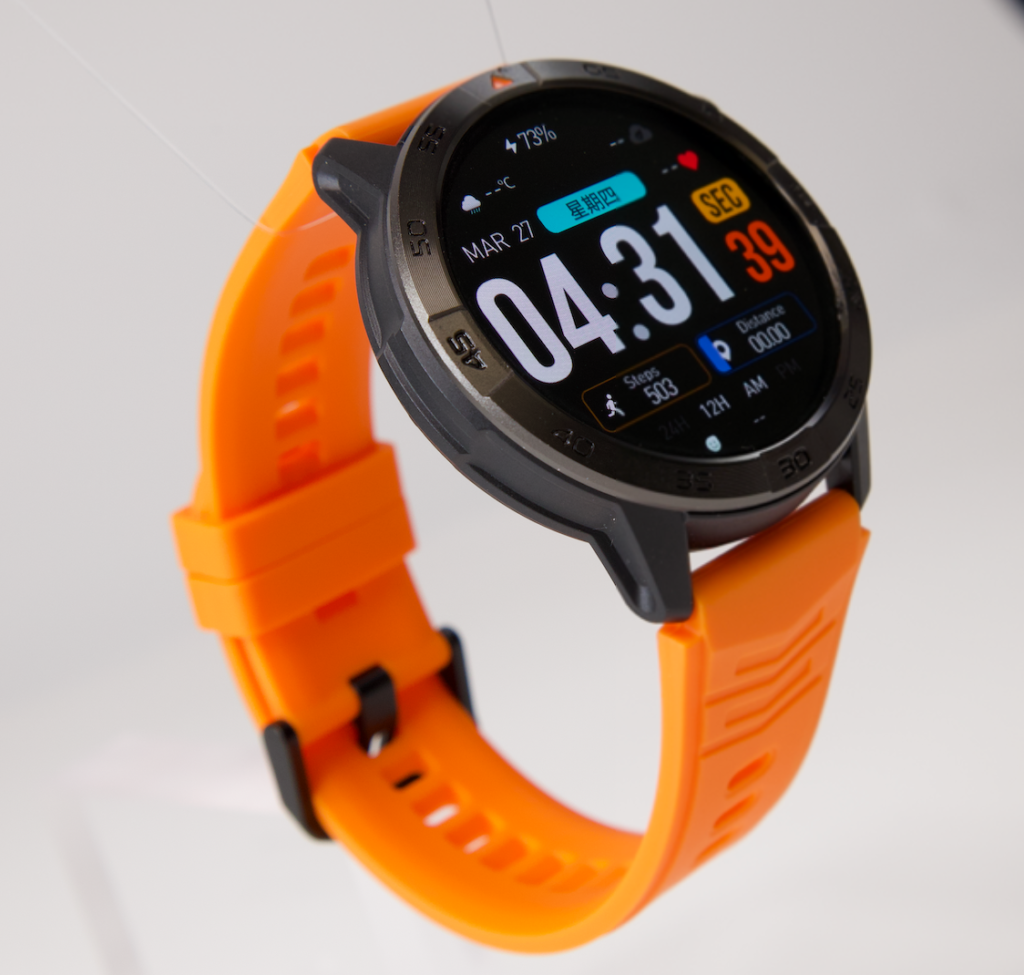
The recommendation is not a claim that Omarek equals a dedicated coaching watch, outdoor navigator, data platform, cellular watch, or medical device. It applies only when none of those specialist roles receives purchase-veto power.
The midpoint decision is whether balance—not specialization—controls ownership. Buyers whose assessment produces the balanced runner identity can compare Omarek’s documented coverage with every equal-priority responsibility. Specialist identities should continue toward the product category built around their veto requirement.
Comparison: Which Ownership Priority Controls the Purchase?
Runner-First Versus Balanced Ownership
Ask whether missing structured tools would disrupt a scheduled workout.
When the answer is yes, runner-first ownership controls the purchase. When sessions are chosen independently and broad records remain sufficient, communication and ordinary wear can keep the buyer in the balanced identity.
The recreational runner qualification guide can help clarify whether specialist execution is genuinely required.
Smartwatch-First Versus Balanced Ownership
Smartwatch-first ownership applies when phone integration and daily communication dominate. Balanced ownership applies when running and outdoor functions retain equal commercial weight.
Omarek fits the second outcome more strongly. The product should not be purchased mainly as a substitute for a highly integrated smartphone platform without verifying the required app and actions.
Outdoor-Adventure Versus Balanced Ownership
The distinction is the consequence of limited route tools.
Helpful GPS and map context can remain within balanced ownership. A trip that depends on course guidance, backtracking, return-to-start, or proven long-session GPS operation requires an outdoor specialist.
Vacation travel does not automatically create an adventure identity. Route dependence and duration—not the word “travel”—control the category.
Data-First Versus Balanced Ownership
Data-first ownership begins when detailed analysis changes what happens next. Balanced ownership remains appropriate when general history, broad pace, route context, and activity information answer the buyer’s practical questions.
A buyer who enjoys viewing more numbers but rarely changes a session because of them has not established a data-first veto.
Simplicity-First Versus Balanced Ownership
Connected functions create value for the balanced runner and noise for some simplicity-first buyers.
Selective calls, notifications, music, GPS, and general activity information can justify Omarek. A buyer who plans to disable nearly everything may obtain better value from a more limited product.
Wearing the Watch at Work
Workplace use strengthens smartwatch-first or balanced ownership when selected alerts, calls, calendar functions, and ordinary appearance matter after the run.

The buyer should verify workplace rules and determine which interruptions are appropriate. An available notification does not automatically deserve access to the wrist.
App Fatigue and Notification Overload
App fatigue favors simplicity-first ownership when the buyer resists repeated permissions, dashboards, subscriptions, workout transfers, and account maintenance.
A balanced buyer may accept one companion app when its activity and connected functions justify the relationship. Android users should verify the required app and phone permissions before checkout.
Notification buyers should also review the practical limits of smartwatch calls and alerts. Bluetooth calling is not standalone cellular service.
When the Ownership Identity Changes
Reassess the identity when casual running becomes structured race preparation, outdoor travel begins requiring dependable navigation, advanced analysis starts directing sessions, workplace communication loses importance, or system complexity becomes unacceptable.
A possible future change should not replace the identity controlling the purchase now. A confirmed requirement should not be postponed merely to preserve Omarek’s eligibility.
Pros and Cons of Omarek for the Balanced Runner Identity
Omarek Pros for Balanced Ownership
- The current $150 product can serve recreational exercise and normal smartwatch ownership.[1]
- Built-in GPS and offline maps may provide broad outdoor context.[1]
- Bluetooth calling and notifications can support selected communication.[1]
- Music control, alarms, and calendar functions broaden daily usefulness.[1]
- General activity and heart-rate information can support non-medical recreational awareness.[1][4]
- Black and orange options provide a basic appearance choice.[1]
- iOS and Android compatibility broadens phone eligibility, subject to app verification.[1]
- The balanced role does not require inventing an undocumented coaching system.
Omarek Cons for Balanced Ownership
- No independent comparative evidence establishes superior GPS accuracy.
- Structured running workouts and advanced pace controls are not documented.
- Training load, recovery analysis, and running dynamics are not documented.
- External-sensor compatibility is not documented.
- Imported courses, turn guidance, and return-to-start are not documented.
- Continuous-GPS runtime is not stated.
- Bluetooth calling depends on a connected-phone context rather than standalone cellular service.
- The product page currently shows no customer reviews.[1]
- The reviewed official pages do not state a clear product-specific warranty duration.[1][2][3]
- App behavior and notification controls require buyer verification.
- The unused-condition return rule may limit meaningful testing.[3]
When Balance Becomes the Wrong Compromise
Reject Omarek when one specialist identity gains veto power.
That change may occur when structured running controls sessions, navigation determines whether an outdoor route can be completed, advanced analysis directs training, or the owner wants substantially less app and notification involvement.
Several balanced conveniences cannot compensate for one missing specialist requirement.
Complete the U.S. Checkout and Ownership Review
Omarek’s product page currently lists the watch at $150 and states free shipping. The general shipping policy separately says shipping charges are calculated and displayed at checkout, so verify the final order total. State and local sales tax may increase the amount charged.
Orders are stated to require 1–3 business days for processing. Estimated U.S. delivery is 3–7 business days, although destination, weekends, holidays, order volume, and carrier delays may affect arrival.
The return policy provides a conditional 30-day window from delivery. Eligibility requires unused condition, original packaging, accessories, charging cable, manuals, included items, and proof of purchase.
Meaningful identity testing may conflict with the unused requirement. Request written clarification before pairing, wearing, or testing the watch in a way that could affect return eligibility.
Customers generally pay return shipping unless the product is defective or incorrect. Discounted items are described as nonrefundable unless damaged or defective.
The seller states that the 370mAh battery may last up to 30 days. Treat that as a ceiling rather than a guaranteed ownership result. GPS, maps, calls, notifications, Bluetooth, display use, and settings can reduce runtime.
Complete the order review using the U.S. smartwatch checkout safeguards. Preserve packaging and included items during a careful pre-use readiness inspection.
Expert Verdict
Runner-first identity: Choose a dedicated running watch.
Smartwatch-first identity: Choose a connected everyday smartwatch with the required phone integration.
Outdoor-adventure identity: Choose an outdoor or navigation specialist.
Data-first identity: Choose an analytical training platform.
Simplicity-first identity: Choose a low-friction basic watch.
Balanced runner identity: Choose Omarek when recreational exercise, outdoor context, communication, scheduling, and normal wear all remain material and documented.
The strongest recommendation follows the ownership priority with veto power—not weekly mileage, ambition, or the number of functions printed on the box.
Choose Omarek when exercise, outdoor tools, communication, and ordinary wear must share equal ownership importance.
Confirm the primary reason for wearing the watch, the capability with veto power, outdoor consequences, data expectations, notification preferences, app tolerance, documented Omarek coverage, and complete U.S. checkout terms. Choose Omarek for the Balanced Runner Identity